Order Tracking
 0800 1422417
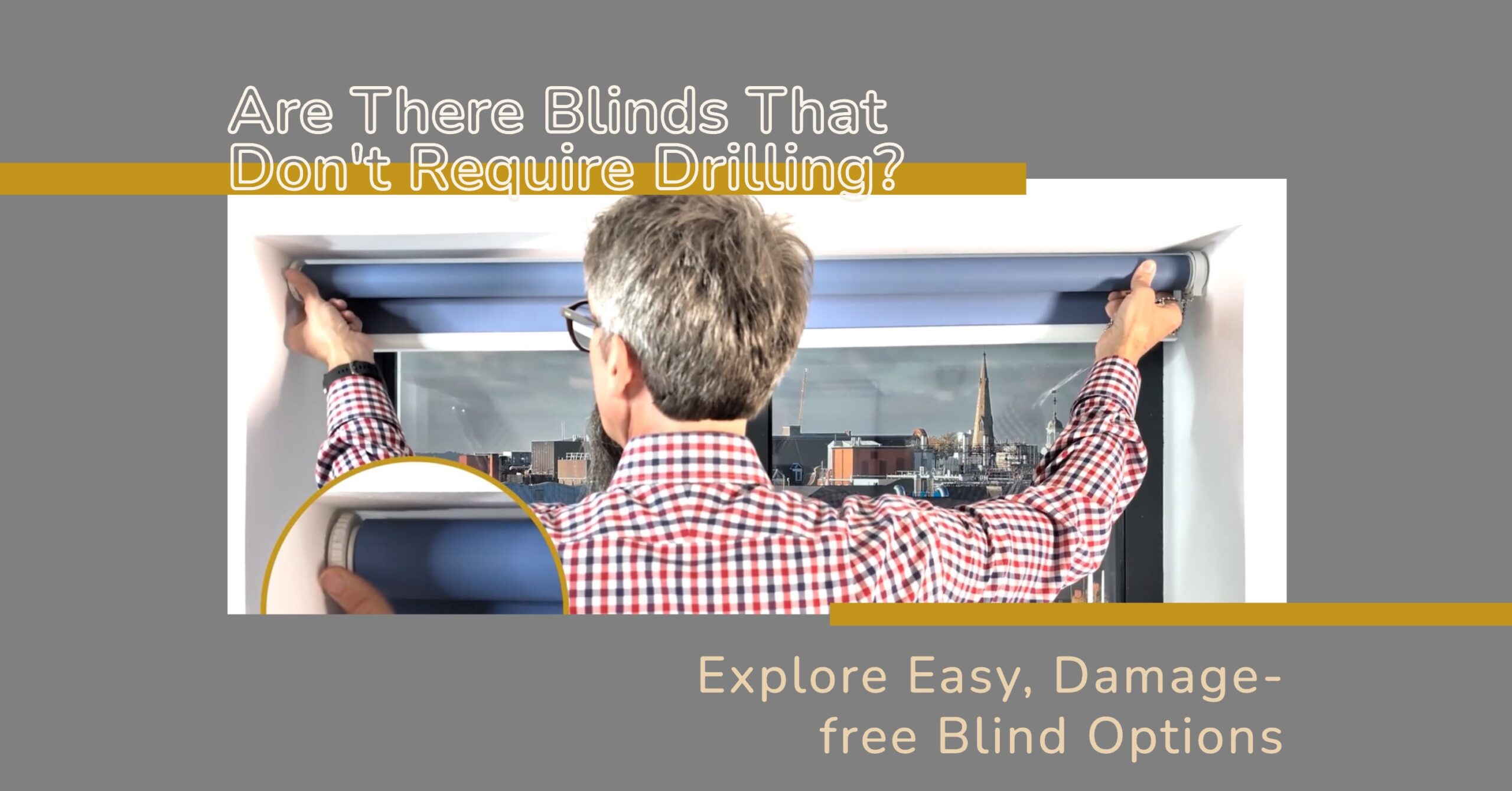
Yes — blinds that don’t require any drilling absolutely exist, and they’re more popular than ever. Whether you’re renting a flat, want to avoid damaging your window frames, or simply prefer a hassle-free installation, no-drill blinds offer a brilliant solution.
These blinds are designed to snap, clip, stick, or twist into place without the need for screws, power tools, or permanent fixtures. They’re ideal for situations where drilling isn’t practical or allowed, such as listed buildings, rented properties, or UPVC window frames. Many homeowners also love them for their speedy setup, clean look, and the fact that they can often be removed without leaving a trace — perfect if you’re decorating, upgrading, or moving out.
In this article, we’ll take a closer look at the different types of no-drill blinds available, how they work, and which ones might suit your space best.
The Benefits of No-Drill Blinds

Before we explore the different types of no-drill blinds available, it’s worth understanding why so many people are choosing them in the first place. From ease of installation to versatility and safety, no-drill blinds offer several compelling benefits.
Hassle-Free Installation
No-drill blinds are designed with simplicity in mind. You don’t need a drill, level, screwdriver, or any power tools — just a few minutes and a steady hand. This makes them ideal for anyone who wants a quick DIY solution without the fuss or the mess of a traditional blind installation.
Damage-Free
One of the biggest appeals of no-drill blinds is that they leave no holes, no cracks, and no damage. If you’re a renter, live in a listed building, or simply don’t want to risk damaging your window frames, these blinds are the perfect choice. You can fit and remove them without affecting the walls or window structure — a real win for those needing a non-permanent solution.
Versatility
No-drill blinds are incredibly adaptable. They work brilliantly on a wide range of window styles, including uPVC windows, bi-fold doors, French doors, and even tilt-and-turn windows — many of which can be tricky (or even unsuitable) to drill into. Whatever your window type, there’s likely a no-drill blind to match.
Clean and Safe
A bonus feature of many no-drill blinds is their cordless operation. Not only does this provide a clean, uncluttered look, but it also means they’re safer for homes with young children or pets, eliminating the risk of entanglement. It’s a modern solution that combines function with peace of mind.
Detailed Breakdown of the Four Main Types

When it comes to no-drill blinds, four main styles dominate the market. Each has its own unique fitting method, strengths, and ideal use cases. Below, we’ll walk you through Click Fit, Stick Fit, Perfect Fit, and Twist Fit/Tension Fit blinds to help you decide which one works best for your home.
Click Fit Blinds
How They Work:
Click Fit blinds use small metal or plastic brackets that slide between the window glass and the rubber beading of a uPVC window. The blind then “clicks” into these brackets, holding it securely in place without any screws or adhesives.
Best For:
Ideal for uPVC windows and doors with visible rubber beading, especially in homes where drilling isn’t an option. They’re also great for rented properties and anyone wanting a fast, clean installation.
Pros:
- Super quick to install — no tools required.
- Leaves no marks or damage when removed.
- Creates a tidy, flush appearance.
- Suitable for tilt-and-turn windows.
Cons/Considerations:
- Only compatible with certain uPVC windows (must have internal rubber beading).
- May not offer a completely integrated look compared to Perfect Fit frames.
- Not suitable for wooden or aluminium frames.
Available Blind Styles:
Roller Blinds, Pleated Blinds, Honeycomb/Cellular Blinds.
Stick Fit Blinds
How They Work:
Stick Fit blinds use a strong adhesive strip or Velcro-like fixing to attach the blind directly onto the glass or frame of the window. There’s no drilling, no brackets — just peel and stick.
Best For:
Excellent for smooth, flat surfaces like glass and for people looking for a super minimal and ultra-quick solution. Ideal for renters or temporary window coverings.
Pros:
- Easiest installation of all no-drill options.
- Completely tool-free and instant.
- Can be removed cleanly if high-quality adhesive is used.
- Good for small windows or short-term setups.
Cons/Considerations:
- Adhesive can lose strength over time, especially in humid or hot environments.
- Not ideal for large or heavy blinds.
- May leave a sticky residue if removed too quickly or improperly.
- Less robust than other no-drill options.
Available Blind Styles:
Pleated Blinds, Honeycomb Blinds, Lightweight Roller Blinds.
Perfect Fit Blinds
How They Work:
Perfect Fit blinds are mounted into a custom-made frame that clips into place between the glass and rubber beading of uPVC windows and doors. The blind sits within the frame, creating a seamless, integrated finish that moves with the window or door.
Best For:
Perfect for conservatories, French doors, bi-fold doors, and tilt-and-turn windows, where movement and a fitted look are key. Also ideal for homes seeking a premium, clean-lined style.
Pros:
- Creates a neat, built-in appearance.
- Blinds move with the window — great for doors.
- No light gaps around the edges.
- Safe and tidy — perfect for children’s rooms.
- No damage to the window frame or wall.
Cons/Considerations:
- Only compatible with uPVC windows and doors with rubber beading.
- Slightly more expensive than other no-drill options.
- Not suitable for wooden or aluminium frames.
Available Blind Styles:
Venetian Blinds, Roller Blinds, Pleated Blinds, Honeycomb/Cellular Blinds.
Twist Fit / Tension Fit Blinds
How They Work:
Twist fit blinds use spring-loaded or tension rods that expand within the window recess to hold the blind in place. Some may also use a twisting mechanism to lock the rod tightly. No screws, adhesives, or brackets are involved.
Best For:
Ideal for recessed windows or small spaces where a traditional blind would be awkward to install. Also great for temporary solutions or non-uPVC window types.
Pros:
- Works with a wide range of window types.
- Simple to install and remove.
- No tools or hardware required.
- Great for temporary setups or short lets.
Cons/Considerations:
- Less secure than other no-drill options — may slip with time.
- Not ideal for larger or heavier blinds.
- Doesn’t offer the same flush fit as Click Fit or Perfect Fit.
Available Blind Styles:
Roller Blinds, Lightweight Roman Blinds, Voile Curtains, Café Curtains.
How to Choose the Right No-Drill Blinds for You
With several no-drill options available, the best choice will depend on your window type, room function, aesthetic preference, and budget. The table below offers a side-by-side comparison of the four main types to help you decide.
No-Drill Blinds Comparison Table
| Blind Type | Installation Method | Best Suited For | Aesthetics | Durability / Security | Price Range |
|---|---|---|---|---|---|
| Click Fit | Brackets slide between glass and rubber beading | uPVC windows with visible beading, tilt-and-turn | Clean and simple | Moderate | Low–Medium |
| Stick Fit | Adhesive strips or Velcro-style fixings | Smooth glass, short-term use, renters | Minimalist and unobtrusive | Low–Moderate | Low |
| Perfect Fit | Custom frame clips into window beading | Conservatories, French/bi-fold doors, uPVC windows | Modern, sleek, integrated | Very high | Medium–High |
| Twist/Tension Fit | Spring-loaded or twist rod held within recess | Recessed windows, metal or wooden frames | Simple and functional | Moderate | Low–Medium |
Key Questions to Ask Yourself
To make the best decision, consider the following:
- What type of window do I have?
Is it uPVC with rubber beading, or is it made of wood or aluminium? This will determine which fittings are compatible. - How will I use the blinds?
Are they for daily use, such as in a living room or bedroom, or occasional use like a guest room or utility space? - What level of light control and privacy do I need?
Do you want blackout coverage, privacy during the day, or light filtering? This affects which blind style and fitting is best. - What is my budget?
Stick Fit and Click Fit options are generally more budget-friendly, while Perfect Fit blinds offer a premium look at a higher price point. - Am I looking for a long-term or temporary solution?
Perfect Fit and Click Fit blinds are designed for long-term use, while Stick Fit or Tension Fit blinds may be better suited to short-term setups or rented homes.
Ready to Transform Your Windows?
No-drill blinds have firmly established themselves as a stylish, practical, and damage-free alternative to traditional blinds. Whether you’re a renter, working with tricky window types, or simply want a faster, cleaner installation, there’s a no-drill option to suit your space. From Click Fit and Perfect Fit to Stick Fit and Tension Fit, each type offers its own advantages in terms of aesthetics, ease of use, and compatibility.
Now’s the perfect time to measure up and explore the wide range of no-drill blinds available. Whether you want something sleek and modern, budget-friendly, or child-safe, there’s a solution that fits both your windows and your lifestyle — all without picking up a drill.