Order Tracking
 0800 1422417
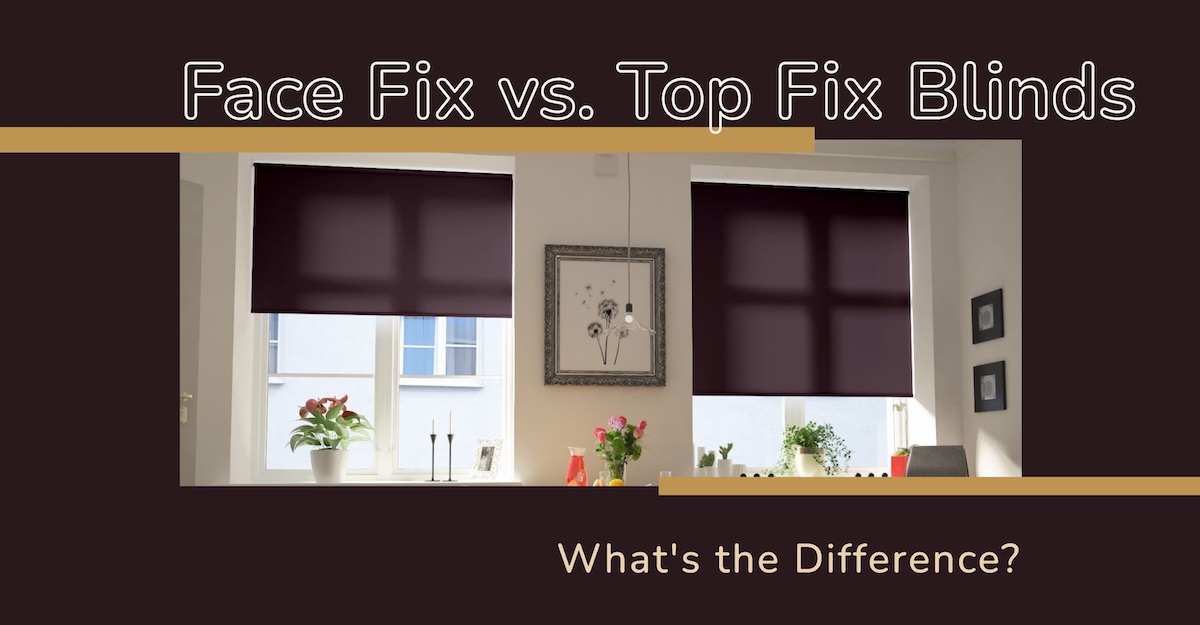
Choosing new blinds can be exciting… until you hit a wall: “Face fix or top fix?” What does that even mean?! If you’ve found yourself staring blankly at these terms while shopping for blinds, you’re not alone.
This is one of the most common points of confusion for homeowners and renters alike – and it’s an important one. The way your blinds are fitted doesn’t just affect how they’re installed – it impacts how they look, how they perform, and how well they block light or protect your privacy.
In this guide, we’ll break down exactly what face fix and top fix mean, explore the pros and cons of each, and walk you through real-life scenarios to help you choose the best option for your space – all in simple, jargon-free language.
Understanding the Basics: What Are Face Fix and Top Fix Blinds?
Before diving into the pros and cons of each fitting method, let’s start by breaking down exactly what we mean by face fix and top fix. These terms refer to where and how the brackets for your blinds are mounted – and this ultimately affects the finished appearance and functionality of your blinds.
Face Fix Blinds (Also Known as Wall Fix or Recess Face Fix)
What is Face Fix?
Face fix blinds are installed by mounting the brackets directly onto the face of the wall, the window frame, or the architrave above the window opening. This method positions the blind so that it sits in front of the window recess, rather than inside it.
How Do They Look?
With a face fix installation, the blind hangs outside of the window recess, covering the full window area and often overlapping the edges slightly. This design can help block more light around the sides and top of the window, which is especially useful for blackout blinds or rooms that need maximum light control.
Imagine standing in front of your window and attaching a blind to the flat wall space above it – that’s face fix in action. The blind becomes a prominent feature on the wall, creating a bold and clean look.
Helpful Analogy:
Think of face fixing like hanging a picture frame directly onto a wall. It’s visible, secure, and sits proudly on display rather than being tucked away.
When Is Face Fix the Right Choice?
Face fix blinds are often the go-to choice when:
- The window recess is too shallow to accommodate the blind mechanism
- There are obstructions inside the recess, such as window handles or vent latches
- You want to make the window appear larger by covering the edges and extending beyond the opening
- You’re installing Cassette blinds, Roller blinds or Day & Night blinds, which often need a bit more depth than a recess can provide
- You need a solution that allows for easy access to the window or sill
It’s a popular choice for modern homes, tenanted properties, or any scenario where flexibility and ease of installation are important.
Top Fix Blinds (Also Known as Recess Top Fix or Ceiling Fix)
What is Top Fix?
Top fix blinds are installed by attaching the brackets to the top surface of the window recess, or even to the ceiling in some cases. This means the blind is fitted inside the window opening, sitting flush within the recess itself.
How Do They Look?
With a top fix installation, the blind is neatly contained within the recess, giving a sleek, tidy appearance. The blind fits snugly from side to side and top to bottom, often aligning perfectly with the window frame. This creates a minimalist, integrated look that many homeowners find desirable – especially for living rooms, bedrooms, or home offices where design cohesion is key.
It’s a great way to keep your blinds discreet and out of the way, especially when paired with Roman blinds, roller blinds, or vertical blinds.
Helpful Analogy:
Think of top fixing like fitting a box neatly inside another box. Everything is enclosed, seamless, and designed to fit perfectly within the space provided.
When Is Top Fix the Best Option?
Top fix is typically chosen when:
- You have a deep window recess that can easily house the blind mechanism
- You want a minimalist, built-in look
- You prefer the blind to sit closer to the glass, which can help with heat retention or light filtering
- You’re using the window sill for plants, ornaments, or décor, and don’t want the blind to interfere
- You’re going for a sleek, architectural finish that blends with the interior design
Top fix blinds are often seen in period homes with deep sills, renovated properties, and new builds where design detail is key.
Key Differences at a Glance
Not sure whether to go for face fix or top fix blinds? This handy table breaks down the essential differences between the two fitting methods to help you decide at a glance.
| Feature | Face Fix (Wall Fix) | Top Fix (Recess Top Fix / Ceiling Fix) |
|---|---|---|
| Mounting Location | Wall above or outside the window recess, or onto the architrave | Top surface of the window recess or directly to the ceiling |
| Aesthetics | Creates a grander, fuller look; can make windows appear larger; covers more wall space | Neat, streamlined, and minimalist; fits cleanly within the window opening |
| Light Blockage | Excellent – overlaps the window opening significantly, reducing light bleed | Good – some light may seep around the sides due to the internal fit |
| Privacy | Excellent – especially when fitted wider than the window opening | Good – but potential side gaps could affect privacy levels |
| Space Usage | Ideal for hiding shallow recesses or unsightly window frames; requires wall space above | Preserves window sill space; ideal for deep recesses; leaves frame exposed |
| Measuring | Measured outside the recess – width and height extend beyond the window | Measured inside the recess – width and height match the internal dimensions |
| Obstructions | Great for handling recess obstructions like handles, vents, or uneven plasterwork | Requires a clean, unobstructed recess for optimal fitting |
| Doorways / Bi-folds | Often preferred for doors or bi-folds where internal mounting isn’t possible | Less commonly used on doors unless the recess is deep and clear |
| Curtains | Can be paired with curtains fitted inside the recess | Can be paired with curtains fitted outside the recess |
| Installation Difficulty | Generally straightforward; alignment doesn’t need to be millimetre-perfect | Can be more technical; requires accurate measuring and level fitting within the recess |
Pros and Cons of Each Mounting Method
Now that you understand the basics of face fix and top fix blinds, let’s dive deeper into the advantages and disadvantages of each. Every home is different, and the right choice will depend on your specific windows, interior layout, and personal style preferences.
A. Face Fix (Wall Fix) – Pros and Cons
Face fixing offers fantastic flexibility and visual impact, making it a popular option for many window types – especially when internal recess fitting isn’t ideal.
Pros of Face Fix Blinds
✔ Excellent Light Control
Because face fix blinds are typically fitted to overlap the window opening, they do a superb job of blocking out light from the top and sides. This is especially useful for blackout blinds in bedrooms, nurseries, or media rooms.
✔ Maximises Privacy
With their wide coverage, face fix blinds provide enhanced privacy – even in the evening when lights are on inside. Overlapping the edges of the window helps reduce visibility from outside.
✔ Makes Windows Appear Larger
Face fix installations can create the illusion of bigger, grander windows, especially when the blind extends beyond the window edges. It’s a great visual trick for small or narrow windows.
✔ Hides Imperfections
If your window frames are unattractive, your recess is uneven, or there’s an old architrave you’d rather not see – a face fix blind will hide all of that effortlessly.
✔ Accommodates Obstructions
Got tricky handles, air vents, or protruding latches inside your window recess? Face fix avoids the problem entirely by sitting in front of everything.
✔ Easier to Measure and Install (Often)
Because the blind is mounted externally, precise measuring is less critical. You’ve got a bit of wiggle room with width and height, which can make installation quicker and less stressful.
✔ Versatile for Doors
For French doors, patio doors or bi-folds, face fixing is often the most practical – and sometimes the only – solution, especially when recesses are non-existent or too narrow.
Cons of Face Fix Blinds
✘ Takes Up Wall Space
You’ll need clear space above and around the window to install face fix blinds. This can be an issue in rooms with tight wall space or low ceilings.
✘ Can Obscure Decorative Architrave
If you’ve got beautiful timber trims or a heritage window frame you want to show off, a face fix blind may cover up those features.
✘ Might Look Bulky in Small Rooms
In compact spaces, external blinds can feel heavy or overpowering, especially with larger blinds like Roman or cassette blinds.
✘ Impact on Furniture Placement
Face fix blinds drop down in front of the wall and window, so furniture placed close to the wall (like headboards or sideboards) may get in the way or need adjusting.
B. Top Fix (Recess Top Fix / Ceiling Fix) – Pros and Cons
Top fixing is ideal for a sleek, built-in look and works brilliantly in spaces where a minimalist, tidy finish is the goal.
Pros of Top Fix Blinds
✔ Clean, Streamlined Look
Top fix blinds are installed within the window recess, offering a sleek, minimal appearance that blends into the window’s architecture. Perfect for contemporary interiors.
✔ Preserves Sill Space
Because the blind sits within the recess, your window sill remains fully usable – ideal for displaying plants, candles, or small décor items, or just leaving clear for airflow.
✔ Highlights Window Features
Rather than covering up your window frame, top fix blinds showcase it. If you’ve invested in decorative architrave or beautiful timber framing, this method keeps it in view.
✔ Space-Saving (Visually)
In small rooms, top fix blinds help keep things feeling open and uncluttered. The blind tucks neatly inside the recess without encroaching on wall or floor space.
✔ Seamless Integration with Curtains
You can install curtains outside the recess and keep the blind inside, achieving a layered look without overcrowding the space.
✔ Ceiling Fix Option
Some blinds, like vertical or electric roller blinds, can be mounted directly to the ceiling for a dramatic floor-to-ceiling look. This is especially striking in modern homes with tall windows or bifold doors.
Cons of Top Fix Blinds
✘ Potential for Light Leakage
Because the blind fits within the recess, there’s a higher chance of light bleeding through the sides, especially with light-filtering or blackout fabrics.
✘ Potential for Privacy Gaps
The same side gaps that allow light in can also allow outside visibility, which might be a concern at night in bedrooms or street-facing rooms.
✘ Requires Clear Recess
If there are handles, window locks, trickle vents or uneven plaster inside the recess, they can obstruct the blind’s operation or installation.
✘ More Precise Measuring Required
Top fix blinds demand accurate measurements. A small miscalculation can lead to blinds that are too wide and get stuck, or too narrow and leave unsightly gaps.
✘ Can Make Windows Look Smaller
By installing the blind within the actual window opening, you’re effectively framing the true window size, which can visually shrink the space compared to face fixing.
How to Choose: Practical Scenarios and Considerations
With both face fix and top fix offering unique benefits, the best choice for your home will depend on your specific setup and priorities. In this section, we’ll walk you through a series of practical questions and real-life scenarios to help you determine the ideal fitting method for your blinds.
A. Ask the Right Questions
Before deciding how to mount your blinds, ask yourself the following key questions. Think of this as a mental decision flowchart that narrows down the best option for your space:
- Do you have a deep window recess, or is it shallow?
A deep recess is usually ideal for top fix; shallow may require face fix. - Are there any obstructions inside the window recess (handles, vents, alarm sensors)?
If yes, face fix will help you avoid operational issues. - What kind of aesthetic are you going for – neat and minimalist, or grand and bold?
Top fix creates a clean, discreet look; face fix delivers visual impact. - How important is maximum light blockage and privacy?
Face fix generally offers better coverage, especially for blackout blinds. - Do you want to use your window sill space?
Top fix lets you keep the sill free for plants, décor or access. - Are you hanging other window treatments (like curtains)?
Consider how the blind and curtain will work together. - Is this for a door or a window?
Doors often benefit from face fix blinds, which don’t get in the way of opening mechanisms. - Taking a moment to consider these questions will steer you in the right direction – especially when you’re ordering made-to-measure blinds where precise decisions matter.
B. Specific Scenarios & Recommendations
Let’s look at some everyday scenarios and recommend the best mounting method for each, along with the reasoning behind the choice.
Scenario 1: Small Room with a Clean, Modern Look Desired
✔ Recommended: Top Fix
In compact spaces, keeping visual clutter to a minimum is essential. A top fix blind tucks neatly into the recess, maintaining clean lines and making the room feel more spacious. It avoids encroaching on valuable wall or floor space and delivers a contemporary, built-in aesthetic.
Scenario 2: Shallow Recess or Internal Obstructions
✔ Recommended: Face Fix
If your window recess is too shallow to house the blind’s mechanism or contains protruding handles, trickle vents, or alarm sensors, face fixing is a practical solution. Mounting the blind to the wall above or around the window keeps everything clear and operational, without forcing a poor fit.
Scenario 3: Maximum Blackout or Privacy Needed
✔ Recommended: Face Fix
For bedrooms, nurseries, or home cinemas where light control is paramount, face fix is your best friend. By extending the blind beyond the window frame, you can block light more effectively, reducing side bleed and enhancing privacy – especially at night when interior lights are on.
Scenario 4: Beautiful Architrave or Window Frame to Show Off
✔ Recommended: Top Fix
If your windows feature decorative woodwork, trims, or ornate architraves, a top fix blind lets you enjoy the craftsmanship in full view. Since the blind sits within the recess, it won’t hide or detract from your window’s architectural details.
Scenario 5: Patio Doors or Bi-Fold Doors
✔ Recommended: Face Fix (Almost Always)
Doors – especially sliding or folding ones – rarely have recesses deep enough for a top fix. In these cases, a face fix blind mounted above the door won’t interfere with operation and can easily cover the full opening for privacy and shading. Face fix also allows the blind to be pulled up fully, giving you unobstructed access.
Scenario 6: Layering Blinds and Curtains
✔ Recommended: Both Can Work – It’s About Placement Strategy
Combining blinds and curtains can create a rich, layered window treatment – but it’s all about how you mount each element:
- Top fix blind + face fix curtain pole: The blind fits neatly within the recess while the curtain pole extends outside, creating visual depth and design interest.
- Face fix blind + recess-fitted curtain rod: If you prefer a bold blind out front and a subtle sheer or voile inside, this combo works beautifully too.
Ultimately, just ensure the two fittings don’t interfere with each other in terms of space and operation. A little planning goes a long way.
Measuring Tips for Each
One of the most important steps in getting the perfect blinds is measuring correctly. Whether you’re opting for face fix or top fix, accurate measurements will ensure a snug fit, smooth operation, and the best overall look. Let’s walk through some universal tips before diving into the specific approaches for each method.
A. General Measuring Advice
No matter which mounting style you choose, a few basic rules apply to ensure your measurements are reliable:
- Always use a metal tape measure.
Cloth or plastic tape measures can stretch or sag, leading to inaccuracies. - Measure in at least three places – at the top, middle, and bottom for both width and height.
Windows – especially in older homes – are rarely perfectly square. By checking all three points, you can spot any variations. - For recess fittings, use the smallest measurement.
This ensures your blind will fit even if the recess narrows slightly in one area. - For outside recess (face fix) fittings, use the largest measurement, or extend your width and height intentionally to get better coverage.
- Double-check everything!
It only takes a minute, but confirming your measurements could save you the hassle of returning or adjusting your blinds. - Account for quirks in older properties.
Period homes often have uneven plasterwork or out-of-square windows, so be extra vigilant and realistic about what your blinds need to accommodate.
B. How to Measure for Face Fix Blinds (Wall Fix / Outside Recess)
If you’re mounting your blind outside the window recess, accuracy is still important – but you’ve got a bit more flexibility with how big you want the blind to be.
Width
- Measure the full width you want the blind to cover.
- For best results, add 5–10cm (2–4 inches) on each side of the window recess. This helps to block out more light and provide better privacy.
- For very wide windows or blackout blinds, you might even go beyond this for more overlap.
Height
- Measure from the top point where the blind will be mounted (usually 5–10cm above the window recess) down to your desired drop.
- This might be the window sill, the floor, or somewhere in between depending on the window’s layout and purpose.
Key Reminder:
When ordering a face fix blind, you’re providing the exact blind size you want – width and drop. The manufacturer will not make deductions, so what you measure is what you’ll get.
C. How to Measure for Top Fix Blinds (Recess Fit / Inside Recess)
Top fix blinds require precise measuring, as they are designed to sit snugly within the window recess. Every millimetre counts!
Width
- Measure the internal width of the window recess at the top, middle, and bottom.
- Use the smallest measurement to ensure the blind doesn’t get stuck.
- Blind manufacturers typically make a small deduction (around 10mm) to allow the blind to operate freely within the space.
Height
- Measure the internal height of the window recess at the left, centre, and right.
- Again, use the smallest measurement to guarantee a proper fit.
Key Reminder:
When ordering a top fix (recess fit) blind, you’re supplying the recess size, not the finished blind size. The manufacturer will make all the necessary adjustments, so don’t deduct anything yourself.
Installation Considerations (Briefly, as This Isn’t an Installation Guide…)
While this article isn’t a full installation guide, it’s still worth covering a few key things to keep in mind before you begin fitting your blinds. Whether you’re going for a face fix or a top fix fitting, being prepared makes all the difference.
🧰 Common Tools You’ll Need
- Drill – for creating secure bracket holes in the wall or recess
- Spirit level – to ensure your brackets are perfectly straight
- Pencil – for marking bracket positions
- Tape measure – for double-checking measurements before you drill
- Screws and wall plugs – usually included, but check your wall type for compatibility
🛠️ Installation Difficulty
Both face fix and top fix blinds are generally DIY-friendly, especially with DotcomBlinds’ easy-to-follow instructions.
However, if you have:
- Uneven or crumbly walls
- High-up or hard-to-reach windows
- Unusual window shapes or sizes
…then it might be worth considering professional installation for a flawless finish.
⚠️ Safety First
No matter which fitting method you choose, child safety is critical. Always install and use the included safety mechanisms, such as cleats or tensioning devices for cords and chains.
Alternatively, opt for cordless or motorised blinds, which are a brilliant solution for homes with young children or pets.
Which Should You Choose?
To recap, face fix blinds are mounted to the wall or architrave and offer broader coverage, better light control, and are ideal for shallow recesses or obstructions. Top fix blinds, on the other hand, sit neatly within the window recess for a clean, minimalist look – perfect for showcasing your window features and saving space.
Now armed with this knowledge, you can confidently choose the mounting style that works best for your home, lifestyle, and window type. Whether you prioritise aesthetics, light control, ease of installation, or practical function, the right choice will make all the difference.
Take a moment to assess your space and think about what matters most to you. And don’t forget – DotcomBlinds offers free samples, so you can see and feel the quality before you commit.
The perfect fit starts with the right fix – and now, you’re ready to make it.