Order Tracking
 0800 1422417
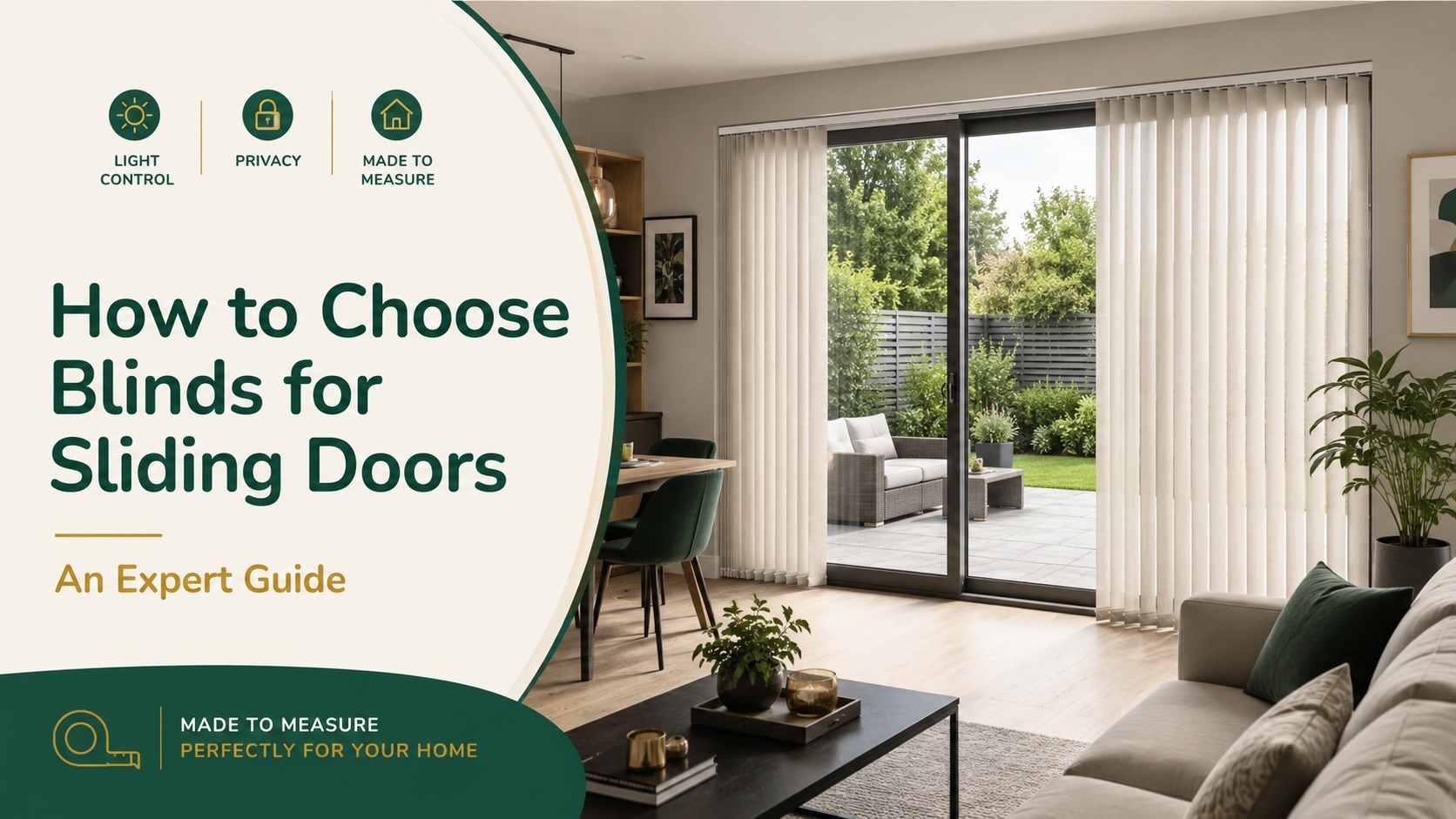
Sliding doors are one of the best ways to bring light, garden views and a more open feeling into a home. They are common in kitchen-diners, living rooms, conservatories, garden rooms, bedrooms and modern extensions. But when it comes to choosing blinds, sliding doors need more thought than an ordinary window.
The reason is simple: sliding doors move. They are not just a large area of glass; they are also an access point. A blind that looks good when it is closed may become frustrating if it gets in the way every time you step into the garden, open the door for ventilation or use the space on a busy day. The best choice is not always the blind that looks most attractive in isolation, but the one that works with the way the door opens, how often it is used and what the room needs from the glass.
That means thinking about more than colour and fabric. You need to consider whether the door slides left, right or across multiple panels, whether the blind needs to stack away from the main access side, whether privacy is needed during the day, whether strong sunlight causes glare or heat, and whether the room needs dimout, blackout or thermal performance. These practical details make a real difference to how well the blind works once it is fitted.
For some sliding doors, vertical blinds remain one of the most practical choices because their side-to-side movement naturally suits wide glazing and regular access. For other rooms, roller blinds, day and night blinds, electric blinds, thermal blinds, blackout blinds, no drill options or curtains may be a better fit. The right answer depends on the room, the door layout and the way the space is used every day.
In this guide, we will look at how to choose blinds for sliding doors from an expert, practical perspective. Rather than simply listing blind types, we will focus on the decisions that matter most: access, privacy, light control, heat, styling, door movement and everyday usability. That way, you can choose a made-to-measure solution that feels considered, looks right and works properly in the real home environment.
DotcomBlinds offers a wide range of made-to-measure blinds and curtains for different rooms, door types and interior styles. With an easy-to-use ordering experience, experienced staff and a 4.6/5 Independent Service Rating on Feefo from over 1,500 verified reviews, it is a trusted place to find sliding door blinds that balance practicality, quality and design.
How to Choose Blinds for Sliding Doors
The best blinds for sliding doors should be chosen around how the door is used, not just how the blind looks. Sliding doors are large areas of glass, but they are also access points, so the right solution needs to balance movement, privacy, light control, glare, comfort and room style.
Vertical blinds are often one of the most practical choices because their side-to-side movement suits sliding doors and wide glass areas. Roller blinds are best for a clean, minimal finish, especially where multiple blinds can be fitted across separate door panels. Day and night blinds are useful for flexible privacy, while electric blinds can make wide or hard-to-reach sliding doors easier to manage.
Fabric choice matters as much as blind type. Dimout fabrics help soften brightness and reduce glare, blackout fabrics are useful for bedrooms and media rooms, and thermal fabrics can add a practical layer around large glazed doors where heat, cold or comfort are concerns. Curtains can also work well where the room needs softness, warmth and a more decorative finish.
Quick Recommendation
- Choose vertical blinds for everyday sliding door access and wide glass coverage.
- Choose roller blinds for a neat, modern and minimal look.
- Choose day and night blinds for privacy without fully losing daylight.
- Choose electric blinds for wide, hard-to-reach or frequently adjusted doors.
- Choose blackout blinds for bedrooms, guest rooms and media rooms.
- Choose thermal blinds where large sliding doors affect heat, glare or comfort.
- Choose curtains where softness, warmth and decorative finish matter most.
Contents
- Start With the Sliding Door Problem, Not the Blind Type
- The Sliding Door Blind Decision Framework
- Vertical Blinds for Sliding Doors
- Roller Blinds for Sliding Doors
- Day and Night Blinds for Sliding Doors
- Perfect Fit Blinds for Sliding Doors
- No Drill Blinds for Sliding Doors
- Electric Blinds for Sliding Doors
- Thermal Blinds for Sliding Doors
- Blackout Blinds for Sliding Doors
- Curtains for Sliding Doors
- Blinds for Sliding Patio Doors by Room Type
- Comparison Table: Best Blinds for Sliding Doors
- Common Mistakes When Choosing Blinds for Sliding Doors
- The Best Blind for Sliding Doors
- Final Thoughts
- FAQs About Blinds for Sliding Doors
Start With the Sliding Door Problem, Not the Blind Type
The most common mistake when choosing blinds for sliding doors is starting with the product category too early. It is natural to ask, “Should I choose roller blinds, vertical blinds or curtains?” but the better first question is, “What does this sliding door need to do every day?”
A sliding door is part window, part wall of glass and part access route. It may bring in useful natural light, frame a garden view, create a connection to a patio or provide access to a balcony. At the same time, it can also create issues with glare, heat, privacy, cold spots, screen visibility and awkward door access. The best blind is the one that solves the most important problem without creating a new one.
How Often Do You Use the Door?
A sliding door used several times a day needs a different solution from one that is opened only occasionally. If the door is the main route to the garden, the blind should be easy to move away from the access point. It should not need constant adjusting, lifting or pulling every time someone walks through.
This is why vertical blinds, electric blinds and carefully planned multiple roller blinds can work well on frequently used sliding doors. They give more control over access and light than a single large blind that simply drops across the entire opening.
If the door is used mainly for light and view, with occasional access, you may have more flexibility. In that case, styling, fabric choice and light control may become more important than constant day-to-day movement.
Which Way Does the Door Slide?
The direction of the sliding door matters. A blind should work with the door’s movement, not against it. If the main opening side is on the right, for example, it may be useful to choose a blind solution that can stack, draw or lift away from that side easily.
For wide sliding doors with several panels, it may also be worth thinking about whether one blind should cover the full width or whether separate blinds across different panels would give better control. Multiple blinds can allow one section to stay covered for privacy while another section remains open for access or light.
What Is the Main Problem You Are Trying to Solve?
Sliding doors can create different issues depending on the room, orientation and surrounding property layout. Before choosing the blind type, it helps to identify the main priority.
Common priorities include:
- Privacy from neighbours, pavements or overlooking gardens
- Glare from low sun or bright daylight
- Heat build-up around large glass areas
- A colder feel near the glazing in winter
- Stronger darkness for bedrooms or media rooms
- A neater finish for modern open-plan spaces
- Easy everyday access to the garden, patio or balcony
Once the main problem is clear, the choice becomes more logical. Day and night blinds, for example, can be useful where daytime privacy is the priority. Thermal fabrics may be better where comfort around the glass is the concern. Blackout fabrics make more sense where the room needs stronger light control.
Is There Enough Space for the Blind to Move?
Sliding doors often need more clearance than customers expect. Vertical blinds need space to stack to one or both sides. Curtains need wall space if they are going to draw clear of the glass. Roller blinds need enough room above the door if they are fitted outside the recess, and handle clearance can affect how close some blinds can sit to the glass.
This is especially important in rooms where furniture sits close to the door, such as dining tables, sofas, kitchen islands or desks. A blind may be technically suitable, but still awkward if it clashes with the way the room is used.
Think About the Door as Part of the Room
The right sliding door blind should suit the door and the room. A busy kitchen-diner may need something practical, easy to operate and good for glare. A bedroom may need softness, privacy and blackout performance. A conservatory or garden room may need heat and light management. A living room may need a balance of privacy, view control and a more decorative finish.
This is why there is no single “best blind for sliding doors” that works for every home. The best choice is the one that supports the door’s movement, solves the room’s main issue and fits naturally with how the space is used.
The Sliding Door Blind Decision Framework
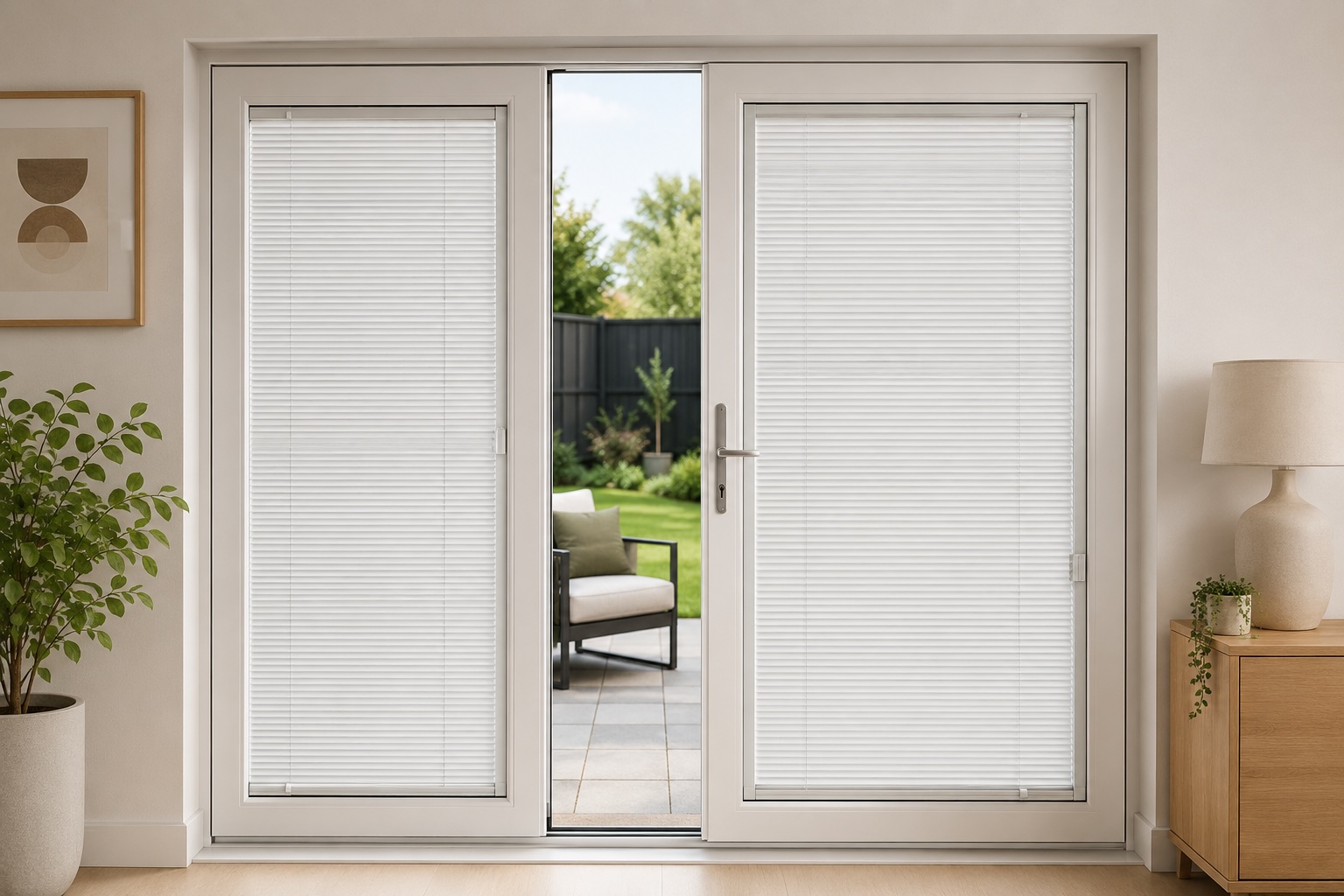
Choosing blinds for sliding doors becomes much easier when you match the blind to the job it needs to do. Sliding doors create different priorities in different homes. In one room, the main issue may be privacy from neighbouring properties. In another, it may be glare across a television screen, heat from a south-facing garden, or the need to keep the doorway clear during the day.
Rather than looking for one universal answer, it is better to narrow the choice by function.
Best for Everyday Access
If the sliding door is used several times a day, access should be the first priority. The blind needs to move easily, stack neatly and avoid blocking the part of the door people use most often.
Strong options include:
- Vertical blinds
- Electric blinds
- Multiple roller blinds across separate door panels
- Curtains, where there is enough wall space for the fabric to stack away from the opening
Vertical blinds are often especially practical here because their side-to-side operation suits the movement of a sliding door. They can be drawn away from the access side, allowing the door to remain usable without lifting a full blind every time someone goes outside.
Best for a Clean, Modern Look
For modern kitchen-diners, extensions and open-plan living spaces, many customers want a blind that looks neat when open and simple when closed. In these rooms, the blind should complement the glazing rather than make the door feel heavy.
Good options include:
- Roller blinds
- Electric roller blinds
- Day and night blinds
- Perfect Fit blinds, where compatible
- No drill blinds, where suitable for the frame or recess
Roller blinds are particularly useful where the aim is a minimal finish. They sit neatly above the glass when raised and give a clean, flat surface when lowered. For wide sliding doors, separate blinds across different sections can often feel more practical than one very large blind.
Best for Privacy Without Losing All Daylight
Sliding doors often face gardens, neighbouring homes, footpaths or shared outdoor spaces. In these situations, privacy is important, but customers may not want to make the room feel dark during the day.
Strong choices include:
- Day and night blinds
- Vertical blinds
- Light filtering roller blinds
- Voile or sheer-style curtains, where a softer finish is preferred
Day and night blinds are useful because they allow more control over visibility. The alternating fabric bands can be adjusted to soften the view into the room while still allowing natural light to pass through. Vertical blinds also offer good privacy flexibility because the slats can be angled rather than fully closed.
Best for Glare and Bright Sunlight
Large sliding doors can create glare, especially in rooms with screens, glossy worktops, dining tables or south-facing glazing. The right blind can make the room more comfortable without necessarily making it dark.
Useful options include:
- Dimout roller blinds
- Vertical blinds
- Day and night blinds
- Thermal blinds
- Electric blinds for easier adjustment throughout the day
For rooms that receive strong sun at certain times, ease of operation matters. If a blind is difficult to adjust, it may not be used properly. Electric blinds can be particularly helpful on large sliding doors because they make it easy to manage light throughout the day.
Best for Bedrooms and Rooms That Need Darkness
If the sliding door is in a bedroom, guest room or media room, stronger light control may be the main concern. In these cases, fabric choice becomes especially important.
Good options include:
- Blackout roller blinds
- Thermal blackout blinds
- Blackout curtains
- Electric blackout blinds
- Layered combinations, such as blinds with curtains
It is important to be clear that blackout fabric stops light from passing through the material itself. Some light may still enter around the sides, top or bottom depending on how the blind is fitted. For customers who want the darkest possible result, the fitting method and any surrounding gaps should be considered as well as the fabric.
Best for Managing Heat and Comfort
Sliding doors bring in a lot of natural light, but large glass areas can also affect room comfort. South-facing doors may make a room feel hot in summer, while older or exposed glazing can feel colder during winter.
Suitable options include:
- Thermal roller blinds
- Thermal blackout blinds
- Vertical blinds with appropriate fabric
- Curtains for an additional fabric layer
- Electric blinds for rooms where regular adjustment is useful
Thermal blinds can help add a practical layer between the room and the glass. They should not be treated as a replacement for efficient glazing, but they can support a more comfortable environment around large glazed doors.
Best for Family Homes and Child Safety
Sliding doors are often in busy family spaces, so operation and safety should be part of the decision. Cords and chains may not be ideal in rooms used by children or pets, especially if the blinds are frequently adjusted.
Good options include:
- Electric blinds
- Wand-controlled vertical blinds
- Cordless systems where available
- No drill or Perfect Fit options where compatible
Electric blinds can be particularly useful because they reduce the need for hanging controls and make operation simpler on larger areas of glass. For family rooms, the best solution is usually one that is easy to use, tidy and practical enough to be adjusted every day.
A Simple Way to Narrow the Choice
A useful starting point is to ask one direct question: what matters most for this sliding door?
If the answer is access, start with vertical blinds, electric blinds or multiple roller blinds.
If the answer is privacy, look at day and night blinds or vertical blinds.
If the answer is a clean finish, consider roller blinds, electric blinds or compatible no drill options.
If the answer is darkness, focus on blackout fabrics and fitting style.
If the answer is heat or glare, consider dimout, thermal or electric solutions.
This framework helps avoid choosing a blind based only on appearance. The best blinds for sliding doors are the ones that look right, operate smoothly and solve the room’s most important practical problem.
Vertical Blinds for Sliding Doors: Still One of the Most Practical Choices
Vertical blinds remain one of the most practical choices for sliding doors because their movement naturally suits the shape and function of the door. Sliding doors move sideways, and vertical blinds also draw sideways, which makes them easier to live with than some blind types on wide openings.
This is especially useful when the door is used regularly. Instead of lifting a full blind every time someone wants to step outside, vertical blinds can be drawn away from the main access side or adjusted to allow a balance of privacy, daylight and movement through the doorway.
Why Vertical Blinds Work Well on Sliding Doors
The main advantage of vertical blinds is flexibility. The slats can be tilted to manage light and privacy without fully opening or closing the blind. This is useful on garden-facing rooms, overlooked patios and ground-floor spaces where privacy may change throughout the day.
Vertical blinds are also well suited to wide expanses of glass. Sliding doors are often much wider than ordinary windows, so a blind that can cover a broad area while still being easy to operate has a clear practical benefit.
Key advantages include:
- Side-to-side operation that suits sliding door movement
- Good coverage for wide glass doors
- Adjustable slats for privacy and light control
- The ability to draw the blind away from the main access side
- Practical operation for patio doors, garden doors and conservatories
Where Vertical Blinds Work Best
Vertical blinds are particularly effective in rooms where the sliding door is used often. They are a strong choice for living rooms, kitchen-diners, garden rooms, conservatories and patio doors where people regularly move between indoors and outdoors.
They can also be useful where the room is overlooked, because the slats can be angled to reduce direct visibility into the room while still allowing some daylight through. This gives more control than a blind that is simply open or closed.
When Vertical Blinds May Not Be the Best Fit
Vertical blinds are practical, but they are not the right style for every room. Some homeowners prefer the cleaner look of roller blinds, the softer finish of curtains or the integrated appearance of Perfect Fit blinds where compatible.
The slats can also move slightly in draughts, especially near frequently opened doors. In more design-led rooms, some people may feel that vertical blinds look more functional than decorative, although fabric choice, colour and finish can make a significant difference.
Expert Verdict
For many sliding doors, vertical blinds are still one of the most sensible starting points. They are not always the most decorative option, but they solve several common sliding door problems well: wide coverage, everyday access, privacy control and flexible light management.
If the door is used frequently and practicality is the main priority, vertical blinds should be high on the shortlist.
Roller Blinds for Sliding Doors: Best for a Clean, Minimal Look
Roller blinds can work very well for sliding doors when the aim is a clean, simple and modern finish. They are especially popular in kitchen-diners, open-plan living spaces and contemporary extensions where the doors are part of a wider glazed wall and the window dressing needs to look neat rather than heavy.
The main appeal of a roller blind is its simplicity. When raised, it rolls away neatly above the glass. When lowered, it creates a flat, tidy surface that can help manage privacy, glare and light. This makes roller blinds a strong choice for homeowners who want sliding door blinds that feel practical without adding too much visual weight to the room.
Why Roller Blinds Work Well on Sliding Doors
Roller blinds are particularly useful where the sliding doors are not being used constantly throughout the day, or where the blinds can be split across the glazed panels. On a wide sliding door, using more than one roller blind can sometimes be more practical than using one very large blind across the full opening.
For example, separate blinds can allow one section of the door to remain shaded while another section stays open for access or daylight. This gives more control and avoids the all-or-nothing effect that can happen with one large blind.
Key advantages include:
- A clean, minimal appearance
- A wide choice of fabrics, colours and patterns
- Dimout, blackout and thermal fabric options
- Good suitability for modern interiors
- The option to use multiple blinds across wider doors
- A neat finish when raised above the glass
Where Roller Blinds Work Best
Roller blinds are a strong fit for sliding doors in kitchens, dining areas, living rooms, bedrooms and garden-facing rooms where a simple finish is preferred. They can look especially effective in modern homes with slim frames, neutral walls and clean architectural lines.
They are also useful when the blind needs to support a specific room function. A dimout roller blind can soften daylight in a bright kitchen-diner. A blackout roller blind can help improve privacy and shading in a bedroom. A thermal roller blind can add a practical layer around large areas of glass where comfort is a concern.
When Multiple Roller Blinds May Be Better Than One
For wider sliding doors, multiple roller blinds are often worth considering. This can make the blind setup more flexible and easier to live with, particularly where different parts of the door are used in different ways.
Multiple roller blinds can allow you to:
- Keep one door panel covered while another remains open
- Control glare on one side of the room without darkening the whole space
- Avoid lifting one very wide blind every time the door is used
- Create a more balanced look across large glazed sections
- Reduce the practical inconvenience of covering the full doorway at once
This is particularly useful in open-plan kitchen-diners, where one side of the glazing may receive direct sunlight while another side is used for regular garden access.
When Roller Blinds May Not Be the Best Fit
The main limitation of roller blinds on sliding doors is access. If a roller blind is fully lowered across the door, it may need to be raised before the door can be used comfortably. This can become irritating if the door is opened many times a day.
Very wide roller blinds also need careful specification. The wider the blind, the more important it becomes to choose the right fabric, fitting position and operation method. In some cases, an electric roller blind may make more sense because it makes a large blind easier to use.
It is also worth remembering that blackout roller blinds block light through the fabric itself, but some light may still appear around the edges depending on the fitting style. This matters most in bedrooms and media rooms.
Expert Verdict
Roller blinds are one of the best choices for sliding doors when the priority is a clean, modern look. They work particularly well where the doors are used occasionally rather than constantly, or where multiple blinds can be fitted across different panels for better control.
If you want sliding door blinds that look neat, offer strong fabric choice and can be tailored to privacy, glare, blackout or thermal needs, roller blinds are a very practical option. The key is to plan them around how the door is actually used, rather than treating the sliding door as one large static window.
Day and Night Blinds for Sliding Doors: Flexible Privacy Without Losing Light
Day and night blinds can be a useful choice for sliding doors where privacy is important, but the room still needs natural light. This is a common issue with large glazed doors, especially in ground-floor living rooms, kitchen-diners, townhouses, balcony rooms and homes that are overlooked by neighbours or nearby footpaths.
Unlike a standard roller blind, a day and night blind uses alternating sheer and opaque fabric bands. By adjusting the position of the bands, you can allow more light through, soften the view into the room or increase privacy when needed. This gives more flexibility than a blind that is simply open or closed.
Why Day and Night Blinds Work Well on Sliding Doors
The main benefit of day and night blinds is adjustable privacy. Sliding doors often create a large area of exposed glass, which can make a room feel too visible from outside. Closing a standard blind may solve the privacy issue, but it can also make the room feel darker than necessary during the day.
Day and night blinds offer a middle ground. The sheer sections can allow daylight to filter through, while the opaque sections help interrupt the view into the room. This makes them especially useful in spaces where you want to keep the room bright without leaving the glass fully exposed.
Key advantages include:
- Flexible control over privacy and daylight
- A more modern alternative to traditional net curtains
- Good suitability for overlooked rooms
- A neat roller-style appearance when raised
- Useful glare reduction in bright rooms
- A softer, more layered look than a plain roller blind
Where Day and Night Blinds Work Best
Day and night blinds work particularly well on sliding doors in living rooms, dining rooms, open-plan kitchens, garden rooms and balcony-facing spaces. They are a strong option where the room is used throughout the day and privacy needs change depending on the time, light level and outdoor activity.
For example, a kitchen-diner facing a neighbouring garden may need some privacy during breakfast or evening meals, but still need daylight during the day. A day and night blind allows more adjustment than simply lowering a full opaque blind.
They can also be useful in home offices, where screen glare and privacy may both matter. The fabric bands can help soften brightness while keeping the room feeling open and usable.
When Day and Night Blinds May Not Be the Best Fit
Day and night blinds are not always the best option where full darkness is the main goal. They can provide good privacy and light control, but they should not be treated in the same way as blackout blinds. If the sliding door is in a bedroom or media room, blackout roller blinds, blackout curtains or thermal blackout fabrics may be more suitable.
The horizontal banding is also part of the look, so it needs to suit the interior. In very traditional rooms, some customers may prefer the softness of curtains or the simplicity of a plain roller blind. In modern spaces, however, day and night blinds can look clean, structured and contemporary.
Expert Verdict
Day and night blinds are a strong choice for sliding doors where privacy and daylight need to be balanced carefully. They are especially useful for overlooked rooms, townhouses, balcony doors and open-plan spaces where the glass should not feel fully exposed during the day.
If the main concern is flexible privacy rather than complete darkness, day and night blinds are well worth considering. They give sliding doors a more controlled, modern finish while keeping the room bright and comfortable.
Perfect Fit Blinds for Sliding Doors: When They Are Compatible
Perfect Fit blinds can be a smart option for some sliding doors, but they need to be approached carefully. They are not automatically suitable for every sliding door system, so compatibility should always be checked before deciding that this is the right route.
Where they do work, the appeal is clear. Perfect Fit blinds sit neatly within a frame that clips into compatible glazed panels, creating a tidy, integrated finish without drilling into the wall or surrounding frame. This can be especially useful where the aim is to keep the sliding door area clean, modern and uncluttered.
Why Perfect Fit Blinds Can Work Well
The biggest advantage of Perfect Fit blinds is that they sit close to the glass. Instead of covering the entire door opening from above or outside the recess, they are designed to work with individual glazed panels where the frame and bead depth allow.
This can be particularly useful on sliding doors where a bulky blind, curtain or track would make the area feel too heavy. The blind feels more integrated with the door itself, which can suit modern interiors, uPVC frames and rooms where a minimal finish is preferred.
Key advantages include:
- A neat, built-in appearance
- No drilling into the surrounding wall or frame on compatible systems
- Blinds sit close to the glass
- Useful for individual glazed panels
- A tidy option where space around the door is limited
- Good for customers who want a cleaner, more fitted look
Why Compatibility Matters
Perfect Fit blinds depend on the structure of the door. Frame type, bead depth, glazing style, seals and handle position can all affect whether the system is suitable. This is especially important with sliding doors because the door panels need to move smoothly without the blind frame interfering with operation.
It is also worth checking whether the blind will sit comfortably around the handles, locks and any raised frame details. Even if a blind looks suitable in principle, small details around the door can make a difference.
For this reason, Perfect Fit blinds should be treated as a compatibility-led solution rather than a universal answer for sliding doors.
Where Perfect Fit Blinds Work Best
Perfect Fit blinds are best suited to compatible glazed panels where the customer wants a neat, framed finish. They can work well in modern homes, conservatories, garden rooms, kitchen-diners and rooms where drilling is not preferred.
They may be especially useful where the sliding door area needs to remain visually clean and where there is limited space above or beside the door for a larger blind system to stack or roll away.
When Perfect Fit Blinds May Not Be the Best Fit
Perfect Fit blinds are not suitable for every sliding door. Some sliding door systems have frame profiles, handles, seals or glazing details that make them unsuitable. They may also be less appropriate where the door is very large, where the panels move in a way that could interfere with the blind, or where a different blind type would offer better privacy or coverage across the full opening.
If the main priority is full-width coverage, flexible side-to-side movement or maximum light control, vertical blinds, roller blinds, day and night blinds or curtains may be more suitable depending on the room.
Expert Verdict
Perfect Fit blinds can be an excellent sliding door option where the frame and glazing are compatible. They offer a neat, integrated look and can help keep the door area uncluttered. However, they should not be chosen on appearance alone.
For sliding doors, the key question is not simply whether Perfect Fit blinds look good, but whether they will work properly with the door frame, handles and sliding movement. Where compatibility is confirmed, they can provide one of the cleanest and most modern finishes available.
No Drill Blinds for Sliding Doors: Useful for Renters and Modern Homes
No drill blinds can be a practical option for sliding doors where the customer wants to avoid drilling into walls, tiles, frames or surrounding surfaces. This can be especially useful in rented homes, newly decorated rooms, new-build properties or spaces where the door surround is difficult to fix into neatly.
The appeal is not only about installation. No drill blinds can also help keep the area around the sliding door looking clean and uncluttered. For many modern interiors, especially kitchen-diners and garden rooms, that matters. The door is often a large visual feature in the room, so a blind solution that avoids bulky fittings can support a more streamlined finish.
Why No Drill Blinds Can Work Well
No drill blinds are useful where a more permanent fixing is not preferred. This may be because the customer is renting, because they do not want to damage the surrounding surface, or because the door sits within a tiled, awkward or highly visible area.
They can also be helpful where the room has already been finished to a high standard and the customer wants a blind that feels less intrusive. In some cases, avoiding visible brackets and screw fixings can make the overall result look cleaner.
Key advantages include:
- No drilling into walls, tiles or frames where the system is suitable
- Useful for rented homes and temporary living situations
- Cleaner finish around modern sliding doors
- Less disruption during installation
- Good option where surrounding surfaces are difficult or undesirable to drill into
- Can suit customers who want a simpler fitting approach
Where No Drill Blinds Work Best
No drill blinds are often most appealing in modern homes, rental properties, kitchen-diners, garden rooms and conservatories where customers want a neat finish without making permanent changes. They can also be a good option where the sliding door sits close to tiles, fitted furniture or delicate surfaces.
They may suit doors that are used mainly for light, privacy and occasional access, provided the chosen system works with the door layout and does not interfere with movement.
Why Suitability Still Needs to Be Checked
No drill does not automatically mean suitable for every sliding door. The exact frame, recess, door movement, handle position and available fixing space will still matter. A system that works well on one sliding door may not be appropriate for another if the frame shape, depth or surrounding area is different.
This is particularly important on sliding doors because the panels must continue to open and close smoothly. The blind should not catch on handles, seals, tracks or neighbouring panels.
When No Drill Blinds May Not Be the Best Fit
No drill blinds may not be the best choice for very wide openings, unusual frame profiles or doors that need full-width coverage from one side to the other. In those cases, vertical blinds, roller blinds, day and night blinds, electric blinds or curtains may offer better practical coverage.
They may also be less suitable where the main requirement is strong blackout performance, depending on the fitting style and whether light gaps are likely around the edges.
Expert Verdict
No drill blinds can be a useful sliding door option when the customer wants a clean finish and wants to avoid permanent fixings. They are particularly relevant for renters, new-build homes and modern interiors where the door area needs to stay neat.
However, they should be chosen based on compatibility, not convenience alone. The best no drill solution is one that avoids drilling while still allowing the sliding door to move properly, the blind to operate smoothly and the room to get the right level of privacy and light control.
Electric Blinds for Sliding Doors: Best for Wide or Hard-to-Reach Glass
Electric blinds can be one of the most practical upgrades for sliding doors, especially where the doors are wide, used often or positioned behind furniture. With large areas of glass, a manually operated blind can become inconvenient if it needs adjusting several times a day. Electric operation makes that process easier, which often means the blinds are used more consistently.
This is particularly relevant for sliding doors because light conditions can change quickly. A kitchen-diner may need glare control in the morning, privacy in the evening and more open glass during the day. If the blinds are simple to adjust, it becomes much easier to manage the room properly.
Why Electric Blinds Work Well on Sliding Doors
The main advantage of electric blinds is convenience. Instead of manually operating a large blind or several blinds across a wide opening, the blinds can be adjusted at the touch of a button. This can be useful in rooms where the glazing is large, the doors are difficult to reach or furniture sits close to the glass.
Electric blinds can also support a cleaner finish because they reduce the need for visible cords or chains. This can be particularly appealing in modern open-plan rooms, family spaces and homes where a more streamlined look is preferred.
Key advantages include:
- Easier operation across large areas of glass
- Useful for wide sliding doors and open-plan rooms
- Good for hard-to-reach doors or doors behind furniture
- Cleaner appearance with fewer visible controls
- Convenient adjustment for glare, privacy and heat
- Suitable for a more premium, modern finish
Where Electric Blinds Work Best
Electric blinds are especially useful in large kitchen-diners, living rooms, garden rooms, conservatories and modern extensions where sliding doors form a major part of the room. They can also work well in bedrooms with sliding doors, particularly where blackout or thermal fabrics are being used.
They are a strong option where the doors receive strong sunlight at certain times of day. If adjusting the blind is effortless, it becomes much easier to reduce glare, protect the room from harsh brightness and improve comfort without leaving the blinds fully closed all day.
Why Electric Operation Is Not Just a Luxury
Electric blinds are often seen as a premium feature, but on sliding doors they can also be a practical usability improvement. Large blinds can be heavier or more awkward to operate manually, especially when fitted across wide glazing. If the blind is awkward to use, it may be left in one position rather than adjusted as needed.
Electric operation solves this problem by making the blind easier to control. This is particularly valuable where several blinds are fitted across separate door panels, as they can be adjusted more conveniently than operating each blind manually.
Fabric Choice Still Matters
Electric operation makes the blind easier to use, but the fabric still needs to match the room’s requirements. A dimout fabric may be suitable for glare control in a kitchen-diner or living room. A blackout fabric may be better for a bedroom or media room. A thermal fabric may be useful where the sliding doors contribute to heat gain, glare or a colder feel around the glass.
The best result comes from combining the right fabric with the right operation method. Electric controls improve convenience, while the fabric determines how the blind manages light, privacy and comfort.
When Electric Blinds May Not Be the Best Fit
Electric blinds may not be necessary for every sliding door. If the door is narrow, easy to reach and only used occasionally, a manual roller blind, vertical blind or day and night blind may be perfectly suitable.
Budget is also a consideration. Electric blinds typically cost more than manual options, so they make the most sense where they solve a clear practical issue, such as a wide opening, frequent adjustment, awkward access or a desire for a more premium finish.
Expert Verdict
Electric blinds are an excellent choice for sliding doors where convenience matters. They are particularly useful for large glazed areas, modern open-plan rooms, hard-to-reach windows and spaces where light, glare and privacy need regular adjustment.
For sliding doors, electric blinds should not be seen only as a design upgrade. In the right room, they can make the blinds easier to use every day, which is often the difference between a window covering that looks good and one that genuinely works well.
Thermal Blinds for Sliding Doors: Managing Heat, Cold and Glare
Thermal blinds can be a good choice for sliding doors because large areas of glass often affect how a room feels throughout the year. A bright set of sliding doors may make a kitchen-diner or garden room feel open and spacious, but the same glazing can also bring stronger sunlight, glare, heat build-up in summer and a colder feeling near the glass in winter.
This is where thermal blinds can be useful. They add an extra fabric layer between the room and the glass, helping to make the space feel more comfortable. They should not be seen as a replacement for well-insulated glazing or proper ventilation, but they can support everyday comfort in rooms where sliding doors play a major role.
Why Thermal Blinds Work Well on Sliding Doors
Sliding doors often cover a much larger glazed area than a standard window. This means the room can be more exposed to changes in temperature and sunlight. In summer, direct sun through the glass can make the room feel too warm or cause glare across worktops, screens and seating areas. In winter, the area close to the doors can feel cooler, particularly in older homes or exposed spaces.
Thermal blinds help by adding a practical layer at the window. Depending on the fabric and fitting, they can help reduce the intensity of sunlight, soften glare and improve the feeling of comfort around the glass.
Key advantages include:
- Useful for large glazed areas
- Helps create a more comfortable layer between the room and the glass
- Can reduce harsh brightness and glare
- Suitable for south-facing or exposed sliding doors
- Can be combined with blackout fabric where stronger shading is needed
- Particularly relevant for garden rooms, conservatories and open-plan spaces
Where Thermal Blinds Work Best
Thermal blinds are especially useful for sliding doors in rooms that experience noticeable temperature changes. This often includes conservatories, garden rooms, kitchen extensions, open-plan dining spaces and bedrooms with large glazed doors.
They can also be a good option for south-facing sliding doors where sunlight is strong for much of the day. In these rooms, the blind does not only provide privacy or shade; it helps make the space easier to use when the sun is intense.
Thermal Blackout Blinds for Bedrooms
Where sliding doors are used in a bedroom or guest room, thermal blackout blinds can be particularly useful. The blackout fabric helps block light passing through the material, while the thermal element adds another layer between the room and the glass.
This can be helpful for rooms that need a more restful feel, especially where early morning light, evening privacy or strong daylight is a concern. As with all blackout blinds, it is important to remember that the fabric itself blocks light, but the overall level of darkness will also depend on the fitting style and any gaps around the edges.
When Thermal Blinds May Not Be the Best Fit
Thermal blinds may not be necessary in every room. If the sliding doors are shaded, north-facing or already very comfortable throughout the year, a standard dimout, blackout or light filtering fabric may be enough.
They also need to be considered alongside access. A thermal blind that fully covers a frequently used sliding door may still need regular adjustment, so the operation method matters. For larger doors, electric thermal blinds may be worth considering because they make it easier to adjust the blinds as conditions change during the day.
Expert Verdict
Thermal blinds are a strong option for sliding doors where comfort is a priority. They are especially relevant for large glass areas, sunny rooms, conservatories, garden rooms and bedrooms where the door affects light, warmth or privacy.
The best approach is to choose thermal blinds because the room genuinely needs them, not simply because the doors are large. Where heat, glare or a cooler feeling around the glass is noticeable, thermal fabrics can make sliding doors easier to live with throughout the year.
Blackout Blinds for Sliding Doors: When Darkness Matters
Blackout blinds can be a good choice for sliding doors when the room needs stronger light control, privacy or a more restful atmosphere. This is most often relevant in bedrooms, guest rooms, media rooms and any space where bright daylight through large glazed doors can become disruptive.
The key point is to understand what blackout actually means. Blackout fabric is designed to stop light from passing through the material itself. However, the overall darkness in the room will also depend on how the blind is fitted and whether light can enter around the sides, top or bottom. This is especially important with sliding doors, where the opening is often wide and the surrounding frame may create more opportunity for light gaps.
Why Blackout Blinds Work Well on Sliding Doors
Sliding doors can introduce a lot of daylight into a room. In daytime living spaces, that can be a benefit. In bedrooms or media rooms, it can become a problem. A blackout blind helps reduce the amount of light entering through the fabric, making the room feel more private, shaded and controlled.
Blackout blinds are also useful where sliding doors face neighbouring properties, shared gardens, balconies or public areas. When lowered, they can provide a stronger privacy barrier than lighter fabrics.
Key advantages include:
- Stronger shading than light filtering or dimout fabrics
- Useful for bedrooms and guest rooms
- Helps improve privacy on overlooked sliding doors
- Good for media rooms where screen glare is an issue
- Available in practical made-to-measure roller blind formats
- Can be combined with thermal properties for added comfort
Where Blackout Blinds Work Best
Blackout blinds are particularly suitable for sliding doors in bedrooms, children’s rooms, guest rooms and media rooms. They can also work well in living rooms where strong sunlight causes glare across a television, although a dimout or day and night blind may be enough if complete darkness is not required.
For sliding doors in bedrooms, blackout roller blinds and thermal blackout blinds are often worth considering. They keep the finish neat while giving the room a more private and restful feel.
Blackout Fabric vs Total Darkness
This distinction is important. A blackout blind fabric blocks light from passing through the material, but it does not automatically guarantee complete darkness across the entire door area. Light may still appear around the edges, especially if the blind is fitted outside the recess, if there are gaps at the sides, or if the door frame shape prevents a close fit.
For customers who want the darkest possible result, the fitting method should be considered carefully. In some rooms, layering blackout blinds with curtains may provide a softer finish and help reduce visible light around the sides.
When Blackout Blinds May Not Be the Best Fit
Blackout blinds are not always necessary for every sliding door. In a kitchen, dining room or living space where daylight is welcome, a dimout, day and night or vertical blind may offer better everyday flexibility. A blackout blind can make the room feel too closed off if it is lowered frequently during the day.
Access also matters. If a blackout roller blind is fully lowered across a frequently used sliding door, it may need to be raised before the door can be used comfortably. For wide doors, multiple blackout blinds or electric operation may be more practical than one large manual blind.
Expert Verdict
Blackout blinds are a strong choice for sliding doors where darkness, privacy or glare control is the main priority. They are especially useful in bedrooms, guest rooms and media rooms, where large glazed doors can otherwise make the space too bright or exposed.
The best result comes from choosing the right blackout fabric, the right fitting style and the right operation method. For sliding doors, blackout performance should always be judged as a combination of fabric, fit and everyday usability.
Curtains for Sliding Doors: When a Softer Finish Works Better
Curtains can be a good choice for sliding doors when the room needs a softer, warmer or more decorative finish than blinds alone can provide. While blinds often give a neater and more compact look, curtains can help soften a large wall of glass and make the room feel more furnished.
This can be especially useful in living rooms, bedrooms, dining rooms and period homes where the sliding doors need to feel part of the wider interior scheme. Large glazed doors can sometimes look stark, particularly in the evening when the glass becomes dark and reflective. Curtains add fabric, texture and visual warmth, which can make the whole space feel more comfortable.
Why Curtains Work Well on Sliding Doors
The main advantage of curtains is softness. Sliding doors are often made up of large panes of glass, slim frames and hard architectural lines. Curtains can balance this by adding movement, fabric and a more layered look.
They can also work well where the doors are not being opened constantly throughout the day. When fitted on a suitable track or pole, curtains can be drawn fully away from the glass and stacked to one or both sides, leaving the door clear when access is needed.
Key advantages include:
- A softer and more decorative finish
- Useful for large glazed areas that feel stark or exposed
- Good for bedrooms, living rooms and period properties
- Can be layered with blinds for extra privacy or comfort
- Helps make sliding doors feel more integrated into the room
- Wide choice of fabrics, colours and patterns
Where Curtains Work Best
Curtains are particularly effective in rooms where atmosphere matters as much as day-to-day practicality. In a bedroom, they can help create a more restful, layered finish around large sliding doors. In a living room, they can add warmth and softness, especially in the evening. In a period or traditional property, curtains may also feel more in keeping with the overall style of the home.
They can also work well where the sliding doors open onto a patio, garden or balcony but are not used constantly. If the doors are mainly opened during warmer months or at specific times of day, curtains can be drawn away when needed and closed again for privacy or comfort.
Layering Curtains With Blinds
One of the strongest uses of curtains on sliding doors is as part of a layered solution. A blind can provide practical light and privacy control close to the glass, while curtains add softness, warmth and a more finished interior look.
For example, day and night blinds or roller blinds can manage privacy during the day, while curtains can be closed in the evening for a cosier feel. In bedrooms, blackout blinds can be paired with curtains to improve the sense of darkness and reduce the visual impact of light around the sides.
Layering can be especially useful where the sliding doors need to perform several jobs at once: privacy, light control, comfort and decoration.
When Curtains May Not Be the Best Fit
Curtains need enough space to stack. This is one of the most important considerations for sliding doors. If there is not enough wall space on either side of the doors, the curtains may cover part of the glass even when open, reducing light and making access less convenient.
Curtains can also be less practical where the sliding door is used many times a day, especially in busy family homes, kitchen-diners or high-traffic garden access areas. In those situations, vertical blinds, electric blinds or multiple roller blinds may be easier to operate.
The track or pole position also matters. It should allow the curtains to clear the door as much as possible when open, while still giving enough coverage when closed.
Expert Verdict
Curtains are a strong option for sliding doors when softness, warmth and decorative finish are priorities. They work particularly well in bedrooms, living rooms and rooms where the sliding doors form part of a more styled interior.
They are not always the most compact or practical solution for high-traffic doors, but where there is enough stack space and the room benefits from a softer finish, curtains can make large sliding doors feel more elegant, comfortable and complete.
Blinds for Sliding Patio Doors by Room Type
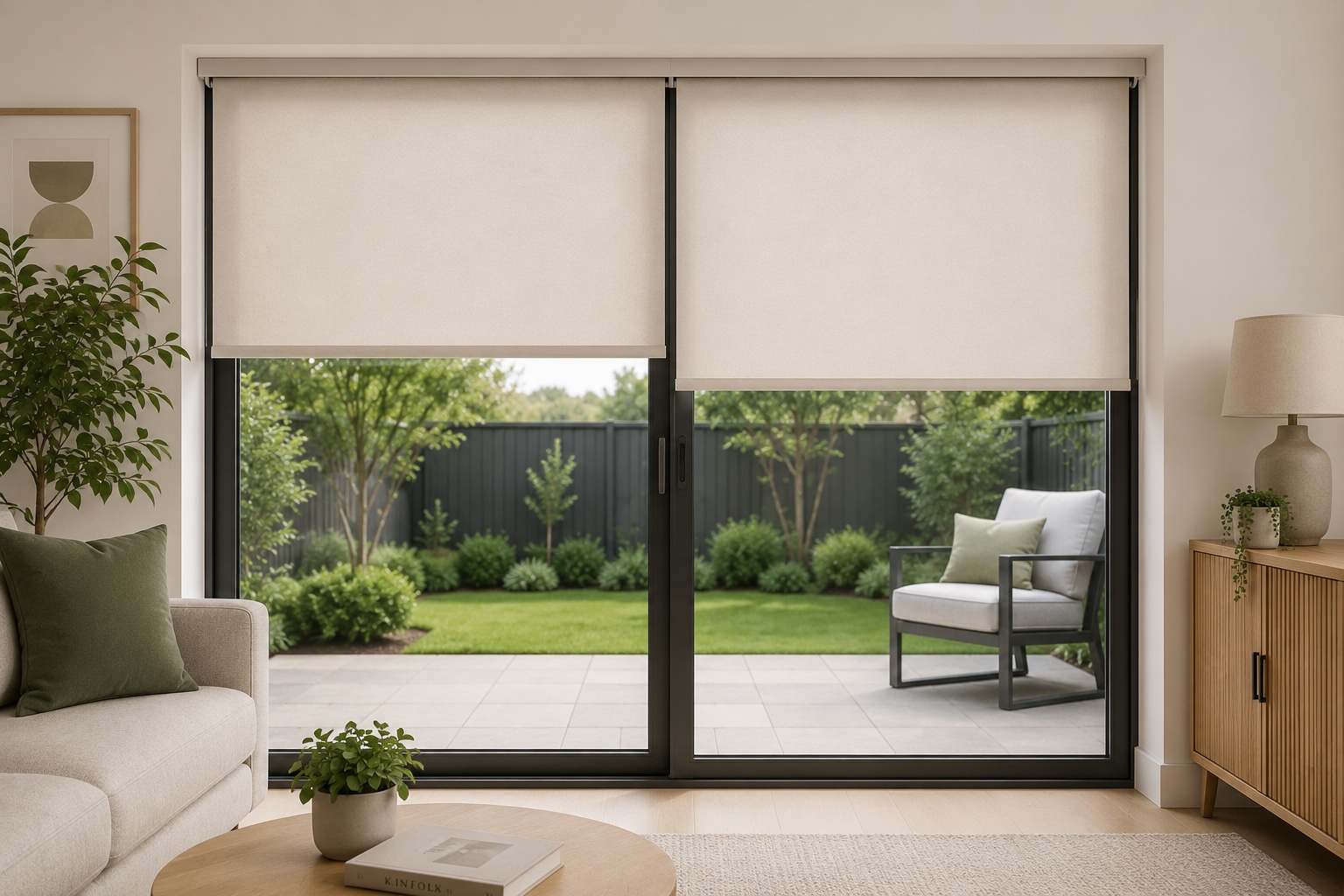
The best blinds for sliding doors can change depending on where the doors are used. A kitchen-diner, living room, bedroom and conservatory may all have sliding doors, but they do not usually need the same type of window covering. The room’s purpose should guide the decision as much as the door itself.
Kitchen-Diners
Sliding doors are common in kitchen-diners because they connect the main living space to the garden or patio. In this type of room, the blind usually needs to manage three things: glare, privacy and easy access.
Good options include roller blinds, day and night blinds, electric blinds and thermal fabrics. Roller blinds can suit a clean, modern kitchen because they sit neatly above the glass when raised. Day and night blinds are useful where the room is overlooked but still needs daylight. Electric blinds can be particularly helpful across wide doors or in rooms where the blinds are adjusted several times a day.
For sunny kitchen-diners, thermal or dimout fabrics may also be worth considering. They can help soften brightness and make the space more comfortable during strong daylight, especially around dining tables, kitchen islands and glazed extensions.
Living Rooms
In living rooms, the blind often needs to balance privacy, comfort and style. Sliding doors may face the garden, neighbouring properties or a patio area, so the room can feel exposed at certain times of day. At the same time, most people still want to enjoy the view and natural light when privacy is less of a concern.
Vertical blinds, day and night blinds, roller blinds and curtains can all work well here. Vertical blinds are practical for wide doors and regular access, while day and night blinds give useful privacy control without fully blocking daylight. Curtains can be a good option where the room needs softness, warmth and a more decorative finish.
If the living room has strong sunlight or screen glare, dimout, thermal or electric blinds may be worth considering. Electric operation can be especially useful if the sliding doors are large or partly blocked by furniture.
Bedrooms
Sliding doors in bedrooms need more attention to privacy and darkness. A large glazed door can make the room feel bright and open during the day, but too exposed or light at night and early in the morning.
Blackout roller blinds, thermal blackout blinds, blackout curtains and electric blackout blinds are usually the strongest options. Blackout fabric helps stop light passing through the material, while thermal blackout fabrics can add another layer of comfort around large glass areas.
For bedrooms where a softer finish is preferred, curtains can also work well, either on their own or layered with blinds. Layering can be particularly useful where the aim is to improve darkness, reduce the visual impact of light gaps and make the sliding door feel more integrated into the room.
Conservatories and Garden Rooms
Conservatories and garden rooms often have a higher proportion of glass than other rooms, so glare, heat and privacy can become more noticeable. Sliding doors in these spaces are often used to connect directly to the garden, so access should also be considered.
Vertical blinds are a practical option because they suit wide openings and can be adjusted for privacy and light. Thermal blinds may be useful where the room becomes too warm in summer or feels cooler near the glass in winter. Electric blinds can also make sense if there are several large areas of glazing or if the blinds need regular adjustment throughout the day.
The best choice for conservatories and garden rooms is usually one that keeps the space usable. If the room becomes too bright, too warm or too exposed, the blinds should help create a more comfortable environment without making the space feel closed off.
Home Offices
A home office with sliding doors can be a pleasant place to work, but bright glass can cause glare on screens and make video calls feel less controlled. Privacy may also be important if the room faces a garden path, neighbouring property or shared outdoor space.
Day and night blinds, dimout roller blinds, vertical blinds and electric blinds are all useful options. Day and night blinds can help manage visibility into the room, while dimout roller blinds can reduce brightness without making the workspace feel dark. If the doors are large or difficult to reach from the desk, electric operation may make daily adjustment much easier.
For home offices, the best blind is usually one that can be adjusted quickly as light changes during the day.
Comparison Table: Best Blinds for Sliding Doors
Sliding doors can be fitted with several different blind and curtain styles, but each option solves a slightly different problem. The most suitable choice usually depends on whether the priority is everyday access, privacy, glare reduction, a clean modern finish, blackout performance or a softer decorative look.
| Blind or Curtain Type | Best For | Main Advantage | Watch Out For | Best Room Fit |
|---|---|---|---|---|
| Vertical Blinds | Everyday access and wide glass coverage | Side-to-side movement works naturally with sliding doors. | Slats can move in draughts and may feel more practical than decorative in some rooms. | Living rooms, patio doors, conservatories and garden rooms |
| Roller Blinds | Clean, minimal styling | Neat appearance with a wide choice of fabrics, colours and finishes. | A lowered blind may block access unless the layout is planned carefully. | Kitchen-diners, bedrooms, modern extensions and living rooms |
| Day and Night Blinds | Privacy without losing all daylight | Alternating fabric bands give flexible control over light and visibility. | Not usually the best choice where full blackout is the main requirement. | Overlooked living rooms, kitchen-diners, balcony doors and home offices |
| Perfect Fit Blinds | A neat integrated finish where compatible | The blind sits close to the glass and can avoid drilling on suitable frames. | Compatibility depends on the frame, bead depth, glazing and handle position. | Modern homes, uPVC doors, conservatories and compatible glazed panels |
| No Drill Blinds | Renters and customers avoiding permanent fixings | Can avoid drilling into walls, tiles or frames where the system is suitable. | Not every no drill system will suit every sliding door or very wide opening. | Rental homes, new-builds, tiled areas and modern interiors |
| Electric Blinds | Large, wide or hard-to-reach sliding doors | Makes large blinds easier to adjust throughout the day. | Higher cost than manual options, so they work best where convenience solves a real issue. | Open-plan kitchen-diners, large living rooms, garden rooms and bedrooms |
| Thermal Blinds | Heat, glare and comfort around large glass areas | Adds an extra fabric layer between the room and the glass. | Should not be treated as a replacement for efficient glazing or ventilation. | South-facing rooms, conservatories, garden rooms and bedrooms |
| Blackout Blinds | Darkness, privacy and stronger shading | Blackout fabric stops light from passing through the material. | Light may still enter around the edges depending on the fitting style. | Bedrooms, guest rooms, children’s rooms and media rooms |
| Curtains | Softness, warmth and decorative finish | Softens large glazed doors and can be layered with blinds. | Needs enough wall space for the fabric to stack away from the door. | Bedrooms, living rooms, dining rooms and period-style interiors |
The table shows why there is no single best blind for every sliding door. Vertical blinds may be the most practical choice where daily access matters, while roller blinds may suit a cleaner interior style. Day and night blinds solve privacy concerns well, electric blinds improve usability on larger doors, and curtains can soften the overall look where there is enough space for them to stack properly.
The most reliable approach is to choose the blind type according to the door’s role in the room, not simply according to the appearance of the blind on its own.
Common Mistakes When Choosing Blinds for Sliding Doors
Sliding doors are not difficult to dress, but they are easy to misjudge. Many problems happen when the blind is chosen as if the door were a standard window. Because sliding doors are wider, more interactive and often used as an access route, small practical details can make a big difference to the finished result.
A blind can look good in a product image but still feel frustrating in daily use if it blocks the opening, catches on handles, has nowhere to stack or does not solve the room’s main light and privacy issue. Avoiding these mistakes will usually lead to a better long-term choice.
Choosing the Blind Before Thinking About Access
The first mistake is choosing a blind type before considering how often the sliding door is used. If the door is opened several times a day, the blind needs to move easily out of the way. A single large blind across the whole opening may look clean, but it could become inconvenient if it has to be raised every time someone steps outside.
For high-use doors, side-to-side operation, electric controls or separate blinds across different panels may be more practical.
Forgetting About Stack Space
Vertical blinds and curtains both need space to stack when open. If there is not enough room beside the sliding door, they may cover part of the glass even when drawn back. This can reduce natural light, interrupt the view and make the door feel less open.
Before choosing a blind or curtain style, it is worth thinking about where the fabric or slats will go when not in use. The best solution should clear the main access point as much as possible.
Assuming Blackout Fabric Means Total Darkness
Blackout fabric stops light from passing through the material, but it does not automatically make the whole room completely dark. Light may still enter around the edges, especially on large sliding doors where gaps at the sides, top or bottom can be more noticeable.
This does not mean blackout blinds are unsuitable. It simply means expectations should be realistic. For bedrooms or media rooms, the fitting style, blind position and potential light gaps matter as much as the fabric itself.
Choosing One Large Blind When Multiple Blinds Would Work Better
On wide sliding doors, one large blind is not always the most practical option. Multiple blinds can give better control because different sections of the glass can be adjusted independently.
This can be useful if one side of the door receives direct sunlight while another side is used for access. It can also help in open-plan rooms where one section needs privacy while another section can stay open for light or view.
Ignoring Handle and Frame Clearance
Sliding doors often have handles, locks, tracks, seals and frame details that can affect how a blind fits and operates. A blind that sits too close to the door may catch or interfere with movement. A system that works well on one type of frame may not suit another.
This is especially important for Perfect Fit blinds, no drill blinds and any blind designed to sit close to the glass. Compatibility should always be checked before assuming the blind will work.
Treating Every Sliding Door the Same
Not all sliding doors need the same solution. A patio door in a busy kitchen-diner, a bedroom door leading to a balcony and a large glazed opening in a garden room may all require different blind choices.
The room’s use should guide the decision. A kitchen-diner may need glare control and easy access. A bedroom may need blackout and privacy. A conservatory may need thermal comfort and light management. A living room may need a balance of privacy, softness and view control.
Prioritising Appearance Over Everyday Use
Style matters, but sliding door blinds also need to be practical. A blind that looks attractive but is awkward to operate will quickly become a compromise. This is particularly true for large doors, family rooms and spaces where the blinds need adjusting several times a day.
The best sliding door blind should look right, but it should also be easy to use, easy to move out of the way and appropriate for the room’s main issue. That balance is what makes the final choice feel properly considered.
The Best Blind for Sliding Doors: A Practical Recommendation
There is no single best blind for every sliding door. The right choice depends on how the door is used, how much glass needs covering and what the room needs most from the blind. A busy kitchen-diner with daily garden access will usually need a different solution from a bedroom with sliding balcony doors or a conservatory that becomes too bright in summer.
The most useful way to decide is to match the blind to the main problem.
Choose Vertical Blinds for Everyday Access
Vertical blinds are often the most practical all-round choice for sliding doors. Their side-to-side movement suits the way sliding doors operate, and the slats can be angled for privacy without fully blocking the view or the daylight.
They are especially useful for patio doors, garden doors, conservatories and wide sliding doors that are opened frequently. If the priority is easy access, flexible light control and practical coverage across a large opening, vertical blinds should be one of the first options to consider.
Choose Roller Blinds for a Clean, Minimal Finish
Roller blinds are a strong choice where the aim is a neat, modern look. They work particularly well in kitchen-diners, bedrooms, open-plan living spaces and contemporary extensions where the blind needs to feel simple and streamlined.
For wide sliding doors, multiple roller blinds can often be more flexible than one large blind. This allows different sections of the glass to be adjusted independently, which can help with access, glare and privacy throughout the day.
Choose Day and Night Blinds for Adjustable Privacy
Day and night blinds are best suited to sliding doors where privacy is important but daylight is still wanted. They are useful for overlooked rooms, ground-floor living spaces, balcony doors and homes where neighbouring properties are close by.
The alternating fabric bands allow more control than a standard open-or-closed blind. They can help soften the view into the room while keeping the space bright and usable.
Choose Electric Blinds for Large or Hard-to-Reach Doors
Electric blinds are worth considering where sliding doors are wide, difficult to reach or adjusted often during the day. They can be especially useful in open-plan rooms, garden rooms, bedrooms and spaces where furniture sits close to the glass.
The main benefit is usability. Large blinds are more likely to be adjusted properly when operation is easy. For sliding doors, that can make a noticeable difference to glare, privacy and room comfort.
Choose Blackout or Thermal Fabrics Where Function Matters Most
Fabric choice is just as important as blind type. If the sliding door is in a bedroom, guest room or media room, blackout fabric may be the priority. If the door creates heat, glare or a colder feel around the glass, thermal fabric may be more appropriate.
A blackout fabric helps stop light passing through the material, while a thermal fabric adds an extra layer between the room and the glass. In some rooms, thermal blackout blinds may be the most practical option because they support both stronger shading and comfort.
Choose Curtains for Softness and a More Decorative Finish
Curtains are a good option where the sliding doors need to feel softer, warmer or more integrated into the room. They work particularly well in bedrooms, living rooms, dining rooms and more traditional interiors.
They are not always the most practical choice for doors used constantly, because they need enough wall space to stack away from the opening. However, where space allows, curtains can make large glazed doors feel more finished and can also be layered with blinds for extra privacy or comfort.
The Most Reliable Rule
If the door is used often, prioritise access.
If the room is overlooked, prioritise privacy control.
If the room gets strong sun, prioritise glare and heat management.
If the room is a bedroom, prioritise blackout and privacy.
If the room feels stark, prioritise softness and styling.
If the doors are wide or awkward to reach, consider electric operation.
The best blind for sliding doors is the one that supports the way the door works every day. Appearance matters, but the most successful choice is the one that looks right, moves easily and solves the room’s main practical issue.
Final Thoughts: Choose Around How the Door Is Used
Choosing blinds for sliding doors is not just about finding a product that covers a large pane of glass. The best choice depends on how the door works, how often it is used and what the room needs from the glazing. Sliding doors bring in light, view and access, but they can also create practical challenges around privacy, glare, heat, cold, darkness and everyday movement.
This is why it helps to start with the door, not the blind type. A high-traffic patio door needs a solution that moves easily out of the way. An overlooked living room needs flexible privacy. A sunny kitchen-diner may need glare and heat management. A bedroom with sliding doors may need blackout fabric and a softer, more private finish. Once the main problem is clear, the choice becomes much easier.
Vertical blinds remain one of the most practical options for sliding doors because they work naturally with side-to-side movement and wide glass areas. Roller blinds are a strong choice for a clean, minimal look, especially where multiple blinds can be used across separate panels. Day and night blinds are useful where privacy and daylight need to be balanced, while electric blinds can make larger or harder-to-reach doors much easier to manage. Thermal and blackout fabrics add another level of function where comfort, shading or privacy matter most.
Curtains should also not be overlooked. Where there is enough space for them to stack properly, they can soften large glazed doors and make bedrooms, living rooms and dining spaces feel warmer and more complete. In some homes, the best result may even come from layering blinds and curtains, using the blind for practical light control and the curtains for softness and atmosphere.
The key is to choose a sliding door blind that works with the room, rather than against it. It should allow easy access, suit the door layout, manage the right level of light and privacy, and feel appropriate for the way the space is used every day. A blind that looks good but constantly gets in the way will quickly become frustrating. A blind that suits both the door and the room will feel like a considered part of the home.
DotcomBlinds offers a wide range of made-to-measure blinds and curtains for different rooms, door styles and practical needs. With quality products, an easy-to-use ordering experience, experienced staff and a 4.6/5 Independent Service Rating on Feefo from over 1,500 verified reviews, DotcomBlinds is a trusted place to find a sliding door solution that balances function, comfort and style.
Explore made-to-measure blinds and curtains from DotcomBlinds to find a sliding door solution that suits your room, your glazing and the way you use the space every day.
FAQs About Blinds for Sliding Doors
Choosing blinds for sliding doors often raises practical questions around access, privacy, blackout performance and fitting options. These answers cover the most common points to consider before choosing a made-to-measure blind or curtain solution.