Order Tracking
 0800 1422417
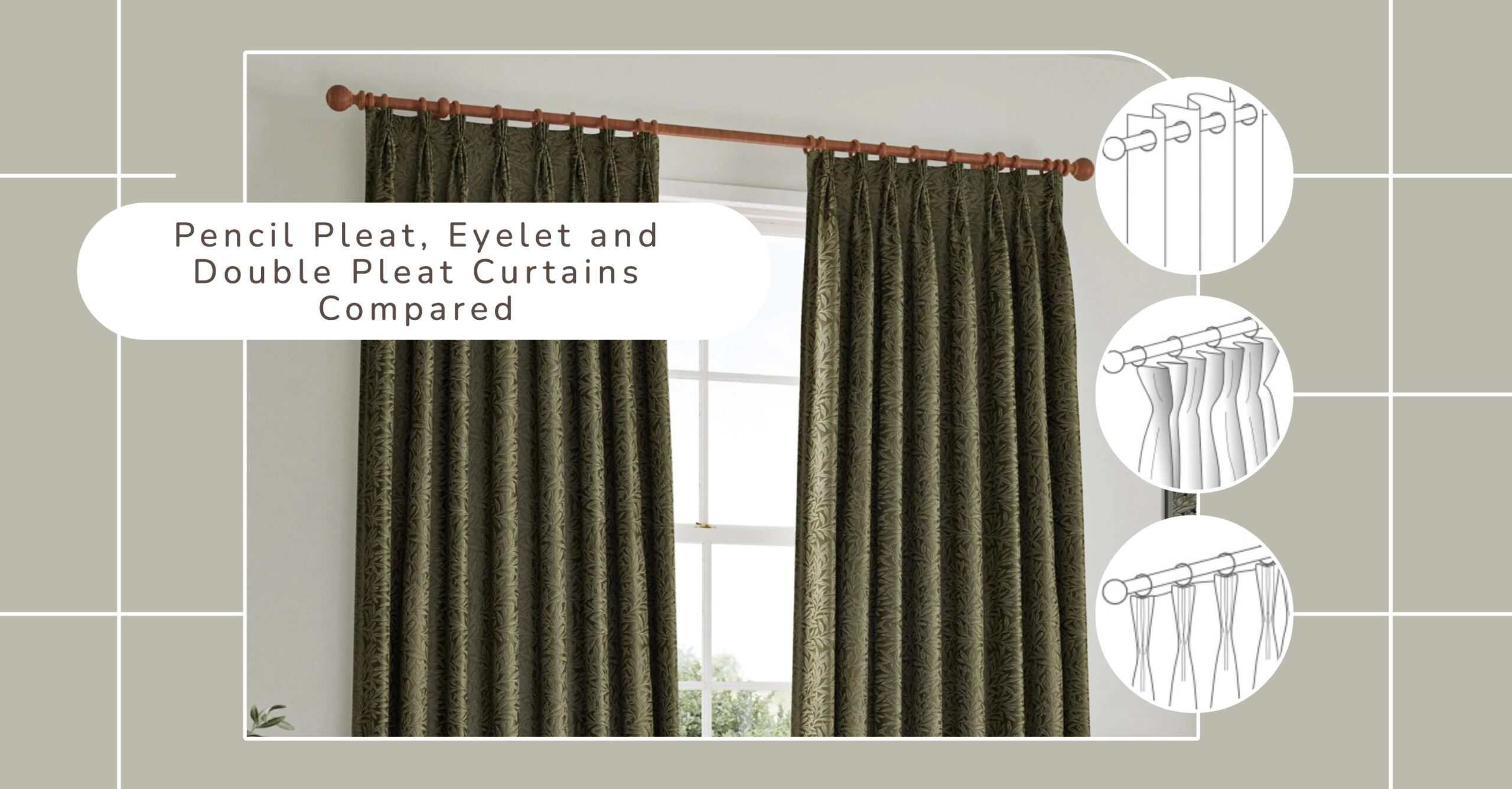
When it comes to dressing your windows, the curtain heading you choose can completely transform both the look and feel of a room. Beyond just holding your curtains in place, the heading style shapes how the fabric drapes, how light filters through, and even how easy the curtains are to open and close. Whether you want a relaxed and casual look, something sleek and modern, or an elegant tailored finish, the right heading can make all the difference in your space’s aesthetic and functionality.
In this article, we’ll explore three of the most popular curtain heading styles: Pencil Pleat, Eyelet, and Double Pleat. We’ll break down how each one looks, how it works, and where it’s best suited, helping you understand the key differences so you can confidently choose the best fit for your home.
At DotcomBlinds, we offer made-to-measure curtains in all of these styles, ensuring a flawless fit for your windows. With our wide selection, you can enjoy the perfect combination of style, function and quality craftsmanship, no matter which heading you choose.
Pencil Pleat Curtains

What They Are:
Pencil pleat curtains are a classic choice, known for their timeless, gathered look. The “pencil” effect comes from thin, uniform folds created by pulling cords threaded through the heading tape at the top of the curtain. This results in neat, vertical pleats that resemble rows of softly sharpened pencils. The heading tape typically comes in standard depths, such as 3-inch or 6-inch, with the deeper 6-inch tape often used for longer or fuller curtains to create a more dramatic finish.
Aesthetic & Style:
Pencil pleat curtains offer a traditional and versatile aesthetic that can adapt to many interior styles. Loosely gathered pleats create a relaxed, cottage-like charm, while tightly pulled pleats deliver a more formal and tailored appearance. They work beautifully with both plain and patterned fabrics, although very large patterns might be slightly obscured if the pleats are pulled too tightly.
Functionality:
These curtains are highly adaptable, as they can be hung from either curtain poles (using curtain rings and hooks) or tracks, making them ideal for a variety of window setups. You can adjust the fullness and gather by hand, offering flexibility to achieve the desired look. When paired with a blackout lining, the soft folds help improve light control by trapping light at the edges.
Best Suited For:
Pencil pleat curtains are a great match for traditional or classic interiors, rooms where a soft, voluminous look is desired, and windows where both poles or tracks are considered. They’re especially practical for bay windows, as they can glide smoothly around curves when used with tracks.
Considerations:
Once hung, pencil pleat curtains typically require some “dressing” to arrange the pleats neatly. Depending on how full they are, they may also have a larger stack back, taking up more space at the sides when open compared to eyelet styles.
Eyelet Curtains

What They Are:
Eyelet curtains offer a contemporary, streamlined style, defined by metal rings (also called eyelets or grommets) set directly into the top edge of the fabric. These eyelets allow the curtain to slide smoothly onto a curtain pole, eliminating the need for hooks or heading tape. Eyelet finishes come in a range of options, such as brushed chrome, antique brass, and satin nickel, making it easy to match them with your curtain pole and overall room decor.
Aesthetic & Style:
Eyelet curtains create a modern, minimalist look with clean, even lines. The large, regular folds produced by the eyelets result in soft, undulating waves that hang elegantly from top to bottom. This style is particularly effective for showcasing the fabric’s texture, colour, or bold patterns, as the simple folds allow the material and pole to take centre stage.
Functionality:
Eyelet curtains are exceptionally easy to hang and operate, gliding effortlessly along the pole. They’re a practical choice for rooms where the curtains are regularly opened and closed, such as living rooms or bedrooms. Thanks to their uniform folds, eyelet curtains also tend to have a very tidy “stack back,” meaning they take up minimal space at the sides when open, letting in the maximum amount of light.
Best Suited For:
Ideal for contemporary, minimalist, or even industrial-style interiors, eyelet curtains work beautifully in living rooms, bedrooms, and other spaces where a crisp, uncluttered look is desired. They are best paired with curtain poles and work particularly well with bold prints or plain, textured fabrics.
Considerations:
Keep in mind that eyelet curtains can only be used with poles, not tracks. Light may sometimes seep through the eyelets at the top, though adding a blackout lining can minimise this. Unlike pencil pleats, the fullness is fixed, as the folds are shaped by the placement of the eyelets.
Double Pleat Curtains (also known as Double Pinch Pleat)

What They Are:
Double pleat curtains, often called double pinch pleat, offer a formal and tailored appearance, thanks to their permanent, sewn-in pleats. In this style, two folds of fabric are pinched together at regular intervals along the heading, creating an elegant “V” shape at the top. This design gives a structured, uniform look that is distinct from the fuller triple pleat style, offering a slightly more relaxed formality while still delivering a sophisticated finish.
Aesthetic & Style:
With their precise, evenly spaced pleats, double pleat curtains bring a sense of elegance and refinement to any room. The structured folds run consistently from top to bottom, creating a neat, ordered appearance. Because they gather less fabric than triple pleats, they are particularly well suited to patterned or luxurious fabrics, as the design remains visible without being hidden in deep folds.
Functionality:
Double pleat curtains hang beautifully, offering a consistent and graceful drape. They can be used on curtain poles (where they often look their best) as well as on certain curtain tracks, such as Silent Gliss systems. Many come with pre-set hooks already sewn into the heading, which makes hanging them straightforward and hassle-free.
Best Suited For:
These curtains are an excellent choice for formal living rooms, dining rooms, or master bedrooms, as well as traditional and transitional interiors seeking a polished, custom-made look. They’re especially effective at showcasing patterned or high-end fabrics and work well on windows where an ordered, tailored finish is desired.
Considerations:
Double pleat curtains are generally considered a more premium option due to the detailed tailoring involved. While their stack back is greater than that of eyelet curtains, it’s usually neater and less bulky than very full pencil pleats. However, once made, they offer little flexibility in adjusting the fullness, as the pleats are permanently fixed.
Choosing Your Perfect Drape: A Side-by-Side Comparison

Frequently Asked Questions (FAQs)
Q1: Which curtain heading is best for blocking out light?
All three heading styles can block light effectively when paired with blackout lining. However, Pencil Pleat and Double Pleat curtains typically offer slightly better light control because their tighter gathers or fixed pleats minimise light leakage at the top and edges. Eyelet curtains, while stylish and modern, may allow a small amount of light to seep through the eyelets at the top — though blackout lining significantly reduces this.
Q2: Can I use all these heading types with both a curtain pole and a curtain track?
No.
- Pencil Pleat curtains are the most versatile, suitable for both curtain poles (using hooks and rings) and tracks.
- Eyelet curtains are designed only for curtain poles, as the eyelets slide directly onto the pole. They are not compatible with tracks.
- Double Pleat curtains can be used on both poles and some types of curtain tracks (such as Silent Gliss systems), though they tend to look most polished and tailored on a pole.
Q3: How do I measure for each of these curtain heading types?
Accurate measuring is key!
- Pencil Pleat: Measure the width of your pole or track. For the drop, measure from the top of the track or from under the pole ring to your desired length. You’ll provide the finished width, and the heading tape allows you to adjust the gather to fit.
- Eyelet: Measure the width of the pole (between finials) and for the drop, measure from the top of the pole, adding 3–4 cm for the fabric above the eyelet.
- Double Pleat: Measure the width of the pole or track. For the drop, measure from below the ring or the bottom of the track to your desired length. Since the pleats are fixed, precision is important, as you cannot adjust fullness after production.
Tip: Always refer to DotcomBlinds’ detailed measuring guides for each curtain type to ensure the best fit.
Q4: Do these curtain types require different amounts of fabric or fullness?
Yes.
- Pencil Pleat: Adjustable, usually 2 to 2.5 times the width of the pole or track.
- Eyelet: Needs less fabric, typically 1.5 to 2 times the pole width, to create its signature wave effect.
- Double Pleat: Predetermined during manufacture, generally 1.8 to 2 times the width, offering a structured, tailored look.
Q5: Are certain heading types easier to operate (open and close)?
Yes.
- Eyelet curtains are usually the easiest, gliding smoothly along a pole with minimal effort.
- Double Pleat curtains also operate well due to their neat, consistent folds.
- Pencil Pleat curtains may need more manual “dressing” and adjustment when opening or closing, especially if they have a lot of gather.
Q6: Which heading style is best for a bay window?
Pencil Pleat curtains are often the best option for bay windows, especially when paired with a custom-curved bay window track, as they can flexibly adapt around corners. Double Pleat curtains can work but require precise measuring and fitting. Eyelet curtains are generally not recommended for bay windows because the eyelets can catch or snag on the joins between pole sections.
Q7: Can I wash or clean curtains with these different headings at home?
Always check the fabric’s care label first.
- Pencil Pleat: If fabric permits, they can usually be unhooked, the cords untied, and gently machine washed, then re-gathered and re-hung.
- Eyelet: Hand washing or professional cleaning is often recommended, as the metal eyelets can damage washing machines or the fabric itself.
- Double Pleat: Typically best suited for professional dry cleaning, as the sewn-in pleats need special care to maintain their shape.
Q8: What kinds of interior design styles do these headings suit best?
- Pencil Pleat: Highly adaptable — works well in country, traditional, or transitional interiors.
- Eyelet: Perfect for modern, minimalist, and industrial spaces with clean, uncluttered lines.
- Double Pleat: Best for formal, elegant, and sophisticated settings, whether traditional or luxurious contemporary.
Find Your Perfect Fit with DotcomBlinds
Ultimately, the best curtain heading for your home depends on your personal style, the function of the room, and the existing decor. Whether you’re drawn to the timeless charm of pencil pleats, the sleek modernity of eyelets, or the refined elegance of double pleats, it’s important to think about the overall look you want to achieve, as well as the practicalities of how often you’ll be opening and closing your curtains.
At DotcomBlinds, we offer a wide range of made-to-measure curtains in all these styles, ensuring you get the perfect fit for your windows and your lifestyle. Explore our full curtain collection here: DotcomBlinds Curtains Range
Need a little extra guidance? Our friendly experts are always on hand to offer advice and help you find the ideal curtain style for your home. Let us help you turn your design vision into reality!