Order Tracking
 0800 1422417
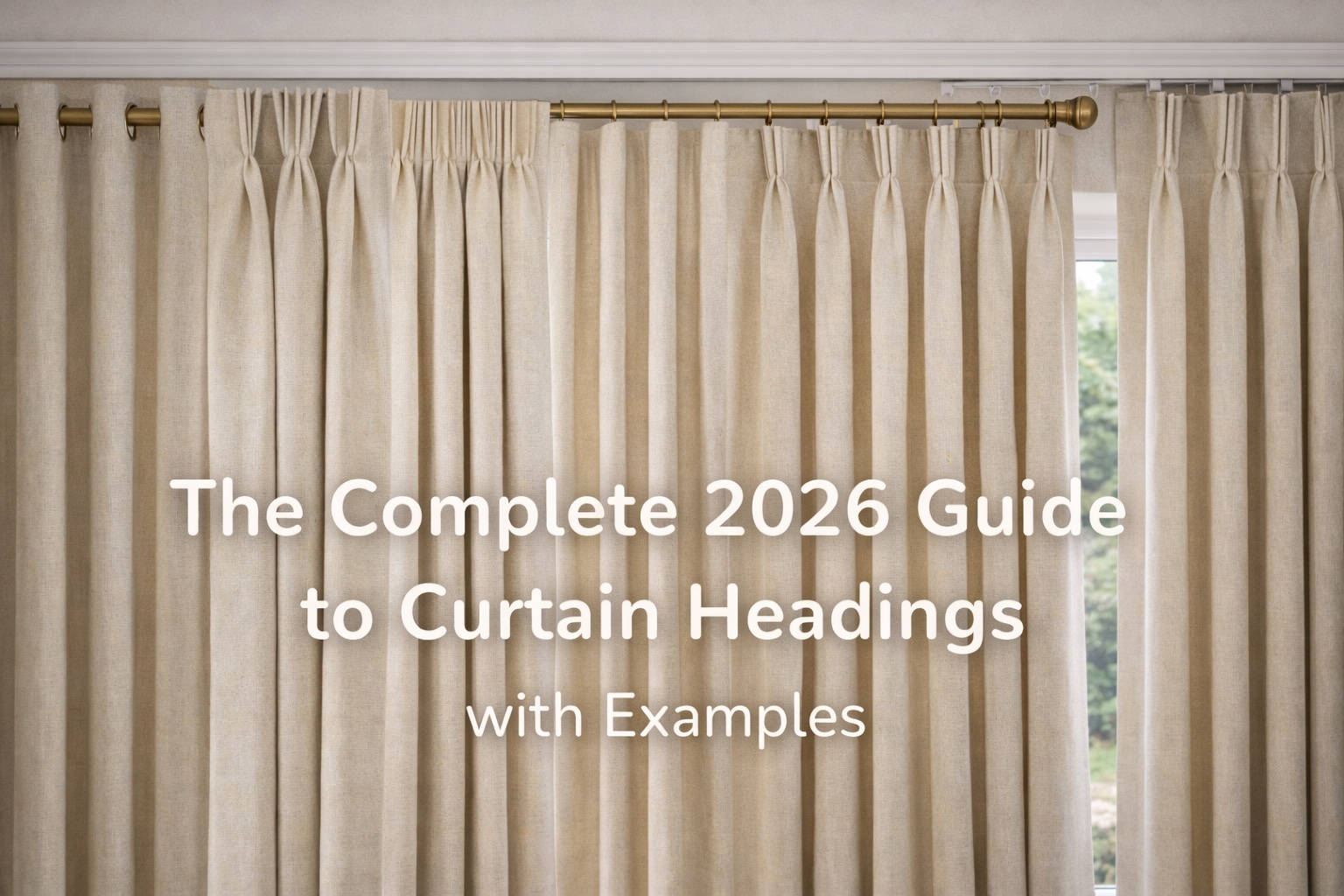
Choosing the right curtain heading is one of the most overlooked decisions when dressing a window, yet it plays a huge role in how your curtains look, feel, and function in everyday life. From how neatly the fabric folds, to how much light is blocked, how warm a room feels, and even how easy the curtains are to open and close, the heading style affects far more than just appearance.
As we move into 2026, curtain headings are no longer just a decorative detail. Modern British homes are embracing larger windows, bi fold doors, and open plan living, while energy efficiency, privacy, and ease of use have become more important than ever. At the same time, classic styles such as pencil pleat remain popular for their versatility and practicality, proving that newer does not always mean better.
In this complete 2026 guide to curtain headings, we will explain the most popular styles used in UK homes today, including pencil pleat, eyelet, wave, and pinch pleat. You will discover how each heading works, where it looks best, and see clear, practical examples to help you choose the right option for your space. Whether you are updating a single room or furnishing an entire home, this guide will give you the confidence to make the right choice first time.
What Is a Curtain Heading and Why Does It Matter?
A curtain heading is the top section of the curtain where it attaches to a track or pole. It controls how the fabric is gathered, folded, and supported, which directly affects how the curtains hang once installed. While the fabric and colour often get most of the attention, the heading is what defines the overall shape and behaviour of the curtain.
The heading you choose influences several practical and visual factors. First, it determines whether your curtains can be hung on a track, a pole, or a specific specialist system. Some headings are highly flexible, while others only work with certain hardware. Choosing the wrong heading can mean replacing your track or pole entirely.
Curtain headings also affect how full or structured the curtains look. Soft gathered headings create a relaxed, traditional appearance, while tailored or uniform headings give a more contemporary or formal finish. This visual difference can dramatically change the character of a room, even when the same fabric is used.
Beyond appearance, headings play an important functional role. They influence how much light leaks in at the top of the window, how well the curtains insulate against draughts, and how much space the curtains take up when fully open. In UK homes, where rooms can be compact and energy efficiency matters, these details make a real difference to everyday comfort.
In short, a curtain heading is not just a finishing touch. It is a key design and performance decision that should be considered alongside fabric choice, room type, and how the space is used. Getting it right ensures your curtains look better, work harder, and suit your home for years to come.
The Most Popular Curtain Headings in the UK for 2026
In the UK, curtain heading preferences are shaped by a mix of tradition, practicality, and changing interior trends. While social media and interior design shows often highlight more contemporary styles, everyday buying behaviour still reflects the realities of British homes, existing curtain tracks, and the need for warmth, privacy, and ease of use.
As we head into 2026, four curtain headings continue to dominate the market. Pencil pleat remains the most versatile and widely used option, eyelet curtains lead the ready made market, wave curtains are the fastest growing choice for made to measure interiors, and pinch pleat sits firmly in the premium, tailored category. Each serves a distinct purpose and suits different rooms, window types, and lifestyles.
Below, we explore each of these curtain headings in detail, with clear explanations and practical examples to help you decide which is right for your home.
Pencil Pleat Curtains (The UK All-Rounder)

Pencil pleat is the most traditional and widely used curtain heading in the UK. It features a heading tape sewn into the top of the curtain, which is pulled tight using cords to form neat, closely gathered folds that resemble a row of pencils standing upright.
One of the biggest reasons pencil pleat remains so popular is its flexibility. It can be hung on both curtain tracks and curtain poles, making it ideal for homes where a track is already installed. This is particularly common in rental properties and older UK homes, where replacing hardware may not be practical.
Pencil pleat curtains are also highly adjustable. The level of gather can be fine tuned during installation, allowing you to control how full or relaxed the curtains appear. This makes them forgiving if measurements are not absolutely perfect, which is reassuring for first time buyers.
From a practical point of view, pencil pleat headings perform exceptionally well in colder homes. The dense gathers create a thicker barrier at the top of the window, helping to reduce draughts and improve insulation. For this reason, they are often chosen for bedrooms, period properties, and rooms where warmth is a priority.
Best suited to:
- Period and traditional homes
- Rental properties
- Bedrooms and living rooms
- Homes with existing curtain tracks
In the next section, we will look at eyelet curtains and why they have become the dominant choice in the ready made curtain market.
Eyelet Curtains (The Modern Favourite)

Eyelet curtains, also known as ring top curtains, are one of the most recognisable and widely sold curtain styles in the UK. The heading features large metal rings punched directly through the fabric, allowing the curtain pole to slide through the top of the curtain itself.
Their popularity comes largely from simplicity. Eyelet curtains are extremely easy to hang, with no hooks, tapes, or adjustments required. Once placed on the pole, the fabric naturally forms large, even folds, giving a clean and contemporary appearance with minimal effort. This makes them particularly appealing for homeowners who want a modern look without a complicated installation process.
Visually, eyelet headings create soft, uniform waves that suit minimalist and modern interiors. They work especially well in living rooms and bedrooms where style is a priority and full blackout is not essential. Because the folds are spaced evenly by the rings, eyelet curtains always look tidy without needing to be dressed or adjusted.
However, eyelet curtains do have limitations. They can only be used with curtain poles and are not compatible with tracks. More importantly for UK homes, the rings sit on top of the pole rather than below it, which leaves a gap at the top of the curtain. This can allow light to leak in, particularly noticeable in bedrooms during the long summer mornings.
For this reason, eyelet curtains are often better suited to spaces where complete darkness is not required, or where the curtains are used more for decoration and privacy than light control.
Best suited to:
- Modern and contemporary interiors
- Living rooms and dining rooms
- Homes with curtain poles already fitted
- Spaces where ease of use is a priority
Next, we will explore wave curtains, the fastest growing curtain heading choice in made to measure interiors.
Wave Curtains (The Contemporary Trend)

Wave curtains have become one of the most desirable curtain heading styles in the UK, particularly in modern homes and made to measure interiors. Unlike traditional gathered headings, wave curtains use a specially designed track and evenly spaced gliders to create a smooth, continuous S shaped wave from one end of the window to the other.
The defining feature of a wave heading is its consistency. The folds remain perfectly uniform whether the curtains are open or closed, giving a sleek, architectural finish that feels both minimal and luxurious. This makes wave curtains especially popular in contemporary living spaces where clean lines and symmetry are important.
From a practical perspective, wave curtains offer one of the neatest stackbacks of any heading style. When fully open, the fabric stacks back into a surprisingly compact space at the side of the window. In UK homes, where natural light is precious and rooms can be narrow, this is a significant advantage.
Wave headings are most commonly used with ceiling mounted or recessed tracks, which allows the curtains to hang from ceiling height. This not only enhances the sense of height in a room but also helps create a seamless look across large glazed areas such as sliding doors and bi fold doors.
Because wave curtains rely on a specific track system and precise spacing, they are best suited to made to measure installations rather than ready made curtains. When measured and fitted correctly, they deliver a high end finish that is difficult to achieve with other heading types.
Best suited to:
- Bi fold and sliding patio doors
- Floor to ceiling windows
- Open plan living spaces
- Modern and newly built homes
Up next, we will look at pinch pleat curtains, a timeless choice for those seeking a more structured and elegant finish.
Pinch Pleat Curtains (The Tailored Classic)

Pinch pleat curtains are one of the most refined and elegant curtain heading styles available. The heading is created by permanently sewing the fabric into neat pleats at the top of the curtain, usually in groups of two or three folds, known as double or triple pinch pleats. This creates a structured, tailored appearance that holds its shape beautifully over time.
Because the pleats are fixed, pinch pleat curtains always hang correctly without the need for regular dressing. The folds fall evenly and predictably, giving a polished look that works particularly well in formal or statement spaces. This makes pinch pleats a popular choice for homeowners who want their curtains to look immaculate with minimal effort.
Pinch pleat curtains can be used with both curtain tracks and curtain poles, depending on how they are finished. When used with a track, they can be fitted close to the ceiling, helping to reduce light leakage and improve insulation. When paired with a decorative pole, they offer a more traditional, classic aesthetic.
One important consideration with pinch pleat curtains is fabric usage. Because the pleats are sewn in and require generous fullness, this heading typically uses more fabric than pencil pleat or eyelet styles. This, combined with the skilled manufacturing involved, places pinch pleat firmly in the premium category.
Best suited to:
- Formal living rooms and dining rooms
- Statement windows
- Period and character properties
- Homes seeking a luxurious, tailored finish
Next, we will compare all curtain heading styles side by side to help you quickly see the differences at a glance.
Curtain Headings at a Glance: Quick Comparison
With several curtain heading styles available, it can be helpful to compare them side by side. Each option offers a different balance of appearance, practicality, and performance, and seeing the differences clearly can make the decision process much easier.
The table below summarises how the most popular curtain headings in the UK compare in terms of compatibility, style, space usage, and typical applications.
| Heading | Works with | Visual style | Stackback space | Key benefit | Typical use |
|---|---|---|---|---|---|
| Pencil Pleat | Track or pole | Traditional to relaxed | Medium | Flexible and insulating | Bedrooms, rentals, period homes |
| Eyelet | Pole only | Modern and casual | Medium | Easiest to hang and use | Living rooms, modern homes |
| Wave | Specific track | Minimal and contemporary | Low | Neatest stackback and uniform folds | Bi-fold doors, large windows |
| Pinch Pleat | Track or pole | Formal and tailored | Medium to high | Permanent, structured folds | Statement rooms, dining rooms |
While this comparison gives a useful overview, the right choice often depends on more than just appearance. Factors such as light control, insulation, room size, and existing hardware all play an important role, especially in UK homes.
In the next section, we will look more closely at how curtain headings affect light, warmth, and privacy, and why these practical details matter just as much as style.
How Curtain Headings Affect Light, Warmth, and Privacy

Curtain headings do much more than change the look of your curtains. They also affect how well your curtains perform in day to day life, especially when it comes to blocking light, keeping warmth in, and improving privacy. In a UK home, where winter draughts, street lighting, and early summer sunrises are all common issues, these practical differences can be just as important as style.
Light control: why the top of the curtain matters
Light leakage often happens at the top of the window, and the heading style plays a big role here.
- Eyelet curtains tend to let in the most light at the top. Because the rings sit on the pole, there is usually a visible gap above the curtain where light can creep through. This can be noticeable in bedrooms, especially during British summer mornings when it can get light very early.
- Pencil pleat and pinch pleat curtains can be better for blocking light, particularly when hung on a track. Tracks allow the curtains to sit higher and closer to the wall or ceiling line, creating a more complete cover at the top.
- Wave curtains can offer excellent light control, but it depends on the track position. When installed ceiling to floor on a properly fitted track, wave curtains can create a sleek, near seamless look with minimal gaps.
Practical example:
If you want a darker bedroom, a track based heading (pencil pleat, pinch pleat, or wave) is often a better choice than eyelets on a pole.
Warmth and insulation: the hidden benefit of fuller headings
Curtains can help reduce heat loss, but the heading influences how snugly the fabric sits against the window and how much air it traps.
- Pencil pleat headings are often considered one of the most insulating options because the fabric is tightly gathered at the top, creating a denser barrier that helps reduce draughts.
- Pinch pleat curtains can also be very effective, especially if they are made with a good lining and fitted with a “return” at the sides to reduce gaps where cold air can sneak in.
- Eyelet and wave headings typically create more open folds at the top, which can look beautiful but may not seal the window area as effectively as gathered or tailored headings.
Practical example:
For older UK homes with slightly draughty windows, pencil pleat curtains with a thermal lining can make a noticeable difference to comfort in winter.
Privacy: how headings influence coverage and movement
Privacy is not just about fabric thickness. It is also about how the curtains sit and how easy they are to fully close.
- Track based headings usually provide better coverage at the top edge, which helps when you want full privacy at night.
- Wave curtains glide smoothly and stack back neatly, making them ideal for large windows where you want privacy quickly without bulky fabric.
- Eyelet curtains are easy to open and close, but because of the top gap, they may feel less private in rooms where there are overlooking windows or streetlights shining in.
The takeaway
If your priority is maximum light blocking, better insulation, and stronger privacy, headings that work with a track tend to have the advantage. If your priority is fast installation and a modern look, eyelets are hard to beat, as long as you are happy with a little extra light at the top.
Next, we will look at stackback in more detail, and why it matters so much in UK homes, especially smaller rooms and large glazed doors.
Stackback Explained: Why It Matters in UK Homes

Stackback refers to the amount of space your curtains take up at the sides of the window when they are fully open. It is an easy detail to overlook, but in many UK homes, where rooms can be compact and windows are often a key source of natural light, stackback has a real impact on how bright and spacious a room feels.
When curtains stack back too far, they can partially cover the window even when open. In smaller rooms, bay windows, or terraces with narrow walls, this can reduce daylight and make the space feel more enclosed than it needs to be.
How different curtain headings compare for stackback
Not all curtain headings behave the same when open, and the difference can be quite noticeable.
- Wave curtains offer the neatest stackback of all the main heading styles. Because the folds are evenly spaced and controlled by the track, the fabric compresses efficiently at the sides. This makes wave curtains particularly effective for large windows, bi fold doors, and sliding patio doors where maximising glass exposure is important.
- Pencil pleat curtains tend to stack back more than wave curtains. The gathered fabric creates more bulk at the sides, which can cover a small portion of the window even when fully open.
- Eyelet curtains usually sit somewhere in the middle. The large, open folds look attractive, but the fabric does not compress as tightly as wave curtains.
- Pinch pleat curtains can also create a bulkier stackback, especially with triple pleats, as the structured folds require more fabric to maintain their shape.
Why stackback matters more than you think
In practical terms, poor stackback can:
- Reduce natural light during the day
- Make windows appear smaller
- Limit how wide doors can open visually
- Affect furniture placement near windows
This is particularly relevant in UK homes with bay windows, patio doors, or narrow wall returns, where every centimetre of visible glass makes a difference.
Practical guidance
If you are working with:
- Large glazed areas or doors, wave headings are often the best solution.
- Smaller windows or cosy rooms, pencil pleat or eyelet curtains can still work well, but it is worth considering how much wall space is available either side of the window.
Choosing the right heading for good stackback helps ensure your curtains enhance the room rather than quietly working against it.
Next, we will look at curtain headings by room type, with practical examples to help you match the right style to each space in your home.
Curtain Headings by Room Type (Practical Examples)
While curtain headings can work across many spaces, certain styles naturally suit specific rooms better than others. Factors such as light control, privacy, window size, and how often the curtains are used all influence which heading will perform best in each area of the home.
Below are practical, room by room examples to help you make the right choice.
Living Rooms

Living rooms are often the most flexible space in the home, used both during the day and in the evening.
- Pencil pleat works well for traditional and transitional living rooms, especially where a curtain track is already in place.
- Eyelet curtains are popular in modern living rooms, offering a relaxed look and easy operation.
- Wave curtains are ideal for contemporary living spaces with larger windows, creating a clean, uncluttered finish.
Tip: If your living room faces the street, a track based heading can offer better privacy in the evening.
Bedrooms

Bedrooms place greater emphasis on light control, warmth, and privacy.
- Pinch pleat on a track is an excellent choice for a smart, hotel style finish with strong blackout performance.
- Pencil pleat is a practical and budget friendly option, especially when paired with a blackout or thermal lining.
- Eyelet curtains can work, but may not be ideal for light sleepers due to light leakage at the top.
Tip: For bedrooms, prioritise headings that sit close to the wall or ceiling to reduce unwanted light.
Bay Windows

Bay windows are a classic feature in many UK homes and often require careful planning.
- Pencil pleat is a reliable choice as it works easily with curved or segmented bay tracks.
- Pinch pleat can look stunning in bay windows when used with a made to measure track.
- Eyelets are usually less suitable unless the bay has a continuous pole system.
Tip: Stackback is especially important in bays, so avoid overly bulky headings if space is limited.
Bi Fold and Sliding Doors

Large glazed doors benefit from headings that move smoothly and stack back neatly.
- Wave curtains are the standout choice here. They glide effortlessly, stack compactly, and maintain a uniform appearance across wide openings.
- Pencil pleat can work, but may feel bulkier and less streamlined over large spans.
Tip: Ceiling mounted tracks enhance the clean, modern look of wave curtains over doors.
Period Homes and Cottage Style Rooms

Character properties often suit softer, more traditional curtain styles.
- Pencil pleat remains the most popular choice for cottages and period homes.
- Pinch pleat adds a formal, heritage feel to larger reception rooms.
- Cottage headings (a variation of pencil pleat) add charm in kitchens and bedrooms.
Tip: Fuller headings can enhance the cosy, layered feel that suits older properties.
Choosing curtain headings by room helps ensure your curtains not only look right, but also work properly for how each space is used.
Next, we will explore how curtain headings interact with tracks, poles, and modern hybrid systems, and why hardware choice matters just as much as the heading itself.
Tracks, Poles, and Hybrid Systems Explained
Curtain headings do not work in isolation. The track or pole you choose plays a major role in how your curtains look, how smoothly they operate, and how well they perform for light control and insulation. In many UK homes, the existing hardware will influence which heading styles are practical, while in others, choosing new hardware can unlock better results.
Curtain tracks: practical and discreet

Curtain tracks are fixed directly to the wall or ceiling and are designed to carry the weight of the curtain using gliders or runners.
- Tracks are compatible with pencil pleat, pinch pleat, and wave headings.
- They allow curtains to sit closer to the wall or ceiling, which helps reduce light leakage at the top.
- Tracks are especially useful for bay windows, wide spans, and ceiling to floor installations.
For wave curtains in particular, a dedicated wave track is essential, as the spacing of the gliders is what creates the signature S shaped folds.
Curtain poles: decorative and visible

Curtain poles are a visible design feature and are often chosen to complement the room’s décor.
- Poles work with eyelet curtains and can also be used with pencil pleat or pinch pleat curtains when hooks or rings are fitted.
- They are easy to install and widely available in different finishes.
- However, poles usually sit slightly away from the wall, which can increase light leakage at the top.
Poles are often chosen for living rooms and spaces where style takes priority over maximum blackout.
Hybrid systems: the best of both worlds

A growing trend for 2026 is the rise of hybrid systems that combine the appearance of a pole with the performance of a track.
- Metropoles look like modern metal poles but use internal gliders for smoother operation.
- These systems allow you to achieve a clean, contemporary look while retaining better light control and easier movement.
- Hybrid systems work well with wave and pinch pleat headings in modern interiors.
Recessed and ceiling mounted tracks

In new build and renovated homes, recessed tracks are increasingly popular.
- Tracks are hidden within the ceiling, allowing curtains to appear to fall directly from above.
- This creates a sleek, high end finish, especially when paired with wave curtains.
- Ceiling mounted tracks can also make rooms feel taller and more spacious.
The key takeaway
When choosing a curtain heading, always consider the hardware at the same time. A heading that looks perfect on paper may not perform as well if paired with the wrong track or pole.
Next, we will look at how made to measure and ready made curtains differ, and why heading choice often matters more when you are investing in custom curtains.
Made to Measure vs Ready Made: Does Heading Choice Change?
Curtain headings are available in both ready made and made to measure curtains, but the range of options, fit, and overall finish can differ significantly between the two. Understanding these differences helps set realistic expectations and ensures you choose a heading that suits both your window and your priorities.
Ready made curtains: quick and convenient
Ready made curtains are produced in standard widths and drops and are widely available on the high street.
- Eyelet headings dominate the ready made market because they are simple to hang and require no adjustment.
- Pencil pleat is the second most common option, offering more flexibility for tracks and poles.
- Headings such as wave and pinch pleat are rarely available ready made due to the precision and fabric usage they require.
While ready made curtains are convenient and budget friendly, you are limited by fixed sizes and fewer heading choices. This can lead to compromises in fullness, drop length, or overall fit.
Made to measure curtains: precision and choice
Made to measure curtains are produced to your exact window dimensions and specification.
- All major heading styles, including pencil pleat, eyelet, wave, and pinch pleat, are available.
- Fullness can be tailored to the room and the look you want.
- Headings such as wave and pinch pleat achieve their best appearance when made to measure, as spacing and fabric usage are carefully controlled.
Made to measure is particularly valuable for bay windows, large doors, and ceiling to floor curtains, where standard sizes often fall short.
How heading choice influences the decision
Some headings naturally push you towards made to measure:
- Wave curtains rely on exact measurements and specific tracks, making them far better suited to custom production.
- Pinch pleat curtains require additional fabric and skilled manufacturing, which is rarely viable in mass produced formats.
If your goal is a clean, tailored finish with minimal compromises, heading choice alone can be a strong reason to opt for made to measure curtains.
The takeaway
Ready made curtains work well for simple windows and straightforward styling. Made to measure curtains unlock the full range of heading options and ensure the best possible fit and performance, especially in modern UK homes.
Next, we will look at common curtain heading mistakes to avoid, helping you sidestep issues that often lead to disappointment or unnecessary replacements.
Common Curtain Heading Mistakes to Avoid
Even the best curtain fabrics can disappoint if the heading choice is not properly thought through. Many of the most common issues customers experience come down to mismatched headings, hardware, or room requirements. Avoiding these mistakes can save time, money, and frustration.
Choosing eyelets for blackout bedrooms
Eyelet curtains are popular and easy to use, but they are often a poor choice for bedrooms where darkness is important.
- The gap above the curtain pole allows light to leak in.
- This can be especially noticeable during UK summer mornings.
Better option: Pencil pleat, pinch pleat, or wave curtains on a track for improved light control.
Not considering existing tracks or poles
Replacing curtain hardware can add cost and complexity.
- Eyelet curtains will not work on tracks.
- Wave curtains require a specific wave track.
- Pencil pleat is the most adaptable heading if hardware cannot be changed.
Tip: Always confirm what is already fitted before choosing a heading.
Ignoring stackback space
Curtains that look beautiful when closed can become bulky when open.
- Heavily gathered or structured headings may block light at the sides.
- This is a common issue in bay windows and smaller rooms.
Tip: If space is tight, wave curtains offer the neatest stackback.
Choosing style over function
It is easy to fall in love with a heading based purely on appearance.
- A modern heading may not suit a draughty room.
- A traditional heading may feel too bulky for large glass areas.
Better approach: Balance style with practical needs such as warmth, privacy, and ease of use.
Overlooking fabric and lining choices
The heading works together with the fabric and lining.
- Fuller headings need enough fabric to look right.
- Thermal and blackout linings can improve performance regardless of heading.
Tip: Think of heading, fabric, lining, and hardware as a complete system.
By avoiding these common mistakes, you are far more likely to end up with curtains that look right and work well for your home.
Next, we will bring everything together with a simple checklist to help you choose the right curtain heading for your home with confidence.
How to Choose the Right Curtain Heading for Your Home
With so many options available, choosing the right curtain heading can feel overwhelming. The key is to work through a few practical considerations in a logical order. This ensures the heading you choose not only looks right but also performs well in everyday use.
Step 1: Consider the room first
Start with how the room is used.
- Bedrooms usually benefit from headings that offer better light control and warmth.
- Living rooms allow more flexibility, depending on whether style or practicality is the priority.
- Large glazed areas often need headings that stack back neatly and glide smoothly.
Thinking room first immediately narrows down your options.
Step 2: Check your track or pole
Your existing hardware plays a big role.
- If you have a track, pencil pleat, pinch pleat, and wave are all suitable.
- If you have a pole, eyelet curtains may be the simplest option.
- If you are happy to change hardware, you have full freedom of choice.
If replacing hardware is not practical, choose a heading that works with what you already have.
Step 3: Decide how important light and insulation are
Ask yourself how dark and warm the room needs to be.
- For strong blackout and insulation, track based headings usually perform best.
- For decorative curtains where some light leakage is acceptable, eyelets can work well.
This is especially important in UK homes where seasons and daylight hours vary significantly.
Step 4: Think about space and stackback
Look at how much wall space you have either side of the window.
- Limited space favours headings with neat stackback, such as wave.
- Larger walls can accommodate fuller headings without issue.
This step is often overlooked but makes a noticeable difference to how the room feels.
Step 5: Match the heading to your style
Finally, consider the look you want to achieve.
- Pencil pleat suits traditional and relaxed interiors.
- Eyelet complements modern, casual spaces.
- Wave works beautifully in contemporary homes.
- Pinch pleat delivers a formal, tailored finish.
A simple rule of thumb
If you want maximum flexibility and practicality, pencil pleat is hard to beat. If you want sleek and modern, wave is often the best choice. If you want easy and contemporary, eyelets fit the bill. If you want refined and timeless, pinch pleat delivers.
Next, we will wrap things up with final thoughts on choosing curtain headings in 2026 and how to move forward with confidence.
Which Curtain Heading Is Right for You in 2026?
Choosing the right curtain heading is about far more than following trends. While 2026 continues to see strong demand for sleek wave curtains and easy to use eyelets, traditional options like pencil pleat and tailored pinch pleats remain just as relevant in the right settings. The best choice is always the one that suits your room, your window, and how you use the space day to day.
For many UK homes, practicality will be the deciding factor. Bedrooms often benefit from headings that work with tracks for better light control and warmth. Living rooms can be more flexible, allowing you to prioritise style and ease of use. Large glazed areas, such as bi fold and sliding doors, usually perform best with headings that stack back neatly and glide smoothly.
If there is one takeaway from this guide, it is that curtain headings should never be an afterthought. When chosen carefully, they enhance the look of your curtains, improve comfort, and help your home feel more finished and considered. By understanding how each heading works and where it performs best, you can make a confident choice that you will be happy with for years to come.
Whether you are replacing existing curtains or planning a full made to measure installation, taking the time to choose the right heading will always pay off in the final result.