Order Tracking
 0800 1422417
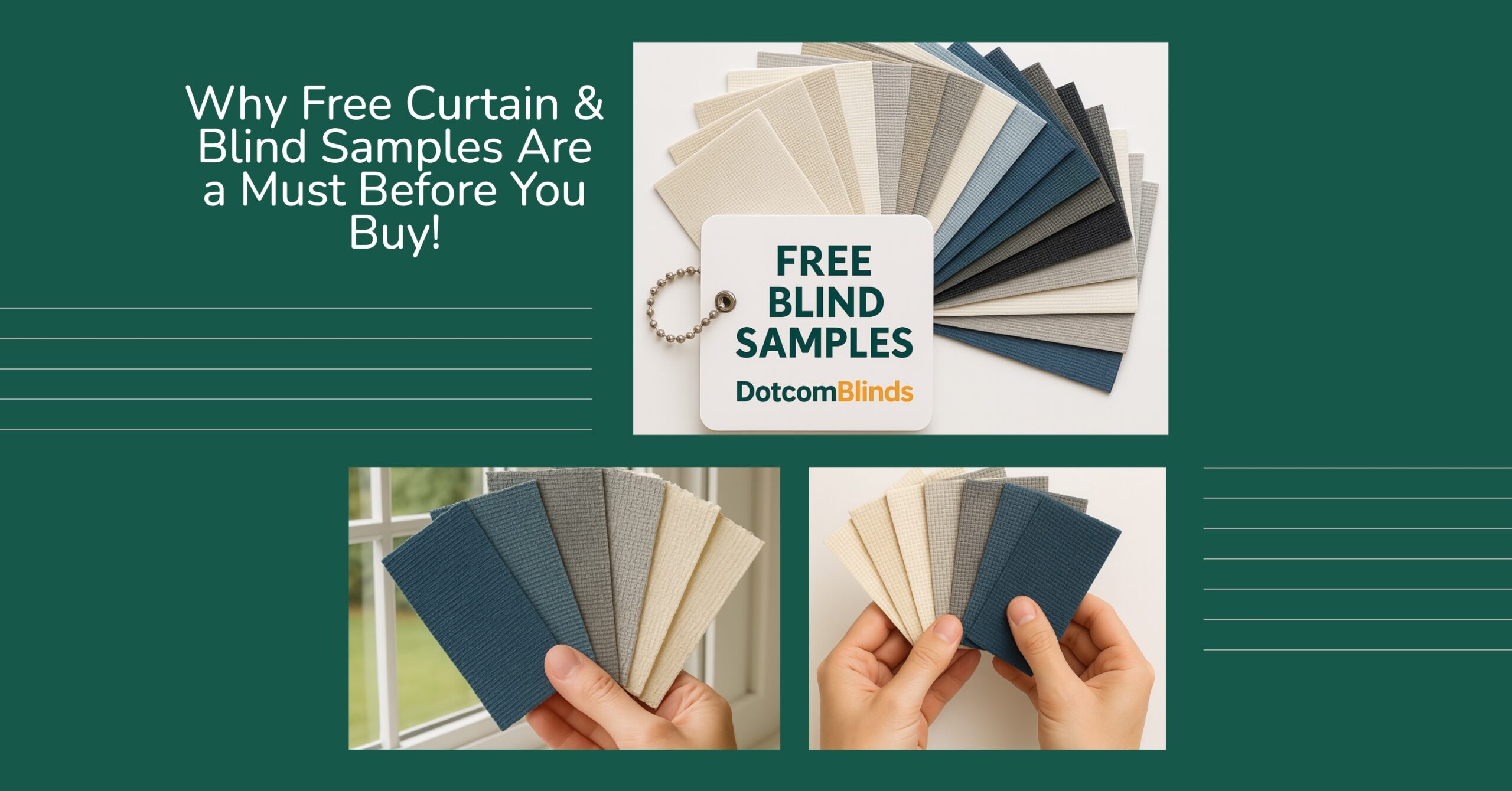
Choosing new window coverings should feel exciting, not stressful. The simplest way to remove risk and make confident choices is to order free curtain samples and free blind samples before you commit. Seeing the fabric in your own space lets you judge colour, texture, light control and quality with total accuracy. This guide explains exactly why samples matter, how to test them properly at home, and what to look for across different styles including roller blind samples, vertical blind samples, blackout blind samples, bifold blind samples and Roman blind samples.
Why samples matter

Online photos are useful, but they cannot replicate how a fabric behaves in your unique lighting conditions. Samples solve that. Here is what you can validate in minutes:
- True colour in your room
Paint colours, flooring and daylight all influence how a swatch appears. A neutral that looks warm on a screen may skew cool beside your wall paint. Samples reveal the truth. - Texture and hand feel
From crisp voiles to soft jacquards and technical blackout coatings, you need to feel weight, weave and finish in your hands to judge quality. - Light control
Sheer, dimout and blackout are not just labels. The same category can perform differently by fabric. Holding a sample to the window shows real-world transmission. - Privacy
Some fabrics allow silhouettes when lit from behind at night. Testing a sample against the glass with lights on makes privacy clear. - Thermal and glare performance
Thermal and reflective backings, thicker weaves and darker colours can help with heat loss or glare. Samples help you pick the right balance for comfort. - Compatibility with your scheme
Compare samples against sofas, worktops, tiles and rugs. This is the fastest way to create a cohesive look.
Curtain samples vs blind samples: which should you order first
Both are valuable, but your project shape decides the starting point.
Choose curtain samples first when
- You are dressing large picture windows or French doors and want drape, softness and pattern scale.
- The room needs acoustic softening or added cosiness.
- You plan layered treatments, for example curtains over roller blinds. The curtain fabric will dominate the look.
Choose blind samples first when
- You want a streamlined, practical solution for kitchens, bathrooms, home offices or bay windows.
- You are prioritising privacy, blackout or thermal performance.
- You have limited recess depth or are working with bi-fold or roof windows that favour specific blind systems.
Order both when
- You are undecided between a relaxed textile look and a minimal finish.
- You plan a layered solution and want to check how textures and colours play together.
How to test your samples at home: a simple method

- Check in daylight
Hold each sample flat to the window at midday and mid afternoon. Note colour shifts and any glare reduction. - Check at night
Turn interior lights on and step outside if possible. Can you see a silhouette through the fabric. This is vital for bedrooms and street-facing rooms. - Move around the room
View your samples from the sofa, dining table or bed. Fabrics often appear darker or lighter at a distance. - Tape swatches to surfaces
Place curtain samples beside skirting, door frames and wall paint. For blinds, tape to the glass where the finished product will sit. - Layer and overlap
Test combinations. A sheer with a heavier Roman, or a roller behind curtains, can give you day-night flexibility. - Stress test practicality
Mark a small pencil dot and gently rub to see how easy it is to clean. Splash a droplet of water on the corner to check drying marks on kitchen candidates. - Photograph at different times
Your phone camera will highlight undertones and sheen that the eye sometimes misses.
What to look for by blind type
Use this quick reference to evaluate blind samples for each style.
| Blind type | What to check on the sample | Best-suited rooms | Practical tips |
|---|---|---|---|
| Roller | Opacity level, stiffness, back coating, edge fray resistance | Kitchens, bathrooms, offices, bedrooms with blackout | Hold against the sun to judge glare. Check reverse colour if fabric is colour-fronted. |
| Vertical | Louvre weight, light gaps between slats, texture, wipeability | Large windows, patio doors, offices | Overlap two louvres from your samples to judge privacy and light lines. |
| Blackout | Pinholes, bonded backing quality, light seepage | Bedrooms, nurseries, media rooms | Press hard on the sample against a bright torch to spot any pinholes. |
| Roman | Handle, thickness, lining options, pattern scale | Living rooms, bedrooms, dining rooms | Drape the sample over a hanger to see fall and creasing. |
| Bi-fold door | Thickness, flexibility, heat build-up risk, system compatibility | Bi-folds, patio doors, garden rooms | Place the sample in full sun on the frame position to assess heat and glare. Consider Perfect Fit or no-drill systems. |
Order any of the above as free swatches: free blind samples UK
Roller blind samples: how to choose with confidence
Roller blind samples are about balance. You want a fabric that hangs smoothly, resists curling and delivers the right opacity.
- Dimout vs blackout
Dimout is great for living areas and offices where you need softened light. Blackout is better for bedrooms and media rooms. Test both at the same window to feel the difference. - Weave and texture
A subtle linen-effect adds warmth. A plain technical weave feels contemporary and is easy to wipe down. - Backings
Some rollers have reflective or coloured backs. If your window faces the street, look out at the sample to check the external appearance. - Moisture resistance
For kitchens and bathrooms, lightly dampen the corner of the sample. Fast drying and wipe clean finishes are winners.
Vertical blind samples: what to look for
Vertical blind samples let you assess louvre quality and privacy lines.
- Louvre overlap
Hold two louvres together and angle them as they would hang. This shows the real light gaps. - Fabric memory
Bend the edge gently. It should spring back rather than crease permanently. - Texture and pattern
A light texture hides marks and adds depth to large expanses. Choose colours that harmonise with flooring for tall doors and picture windows.
Blackout blind samples: do they really block the light
Blackout performance depends on the fabric and on installation details such as cassette and side channels. The sample test still tells you a lot.
- Torch test
Place the sample over a bright torch. No pinpricks should show through. - Edge light
Light leaks often occur at edges in the finished product. Choose deeper colours and consider cassette options if near-total darkness is a priority. - Heat and noise
Heavier blackout fabrics can add a degree of insulation and soften external noise. Compare a blackout and a standard dimout sample on a sunny day to feel the difference.
Roman blind samples: fabric makes the look
Roman blind samples are all about drape and depth.
- Handle and thickness
A plusher handle gives beautiful folds. If you prefer a crisp, tailored look, a tighter weave works well. - Lining choices
Standard, thermal or blackout linings change how the fabric falls and how much light enters. If you are choosing for a bedroom, compare the same face fabric with and without blackout lining. - Pattern scale
For prints and larger textures, tape samples together to approximate a larger area. This helps you understand repeat and impact.
BiFold door blind samples: practical checks you should do
BiFold blind samples must handle strong light and frequent door use.
- Slim profiles
For Perfect Fit or no-drill systems, the fabric should be supple enough to operate close to the glass without snagging. - Heat and glare
Garden rooms and south-facing doors can get hot. Compare a light-coloured dimout against a mid-toned solar reflective fabric to pick the most comfortable option. - Finger marks and cleaning
Doors mean hands. Wipe a small mark on the sample with a damp cloth to see how easily it lifts.
Free curtain fabric samples: how to review them like a pro

Curtains introduce softness, texture and pattern scale. Free curtain fabric samples help you get this right.
- Check pile and sheen
Velvets and sateens pick up light differently through the day. Turn the sample to see directional sheen. - Drape test
Hang the sample over a broom handle or hanger. The best curtain fabrics fall in soft, even folds without stiffness. - Light filtering
Hold the sample to the window to judge glow. A medium-weight fabric with a good lining gives privacy without gloom in living areas. - Pattern repeat
Use tape to place two or three samples side by side. This simulates repeat and helps you assess the visual rhythm.
What to expect
Ordering free blind samples UK wide is quick and straightforward. You select the fabrics you like, add your details and receive labelled swatches to compare at home. Because DotcomBlinds manufactures in the UK, you can expect a curated selection that reflects real in-stock ranges and current styles. Use the labels to record your room notes and shortlist favourites.
Browse and order here: Free Fabric Samples
How many samples should you order
- Shortlist by colour family
Pick 3 to 6 options per room in the correct colour family. Add 1 wildcard to avoid tunnel vision. - Test across finishes
For blinds, choose at least one sheer or voile, one dimout and one blackout in your chosen colour so you can compare performance. - Try a texture trio
Smooth, lightly textured, and pronounced weave. One will jump out when you see it in your own light. - Order for every room
Kitchen humidity, bathroom condensation and bedroom darkness needs differ. Samples per room avoid guesswork.
Common mistakes to avoid with samples
- Judging under one light only
Always test morning, midday, afternoon and evening. - Ignoring the exterior view
For street-facing windows, check how backings look from outside. - Not testing privacy at night
Turn indoor lights on and check silhouettes. - Forgetting hardware compatibility
If you have shallow recesses or tilt-and-turn frames, choose fabrics and systems that suit the space. Your sample should be flexible enough for the system you want. - Ordering one fabric for every room
Kitchens and bathrooms call for moisture resistant or wipe clean finishes. Bedrooms benefit from blackout. Let samples guide room-by-room choices.
Quick decision checklist
- Does the sample match your paint and flooring under daylight and artificial light.
- Is the privacy level right for the room.
- Does the texture feel premium and durable enough for daily use.
- For blinds, does the opacity meet your glare and sleep needs.
- For curtains, does the fabric drape how you like when hung.
- Are you happy with the appearance from outside the property.
FAQs
Are samples really free?
Yes. You can order free blind samples and free curtain samples to assess in your home before buying.
How many samples should I order?
Shortlist 3 to 6 per room. Include different opacity levels if you are undecided on light control.
Do blackout blind samples show the final darkness?
They show fabric performance, which is most of the story. For the darkest rooms, consider pairing blackout fabric with a cassette or side channels to minimise edge light.
What is the best way to compare colours?
View samples against your walls and flooring in daylight and evening light. Stand back a few metres to judge how they read across the room.
Can I get samples for bi-fold door blinds?
Yes. Order bifold blind samples to check heat, glare and flexibility for no-drill or frame-fit systems.
Order your samples now
Samples are the shortcut to getting it right first time. Spend an evening testing swatches and you will buy once, buy right and love the result for years. Order your free samples today: https://www.dotcomblinds.com/free-fabric-samples