Order Tracking
 0800 1422417
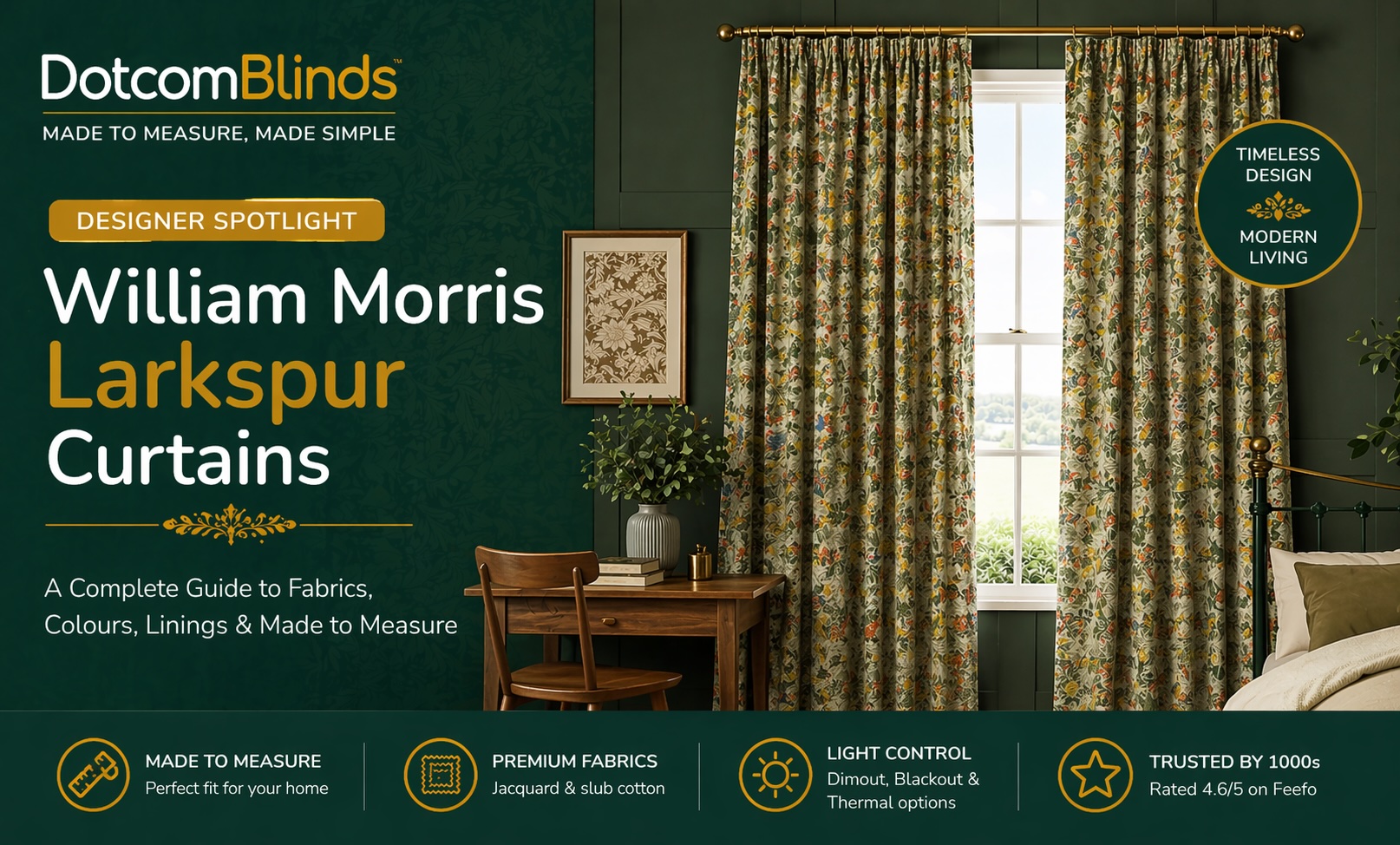
Few designers have maintained the level of relevance in British interiors quite like William Morris. More than a century after his work first emerged, Morris patterns continue to appear across period renovations, contemporary homes, and everything in between. This resurgence is not driven by nostalgia alone. It reflects a broader shift towards interiors that prioritise craftsmanship, longevity, and character over short-term trends.
At a time when many homeowners are moving away from flat, minimal finishes, richly detailed textiles such as the Larkspur design offer a clear alternative. Originally created in 1872, Larkspur stands out for its flowing composition, layered botanicals, and structured repetition. It delivers visual interest without overwhelming a space, making it particularly effective at window level where scale and proportion matter.
For today’s interiors, the challenge is not whether these heritage patterns work, but how they are applied. This is where DotcomBlinds positions itself effectively. By combining Morris’s original design language with modern made-to-measure production, the brand translates a 19th-century aesthetic into something practical for contemporary homes. The result is a collection of William Morris made to measure curtains that deliver both visual impact and functional performance.
Within this collection, Larkspur remains one of the most versatile options. Whether used in a traditional setting or as a contrast within a more modern scheme, it offers a balance of heritage design and everyday usability that aligns closely with current interior trends in the UK.
The History of the Larkspur Design
Origins: A Design Rooted in 1872
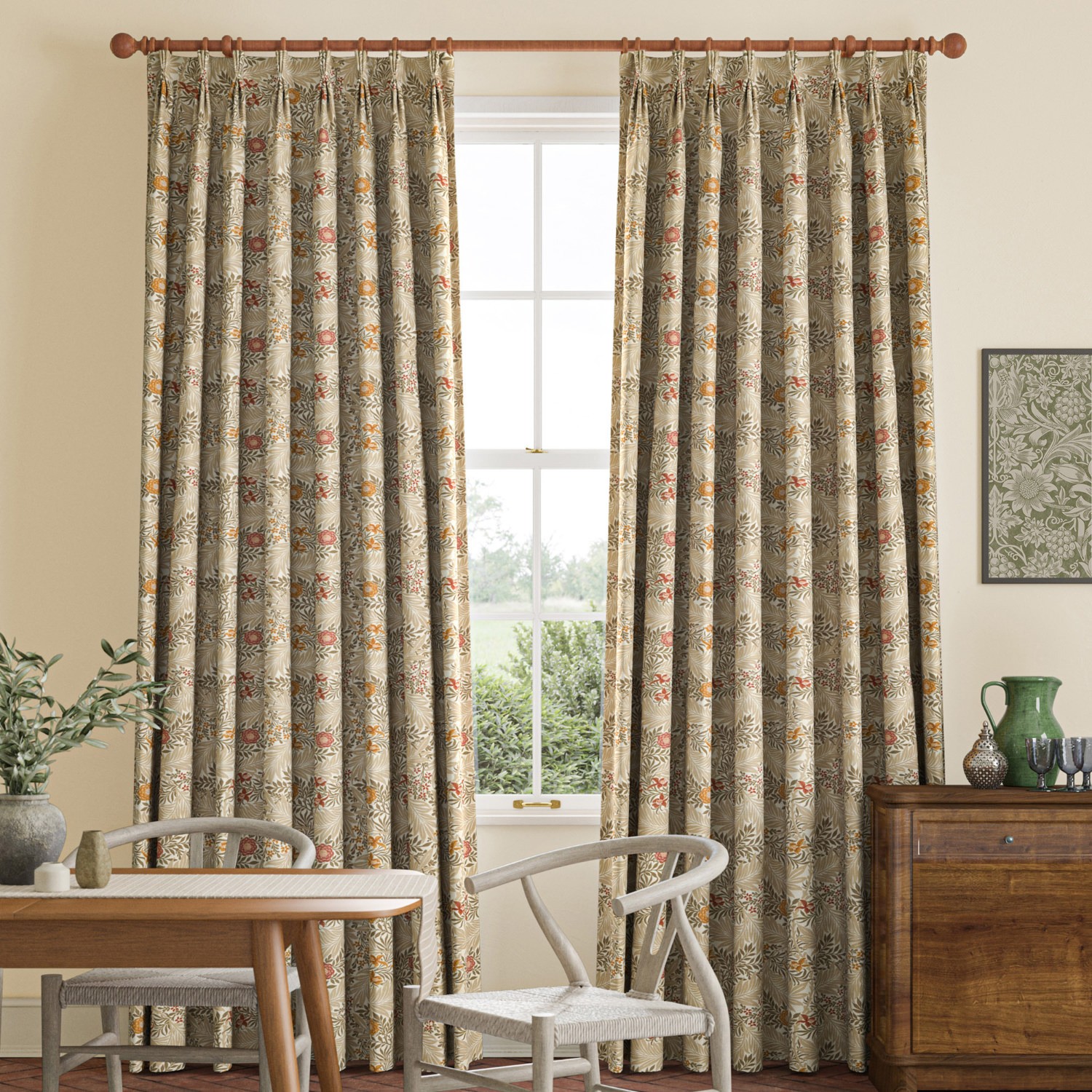
The Larkspur pattern was first introduced in 1872 by William Morris, originally conceived as a wallpaper rather than a textile. This context is important. Morris designed patterns to work across entire interior schemes, not as isolated decorative elements. As a result, Larkspur carries a sense of continuity and rhythm that translates effectively from walls to soft furnishings, particularly curtains where vertical flow enhances the design.
During this period, Morris was deeply influenced by medieval art, nature, and traditional craftsmanship. Unlike many Victorian designs that leaned towards excess or rigid symmetry, Larkspur reflects a more controlled, organic structure. This is one of the reasons it remains usable in modern interiors without feeling dated.
Design Philosophy: Function Meets Beauty
Morris’s well-known principle, “Have nothing in your houses that you do not know to be useful, or believe to be beautiful,” underpins the Larkspur design. This is not just a philosophical statement. It directly informs how the pattern functions in a space.
Larkspur is visually detailed, but not chaotic. The repeating structure ensures it performs well across larger surfaces such as curtains, where poorly balanced patterns can quickly become overwhelming. This balance between decoration and usability aligns closely with modern expectations, where aesthetics must also support comfort and practicality.
Aesthetic Detail: Structured Nature at Window Scale
What distinguishes Larkspur from other floral patterns is its sense of “ordered nature”. The design features:
- Flowing, winding stems that guide the eye vertically
- Layered floral elements that create depth without visual clutter
- A consistent repeat pattern that maintains structure across wider curtain spans
At window level, these characteristics become particularly effective. Curtains require patterns that can scale without distortion, especially in made-to-measure formats where widths can exceed standard retail sizes. Larkspur’s composition naturally accommodates this, maintaining clarity whether used on a single window or across larger installations such as bay windows or bi-fold doors.
This ability to balance detail with structure is a key reason why Larkspur floral pattern curtains continue to perform well in both traditional and contemporary interiors.
Exploring the Fabric: Jacquard vs Slub Cotton

One of the more important distinctions within the Larkspur curtain range is not just colour, but fabric construction. The same design behaves very differently depending on whether it is woven or printed, and this has a direct impact on how the curtains look, hang, and perform in a room.
For buyers comparing options, understanding the difference between Jacquard and Slub cotton curtains is essential.
The Jacquard Range (Limestone & Ochre)
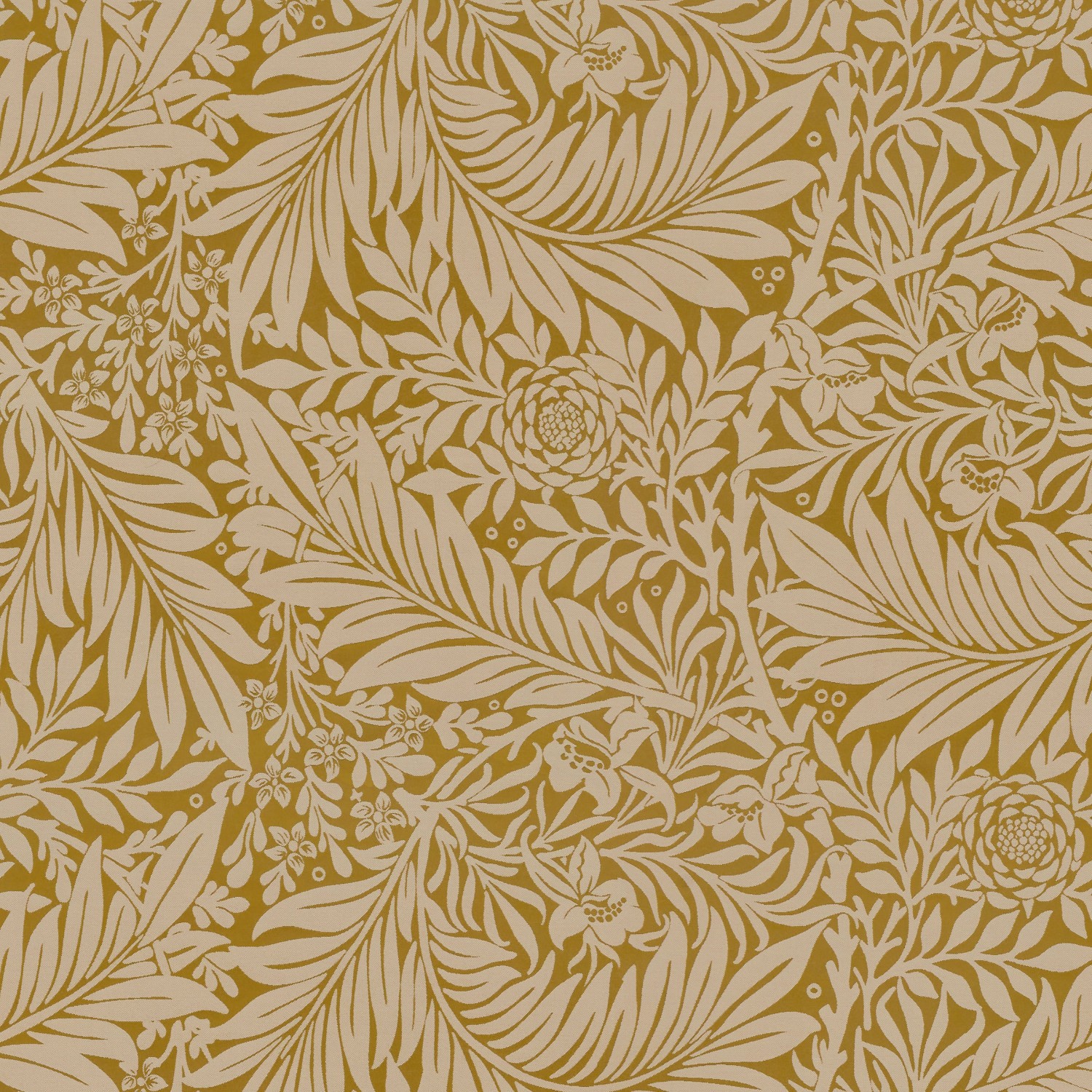
The Jacquard variants use a woven construction, where the Larkspur pattern is integrated directly into the fabric rather than printed onto the surface.
Key characteristics:
- Composition: 63% Cotton / 37% Polyester
- Heavier weight and more structured drape
- Subtle texture with a refined, slightly raised pattern
- Greater durability and crease resistance
Because the design is woven into the fabric, it has more depth and longevity compared to printed alternatives. The pattern remains visible from different angles and under changing light conditions, which adds a more premium, tailored feel.
Best suited for:
- Formal living rooms
- Period properties
- Spaces where curtains act as a focal point
In practical terms, Jacquard Larkspur curtains tend to hold their shape better, making them particularly effective when paired with structured headings such as pinch pleats.
The Slub Cotton Range (Flint, Woad, Nettle & Berry)
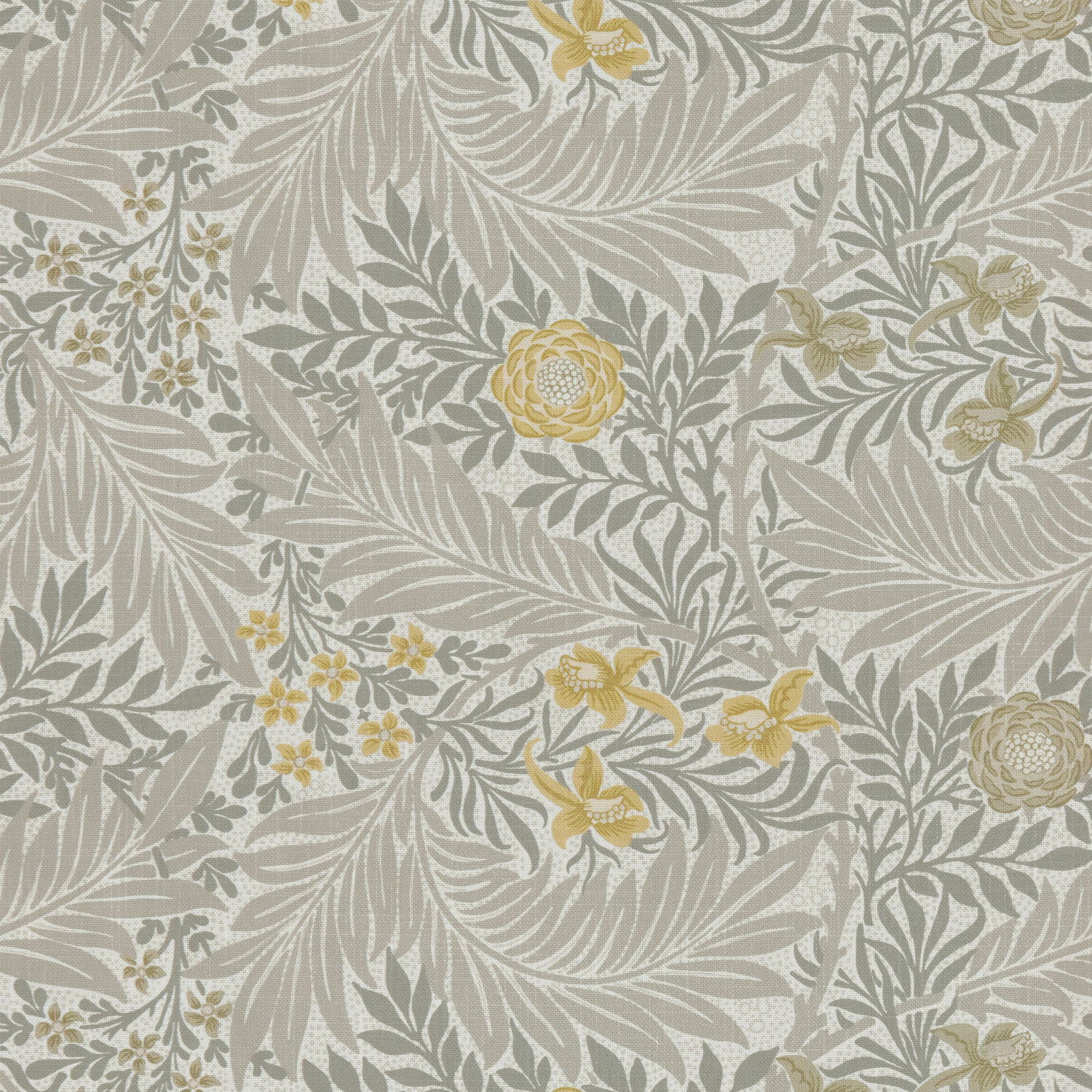
The Slub Cotton variants take a different approach, using a printed design on a textured cotton base.
“Slub” refers to the natural irregularities in the yarn, which create a slightly uneven surface. This is intentional and contributes to a more relaxed, organic appearance.
Key characteristics:
- Composition: 100% Cotton
- Matte finish with visible texture
- Softer, more fluid drape
- More casual, less formal aesthetic
The printed Larkspur design sits on top of the fabric rather than being woven through it. This results in a flatter visual finish, but one that works well in interiors where a lighter, less structured look is preferred.
Best suited for:
- Bedrooms
- Informal living spaces
- Contemporary or natural-style interiors
Quick Comparison: Jacquard vs Slub Cotton
| Feature | Jacquard (Limestone, Ochre) |
Slub Cotton (Flint, Woad, Nettle, Berry) |
|---|---|---|
| Construction | Woven pattern | Printed pattern |
| Composition | Cotton blend | 100% cotton |
| Texture | Smooth, structured | Textured, organic |
| Drape | Heavier, more defined folds | Softer, more relaxed |
| Finish | More formal | More casual |
| Best Use | Statement rooms | Everyday spaces |
Practical Consideration
From a performance perspective, the choice between these two fabrics should be based on:
- The level of formality required
- How much structure you want in the curtain folds
- Whether the curtains are intended to stand out or blend into the space
Both options carry the same Larkspur design, but the material choice determines how that design is ultimately perceived in the room.
Modern Functionality: Linings and Light Control
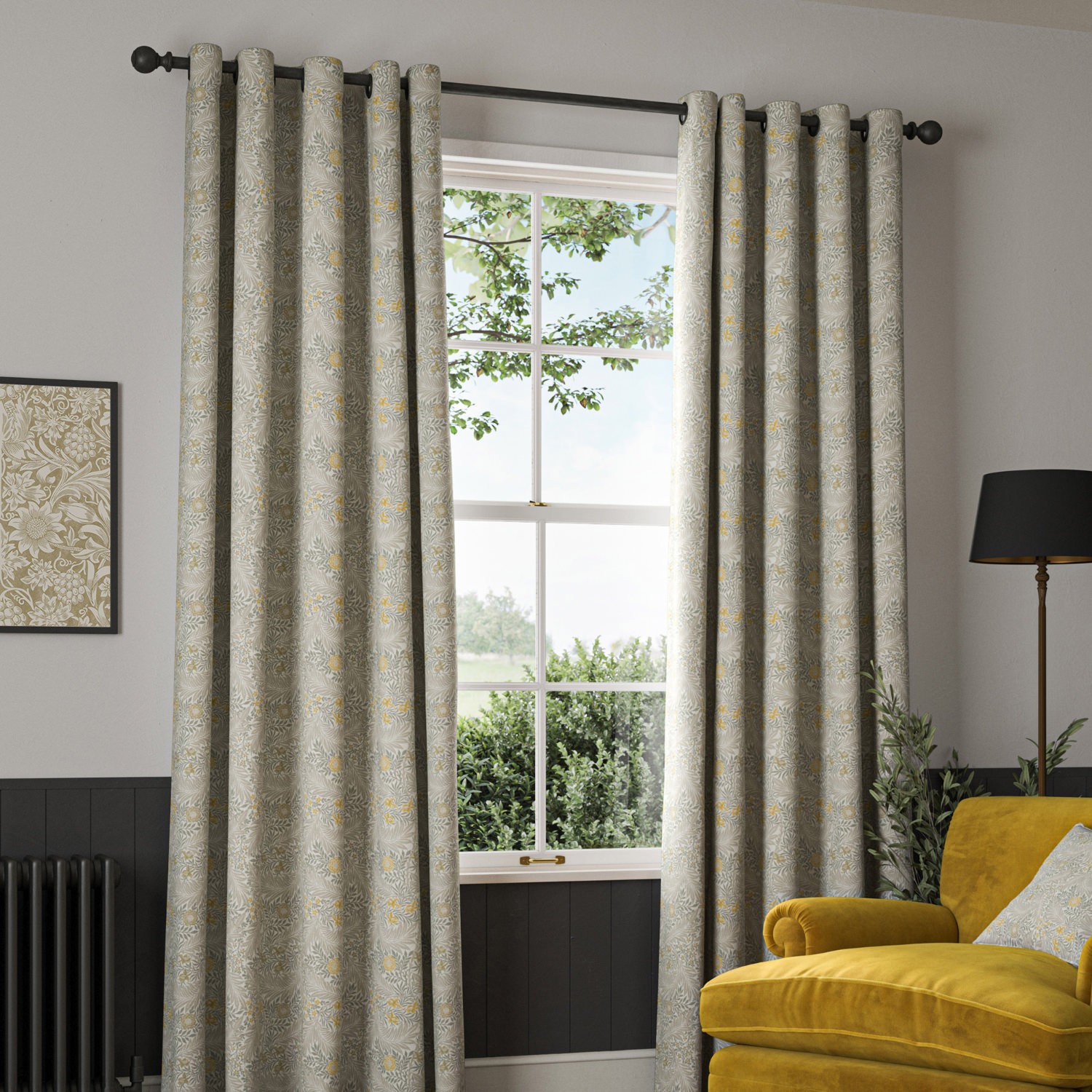
While the Larkspur design is rooted in 19th-century craftsmanship, its real value in a modern home depends just as much on what sits behind the face fabric. Lining choice has a direct effect on how the curtains perform day to day, influencing light control, privacy, insulation, and the overall feel of the room.
For homeowners investing in William Morris made to measure curtains, this is where style and practicality come together.
Dimout Linings for Softer Light Control
A dimout lining is often the most balanced option for living spaces where you still want to enjoy natural daylight, but without the harshness of direct glare. Rather than fully darkening the room, dimout linings help soften incoming light and improve privacy, while still allowing the Larkspur design to feel light and decorative rather than heavy.
This makes dimout a strong choice for:
- Living rooms
- Dining rooms
- Garden rooms
- Spaces with bright south-facing windows
In practical terms, dimout linings work well when the aim is comfort rather than complete darkness. They reduce sharp sunlight and create a calmer atmosphere, particularly in rooms used throughout the day.
Blackout and Thermal Blackout for Bedrooms and Better Insulation
Where stronger light control is needed, blackout and thermal blackout linings are the more functional option. These are particularly useful in bedrooms, nurseries, and guest rooms, where outside light can interfere with sleep quality.
A standard blackout lining is designed to reduce incoming light significantly, while a thermal blackout lining adds an extra layer of insulation. In UK homes, this has a clear practical benefit. Older properties, large window openings, and draught-prone rooms often lose a noticeable amount of heat through glazing, especially during colder months.
This makes thermal blackout William Morris curtains especially well suited to:
- Bedrooms
- Bay windows
- Period homes
- Larger glazed areas such as doors and tall windows
Energy Efficiency That Supports Comfort
Curtains are often seen primarily as a decorative feature, but with the right lining they can also contribute to energy efficiency. Heavier fabrics such as the Larkspur Jacquard range already provide more presence at the window, and when combined with a thermal lining, they help create a more effective barrier against heat loss.
This matters in practical terms because it can help:
- Reduce draughts around the window area
- Improve comfort in colder rooms
- Support better heat retention during winter
- Make larger or older rooms feel more stable in temperature
For many UK households, this performance element is just as important as the pattern itself. A made-to-measure curtain that looks strong visually but also improves room comfort offers a much better long-term return than a purely decorative ready-made alternative.
Choosing the Right Lining for the Room
The right option ultimately depends on how the room is used.
- Dimout suits spaces where softened daylight is preferred
- Blackout is better for rooms where darkness and privacy matter most
- Thermal blackout is the strongest all-round option for bedrooms and colder parts of the home
With a design such as Larkspur, the advantage is that you do not have to choose between heritage style and modern performance. The pattern delivers the decorative impact, while the lining ensures the curtains function properly in everyday life.
Choosing Your Header: The DotcomBlinds Difference
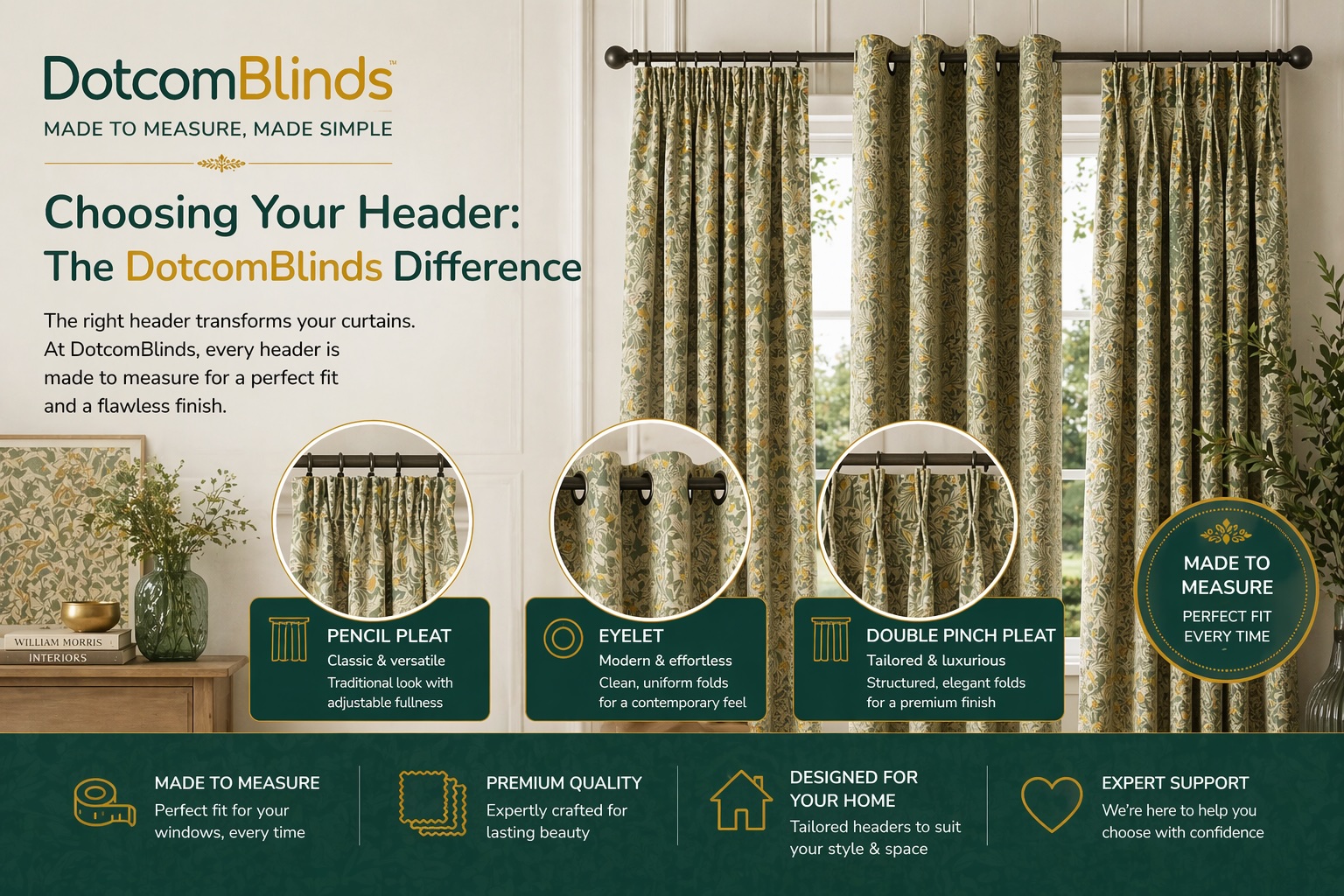
While fabric and lining determine how Larkspur curtains look and perform, the header style defines how they sit and move across the window. This is often overlooked, but it has a direct impact on the overall finish, fold structure, and how traditional or contemporary the final result feels.
With made-to-measure options from DotcomBlinds, the choice of heading allows you to tailor a heritage design like Larkspur to suit very different interior styles.
Pencil Pleat: The Traditional Standard
Pencil pleat remains the most versatile and widely used curtain heading. It creates a series of tight, uniform gathers along the top of the curtain, offering a balanced and classic appearance.
Key characteristics:
- Adjustable fullness depending on how tightly the tape is pulled
- Compatible with both curtain tracks and poles
- Works well across a wide range of window sizes
For a design like Larkspur, pencil pleat aligns closely with its historical roots. It allows the pattern to flow naturally without imposing too much structure, making it a reliable choice for:
- Period properties
- Bay windows
- Traditional living and dining rooms
Eyelet: A Contemporary Interpretation
Eyelet curtains introduce a more modern aesthetic, using metal rings that sit directly on the curtain pole. This creates wider, more uniform folds that run from top to bottom.
Key characteristics:
- Clean, consistent wave effect
- Easy to open and close
- Requires a curtain pole rather than a track
Eyelet headings are useful when you want to bring a 19th-century pattern into a more contemporary setting. The structured folds simplify the visual impact of the design, helping Larkspur feel more controlled and less ornate.
Best suited for:
- Modern interiors
- Open-plan living spaces
- Rooms where simplicity is preferred over detail
Double Pinch Pleat: A More Tailored Finish
Double pinch pleat (also known as two-finger pinch pleat) offers a more formal and structured appearance. The fabric is gathered into fixed pleats that are stitched in place, creating a consistent and tailored look across the width of the curtain.
Key characteristics:
- Defined, evenly spaced pleats
- Higher fabric volume for a fuller appearance
- Typically used with curtain tracks or poles with rings
This heading enhances the depth and weight of the Larkspur fabric, particularly in Jacquard variants, where the woven pattern benefits from a more structured presentation.
Best suited for:
- Formal living rooms
- Dining rooms
- Interiors aiming for a more “designed” finish
Choosing Your Header: Quick Comparison
| Header Style | Look & Finish | Best For | Works With |
|---|---|---|---|
| Pencil Pleat | Classic, gathered and versatile with a traditional finish. | Period homes, bay windows, living rooms and dining rooms. | Curtain tracks and poles |
| Eyelet | Clean, uniform folds with a more modern appearance. | Contemporary interiors, open-plan spaces and simpler room schemes. | Curtain poles only |
| Double Pinch Pleat | Structured, tailored and more formal with a premium finish. | Formal living rooms, dining rooms and high-end interior schemes. | Curtain tracks and poles with rings |
Practical Consideration
The choice of header should reflect both the room style and how the curtains will be used day to day.
- Pencil pleat offers flexibility and a traditional feel
- Eyelet provides a cleaner, more contemporary look
- Double pinch pleat delivers a more premium, tailored finish
With made-to-measure curtains, this level of control allows the same Larkspur fabric to adapt across very different interior styles, from classic to modern, without compromising on fit or functionality.
Colour Palette Guide: Matching Larkspur to Your Interior
One of the strengths of the Larkspur collection is its versatility across colourways. While the pattern remains consistent, the colour palette significantly influences how the curtains interact with the room. Choosing the right variant is less about preference alone and more about how the tone works with light, wall colours, and overall interior style.
Neutrals: Limestone & Flint
The neutral tones provide the most flexibility, particularly in spaces where you want the pattern to complement rather than dominate.
Limestone leans towards warm, soft neutrals, making it effective in rooms with:
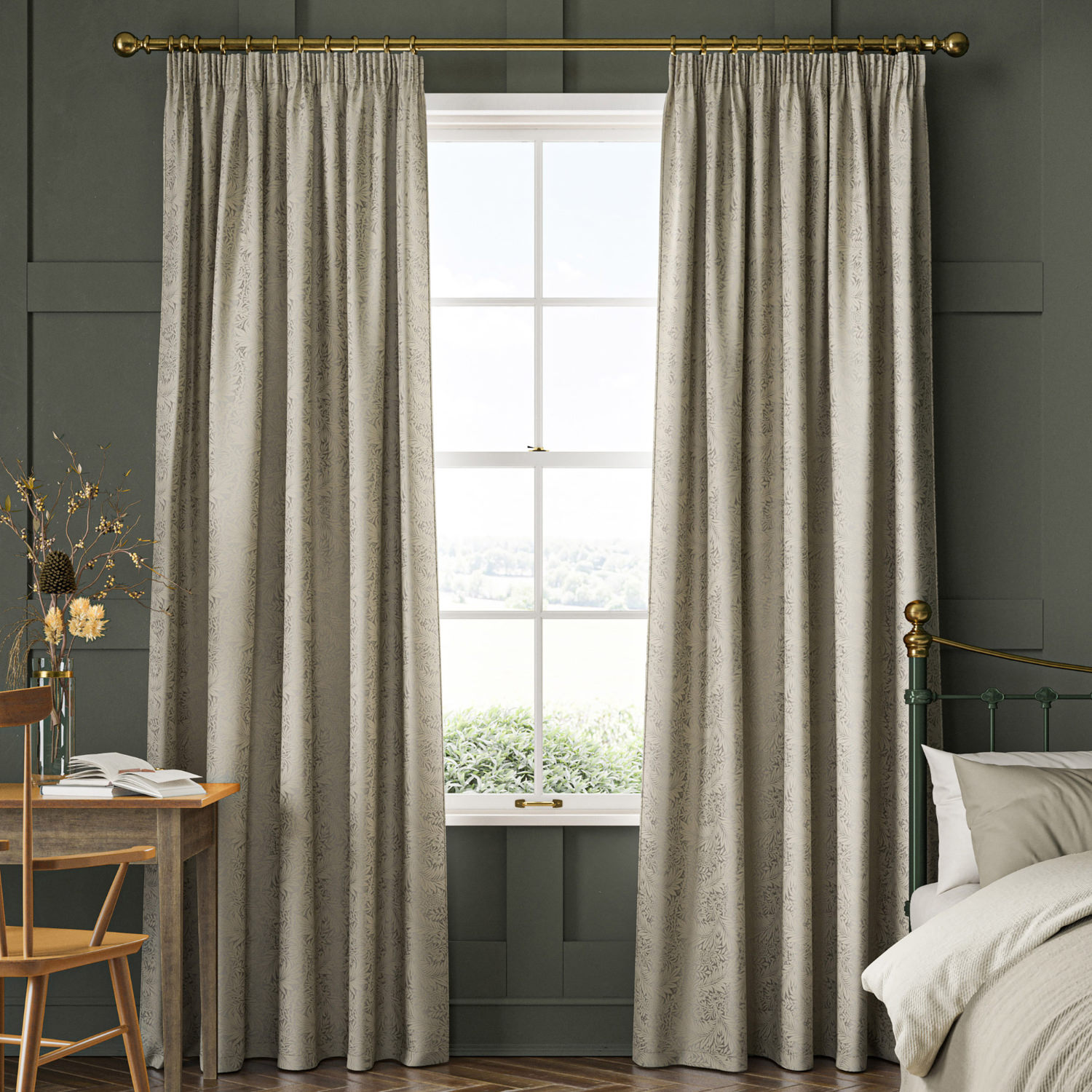
- Light wood flooring
- Off-white or cream walls
- Natural textures such as linen and wool
Flint introduces a slightly cooler, grey-based tone, which works well in:
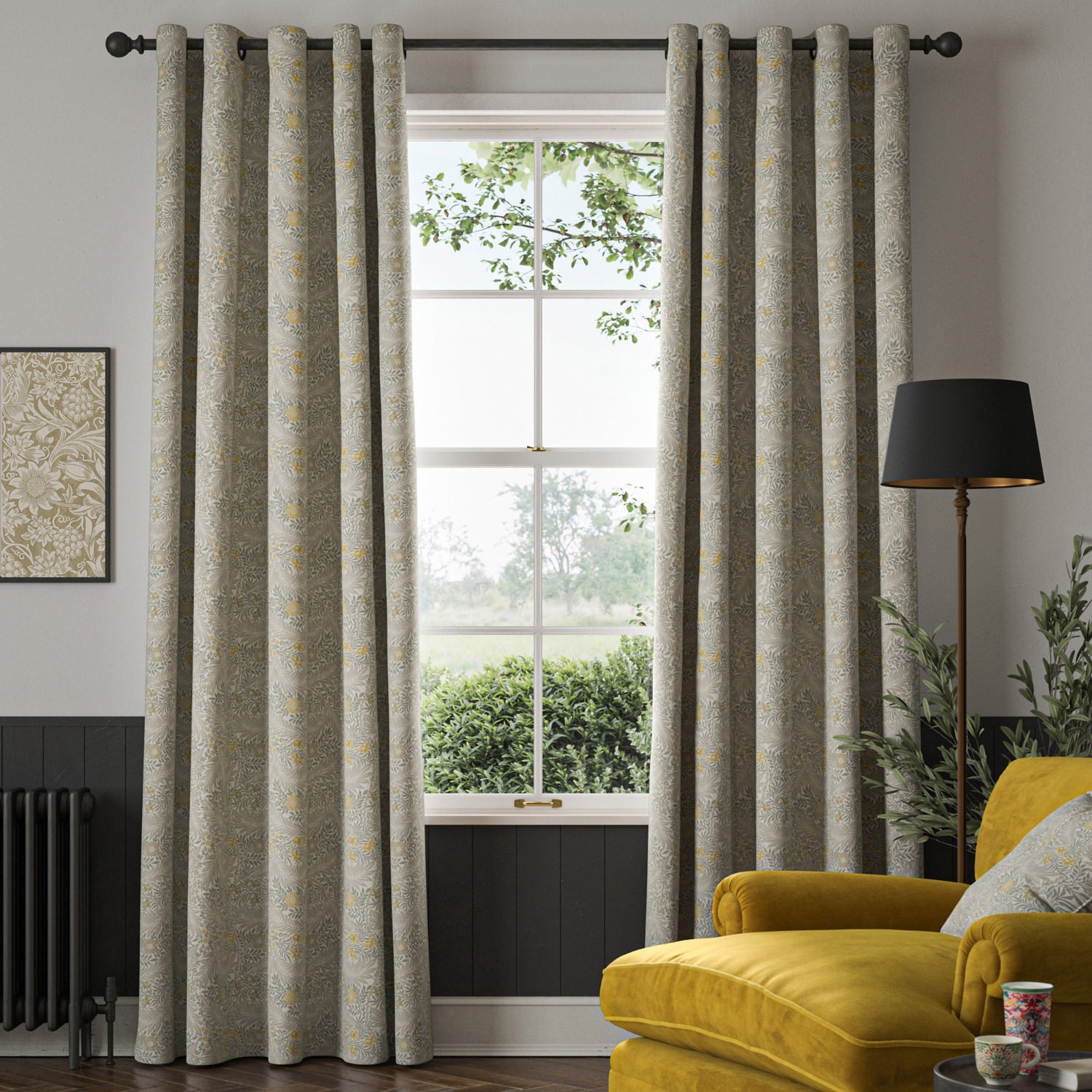
- Contemporary interiors
- Spaces with cooler colour palettes
- Rooms with metal or stone finishes
These options are particularly effective in:
- Smaller rooms where darker colours may feel restrictive
- Open-plan spaces where consistency is important
They also align well with current UK trends towards lighter, more breathable interiors without losing the character of a patterned fabric.
Heritage Tones: Woad & Nettle
The deeper colourways draw more directly from traditional British interiors, offering stronger contrast and a more defined presence at the window.
Woad, with its deep blue tones, works well in:
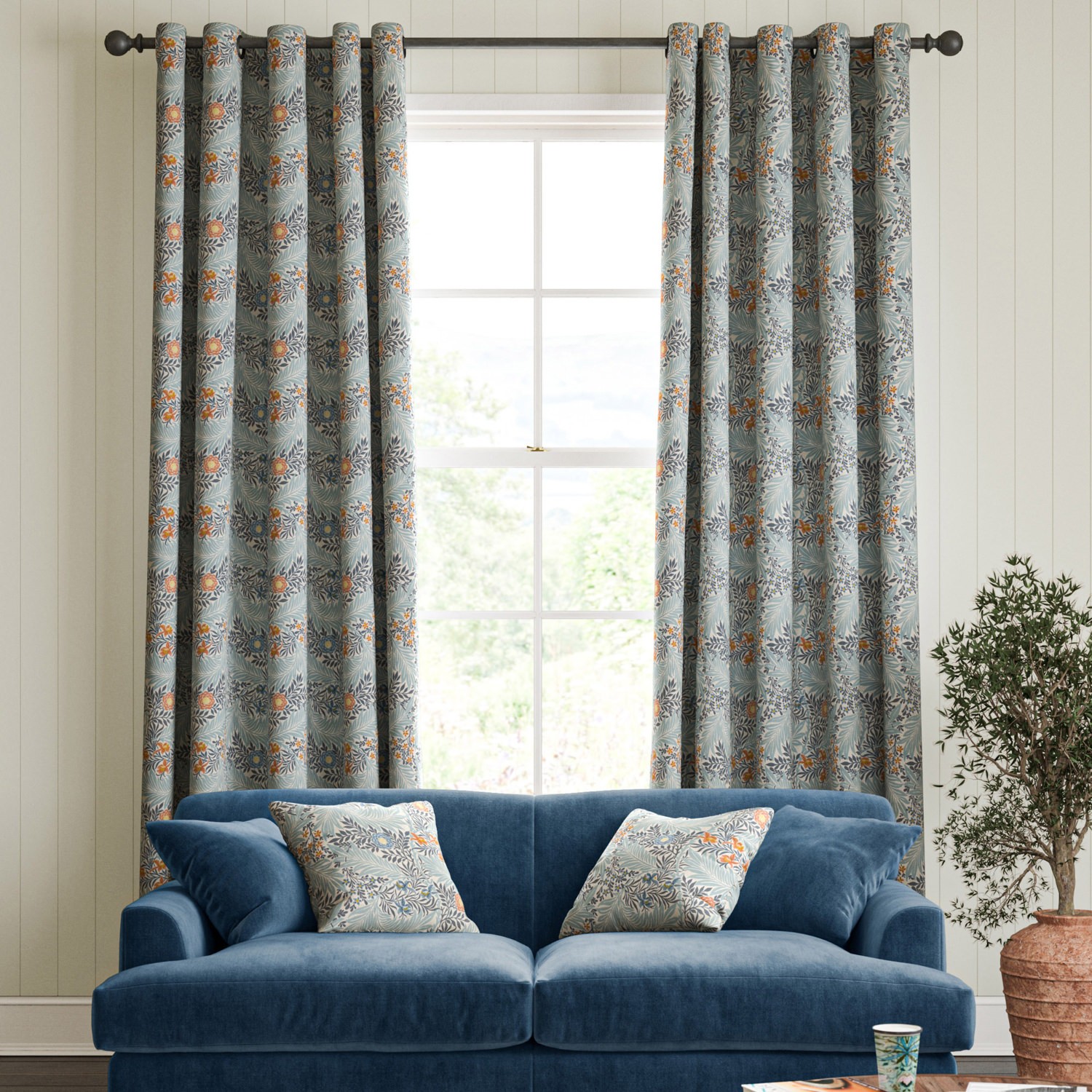
- Studies and home offices
- Living rooms with darker furniture
- Interiors using navy, charcoal, or muted brass accents
Nettle introduces a botanical green that feels grounded and natural, making it suitable for:
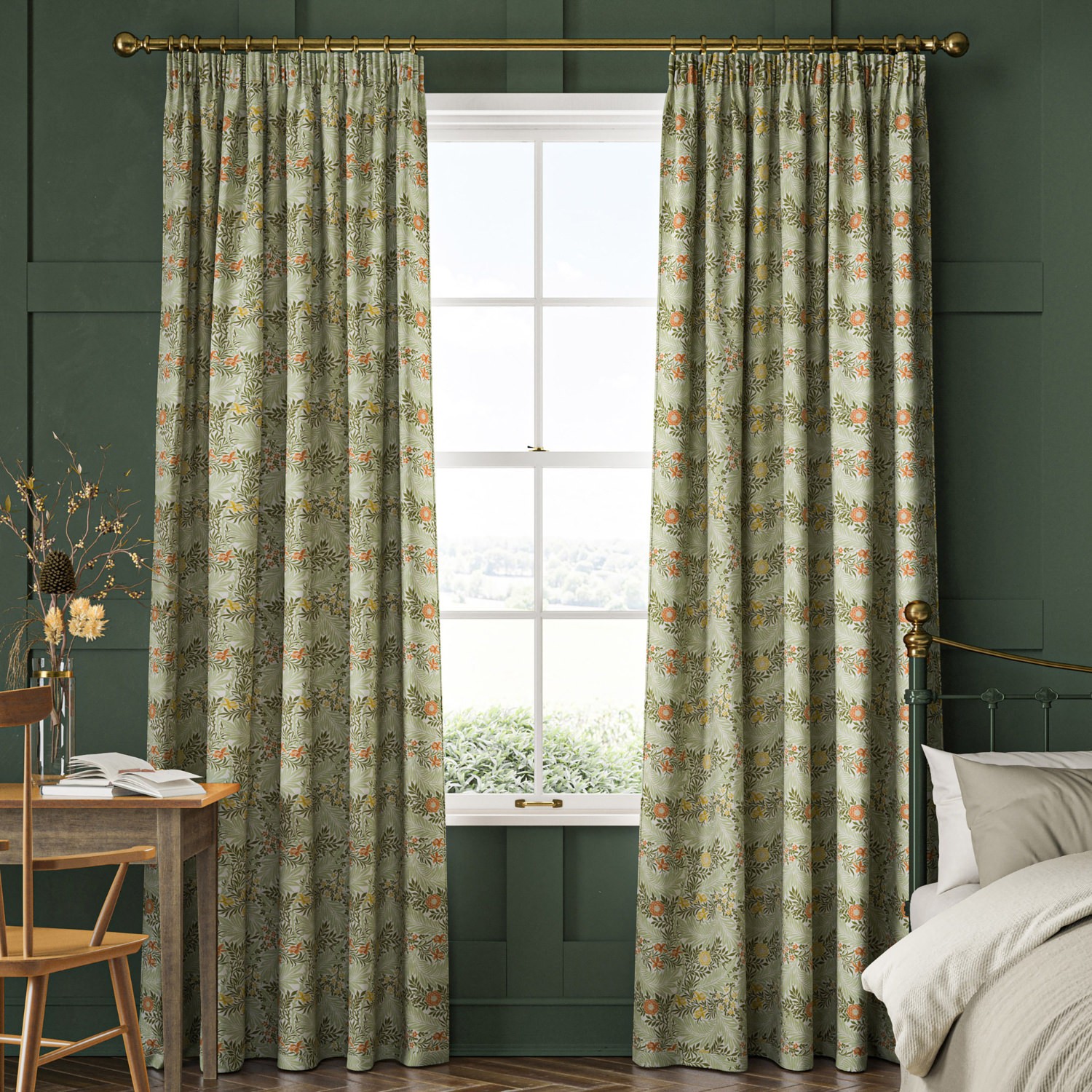
- Dining rooms
- Period properties
- Interiors incorporating plants or earthy colour schemes
These shades are particularly effective where you want the curtains to feel integrated into a richer, more layered design scheme rather than standing out as a single feature.
Bold Accents: Ochre & Berry
The bolder colourways shift the curtains from a supporting element to a focal point within the room.
Ochre brings warmth and energy, working well when paired with:
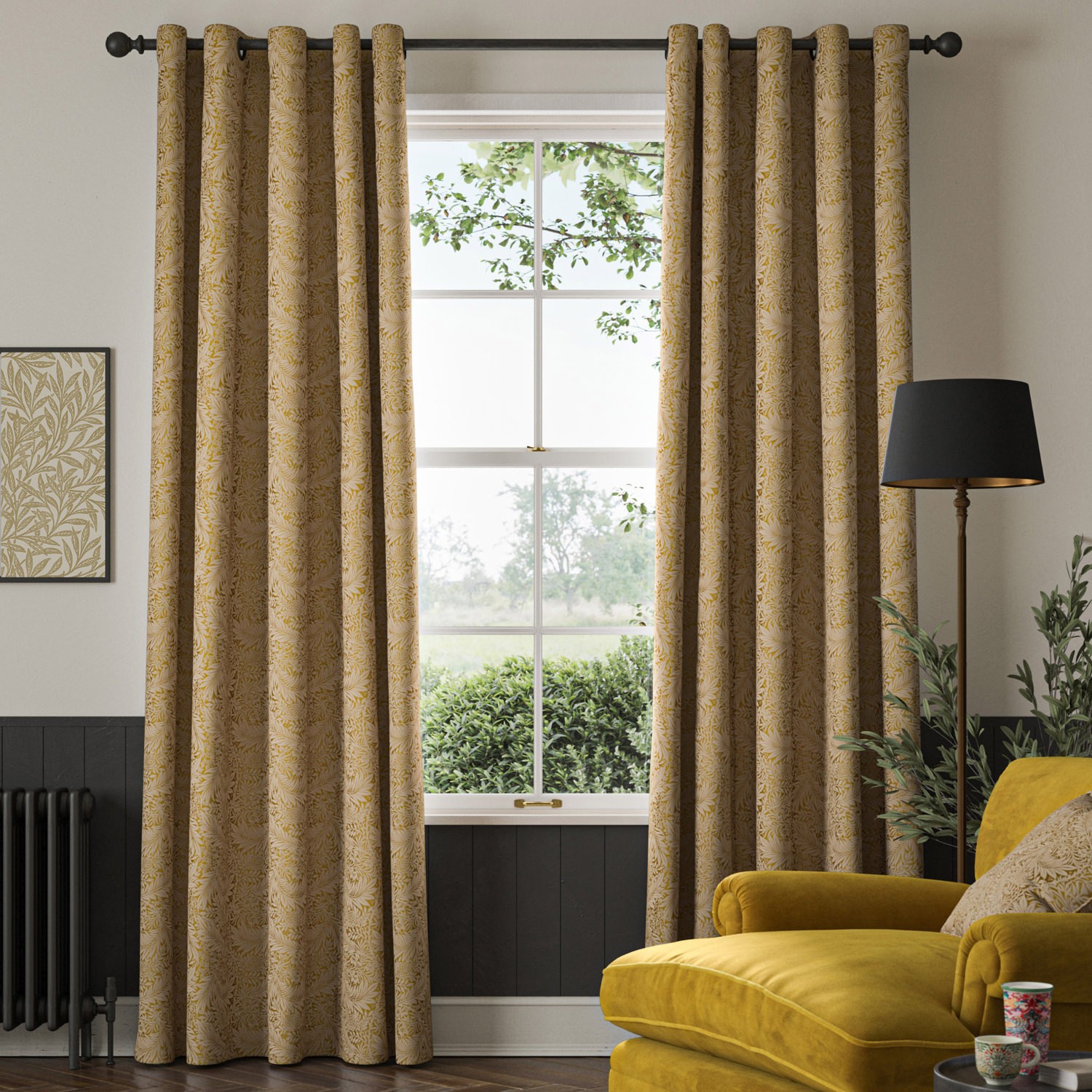
- Neutral walls (white, beige, light grey)
- Darker woods or black accents
- Mid-century or heritage-inspired interiors
Berry introduces deeper red and plum tones, which are more dramatic and suited to:
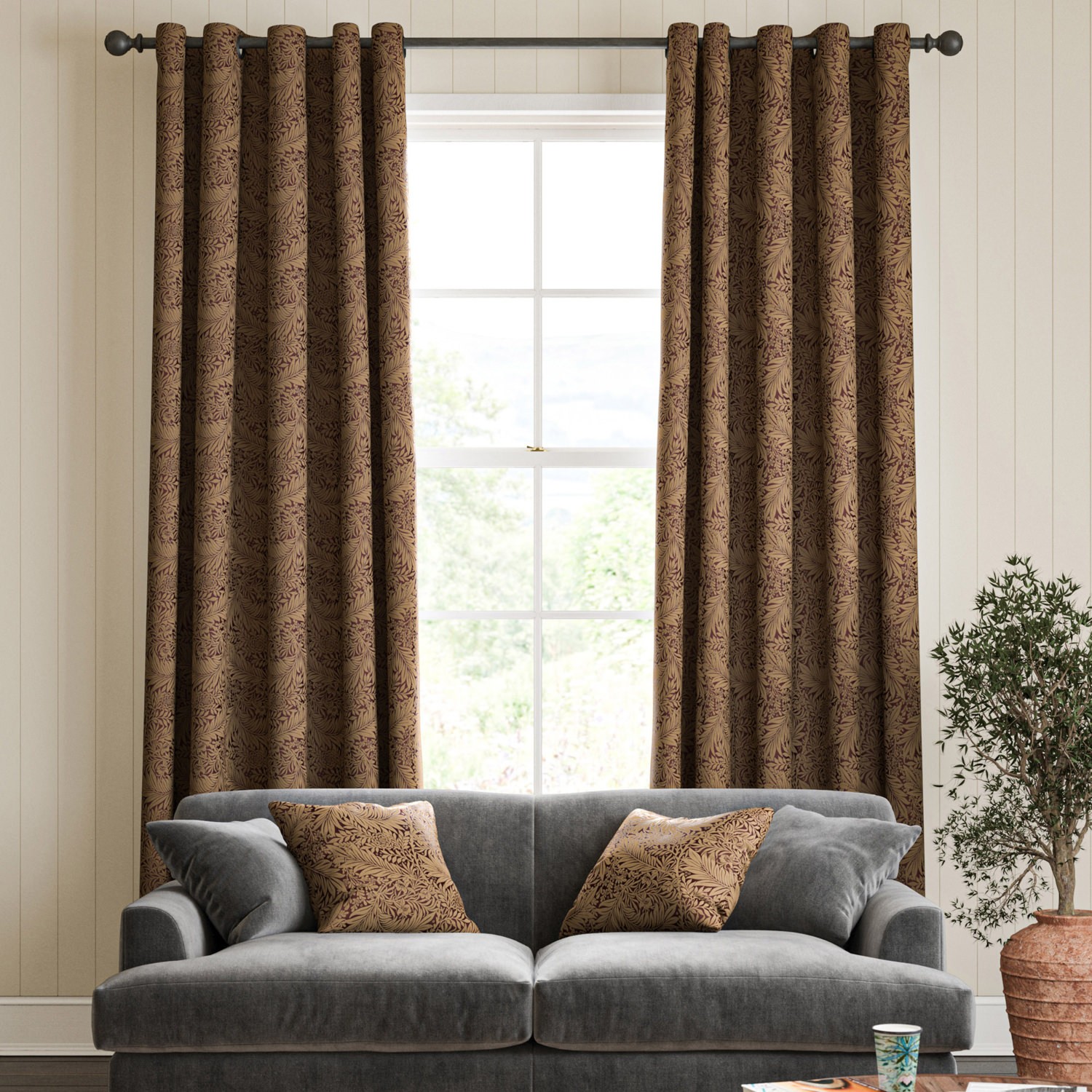
- Feature rooms
- Formal dining areas
- Spaces designed around contrast and depth
When using these colours, it is generally more effective to keep surrounding elements restrained. This allows the curtains to anchor the room visually without competing with other strong design features.
Practical Approach to Colour Selection
When selecting a Larkspur colourway, consider:
- Natural light levels (darker colours absorb more light)
- Room size (lighter tones help maintain openness)
- Existing materials and finishes (flooring, furniture, wall colour)
For most buyers, viewing samples in the actual room is the most reliable way to assess colour accuracy, as lighting conditions can significantly alter how each tone appears throughout the day.
This is where made-to-measure options from DotcomBlinds add practical value, allowing you to align colour, fabric, and sizing before committing to a final specification.
Measuring for Perfection: The Expert Edge
For a design like Larkspur, scale and proportion matter. Unlike plain fabrics, patterned curtains rely on correct sizing to ensure the design flows properly across the window. This is where made-to-measure becomes less of a luxury and more of a requirement.
Why Made-to-Measure Outperforms Ready-Made
Ready-made curtains are produced in fixed widths and drops, which introduces several limitations:
- Pattern misalignment across wider windows
- Insufficient fullness, reducing the impact of the design
- Incorrect drop lengths, leading to either pooling or gaps
With a detailed pattern such as Larkspur, these issues are more noticeable. The repeat needs enough width and fabric volume to sit correctly, otherwise the design can appear compressed or uneven.
Made-to-measure curtains avoid this by ensuring:
- Accurate width based on the window and track or pole
- Correct fullness for the chosen heading style
- Precise drop for a clean finish at floor level
Designed for Larger and More Complex Windows
One of the key advantages of made-to-measure is the ability to accommodate larger openings that standard curtains cannot cover effectively.
With options available through DotcomBlinds, Larkspur curtains can be produced up to:
- 5.2 metres in width
- 3.76 metres in drop
This makes them suitable for:
- Bay windows
- Tall Victorian windows
- Bi-fold and sliding doors
- Open-plan living areas with wide glazing
In these scenarios, correct sizing is critical not just for appearance, but also for functionality. Curtains that are too narrow or too short will not provide adequate light control or insulation.
Impact on Drape and Overall Finish
The way curtains hang is heavily influenced by how they are measured and made. Insufficient fabric width leads to flat, stretched panels, while excess without structure can look untidy.
Made-to-measure ensures:
- Even, consistent folds
- Proper stack-back when curtains are open
- Balanced coverage when closed
This is particularly important when using structured headings such as pinch pleats, where precision directly affects the final look.
Practical Consideration Before Ordering
Before placing an order, it is important to consider:
- Whether the curtains will be fitted to a track or pole
- The desired finish (just touching the floor, breaking slightly, or pooling)
- Obstructions such as radiators, window handles, or furniture
Accurate measuring at this stage avoids adjustments later and ensures the Larkspur design performs as intended.
The Outcome
For patterned, heritage designs, made-to-measure is not simply about fit. It ensures that the visual integrity of the design is maintained while delivering the expected level of performance in terms of light control, insulation, and usability.
In practical terms, it is the difference between curtains that simply cover a window and curtains that complete the room.
Maintenance and Longevity
Investing in a heritage design such as Larkspur is not just about initial impact. With the right care, these curtains are designed to maintain their appearance and performance over the long term. Fabric type, lining choice, and environmental factors all play a role in how well they age.
Routine Care and Cleaning
For both Jacquard and Slub cotton variants, regular light maintenance helps preserve the fabric:
- Vacuum gently using a soft brush attachment to remove dust
- Avoid excessive handling to prevent unnecessary creasing or wear
- Keep away from prolonged moisture exposure, particularly in kitchens or bathrooms
For deeper cleaning, professional dry cleaning is generally recommended, especially for lined curtains. This helps maintain:
- Fabric structure
- Colour consistency
- Pattern definition
Machine washing is not typically advised for made-to-measure curtains, particularly those with structured headings or heavier linings.
Fabric-Specific Considerations
Different constructions require slightly different approaches:
- Jacquard fabrics (cotton blends) tend to be more durable and resistant to creasing, making them easier to maintain over time
- Slub cotton fabrics are softer and more natural in appearance, but may require more careful handling to preserve their texture
Because Slub cotton has a more organic finish, minor variations and soft creasing are part of its character rather than a defect.
Managing Light Exposure
Direct sunlight is one of the main factors affecting fabric longevity. Over time, strong UV exposure can lead to fading, particularly in darker or more saturated colourways.
To reduce this risk:
- Use linings to create a protective barrier
- Consider rotating curtains periodically where possible
- Avoid leaving curtains fully open during prolonged direct sunlight
Thermal and blackout linings can be especially useful here, as they add an additional layer of protection behind the face fabric.
Long-Term Performance
Well-made curtains, particularly those produced to measure, are designed to last significantly longer than off-the-shelf alternatives. The combination of:
- Proper sizing
- Quality fabric construction
- Suitable lining
means they retain both their appearance and functionality over time.
With options from DotcomBlinds, the focus on made-to-measure production helps ensure that the curtains are not under unnecessary strain from poor fit or incorrect proportions, which is often a key cause of early wear.
A Practical Investment
From a cost perspective, higher-quality curtains should be viewed over a longer lifecycle. When maintained correctly, Larkspur curtains are not a short-term decorative choice but a more durable interior feature that continues to perform across changing seasons and usage patterns.
This balance of design longevity and practical durability is what makes them a more considered investment compared to standard ready-made alternatives.
Why Choose William Morris Curtains from DotcomBlinds
When investing in a heritage design like Larkspur, the supplier matters as much as the fabric itself. The quality of manufacturing, accuracy of sizing, and level of service all influence how well the final product performs in your home.
Proven Customer Trust
One of the clearest indicators of reliability is verified customer feedback. DotcomBlinds holds a 4.6 out of 5 rating on Feefo, based on over 1,500 verified reviews. This reflects consistent delivery across:
- Product quality
- Order accuracy
- Customer support
- Overall buying experience
For made-to-measure products, where precision is critical, this level of trust is particularly important.
Made-to-Measure Precision
Unlike off-the-shelf options, every curtain is produced to your exact specifications. This ensures:
- Accurate width and drop for your window
- Correct fullness based on the chosen heading
- A cleaner, more professional finish
For patterned fabrics like Larkspur, this precision is essential to maintain design balance and ensure the pattern sits correctly across the window.
Free Sample Service
Choosing fabric online introduces a level of uncertainty, particularly with colour and texture. DotcomBlinds addresses this with a free sample service (up to 10 samples), allowing you to:
- Assess colour in your own lighting conditions
- Compare fabric types (Jacquard vs Slub cotton)
- Make a more confident decision before ordering
This step is especially valuable with heritage designs, where subtle differences in tone can significantly affect the final look.
UK-Based Expertise
DotcomBlinds combines an easy-to-use online experience with the backing of experienced staff who understand made-to-measure window dressings. This ensures:
- Practical guidance where needed
- Products suited to UK homes and conditions
- A focus on both aesthetics and performance
This balance between convenience and expertise is often missing from lower-cost, mass-produced alternatives.
Reliable Delivery and Service
From order to installation, consistency is key. A well-managed process reduces the risk of delays, incorrect sizing, or product issues. With a focus on customer care, DotcomBlinds aims to deliver:
- Clear ordering processes
- Reliable lead times
- Support throughout the buying journey
Overall Value
When viewed as a complete package, the combination of:
- Heritage design
- Made-to-measure accuracy
- Verified customer trust
- Practical support tools such as free samples
positions DotcomBlinds as a strong option for sourcing William Morris made to measure curtains.
For buyers, the difference is not just in the product itself, but in how confidently and accurately it fits into the home once installed.
Conclusion: A Timeless Investment
The Larkspur design captures what makes William Morris enduringly relevant. It combines decorative detail with structure, allowing it to work across both traditional and modern interiors without feeling out of place. More importantly, it demonstrates that heritage design can still meet the practical expectations of contemporary living.
Through considered fabric choices, functional linings, and tailored sizing, Larkspur curtains go beyond surface-level aesthetics. They offer:
- Design longevity, with a pattern that remains relevant over time
- Functional performance, from light control to insulation
- Flexibility, adapting to different room types and interior styles
When produced as made-to-measure, these benefits become more consistent and reliable. Correct proportions, proper drape, and accurate fitting ensure that the design performs as intended, both visually and practically.
Sourcing through DotcomBlinds brings this together. By combining Morris’s original design principles with modern manufacturing and customer-focused service, the result is a product that bridges two very different eras without compromise.
For homeowners, this makes Larkspur more than a decorative choice. It is a considered, long-term addition to the home. One that balances heritage, usability, and performance in a way that few off-the-shelf alternatives can match.