Order Tracking
 0800 1422417
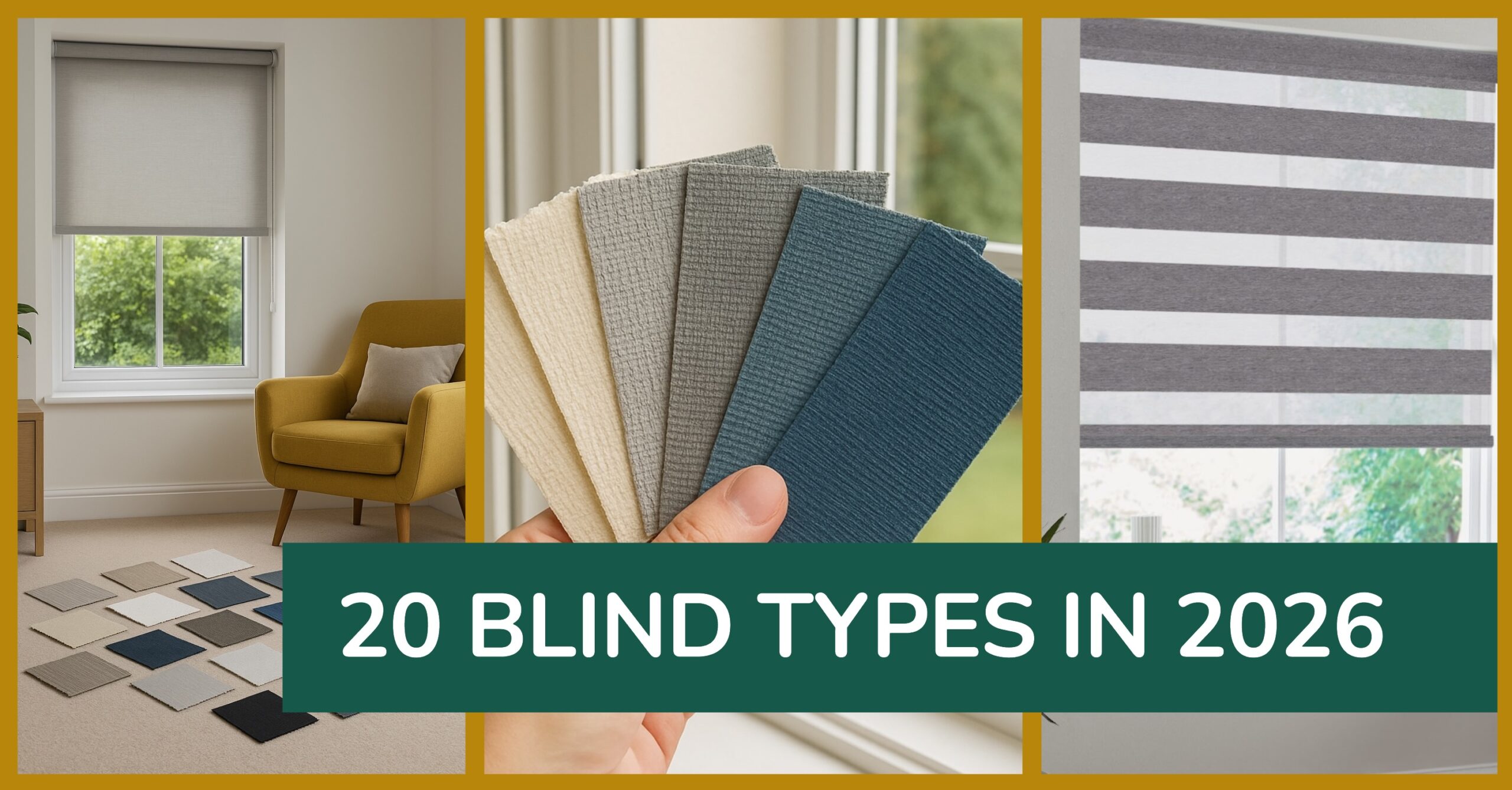
Choosing the right blinds for your home has never been more exciting than in 2026. With new technologies, innovative no-drill systems and a surge in design-led fabrics, today’s window coverings offer far more than simple shading. They shape the atmosphere of a room, enhance privacy, improve insulation and even integrate with smart home routines. Yet with so many styles available, finding the perfect blind can feel overwhelming.
That’s where expert guidance makes all the difference.
In this comprehensive guide, we take you through 20 blind types shaping UK homes in 2026, explaining how each one works, what makes it unique and where it performs best. Whether you’re renovating a single room, upgrading a whole property or simply exploring new interior trends, this article breaks down every option clearly and confidently. From classic roller blinds to cutting-edge smart systems, and from natural materials to modern no-drill designs, you’ll learn exactly which blinds suit your space, your lifestyle and your budget.
By the end, you’ll have expert-level clarity on which blind type is right for you – and how to customise it to perfection.
Let’s explore the standout blind styles defining 2026.
Roller Blinds

What they are
Roller blinds are one of the most popular and versatile blind types in the UK. They consist of a single piece of fabric that rolls neatly around a top tube using either a chain mechanism or a cordless spring system. Known for their simplicity, affordability and clean look, they suit almost every room in the home.
Key features in 2026
In 2026, roller blinds continue to evolve with improved fabrics, more durable mechanisms and wider design choice. Thermal-backed and moisture-resistant options are now more common, and many households are opting for cassette or smart roller upgrades to improve light control and convenience. eco-conscious fabrics, recycled materials and low-VOC coatings are also becoming more mainstream.
Best for
- Kitchens and bathrooms
- Living rooms and home offices
- Small or large windows
- Rental homes and first-time buyers
Pros
- Simple, modern design that works with most interiors
- Wide range of fabrics, colours and patterns
- Affordable compared to many other blind types
- Easy to operate and maintain
- Moisture-resistant and blackout options available
Cons
- Standard roller blinds can have light gaps around the edges
- Fabric may not suit highly textured or traditional interiors
- Large windows may require upgraded mechanisms
- Not as insulating as honeycomb or thermal blinds unless upgraded
Price range
Typically low to mid cost depending on fabric type, size and optional upgrades such as cassettes or smart controls.
Expert buying tips
- Choose a cassette roller if you want improved blackout performance.
- For kitchens or bathrooms, opt for moisture-resistant PVC fabrics.
- If you need extra insulation, select a thermal-backed roller fabric.
- Consider chain-free or cordless options for child safety and a cleaner look.
Consider these alternatives
- Double roller blinds for day and night flexibility
- Day and night blinds if you want better light control
- Cassette blinds for tighter blackout
- Roman blinds for a softer, more decorative finish
Double Roller Blinds

What they are
Double roller blinds feature two separate roller fabrics mounted on a single bracket system, allowing homeowners to enjoy the benefits of both a daytime and nighttime blind in one compact unit. Typically, the front layer provides privacy and soft light control, while the back layer offers full blackout or enhanced shading. This dual-layer setup gives far greater versatility compared to a standard roller blind.
Key features in 2026
In 2026, double roller blinds are increasingly popular thanks to slimmer dual brackets, smoother mechanisms and a broader choice of blackout and dim-out combinations. Many systems are now available with matching cassettes for a cleaner finish, while eco-friendly fabrics and moisture-resistant options are becoming the norm. No-drill day and night variants and smart control upgrades are also gaining traction.
Best for
- Bedrooms needing both daytime light filtering and nighttime blackout
- Living rooms with variable lighting requirements
- Street-facing windows that require privacy throughout the day
- Homes wanting flexibility without switching blind types
Pros
- Two blinds in one for maximum light and privacy control
- Ideal for bedrooms and nurseries where blackout is essential
- Slimmer dual brackets make modern units less bulky
- Huge choice of fabric combinations
- Can be upgraded with cassettes or smart motors
Cons
- More expensive than single roller blinds
- Bulkier appearance without a cassette cover
- Requires accurate measuring for smooth dual operation
- Limited suitability for very small windows
Price range
Generally mid-range, depending on fabric choice, blackout performance and upgrades such as cassette systems or motorisation.
Expert buying tips
- Pair screen or voile fabric with a true blackout fabric for the best day-night balance.
- Add a cassette to hide the dual brackets and create a more seamless look.
- In bedrooms, choose a side channel upgrade if you want near-total darkness.
- For child safety and convenience, consider smart or cordless double rollers.
Consider these alternatives
- Day and night (Zebra) blinds if you want a single-layer dual-effect fabric
- Cassette blinds for superior blackout performance
- Roman blinds for a softer, more decorative option
- Electric blinds for hands-free control
Day and Night Blinds (Zebra Blinds)

What they are
Day and night blinds, often called zebra blinds, feature alternating horizontal bands of sheer and opaque fabric. As the fabric layers slide across each other, the stripes align or offset to create varying levels of light, privacy and visibility. This makes them a stylish, modern alternative to roller blinds with far greater control over ambience.
Key features in 2026
In 2026, day and night blinds continue to grow in popularity thanks to enhanced fabric clarity, smoother operating mechanisms and bolder, design-led colourways. Many models now come with upgraded blackout stripes, wider fabric drops for big windows, and smarter no-drill or motorised variations. Their sleek, contemporary appearance fits perfectly with current interior trends that favour clean lines and layered lighting.
Best for
- Living rooms and dining rooms
- Home offices needing glare reduction
- Bedrooms where adjustable privacy is essential
- Street-facing windows
- Modern and contemporary interiors
Pros
- Adjustable light control without raising the blind fully
- A modern, stylish appearance that suits minimal interiors
- Excellent privacy during the day
- Wide range of fabrics, textures and stripe opacities
- Works well on both small and large windows
Cons
- Not a true blackout solution
- More delicate than standard roller fabrics
- Some designs may look too modern for traditional homes
- Premium fabrics can increase cost
Price range
Mid-range, depending on stripe quality, fabric weight and optional upgrades such as cassettes or smart motors.
Expert buying tips
- For better light control, choose closely woven opaque stripes.
- Add a cassette headbox to tidy the top and reduce light bleed.
- If glare control is important, pick fabrics with UV resistance.
- For a softer finish, look for textured or linen-effect stripes.
Consider these alternatives
- Double roller blinds if you want separate day and night layers
- Roller blinds for a simpler, more cost-effective solution
- Roman blinds for a softer aesthetic with good privacy
- Cassette blinds if blackout is essential
Roman Blinds

What they are
Roman blinds are fabric blinds that fold into soft, neat pleats when raised and lie flat when lowered. They offer the look and feel of made-to-measure curtains but in a compact blind format, making them a favourite for adding warmth, elegance and texture to a room. They are operated via a chain, cordless mechanism or motorised system.
Key features in 2026
In 2026, Roman blinds are increasingly popular in layered interior schemes, with homeowners favouring plush fabrics, tactile weaves and subtle patterns that add depth to a space. Thermal linings, blackout linings and interlinings have also become more common, offering improved insulation and room darkening. Motorised Roman blinds are becoming more affordable, allowing for quieter, smoother and safer operation.
Best for
- Bedrooms and living rooms
- Bay windows
- Period and traditional homes
- Rooms where soft décor and warmth are desired
- Windows where curtains would be too bulky
Pros
- Luxurious and elegant appearance
- Excellent for insulation when lined
- Wide variety of premium fabrics and textures
- Hides window frames and improves aesthetics
- Can deliver excellent blackout performance with the right lining
Cons
- More expensive than roller or vertical blinds
- Fabric can be harder to clean
- Not ideal for very humid rooms like bathrooms
- Pleats may show minor wear over long-term daily use
Price range
Mid to premium, depending heavily on the chosen fabric, lining type and whether motorisation is added.
Expert buying tips
- Choose blackout lining for bedrooms and enhanced light control.
- For traditional homes, opt for interlining to create richer, fuller folds.
- Avoid natural-silk fabrics in sunny rooms as they may fade.
- For convenience and child safety, consider a smart or cordless Roman system.
Consider these alternatives
- Roller blinds for a more minimalist, low-cost option
- Pleated or honeycomb blinds for better insulation
- Day and night blinds for flexible light control
- Curtains if you want a fuller, more dramatic window treatment
Venetian Blinds (Wood, Metal and Aluminium)

What they are
Venetian blinds are horizontal slatted blinds that allow precise control of light and privacy by tilting the slats up or down, or raising the blind completely. Available in real wood, faux wood and metal (usually aluminium), they offer a crisp, structured look that suits a wide range of interiors. Each material variation delivers different aesthetic and practical benefits, making Venetians one of the most versatile blind types on the market.
Key features in 2026
In 2026, Venetian blinds continue to evolve with wider slat options, improved anti-warp finishes and more sustainable material choices. Eco-friendly faux wood with realistic grain textures is increasingly popular, as is powder-coated aluminium in modern matt finishes. Cordless and motorised Venetian systems are also more mainstream, appealing to homeowners wanting cleaner lines and safer operation.
Best for
- Kitchens and bathrooms (metal or aluminium versions)
- Living rooms and home offices
- Large or wide windows
- Homes needing strong privacy control without full blackout
- Contemporary, minimalist or Scandinavian-inspired décor
Pros
- Excellent light and privacy control thanks to tilting slats
- Durable and long-lasting, especially aluminium options
- Wide variety of colours, finishes and slat thicknesses
- Wood and faux wood add warmth and a premium feel
- Easy to wipe clean, making them ideal for busy households
Cons
- Real wood is not suitable for high-moisture rooms
- Aluminium slats can rattle slightly if windows are open
- More difficult to deep-clean compared to fabric blinds
- Offers shading but not strong blackout performance
Price range
Low to mid for aluminium, mid-range for faux wood, and premium for high-quality real wood.
Expert buying tips
- Choose faux wood for kitchens and bathrooms to avoid warping.
- Select wider slats (e.g. 50mm) for a more modern, streamlined look.
- For glare reduction in home offices, consider matt-coated aluminium.
- If child safety is a priority, opt for cordless or motorised Venetians.
Consider these alternatives
- Roller blinds for simpler cleaning and a softer look
- Day and night blinds if you want more flexible light filtering
- Vertical blinds for larger patio or sliding doors
- Wooden blinds specifically, if a natural aesthetic is the priority
Vertical Blinds

What they are
Vertical blinds consist of long vertical fabric slats (called louvres) that rotate to control light and privacy, while also drawing smoothly to one side or splitting in the centre. They are especially well suited to wide windows, patio doors and commercial spaces, offering a practical and contemporary alternative to curtains or roller blinds.
Key features in 2026
In 2026, vertical blinds are enjoying renewed popularity thanks to improved fabric textures, soft weaves and more elegant louvre designs that look less “office-like” and more stylish in modern homes. Wider louvre options, blackout vertical fabrics and wipe-clean materials have expanded their versatility. Upgraded headrails, quieter gliders and chain-free bottom weights are also becoming standard, improving aesthetics and safety.
Best for
- Sliding doors and patio doors
- Large, wide windows
- Conservatories and garden rooms
- Living rooms and home offices
- Commercial spaces where flexible shading is needed
Pros
- Excellent for controlling light across very wide areas
- Louvres rotate for flexible shading without blocking the view
- Works on awkward shapes like sloping or very tall windows
- Available in blackout, dim-out, waterproof and textured fabrics
- Easy to clean compared to some fabric blind types
Cons
- Can move in a breeze if windows or doors are open
- Not the best option for small windows
- Some homeowners prefer a softer look than the vertical style
- Pets may brush against the louvres, causing movement
Price range
Low to mid-range depending on fabric quality, louvre width and headrail technology.
Expert buying tips
- Choose chain-free bottom weights for a cleaner, safer and more modern finish.
- For patio doors, select a split-draw configuration to allow central access.
- Opt for wipe-clean or PVC fabrics in kitchens, bathrooms or utility rooms.
- If glare is an issue, choose dim-out vertical fabrics instead of basic weaves.
Consider these alternatives
- Roller blinds for a simpler, contemporary look
- Panel blinds if you want an ultra-modern solution for large doors
- Perfect Fit or Clic Fit blinds for bi-fold or patio doors where drilling is not possible
- Roman blinds for a softer finish on tall windows
Blackout Blinds

What they are
Blackout blinds are designed to block as much external light as possible using opaque fabrics and light-reducing components. While the term often refers to roller blinds with blackout fabric, it also applies to Roman, vertical, honeycomb and cassette systems created specifically to minimise light entry. Their purpose is simple: deliver deeper darkness for better sleep, improved privacy and reduced glare.
Key features in 2026
In 2026, blackout blinds are more effective than ever, with improved fabric coatings, insulated layers and tighter-weave textiles. Advances in cassette and side-channel technology allow near-total darkness, making blackout blinds popular for bedrooms, nurseries and home cinemas. Increased demand for energy efficiency also means many blackout fabrics include thermal backing to help manage heat loss.
Best for
- Bedrooms and nurseries
- Home cinemas and gaming rooms
- Shift workers needing daytime sleep
- Offices requiring glare control
- Street-facing properties requiring enhanced privacy
Pros
- Excellent at reducing light for improved sleep
- Available in many styles including roller, Roman and cassette blinds
- Helps reduce glare on screens
- Thermal-backed blackout fabrics improve insulation
- Ideal for privacy-sensitive rooms
Cons
- Standard blackout blinds still have edge gaps without cassettes or side channels
- Dark fabrics may make rooms feel smaller
- Not all materials provide the same level of darkness
- Blackout blinds can cost more than standard fabrics
Price range
Low to mid-range for basic blackout rollers, with higher costs for cassette systems or premium lined Roman blinds.
Expert buying tips
- For the best blackout effect, choose cassette blinds with side channels.
- Avoid very light-coloured blackout fabrics if you want maximum darkness.
- Pair blackout blinds with curtains for a layered, hotel-style blackout solution.
- If heat loss is a concern, select thermal-backed blackout fabrics.
Consider these alternatives
- Cassette blinds for superior edge-to-edge blackout
- Honeycomb blinds for better insulation with good dim-out performance
- Roman blinds with blackout lining for a softer aesthetic
- Double roller blinds if you want both light filtering and blackout options
Thermal Blinds

What they are
Thermal blinds are designed to improve a home’s insulation by reducing heat loss in winter and limiting heat gain in summer. They work by using special thermal linings, cellular structures or reflective coatings that help regulate indoor temperature. Thermal performance can be added to many blind types including rollers, Romans, honeycomb blinds and Perfect Fit models.
Key features in 2026
In 2026, rising energy costs have made thermal blinds one of the most sought-after solutions for homeowners. Advanced insulating fabrics, multi-layer coatings and improved honeycomb cell designs offer better temperature regulation than earlier models. Many blinds now combine thermal performance with blackout or moisture-resistant properties, while eco-friendly recycled materials are becoming more widely available.
Best for
- Bedrooms and living rooms
- Older homes with draughty windows
- North-facing rooms that feel cold
- Conservatories and garden rooms
- Energy-conscious households
Pros
- Helps maintain a stable indoor temperature
- Can reduce heating and cooling costs
- Available in multiple blind styles and colours
- Works well alongside blackout options
- Ideal for both warm and cold climates
Cons
- Thermal performance varies widely between blind types
- Can cost more than standard fabrics
- Some thicker materials may feel heavier or bulkier
- Not a replacement for proper window insulation
Price range
Typically mid-range, though honeycomb and high-performance coatings can push pricing toward the premium bracket.
Expert buying tips
- For the strongest insulation, choose honeycomb blinds with double or triple cell construction.
- When selecting roller blinds, look for thermal-backed fabrics rather than basic coatings.
- Pair thermal blinds with tight-fitting systems, such as cassette or Perfect Fit, to minimise draughts.
- Avoid dark colours in sun-facing rooms, as they may absorb unnecessary heat.
Consider these alternatives
- Honeycomb blinds for best-in-class insulation
- Roman blinds with thermal lining for a cosy, decorative finish
- Blackout blinds if you want both thermal and light-blocking properties
- Curtains layered with blinds for maximum heat retention
Honeycomb Blinds

What they are
Honeycomb blinds, also known as cellular blinds, feature a clever layered structure made up of hexagonal or honeycomb-shaped cells. These cells trap air inside them, creating an insulating barrier that helps regulate indoor temperature. The blinds can be single, double or even triple-cell, with more cells offering higher thermal performance. They raise and lower like pleated blinds but provide far superior insulation.
Key features in 2026
In 2026, honeycomb blinds are among the top-performing energy-saving window treatments. Improved cell construction, recycled PET fabrics and anti-static coatings have made them more efficient and durable. Motorised and cordless models are now widely available, and Perfect Fit or no-drill honeycomb blinds are especially popular for bi-fold doors and conservatories. Many ranges now include blackout cellular fabrics for both temperature control and light blocking.
Best for
- Bedrooms, living rooms and home offices
- Conservatories and garden rooms where heat control is challenging
- Homes aiming to reduce energy bills
- Cold or north-facing rooms
- Bi-fold, French and patio doors (Perfect Fit variants)
Pros
- Exceptional insulation compared to most other blind types
- Available in blackout and light-filtering versions
- Helps improve energy efficiency year-round
- Modern, neat appearance with no visible cords on cordless models
- Lightweight yet highly effective
Cons
- Usually more expensive than standard pleated or roller blinds
- Not ideal for very humid rooms unless designed as moisture-resistant
- Limited patterns compared to roller or Roman blinds
- Deep cell designs may protrude slightly further than basic pleats
Price range
Mid to premium, depending on cell depth, number of layers and whether the system is Perfect Fit, cordless or motorised.
Expert buying tips
- Choose double or triple-cell construction for maximum insulation.
- Opt for blackout honeycomb fabrics in bedrooms for dual performance.
- For doors or tricky frames, go for Perfect Fit honeycomb blinds to eliminate draught gaps.
- If sustainability matters, select ranges made from recycled PET fabrics.
Consider these alternatives
- Thermal roller blinds for a more budget-friendly insulation option
- Roman blinds with thermal lining for a warmer, decorative finish
- Pleated blinds if you want a similar look at a lower cost
- Cassette blinds for superior blackout performance
Pleated Blinds

What they are
Pleated blinds are lightweight fabric blinds that fold into crisp accordion-style pleats when raised and unfold into a flat panel when lowered. They offer a soft, textured appearance and are particularly popular for shaped windows, conservatories and doors. Although visually similar to honeycomb blinds, pleated blinds are made from a single-layer fabric rather than a cellular structure.
Key features in 2026
In 2026, pleated blinds remain a popular choice for tricky window shapes and spaces where a light, flexible solution is needed. Modern pleated fabrics now include improved thermal coatings, UV protection and anti-glare finishes. No-drill versions, including Perfect Fit and Clic Fit, are especially popular for bi-fold doors, conservatories and rental homes. Many ranges now offer reflective backings to help moderate heat in sun-facing rooms.
Best for
- Conservatories and garden rooms
- Bi-fold, patio and French doors
- Shaped or angled windows
- Home offices requiring glare control
- Rooms needing a lightweight, unobtrusive blind
Pros
- Versatile and suitable for unusual window shapes
- Reflective and thermal coatings available
- Lightweight and easy to operate
- Works well with no-drill systems
- Softer, more textured look than roller blinds
Cons
- Less insulating than honeycomb blinds
- Deep pleats may gather dust over time
- Fewer design patterns compared to roller or Roman blinds
- Very wide windows may require tensioned systems or split units
Price range
Generally mid-range, depending on fabric specification, coatings and optional Perfect Fit or Clic Fit systems.
Expert buying tips
- For hot conservatories, choose pleated fabrics with reflective or solar coatings.
- Use Perfect Fit pleated blinds on French or bi-fold doors for a stable, draught-free solution.
- If insulation is a priority, consider upgrading to honeycomb blinds instead.
- For shaped windows, ensure your supplier offers custom templating for accurate fitting.
Consider these alternatives
- Honeycomb blinds for improved insulation
- Roller blinds for simpler, more budget-friendly shading
- Roman blinds if you want added softness and décor appeal
- Clic Fit or Perfect Fit blinds to avoid drilling into frames
Perfect Fit Blinds

What they are
Perfect Fit blinds are no-drill window coverings that clip directly into a uPVC window or door frame using a discreet bracket system. The blind sits within its own frame, which moves with the window or door when opened or closed. Perfect Fit is a fitting method rather than a single blind style, and is available in pleated, honeycomb, roller and Venetian variations.
Key features in 2026
In 2026, Perfect Fit blinds remain one of the most convenient, space-saving and child-safe options on the market. Slimmer frame profiles, improved colour-matching to modern uPVC and smoother clip-in mechanisms make installation easier and more seamless than before. With energy-efficient honeycomb options, blackout fabrics and expanding compatibility for bi-fold and patio doors, Perfect Fit continues to grow in popularity across UK households.
Best for
- uPVC windows and doors
- Bi-fold, French and patio doors
- Conservatories and garden rooms
- Rental homes where drilling isn’t allowed
- Rooms needing a clean, clutter-free finish
Pros
- No drilling required, protecting window frames
- Blind moves with the window or door for uninterrupted operation
- Excellent for doors where free-hanging blinds would sway
- Very child-safe thanks to tensioned or cordless designs
- Available in a wide range of blind types and fabrics
Cons
- Not suitable for wooden or aluminium frames without modifications
- The frame adds a visible border around the glass
- Large windows may require multiple panels
- Typically more expensive than standard blinds due to custom frames
Price range
Mid-range to premium, depending on the blind type (roller, pleated, honeycomb or Venetian) and frame colour.
Expert buying tips
- For best insulation, choose Perfect Fit honeycomb blinds.
- To reduce glare on doors, select pleated fabrics with solar or thermal coatings.
- Match the frame colour to your uPVC (white, anthracite or brown) for a seamless look.
- Ensure accurate measuring of the visible glass area, not the entire window frame.
Consider these alternatives
- Clic Fit blinds for a simpler no-drill solution
- Stick Fit or Twist Fit blinds for rental flexibility
- Roller blinds if you prefer a more minimalist aesthetic without the additional frame
- Venetian blinds for adjustable privacy and precision light control
Clic Fit Blinds

What they are
Clic Fit blinds are a popular no-drill, no-screw blind system that uses small tension brackets fitted neatly between the glazing and the window frame. The blind clicks into place securely, creating a clean, streamlined look without the need for tools. Clic Fit is a fitting method rather than a specific blind style and is commonly available in pleated, honeycomb and Venetian variations.
Key features in 2026
In 2026, Clic Fit blinds continue to grow in popularity due to their increased compatibility with modern window and door systems. Improved tension brackets, child-safe cordless designs and enhanced thermal honeycomb fabrics make them a strong competitors to Perfect Fit. Lightweight aluminium frames and bolder colour options help homeowners achieve a contemporary finish that complements modern uPVC windows.
Best for
- uPVC windows and doors
- Bi-fold, French and patio doors
- Conservatories and orangeries
- Rental properties needing non-permanent installations
- Homes seeking minimalist, unobtrusive blinds
Pros
- No drilling or screws required
- Slim, minimal frame that blends into modern interiors
- Easy to install and remove
- Available in thermal, blackout and light-filtering fabrics
- Blind stays close to the glass, reducing sway on doors
Cons
- Not suitable for all window frame types (optimised for uPVC)
- Less rigid than Perfect Fit frames
- Large panes may require additional tension points
- Frame colours may be more limited than Perfect Fit options
Price range
Generally mid-range, though honeycomb versions and wider panels sit toward the premium end.
Expert buying tips
- For maximum insulation, choose Clic Fit honeycomb fabrics in double or triple cell.
- If fitting to bi-fold doors, ensure the door seals are not obstructed by the tension brackets.
- For a cleaner look, match or complement the frame colour with your window or door finish.
- Consider cordless or tensioned options for improved child safety.
Consider these alternatives
- Perfect Fit blinds for a more robust framed appearance
- Stick Fit blinds for renters needing easy removal
- Pleated blinds if you want a soft, lightweight shading solution
- Venetian blinds for adjustable light control with a no-drill fitting
Stick Fit Blinds

What they are
Stick Fit blinds are a no-drill blind system that uses strong, removable adhesive strips to attach a lightweight blind frame directly onto the window glass or frame. The blind sits close to the glazing, providing a neat, modern appearance without the need for screws or tools. Stick Fit is a fitting method used mainly with pleated and honeycomb blinds, making it ideal for renters or homeowners who want a completely reversible installation.
Key features in 2026
In 2026, Stick Fit blinds have become increasingly popular due to improvements in adhesive technology, allowing for stronger hold and easier residue-free removal. Modern adhesive frames are more temperature-resistant, making them suitable for sun-facing windows and conservatories. Upgraded fabrics, including thermal and blackout honeycomb materials, provide better insulation and privacy. Their clean, slimline design continues to appeal to households wanting a subtle, low-profile blind.
Best for
- Rental homes and student accommodation
- uPVC windows where drilling isn’t allowed or desired
- Conservatories and sunrooms
- Small to medium-sized windows
- Quick, DIY-friendly installations
Pros
- 100 percent no-drill installation
- Simple to fit and remove, ideal for temporary or long-term use
- Clean, minimal look that sits close to the glass
- Compatible with thermal and blackout fabrics
- Works well for rooms where traditional fitting isn’t possible
Cons
- Not as robust as Perfect Fit or Clic Fit systems
- Adhesive strength can vary depending on surface cleanliness and temperature
- Not recommended for very large or heavy blinds
- May need occasional re-sticking in high-moisture areas
Price range
Low to mid-range, with costs depending on the chosen blind style (pleated or honeycomb) and size.
Expert buying tips
- Clean the window glass thoroughly before fitting to maximise adhesive grip.
- For warm conservatories, choose reflective or thermal honeycomb fabrics to help manage heat.
- Avoid fitting in very humid areas unless the adhesive is specifically rated for moisture.
- If you plan to remove the blinds frequently, choose reusable adhesive frames to extend longevity.
Consider these alternatives
- Clic Fit blinds for a more secure no-drill solution
- Perfect Fit blinds for a framed look and maximum stability
- Pleated blinds if you prefer a classic free-hanging option
- Honeycomb blinds for stronger insulation and energy efficiency
Tension Fit Blinds (Twist Blinds)

What they are
Tension Fit blinds, often known as Twist blinds, are a completely no-drill blind system that uses adjustable tension rods or twisting brackets to secure the blind within the window recess. Instead of adhesives or clip-in frames, these blinds rely on controlled pressure between the window sides to hold the unit firmly in place. They are most commonly available as roller, pleated or light-filtering blinds.
Key features in 2026
In 2026, Twist blinds have become a favourite among renters and DIY enthusiasts thanks to stronger tension mechanisms and slimmer, more discreet end caps. Improved grip pads and upgraded spring-loaded systems ensure a secure hold without damaging the paintwork or uPVC surfaces. Many buyers now prefer Twist blinds for smaller windows, student flats and quick installations that require absolutely no tools.
Best for
- Rental homes
- Student accommodation
- Small to medium-sized windows
- Lightweight roller or pleated fabrics
- Quick, damage-free installation
Pros
- No drilling, screws or adhesives required
- Fast and clean installation
- Easy to remove or reposition
- Suitable for windows where drilling is impractical
- Works well with lightweight and semi-opaque fabrics
Cons
- Less stable than Perfect Fit or Clic Fit systems
- Not ideal for very wide or heavy blinds
- Slight movement can occur if poorly tensioned
- Limited fabric and style options compared to full-frame no-drill systems
Price range
Low to mid-range, depending on fabric type and tension mechanism quality.
Expert buying tips
- Choose lightweight fabrics to ensure the tension system remains stable.
- Always follow the manufacturer’s measuring instructions precisely for the best fit.
- Avoid using Twist blinds on very tall windows where gravity may reduce tension over time.
- For a more premium, draught-free finish, consider Perfect Fit or Clic Fit alternatives.
Consider these alternatives
- Stick Fit blinds for an adhesive-based, ultra-slim no-drill option
- Clic Fit blinds if you want a more secure non-drill frame
- Roller blinds for larger windows where tension systems aren’t suitable
- Honeycomb blinds if insulation is a priority
Bifold Blinds

What they are
Bifold blinds are window coverings specifically designed for bi-fold doors, which open and fold in panels. Because traditional free-hanging blinds can obstruct door movement, bifold blinds are made to sit close to the glass, moving seamlessly with each door panel. They are typically available in Perfect Fit, Clic Fit, honeycomb, pleated and slimline Venetian formats, all chosen for their stability and minimal projection.
Key features in 2026
In 2026, bifold blinds continue to evolve with slimmer profiles, improved energy-saving fabrics and greater compatibility with modern aluminium and uPVC bifold systems. Homeowners increasingly prefer no-drill designs such as Perfect Fit and Clic Fit, as they avoid interfering with door seals and allow the doors to open freely. Thermal honeycomb fabrics are now widely used to combat heat loss in winter and overheating in summer, especially in south-facing garden rooms.
Best for
- Bi-fold doors and large glazed door systems
- Kitchens and open-plan living areas
- Garden rooms, conservatories and orangeries
- Homes wanting a tidy, unobtrusive shading solution
- Spaces where traditional blinds would block door movement
Pros
- Blind moves with each door panel for uninterrupted operation
- No-drill options protect door frames and seals
- Excellent for managing glare and heat on large glazed areas
- Available in thermal, blackout and light-filtering fabrics
- Slim, space-saving design ideal for tight openings
Cons
- Requires precise measuring for smooth operation
- Limited fabric weights, as heavy materials aren’t suitable
- Multiple panels may increase the overall cost
- Less suitable for wooden doors unless compatible clips are available
Price range
Mid-range to premium, depending on the fitting style (Perfect Fit, Clic Fit or pleated), fabric type and number of door panels.
Expert buying tips
- For best temperature control, choose honeycomb fabrics in Perfect Fit or Clic Fit frames.
- Avoid free-hanging roller blinds, as they can obstruct movement and flap when doors open.
- Match the frame colour (white, anthracite or brown) to your bifold system for a seamless look.
- Ensure your blinds won’t interfere with door hinges, gaskets or magnetic catches.
Consider these alternatives
- Perfect Fit blinds for the most secure and streamlined finish
- Clic Fit blinds for a lighter, easier-to-remove option
- Pleated blinds for a softer look with good solar control
- Vertical blinds if shading is needed outside the recess rather than on the panels
Conservatory Blinds

What they are
Conservatory blinds are window and roof blinds specifically designed to manage heat, glare and privacy in conservatories, garden rooms and orangeries. Because conservatories feature large areas of glazing, these blinds are engineered to control temperature extremes and offer flexible shading throughout the day. Conservatory blinds can include pleated, honeycomb, Perfect Fit, Clic Fit and roof-specific tensioned systems.
Key features in 2026
In 2026, energy-efficient conservatory blinds continue to dominate, with honeycomb and solar-reflective pleated fabrics delivering improved thermal performance. Modern conservatory designs often use bi-fold or sliding doors, increasing demand for no-drill frame systems such as Perfect Fit and Clic Fit. Anti-glare coatings, UV-blocking materials and advanced roof tension systems help create a more comfortable environment year-round. Sustainability is also a trend, with many ranges now using recycled or low-impact fabrics.
Best for
- Traditional and modern conservatories
- Garden rooms and sunrooms
- South-facing spaces that overheat
- Roof windows and triangular or irregular shapes
- All-season temperature management
Pros
- Excellent solar control for highly glazed rooms
- Thermal and reflective fabrics help regulate heat
- Available in a wide range of no-drill systems
- Suitable for roof blinds and angled glazing
- Improves comfort and usability of the space
Cons
- Full conservatory coverage can be costly
- Regular cleaning may be needed due to dust and insects in roof sections
- Pleated and honeycomb fabrics may fade in extreme sunlight
- Incorrect measuring can lead to gaps on complex window shapes
Price range
Mid-range to premium, depending on whether the blinds cover side windows only or include roof sections, plus the chosen fabric technology.
Expert buying tips
- For the best climate control, choose honeycomb blinds in double or triple cell construction.
- Use solar-reflective pleated fabrics on roof panels to reduce heat gain.
- Consider Perfect Fit or Clic Fit systems for neat, secure fitting on doors and windows.
- Always check whether your conservatory requires bespoke templated blinds for shaped glazing.
Consider these alternatives
- Pleated blinds for a lightweight and versatile shading solution
- Honeycomb blinds for superior insulation
- Vertical blinds for wide patio or sliding doors adjacent to the conservatory
- Roller blinds if only the lower sections need coverage
Cassette Blinds (Side Track Blinds)

What they are
Cassette blinds, sometimes called side track blinds, are roller blinds that sit inside a three-sided frame consisting of a head cassette and side channels. The cassette hides the roller mechanism for a neater finish, while the side tracks significantly reduce light gaps, guiding the fabric smoothly as it moves. This makes cassette blinds one of the most effective solutions for achieving near-total blackout.
Key features in 2026
In 2026, cassette blinds are more advanced than ever, with improved side-channel seals, quieter operation and enhanced blackout fabrics that block even tiny light leaks. Slimmer cassette designs match modern interior trends, and thermal-backed and moisture-resistant fabrics have expanded their use beyond bedrooms into kitchens, bathrooms and home offices. Smart and electric cassette systems are increasingly common, offering hands-free control and even tighter closure points.
Best for
- Bedrooms and nurseries needing maximum darkness
- Home cinemas and media rooms
- Shift workers and light-sensitive sleepers
- Offices requiring full glare control
- Street-facing properties needing superior privacy
Pros
- Delivers one of the best blackout performances available
- Side tracks stop light bleed around the edges
- Sleek, modern finish that hides the roller mechanism
- Available with thermal, blackout and moisture-resistant fabrics
- Works well with manual, cordless or smart motors
Cons
- More expensive than standard roller blinds
- Requires precise installation to ensure tracks align correctly
- Slightly bulkier than non-cassette systems
- Not suitable for some shaped or irregular windows
Price range
Mid to premium, depending on cassette size, fabric specification and whether manual or motorised controls are chosen.
Expert buying tips
- Choose a blackout-rated fabric with a high-density coating for the best results.
- Opt for motorisation if the blind will be used daily or installed in hard-to-reach areas.
- For insulation benefits, select thermal-backed cassette fabrics.
- Ensure your window recess is deep enough to accommodate the cassette and side channels.
Consider these alternatives
- Blackout roller blinds for a lower-cost solution without side channels
- Roman blinds with blackout lining for a softer yet effective blackout option
- Double roller blinds for homes needing day-night flexibility
- Honeycomb blinds if insulation is a bigger priority than full blackout
Bamboo Blinds

What they are
Bamboo blinds are natural, eco-friendly blinds made from thin woven bamboo slats or reeds. They roll or fold up similarly to roller or Roman blinds, depending on the style, and provide a warm, organic texture that suits both traditional and contemporary interiors. Because they are semi-opaque, bamboo blinds filter light beautifully while still offering a degree of privacy.
Key features in 2026
In 2026, bamboo blinds are enjoying a design revival, driven by rising demand for sustainable, nature-inspired decor. Modern weaving techniques create tighter, smoother finishes with improved durability and better light control. Many ranges now offer optional blackout liners, thermal backings and cordless mechanisms. Designers favour bamboo for its tactile, handcrafted look and its alignment with eco-conscious living.
Best for
- Living rooms and dining rooms
- Bedrooms where a natural, calming aesthetic is preferred
- Bohemian, rustic, coastal or Japandi-style interiors
- Garden rooms and conservatories (as long as humidity levels are moderate)
- Homeowners seeking sustainable materials
Pros
- Made from natural, renewable materials
- Warm, textured appearance that enhances interior design
- Soft light filtering creates a relaxing ambience
- Lightweight and easy to operate
- Available in roll-up or Roman-style configurations
Cons
- Not naturally blackout without a lining
- Not ideal for very humid rooms like bathrooms
- Irregular weaves may allow small light gaps
- Less contemporary than fabric blinds for some homes
Price range
Low to mid-range, with pricing influenced by weave density, finish quality and whether a lining is included.
Expert buying tips
- Add a blackout or thermal lining if using bamboo blinds in bedrooms.
- For a more polished look, choose tightly woven bamboo with a smoother finish.
- Avoid using bamboo blinds in very damp rooms, as natural materials can warp or discolour.
- Pair with curtains for a layered, designer-led aesthetic and improved light control.
Consider these alternatives
- Roman blinds for a softer, fabric-based natural look
- Wooden Venetian blinds if you prefer adjustable slats
- Roller blinds for a more minimalist, modern finish
- Pleated blinds for better insulation in cooler rooms
Electric Blinds (Mains, Solar and Battery Operated)

What they are
Electric blinds are motorised window coverings that open and close at the touch of a button, via remote control, app, smart home integration or automated schedules. The technology is available across many blind types including roller, Roman, Venetian, cassette and day and night blinds. Electric blinds can be powered in three main ways: mains-powered, battery-operated or solar-charged, each offering different benefits depending on the home layout and installation requirements.
Key features in 2026
In 2026, electric blinds are a mainstream choice thanks to quieter motors, longer-lasting batteries and more reliable solar technology. Most systems now integrate seamlessly with smart home platforms such as Alexa, Google Home and Apple HomeKit, enabling voice control and automated routines. Solar-powered blinds have improved significantly, capturing more energy even on overcast days, while mains-powered options remain the preferred choice for high-use rooms. Safety regulations and consumer demand have also pushed cordless, child-safe designs to the forefront.
Best for
- Bedrooms and living rooms
- High windows or hard-to-reach recesses
- Large bay, bi-fold or picture windows
- Smart homes and automated shading systems
- Homes prioritising convenience and accessibility
Pros
- Smooth, effortless control via remote, smartphone or voice assistant
- Excellent for child safety due to cordless operation
- Solar and battery options avoid the need for wiring
- Improves accessibility for elderly or mobility-restricted users
- Compatible with many blind styles and fabrics
Cons
- More expensive than manual blinds
- Mains-powered systems may require professional wiring
- Battery replacement is needed every few years
- Solar performance can vary depending on sunlight levels
Price range
Mid-range to premium. Mains-powered motors are often more expensive upfront, while battery and solar versions offer lower installation costs but slightly higher long-term maintenance.
Expert buying tips
- Choose mains-powered motors for large blinds or high-traffic rooms where frequent use is expected.
- Opt for solar-powered systems in bright conservatories or south-facing windows to reduce charging needs.
- Ensure your chosen blind fabric is compatible with motorisation, especially for Roman or heavier materials.
- Integrate blinds with smart home routines to automate shading for comfort and energy efficiency.
Consider these alternatives
- Smart blinds for advanced automation features (these may overlap but can include enhanced app or sensor control).
- Cordless blinds for a simpler, non-electric child-safe option.
- Cassette blinds for superior blackout performance if automation isn’t essential.
- Manual roller blinds for budget-conscious households wanting a similar aesthetic.
Smart Blinds

What they are
Smart blinds are advanced window coverings that integrate with home automation systems, allowing users to control them through smartphone apps, voice assistants, remote controls or automated schedules. While often motorised, smart blinds go further than basic electric blinds by offering features such as sunrise/sunset automation, temperature-responsive operation and integration with systems like Alexa, Google Home, Apple HomeKit and IFTTT.
Key features in 2026
In 2026, smart blinds have moved firmly into the mainstream thanks to improved compatibility, faster wireless protocols and more reliable app ecosystems. Many blinds now come with built-in light or temperature sensors that automatically adjust shading to maintain comfort and reduce energy consumption. Battery life has also improved significantly, while solar charging and ultra-quiet motors make smart blinds more appealing to style-conscious homeowners. The rise of AI-led home management has made automated shading a standard expectation in modern homes.
Best for
- Smart homes and tech-forward households
- Bedrooms and living rooms
- Home offices needing automated glare control
- Hard-to-reach windows
- Energy-efficient homes aiming to optimise heating and cooling
Pros
- Full app, voice and schedule control for hands-free operation
- Can automate shading based on time, temperature or sunlight
- Enhances energy efficiency by preventing overheating or heat loss
- Excellent for accessibility and child safety (cordless by design)
- Compatible with a wide variety of blind types and materials
Cons
- More expensive than manual or basic motorised blinds
- Requires Wi-Fi or hub connectivity, which can add complexity
- Battery models require periodic recharging
- May be unnecessary for small or low-use windows
Price range
Mid to premium. Costs depend on the motor type, smart hub requirements, blind size and chosen fabric.
Expert buying tips
- Check compatibility with your existing smart home system before buying.
- For bedrooms, combine smart operation with blackout or cassette blinds for perfect morning automation.
- If you want minimal maintenance, choose solar-assisted charging in bright rooms.
- Group blinds in app controls to automate whole-room shading routines.
Consider these alternatives
- Electric blinds if you prefer simpler remote control without smart features.
- Cordless blinds for a low-cost, child-safe solution.
- Cassette blinds if maximum blackout is more important than automation.
- Day and night blinds for flexible light control without electronics.
Further Customisation
While each blind type offers its own benefits, the true strength of modern window coverings lies in the wide range of customisation options available. In 2026, homeowners have more control than ever over how their blinds look, function and fit. Whether you’re furnishing a contemporary flat, a busy commercial space or a family home, made-to-measure blinds ensure a perfect finish tailored to your needs.
Made to Measure Sizing
All the blind types discussed in this guide can be produced to exact measurements, ensuring a precise fit for standard, oversized or unusually shaped windows. Made-to-measure sizing eliminates gaps, improves insulation and delivers a professionally fitted appearance that off-the-shelf blinds rarely achieve.
Fabric Types and Performance Options
Customers can choose from an extensive range of fabrics designed to meet different performance needs. Options include:
- Blackout fabrics for maximum light blocking
- Dim-out and light-filtering fabrics for softer illumination
- Thermal and solar-reflective coatings for improved energy efficiency
- Moisture-resistant materials ideal for kitchens, bathrooms and utility rooms
- High-performance honeycomb cells for superior insulation
These variations allow each blind style to be tailored to the room’s purpose and environmental conditions.
Styles and Design Choices
Blinds can also be customised to suit any interior theme. Choices include:
- Plain fabrics for minimalist or contemporary décor
- Patterned fabrics to add visual interest and character
- Designer collections featuring textured weaves, bold prints and premium finishes
- Natural materials such as bamboo or wooden slats for organic warmth
This level of design choice ensures blinds feel like part of the décor rather than an afterthought.
Operation Options: Chain, Wand or Motorised
Different operating mechanisms allow homeowners to tailor ease of use, safety and convenience:
- Chain-operated systems remain simple and reliable
- Wand control offers a child-safe alternative for Venetian and vertical blinds
- Cordless spring mechanisms provide a clean, modern look with improved safety
- Electric and smart controls add automation, voice control and remote operation
These systems can be chosen based on lifestyle, accessibility or aesthetic preference.
Suitability for Domestic, Office and Commercial Spaces
Made-to-measure blinds adapt effortlessly to different environments:
- Domestic settings benefit from blackout, thermal and designer styles
- Home offices require glare reduction, privacy and screen-friendly fabrics
- Commercial buildings often prioritise durability, fire-rated materials and easy maintenance
- Hospitality and retail spaces may select stylish or branded designs for visual impact
Whatever the setting, customisation ensures the blind performs exactly as required.
Find Your Perfect Blind with DotcomBlinds
With so many innovative blind types available in 2026, choosing the right style for your home comes down to understanding your needs, your décor and the level of performance you expect. Whether you’re searching for blackout solutions for a bedroom, smart blinds for convenience, or no-drill options for bi-fold doors and rental properties, today’s market offers more choice and flexibility than ever before.
At DotcomBlinds, you’ll find one of the UK’s most comprehensive ranges of made-to-measure blinds, covering every style featured in this guide and more. As a UK manufacturer with a commitment to quality, customer care and smooth shopping experiences, DotcomBlinds makes the entire process easy from start to finish. Every blind is crafted to order in their in-house factory, ensuring a perfect fit and professional finish.
To help you choose confidently, DotcomBlinds offers free fabric samples, allowing you to feel the materials, check colours against your décor and compare different options before placing your order. It’s the easiest way to ensure your blinds look and perform exactly as you want them to.
Explore the full collection today and discover how the right blinds can transform your home.