Order Tracking
 0800 1422417
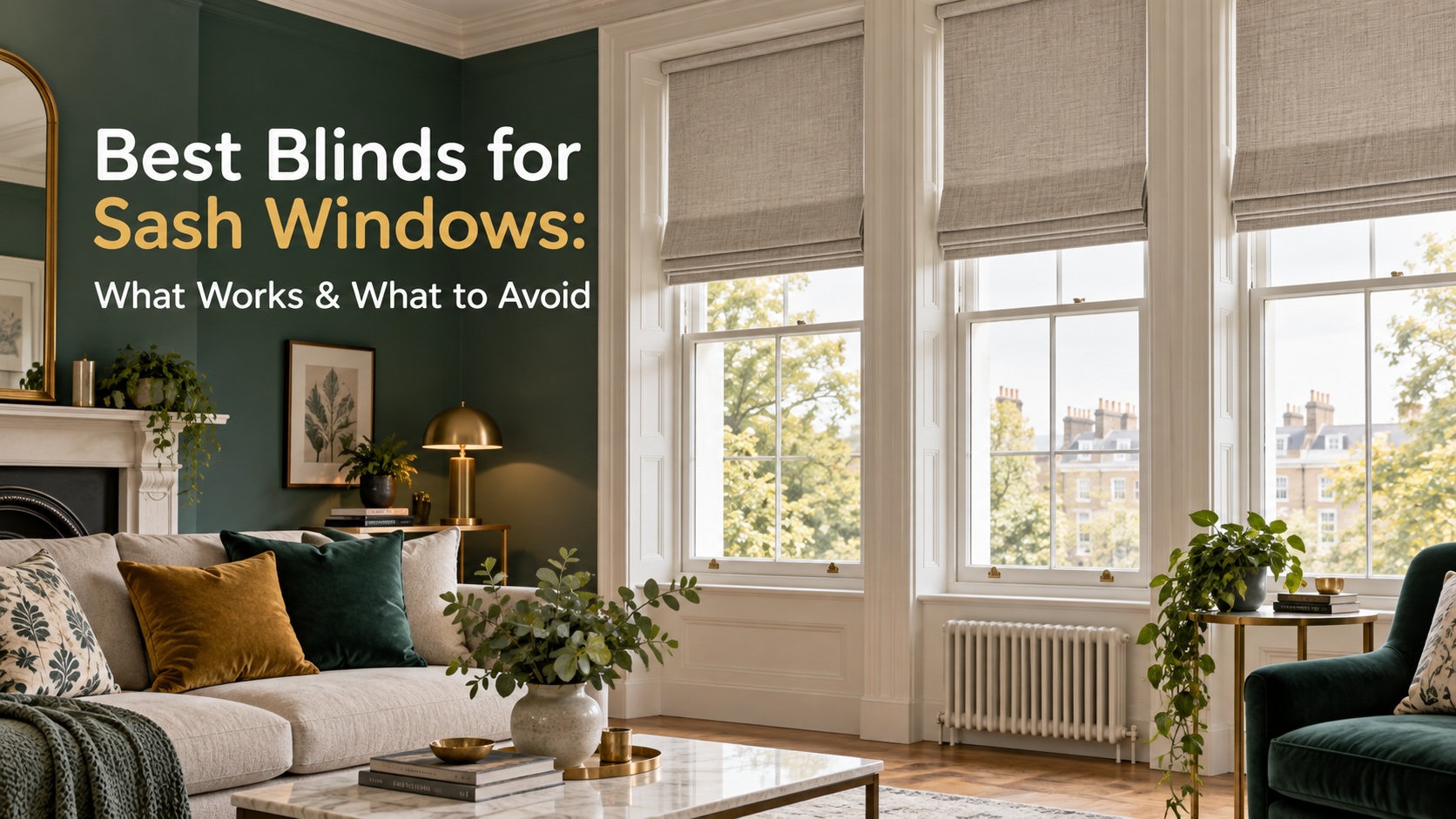
Sash windows are one of the most distinctive window styles found in UK homes, particularly in period properties. Their tall proportions, sliding sashes and often deep reveals give them a very different character from standard casement windows.
That also means the blind needs to be chosen differently.
The best blind for a sash window should work with the vertical movement of the sash, the depth of the recess, the position of locks and handles, and the proportions of the glazing. It should also avoid covering more of the window than necessary, especially where natural light is important.
Common sash window characteristics include:
- Tall, relatively narrow glazing
- Upper and lower sliding sashes
- Timber, uPVC or aluminium replacement frames
- Deep reveals in older properties
- Decorative frames and mouldings
- Prominent sash locks, lifts or catches
- Large areas of glass that contribute strongly to the look of the room
These details can affect blind compatibility.
A bulky blind can interfere with the sash or cover too much of the upper glass. A blind with a deep headrail may not suit a shallow reveal. A treatment that looks right on a wide modern window may feel out of proportion on a narrow sash.
For this reason, the best sash window blinds are usually those that combine:
compactness + clear opening movement + appropriate proportions + useful light control + a style that suits the window itself
Roller blinds are often one of the safest all-round choices because they are simple and relatively compact. Roman blinds can work particularly well in period interiors, while Venetian blinds are useful where adjustable privacy and light control matter.
In this guide, we look at the blind styles that work best with sash windows, where each option has an advantage, and which treatments should be used more selectively.
Use the links below to jump directly to the sash window advice you need.
Quick Answer
Sash Window Basics
Blind Types for Sash Windows
- Roller Blinds: Often the Best All-Round Choice for Sash Windows
- Roman Blinds: Best for Traditional and Period Sash Windows
- Venetian Blinds: Best for Flexible Light and Privacy Control
- Metal Venetian Blinds for Sash Windows
- Wood Venetian Blinds for Sash Windows
- Pleated Blinds for Sash Windows
- Day & Night Blinds: Are They Suitable for Sash Windows?
- Vertical Blinds: Usually Not the Best Choice for Sash Windows
- Blackout Blinds for Sash Windows
Blinds and Curtains
Best Blinds by Window Type
Best Blinds by Requirement
Colour and Design
Mistakes, Compatibility and Fitting
Quick Answer: What Are the Best Blinds for Sash Windows?
For most sash windows, the strongest choices are Roller blinds, Roman blinds and Venetian blinds.
The best option depends on the window itself and what matters most in the room.
- Roller blinds are usually the best all-round choice because they are compact, simple and work well with tall window proportions.
- Roman blinds are especially well suited to period interiors where a softer, more decorative finish is wanted.
- Venetian blinds are a strong option where adjustable privacy and light control are more important.
- Pleated blinds can work well where the recess is shallow or a slimmer treatment is preferred.
- Day & Night blinds can be useful where privacy and daylight both matter, though they create a more contemporary look.
Which Blind Is Best for an Original Timber Sash Window?
For original timber sash windows, Roman or Roller blinds are usually the strongest starting points.
Roman blinds suit traditional interiors particularly well, while Roller blinds keep the window treatment simpler and more compact.
Which Blind Is Best for a Modern uPVC Sash Window?
For replacement uPVC sash windows, Roller blinds or Metal Venetian blinds are usually practical choices.
Where a suitable No Drill system is available, that can also be useful if permanent frame alteration is best avoided.
Which Blind Is Best for Privacy?
If privacy is the main concern, Venetian blinds are particularly useful because the slats can be tilted rather than simply raised or lowered.
Day & Night blinds can also provide flexible daytime screening.
Which Blind Is Best for a Bedroom?
For bedrooms, a blackout Roller blind is often one of the most practical options.
Roman blinds with suitable blackout lining can also work well where a softer traditional appearance is preferred.
What Should You Use More Carefully?
More caution is usually needed with:
- Vertical blinds on narrow sash windows
- Very bulky Roman blinds in shallow reveals
- Wide Wood Venetian slats on compact windows
- Deep cassettes where recess space is limited
- Any blind that interferes with the movement of the upper or lower sash
The Main Rule
The best sash window blind should suit:
the sash movement + recess depth + window proportions + privacy needs + character of the room
For the average sash window, Roller blinds are the safest all-round choice, but Roman and Venetian blinds can be better where style or adjustable light control matters more.
Why Sash Windows Need a Different Blind Approach
Sash windows work differently from standard casement windows, so blind choice needs to take their vertical sliding action, proportions and frame depth into account.
A blind that works perfectly on a conventional outward-opening window can feel awkward or restrictive on a sash window.
The Sash Moves Vertically
Traditional sash windows use one or two framed sections that slide vertically.
This means the blind should not obstruct:
- The movement of the lower sash
- The movement of the upper sash
- Sash locks and catches
- Sash lifts
- Any projecting hardware
A blind that sits too close to the moving parts can interfere with normal operation.
Sash Windows Are Often Tall and Narrow
Their proportions are another important difference.
A tall, narrow window usually suits blind styles that respect the vertical shape rather than overwhelm it.
Roller, Roman and Venetian blinds generally work well because they can be scaled neatly to the individual window.
Very bulky treatments can make a narrow sash feel crowded.
Recess Depth Can Vary Considerably
Some period sash windows sit within deep reveals, while replacement sash windows may have much shallower recesses.
This affects which blind types are practical.
A deep recess can accommodate a broader range of:
- Headrails
- Fabric folds
- Slats
- Cassettes
A shallow recess may favour a more compact Roller or Metal Venetian blind.
The Frame Is Often Part of the Room’s Character
Original timber sash windows are frequently decorative features in their own right.
Thick architraves, painted timber, deep sills and period detailing can contribute strongly to the room.
A blind that hides too much of the frame can remove some of that character.
This is one reason simpler blinds often work well. They allow the window itself to remain visually important.
Daylight Matters
Sash windows often provide generous vertical glazing.
If a blind has a large fabric stack or bulky headrail, it can cover more of the upper glass when raised.
That can reduce useful daylight and make the window feel smaller.
The Main Compatibility Principle
The strongest sash window blinds are usually those that work with:
vertical movement + tall proportions + recess depth + frame character + available glazing
The blind should complement the architecture rather than compete with it.
Do Blinds Interfere With Sash Windows?
They can, but only if the blind sits within the path of the moving sash or projects too far into the opening.
The key issue is not whether blinds are suitable for sash windows in general. It is whether the specific blind has enough clearance to let the sash move normally.
Where Interference Can Happen
Problems are most likely when:
- The headrail sits too close to the moving sash
- The blind projects too far into the recess
- Fabric or slats overlap sash locks or catches
- The lower sash needs to rise into the same space as the blind
- The upper sash drops into the blind’s operating area
This is why sash windows should be treated as moving systems, not just glazed openings.
Headrail Depth Matters
Some blind types have much deeper headrails or cassettes than others.
For example, a compact Roller blind will usually need less space than:
- A Day & Night cassette
- A wide Wood Venetian headrail
- A heavily folded Roman blind
Where the recess is shallow, that extra depth can become important.
Blind Position Matters Too
A blind can sometimes work perfectly well with a sash window if it sits far enough forward or high enough to remain clear of the moving sections.
The same blind may be unsuitable if positioned deeper into the reveal.
So compatibility depends on the combination of:
blind depth + blind position + sash movement
Hardware Can Also Cause Problems
Sash locks, catches and lifts can project into the same space as the blind.
This is especially relevant with Venetian blinds, where slats may sit close to the frame, or with Roller blinds where the fabric drops near the centre rail.
Best Approach
Before choosing a blind for a sash window, check whether the blind will remain clear when:
- The lower sash is raised
- The upper sash is lowered
- The locks and catches are used
- The blind is fully lowered
A blind that allows all of those movements without contact is generally a much better compatibility choice.
Should Sash Window Blinds Sit Inside or Outside the Recess?
Both positions can work, but the better choice depends on recess depth, sash movement, blind bulk and how much of the original frame you want to keep visible.
For sash windows, this is an important compatibility decision because the recess is often deeper and more architecturally prominent than on standard windows.
Inside the Recess
An inside-recess blind usually creates a cleaner and more integrated appearance.
It can be a good choice where:
- The reveal is deep enough
- The blind does not interfere with sash movement
- The frame should remain visually prominent
- A neat, contained look is preferred
This often suits Roller and Venetian blinds particularly well.
The main limitation is space. If the recess is shallow, the headrail, cassette or slats may project too far and interfere with the moving sash or hardware.
Outside the Recess
An outside-recess blind can be a better option where depth is limited.
It gives more freedom for:
- Larger headrails
- Roman blind folds
- Day & Night cassettes
- Wider Venetian slats
It can also help avoid conflicts with the moving parts of the sash.
Which Position Preserves More of the Window?
An inside-recess blind can keep the treatment visually contained and leave more of the surrounding frame visible.
An outside-recess blind may cover more of the architrave or wall around the window, but it can sometimes leave the sash movement less restricted.
Which Is Better for Period Sash Windows?
Where the original timber frame is an important decorative feature, an inside-recess treatment can often feel more sympathetic because it allows the mouldings and frame to remain visible.
However, this only works if there is enough depth.
Best Approach
Choose inside the recess where:
depth is sufficient + sash movement remains clear + the frame should stay visible
Choose outside the recess where:
depth is limited + the blind is bulkier + more clearance is needed
The better option is the one that allows the blind and sash window to operate independently without compromising the character of the window.
Roller Blinds: Often the Best All-Round Choice for Sash Windows
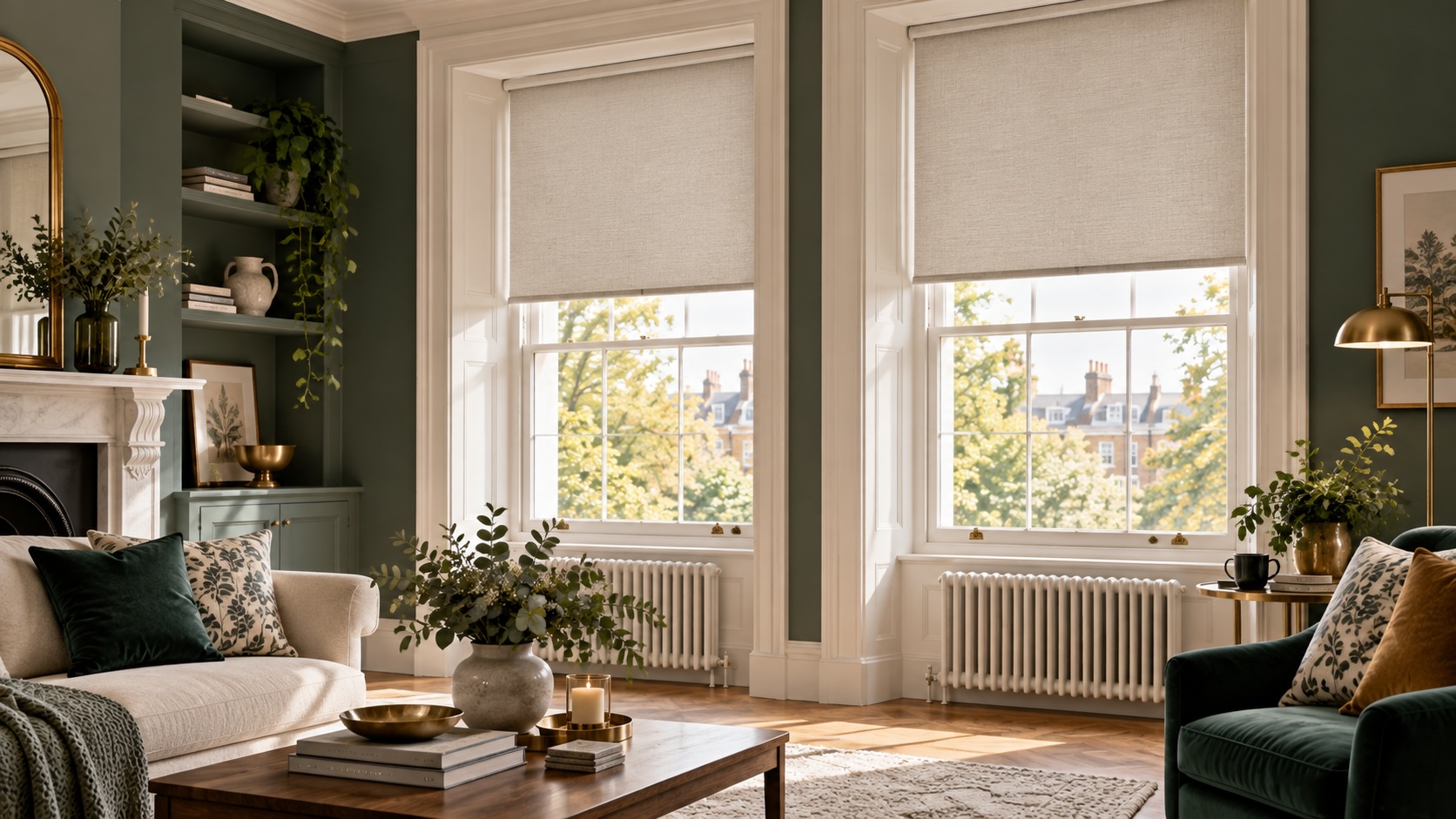
Roller blinds are usually one of the strongest options for sash windows because they combine a compact profile, simple operation and relatively low visual bulk.
They work particularly well where the aim is to preserve the proportions and character of the window without introducing too much material around it.
Why Roller Blinds Suit Sash Windows
Sash windows are often tall and relatively narrow.
A Roller blind follows that shape neatly and does not add the same depth as a heavier Roman blind or wide Wood Venetian blind.
This makes Roller blinds a good choice where:
- The recess is relatively shallow
- The sash needs clear movement
- The frame itself is decorative
- A simple, unobtrusive treatment is preferred
- Maximum visible glazing is wanted when the blind is raised
They Preserve More of the Window When Raised
One of the main advantages is the relatively small amount of material at the top of the window.
When raised, a Roller blind can leave much of the glazing exposed, helping the sash window retain its sense of height and allowing more daylight into the room.
That is especially useful on period windows where the upper sash contributes strongly to the overall look.
They Work in Both Traditional and Modern Interiors
Roller blinds are visually flexible.
A plain neutral fabric can suit a modernised sash window, while a softer woven or patterned fabric can work well in a more traditional room.
The blind itself remains simple, so the fabric determines much of the final look.
Main Compatibility Consideration
The main issue is clearance.
The blind needs to remain clear of:
- Sash locks
- Sash lifts
- The moving upper or lower sash
- Any projecting handles or hardware
If the recess is shallow, the Roller mechanism also needs enough depth to sit comfortably without obstructing the window.
Best Use
Roller blinds are particularly strong where the priority is:
compactness + simple styling + good daylight + broad compatibility
For many sash windows, they are the safest all-round choice.
Roman Blinds: Best for Traditional and Period Sash Windows
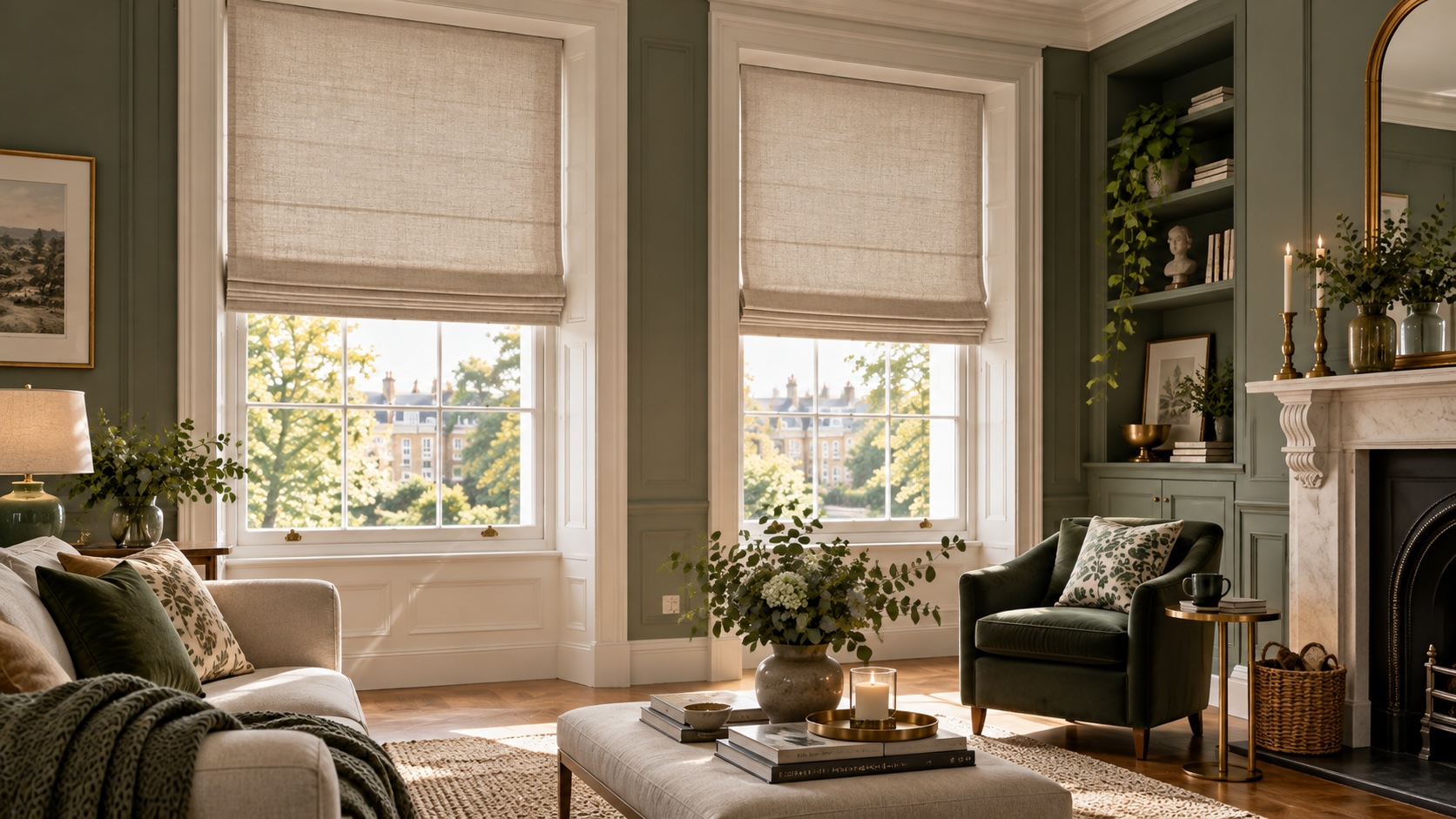
Roman blinds can work especially well with sash windows where the aim is to preserve a more traditional or decorative appearance.
Their soft fabric folds suit the character of period interiors and can complement timber frames, deep reveals and classic architectural detailing.
Why Roman Blinds Suit Sash Windows
Roman blinds are a strong option where the window is part of the room’s design rather than something that should visually disappear.
They work particularly well in:
- Period living rooms
- Traditional bedrooms
- Georgian or Victorian-style interiors
- Rooms with timber flooring or mouldings
- Spaces where a softer fabric treatment is preferred
They Complement Tall Window Proportions
Sash windows are often tall and narrow, and a Roman blind can reinforce that vertical shape.
A plain or subtly patterned fabric can soften the window without overwhelming its proportions.
The Main Limitation Is the Fabric Stack
When raised, Roman blinds fold into horizontal sections at the top of the window.
That creates more bulk than a Roller blind and can cover part of the upper glazing.
This matters because the top section of a sash window is often an important source of daylight.
In smaller or darker rooms, that loss of visible glass may be more noticeable.
Recess Depth Matters
Roman blinds also need enough physical space around the window.
They may be less suitable where:
- The recess is shallow
- The sash sits very close to the front of the reveal
- Locks or catches project into the blind’s path
- There is limited room above the window
Fabric Choice Affects Compatibility Too
Heavier fabrics create deeper folds and a larger stack.
Lighter or medium-weight fabrics usually sit more comfortably on narrower sash windows.
Pattern scale also matters. Large, busy designs can dominate a tall, narrow opening.
Best Use
Roman blinds are particularly strong where the priority is:
period character + softness + decorative impact
For sash windows in traditional interiors, they are one of the most visually sympathetic choices, provided there is enough depth and the fabric stack does not obscure too much glazing.
Venetian Blinds: Best for Flexible Light and Privacy Control
Venetian blinds are a strong choice for sash windows where adjustable daylight and privacy matter more than decorative softness.
Their horizontal slats can be tilted throughout the day, giving more control than a blind that is simply raised or lowered.
Why Venetian Blinds Work Well With Sash Windows
Sash windows often provide tall areas of glazing, which can make privacy difficult without sacrificing too much natural light.
Venetian blinds help by allowing you to:
- Tilt the slats to reduce direct views
- Redirect incoming light
- Keep part of the window visually open
- Adjust different light levels throughout the day
This can be particularly useful on ground-floor sash windows facing a street or neighbouring property.
They Suit the Window’s Proportions
Venetian blinds can sit neatly within tall, narrow openings.
The repeated horizontal slats create structure without requiring a large amount of fabric.
This can make them a good option where the window needs to remain relatively compact and functional.
Metal or Wood Venetian?
The choice between Metal and Wood Venetian blinds mainly comes down to depth, visual weight and style.
Metal Venetian blinds tend to have a slimmer profile and are easier to accommodate in tighter recesses.
Wood Venetian blinds create a warmer, more traditional appearance but usually need more depth and can feel heavier on narrow windows.
Clearance Still Matters
Venetian blinds need enough room for the headrail and slats to sit without interfering with:
- Sash locks
- Sash lifts
- Projecting hardware
- The vertical movement of the window
This is particularly important in shallow reveals.
Best Use
Venetian blinds are particularly strong where the priority is:
adjustable privacy + directional light control + compact operation
For sash windows that are overlooked or exposed to changing sunlight, they are one of the most practical choices.
Metal Venetian Blinds for Sash Windows
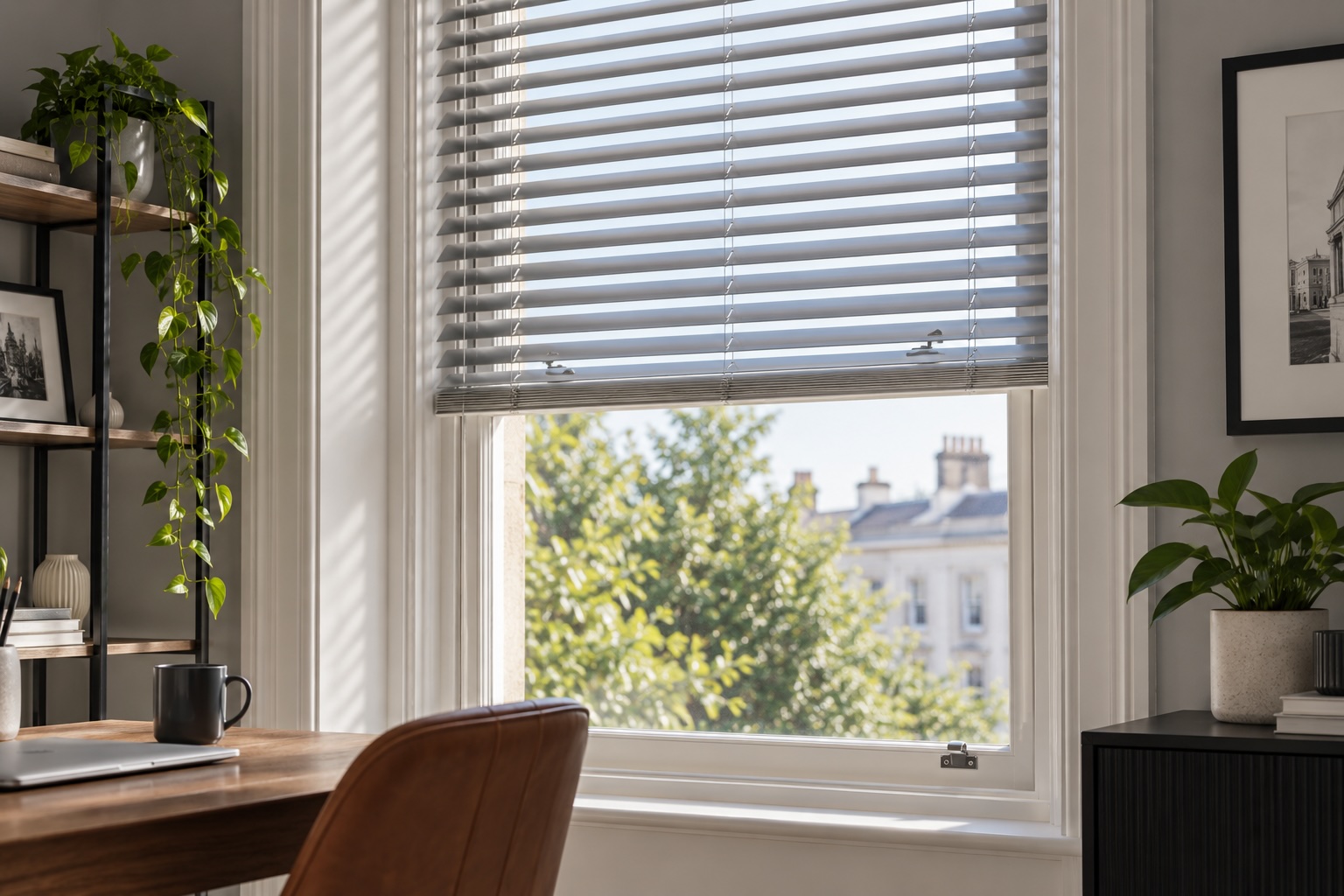
Metal Venetian blinds are often one of the better Venetian options for sash windows because they usually have a slimmer profile and lower visual weight than wood alternatives.
That can make them particularly useful where recess depth is limited or the sash window itself is relatively narrow.
Why Metal Venetian Blinds Work Well
Their main advantages are:
- Slimmer slats
- Compact headrails
- Good control over daylight
- Adjustable privacy
- A relatively lightweight appearance
This makes them well suited to sash windows in both traditional and more contemporary interiors.
Better for Tighter Recesses
Some sash windows, especially replacement units, have shallower reveals than older timber windows.
In these cases, the narrower profile of a Metal Venetian blind can make compatibility easier.
They are often less intrusive than wider Wood Venetian blinds and can sit more comfortably where available depth is restricted.
Good for Street-Facing Sash Windows
Metal Venetian blinds are particularly useful where privacy is important during the day.
The slats can be tilted to reduce direct views from outside while still allowing light into the room.
This makes them a strong option for:
- Ground-floor sash windows
- Front-facing living rooms
- Home offices
- Bedrooms overlooking the street
They Suit Modernised Period Homes
Metal Venetian blinds can work well where a period property has been updated with a more contemporary interior.
Their cleaner lines and slimmer appearance can provide a useful contrast to traditional sash frames without making the window feel overly heavy.
Main Compatibility Consideration
As with all Venetian blinds, the key issue is clearance.
The headrail and slats need enough space to avoid interfering with:
- Sash locks
- Sash lifts
- The moving upper or lower sash
- Any projecting frame hardware
Best Use
Metal Venetian blinds are particularly strong where the priority is:
slim profile + adjustable privacy + precise light control + limited recess depth
For narrow or compact sash windows, they are often the more practical Venetian option.
Wood Venetian Blinds for Sash Windows
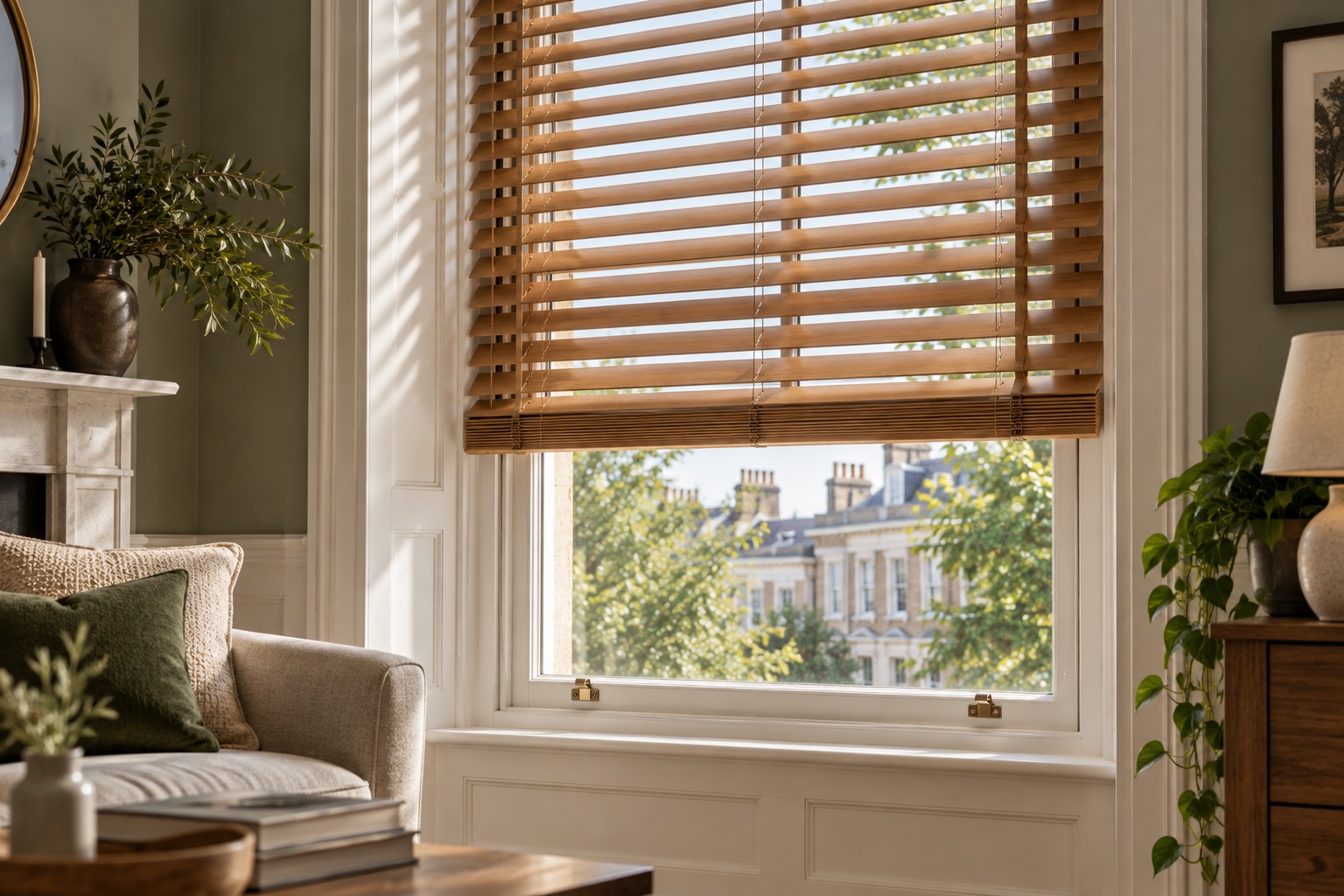
Wood Venetian blinds can suit sash windows very well where there is enough depth and the aim is to create a warmer, more traditional appearance.
They are particularly effective in period interiors where the blind needs to complement timber frames, wooden floors or other natural materials.
Why Wood Venetian Blinds Work Well
Their main strengths are:
- Strong traditional character
- Adjustable privacy
- Precise light control
- Warm visual appearance
- Good compatibility with timber sash frames
This makes them a natural choice for living rooms, bedrooms and other period spaces where the sash window is part of the room’s architectural character.
They Need More Space Than Metal Venetians
The main compatibility issue is depth.
Wood Venetian blinds generally use wider slats and more substantial headrails than metal versions.
That means they can be harder to accommodate where:
- The recess is shallow
- The sash sits close to the front of the reveal
- Locks or sash lifts project significantly
- The window is particularly narrow
In these situations, a Metal Venetian or Roller blind may be more practical.
Slat Width Matters
Wide slats can look impressive on larger sash windows, but they can feel too bulky on narrow openings.
A more restrained slat width usually works better where the sash is slim or the reveal is tight.
The aim is to keep the blind proportionate to the window.
Light Finishes Can Reduce Visual Weight
Pale wood, white or lighter painted finishes tend to feel less heavy than dark walnut or deep-stained options.
This can help preserve the sense of height and openness that sash windows naturally provide.
Best Use
Wood Venetian blinds are particularly strong where the priority is:
period character + warmth + adjustable privacy + strong light control
They work best on sash windows with enough recess depth and enough width to support the more substantial slat profile.
Pleated Blinds for Sash Windows
Pleated blinds can work well with sash windows where a slim, lightweight treatment is preferred.
They are especially useful where the recess is relatively tight or the window would feel overwhelmed by a bulkier blind.
Why Pleated Blinds Can Be a Good Fit
Their main advantages are:
- Slim profile
- Low visual weight
- Compact appearance
- Good suitability for narrow windows
- Minimal obstruction when raised
This can make them a practical option for sash windows where preserving as much visible glazing as possible is important.
Useful for Shallow Reveals
Because pleated blinds are generally less bulky than Roman or Wood Venetian blinds, they can be easier to accommodate where recess depth is limited.
This can be particularly helpful on replacement sash windows with shallower reveals.
They Keep the Window Looking Light
Sash windows often rely on their tall glazing to create a sense of height and bring daylight into the room.
A slim pleated blind can support that by avoiding a heavy headrail or large fabric stack.
This makes them a good choice where the window should remain visually light.
Best in Simpler Interiors
Pleated blinds tend to have a more understated appearance than Roman or Wood Venetian blinds.
They work particularly well in:
- Modernised period homes
- Bedrooms
- Home offices
- Minimalist interiors
- Rooms where the window frame should remain the main feature
Main Compatibility Consideration
As with other blind types, they still need enough clearance from:
- Sash locks
- Sash lifts
- Moving window sections
- Projecting frame hardware
Their slim profile helps, but it does not remove the need to check the sash movement.
Best Use
Pleated blinds are particularly strong where the priority is:
slim profile + limited recess depth + low visual bulk + good daylight
For narrow or shallow sash windows, they can be a very practical alternative to heavier blind styles.
Day & Night Blinds: Are They Suitable for Sash Windows?
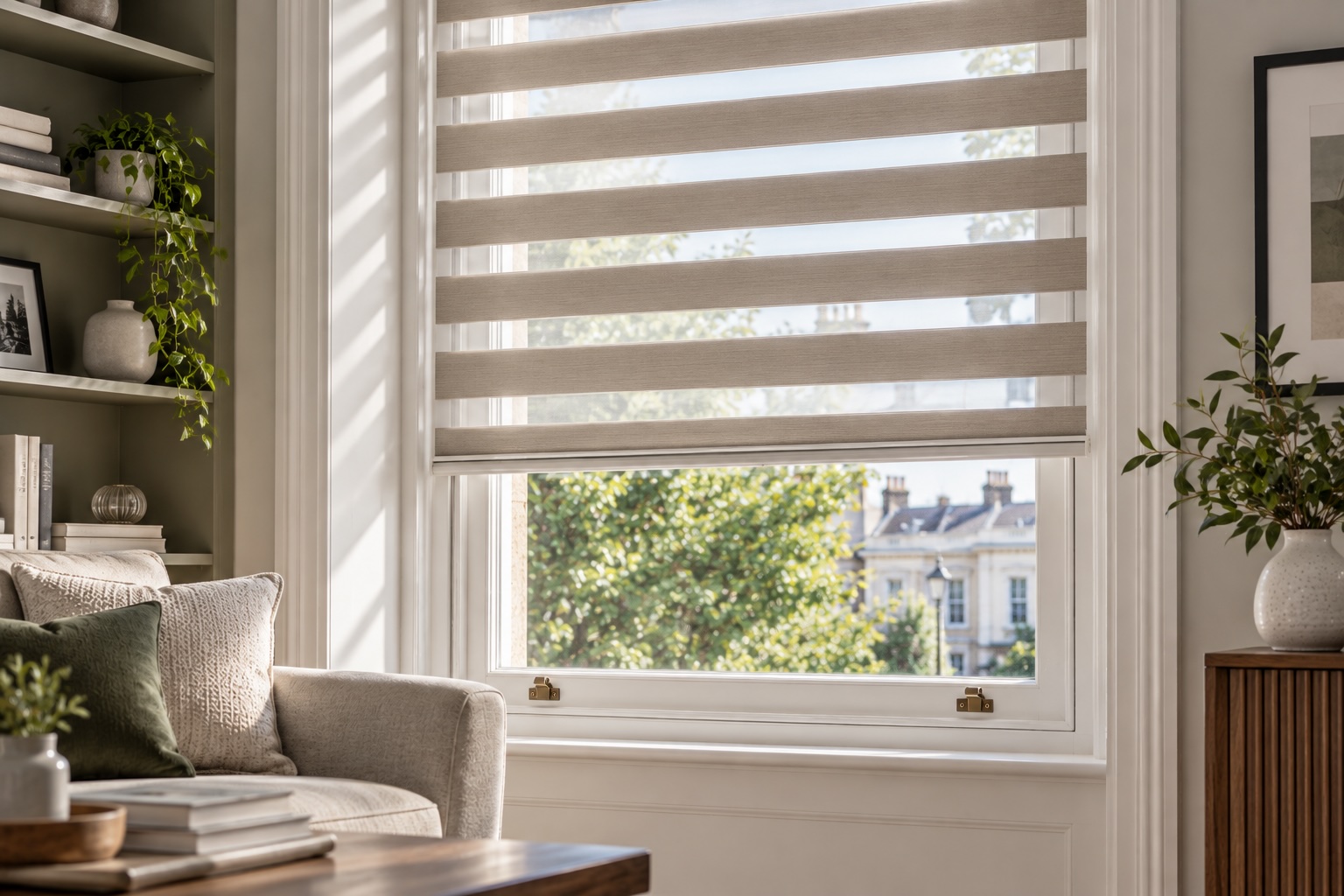
Day & Night blinds can work with sash windows, particularly where privacy and natural light both matter, but they are usually a more contemporary choice than Roller, Roman or Wood Venetian blinds.
Their suitability depends mainly on recess depth, sash clearance and whether the modern striped appearance suits the room.
Why Day & Night Blinds Can Work
Day & Night blinds use alternating sheer and opaque fabric bands.
This allows you to adjust the blind so that light can still enter while direct views from outside are reduced.
That can be useful for:
- Ground-floor sash windows
- Street-facing rooms
- Bedrooms needing daytime privacy
- Home offices
- Modernised period properties
Good for Privacy Without Closing Off the Window
One of their main advantages is flexibility.
A standard opaque blind often needs to be either open or closed, while a Day & Night blind can create an intermediate level of privacy.
This can be particularly useful on tall sash windows where you do not want to lose too much daylight.
The Look Is More Contemporary
Day & Night blinds have a structured appearance because of their repeated horizontal bands.
That can work very well in renovated or contemporary interiors, but may feel less sympathetic in a traditional period room where the sash window itself is a strong decorative feature.
For classic interiors, Roman or Wood Venetian blinds may feel more natural.
Cassette Depth Can Matter
Day & Night blinds often have a more substantial headrail or cassette than a simple Roller blind.
This can be important where:
- The reveal is shallow
- The sash sits close to the front of the recess
- Locks or fittings project into the blind area
- There is limited clearance above the glazing
Best Use
Day & Night blinds are particularly strong where the priority is:
daytime privacy + filtered light + contemporary styling
They can be a good option for sash windows, but they are usually better suited to modernised interiors and windows with enough depth to accommodate the mechanism comfortably.
Vertical Blinds: Usually Not the Best Choice for Sash Windows
Vertical blinds are generally not the first choice for sash windows, particularly where the window is tall, narrow and individually framed.
Their proportions are usually better suited to wide glazing, patio doors and large window spans.
Why Vertical Blinds Can Feel Out of Place
Sash windows already have a strong vertical structure, but they are often relatively narrow.
Adding full-height vertical louvres to a small or medium sash can make the treatment feel oversized or visually heavy.
This is especially true where:
- The sash window is narrow
- The reveal is deep
- The frame has decorative period detailing
- The room is traditionally styled
They Can Also Hide Too Much of the Frame
One of the appeals of sash windows is the architectural detailing around the glazing.
Vertical blinds can cover more of the frame and recess than simpler options such as Roller or Venetian blinds.
That can reduce the visual character of the window.
When Vertical Blinds Can Work
They are not completely unsuitable.
Vertical blinds may make sense where:
- Several sash windows sit together in one wide opening
- The glazing spans a large wall area
- The room is contemporary rather than period
- Adjustable privacy across a broad area is important
In these situations, the overall width of the opening can make the proportions feel more appropriate.
Better Alternatives for Individual Sash Windows
For a typical sash window, stronger options are usually:
- Roller blinds
- Roman blinds
- Metal Venetian blinds
- Wood Venetian blinds
- Pleated blinds
These styles tend to fit the scale and proportions of the window more naturally.
Best Use
Vertical blinds are best treated as a situational option rather than a default sash-window solution.
They work more convincingly on grouped or unusually wide sash windows than on the typical single tall, narrow sash.
Blackout Blinds for Sash Windows
Blackout blinds can work very well on sash windows, particularly in bedrooms, nurseries and other rooms where reducing incoming light is important.
The strongest option is usually a blackout Roller blind because it combines effective light control with a relatively compact profile.
Why Blackout Roller Blinds Work Well
Blackout Roller blinds suit sash windows because they are:
- Compact
- Simple
- Relatively unobtrusive
- Well suited to tall, narrow proportions
- Easy to keep visually contained within the window area
They can also leave much of the glazing exposed when raised, which helps preserve daylight during the day.
Blackout Does Not Mean Complete Darkness in Every Setup
The fabric itself can block light, but some light may still enter around the edges depending on how the blind relates to the recess.
This is important if the aim is near-total darkness rather than simply reducing daylight.
The depth and shape of the sash window reveal can influence how noticeable those light gaps are.
Roman Blinds Can Also Work
Roman blinds can also be used with blackout lining.
This can suit period bedrooms particularly well because it combines a softer, traditional appearance with stronger light reduction.
The main trade-off is that the fabric stack is bulkier and can cover more of the upper glazing when raised.
Dark Blackout Fabrics Need Some Restraint
A very dark blind can make a sash window feel visually heavier, especially if:
- The window is narrow
- The room already has limited daylight
- The recess is deep
- The frame itself is dark
A lighter blackout fabric can often provide the same practical benefit while keeping the window area visually softer.
Best Use
Blackout blinds are particularly strong where the priority is:
reduced light + bedroom comfort + compact operation
For most sash windows, a blackout Roller blind is usually the most practical choice, while a lined Roman blind can work better where the room needs a more traditional decorative finish.
Are Curtains Better Than Blinds for Sash Windows?
Curtains can work extremely well with sash windows, particularly in period interiors, but they are not automatically better than blinds.
The better choice depends on whether the priority is traditional character, compactness, daylight control or visual softness.
Why Curtains Suit Sash Windows
Sash windows often have tall proportions, and full-length curtains can complement that shape very well.
They are particularly effective in:
- Period living rooms
- Traditional bedrooms
- Georgian and Victorian-style interiors
- Rooms with decorative timber frames
- Spaces where a softer, more layered look is wanted
Curtains can also make the window feel taller by extending the visual line down towards the floor.
Blinds Are Usually More Compact
Blinds have an advantage where the window needs to remain visually clear and uncluttered.
Roller and Venetian blinds, in particular, can:
- Take up less visual space
- Preserve more visible glazing
- Offer more precise light control
- Sit neatly within a deep reveal
- Keep more of the sash frame visible
This can make them a better choice for smaller rooms or narrower sash windows.
Curtains Can Add More Visual Weight
Heavy curtains, deep folds and strong patterns can dominate a tall sash window.
That is not necessarily a problem in a large period room, but in a compact space they can make the window area feel heavier.
Lighter fabrics and more restrained fullness usually work better where spaciousness matters.
Privacy and Light Control Differ
Curtains are excellent for full privacy when closed, but they generally offer less fine control than Venetian or Day & Night blinds.
If the window faces a street, adjustable blinds may be more practical during the day.
Best Approach
Choose curtains where the priority is:
traditional character + softness + height + decorative impact
Choose blinds where the priority is:
compactness + visible glazing + flexible light control + lower visual bulk
For many sash windows, the best choice is not about which treatment is better overall, but which one suits the room’s style and the way the window needs to function.
Blinds vs Curtains for Period Sash Windows
Period sash windows can suit both blinds and curtains, but the two treatments create very different effects.
The better choice depends on whether the priority is preserving architectural detail or adding a softer traditional finish.
Blinds Keep More of the Window Visible
A well-proportioned blind can sit relatively close to the glazing and allow the sash frame, architrave and reveal to remain visible.
This is particularly useful where the window itself is an important feature.
Roller and Venetian blinds are usually the strongest options if the aim is to keep the treatment compact.
Curtains Add More Traditional Character
Full-length curtains can complement the tall proportions of sash windows and often suit Georgian, Victorian and other period interiors very naturally.
They can add:
- Softness
- Height
- Texture
- Decorative weight
- A stronger sense of formality
Roman blinds can provide some of the same softness while keeping the treatment more contained.
Timber Frames Often Influence the Choice
Original painted or stained timber sash windows can be visually attractive in their own right.
If the frame detailing is important, a blind may allow more of it to remain visible.
If the room needs more warmth or a more traditional decorative finish, curtains may be the better option.
Privacy Can Favour Blinds
Period properties often have sash windows facing directly onto streets or neighbouring homes.
Venetian blinds can be particularly useful here because they allow privacy without requiring the whole window to be covered.
Curtains generally provide stronger full screening, but less flexible daytime control.
Best Use
For period sash windows:
Choose blinds where the priority is preserving the frame, reducing visual bulk and controlling light more precisely.
Choose curtains where the priority is softness, height and traditional decorative character.
Neither is inherently more authentic or suitable. The best treatment is the one that supports both the architecture of the window and the style of the room.
Should You Use Blinds and Curtains Together on Sash Windows?
Yes. Combining blinds and curtains can work particularly well with sash windows because the two treatments can perform different roles.
The key is to avoid making the window feel too heavily dressed.
Why Layering Can Work
A blind can provide:
- Daytime privacy
- Adjustable light control
- A compact treatment close to the glass
Curtains can then add:
- Softness
- Height
- Evening privacy
- Stronger decorative character
This combination can be especially effective in period living rooms and bedrooms.
Roller Blinds With Curtains
A Roller blind is one of the easiest styles to combine with curtains because it adds relatively little visual bulk.
The blind can handle everyday light control, while full-length curtains provide a softer frame around the sash window.
This works particularly well where the aim is to keep the architecture visible without losing the traditional feel of fabric curtains.
Venetian Blinds With Curtains
Venetian blinds can also work well with curtains.
This combination is useful where daytime privacy matters because the slats can be adjusted while the curtains remain open.
It can be particularly practical for street-facing sash windows.
Roman Blinds With Curtains Need More Care
Roman blinds already introduce fabric folds and visual weight.
Adding full curtains as well can make a narrow sash window feel over-dressed, especially in a small room.
This combination usually works better where:
- The window is large
- The room is spacious
- The recess is deep
- The overall interior is intentionally layered
Avoid Too Much Fabric
Sash windows often have attractive proportions and detailed frames.
Too many layers can hide:
- Timber mouldings
- Architraves
- Deep reveals
- The vertical shape of the window
This can reduce some of the architectural character that makes sash windows distinctive.
Best Approach
Layering works best when one treatment remains visually simple.
A strong combination is usually:
simple Roller or Venetian blind + restrained full-length curtains
This gives the window flexible light and privacy control without overwhelming the sash frame.
Best Blinds for Original Timber Sash Windows
Original timber sash windows need blinds that respect both the movement of the sash and the architectural character of the frame.
The strongest options are usually:
1. Roman blinds
2. Roller blinds
Roman Blinds
Roman blinds are particularly well suited to original timber sash windows in period interiors.
Their soft fabric folds work naturally with:
- Painted or stained timber
- Deep reveals
- Decorative architraves
- Traditional bedrooms
- Period living rooms
They can also add warmth without introducing the rigid appearance of a more modern blind system.
The main limitation is the fabric stack. If the window is relatively small or the upper sash provides important daylight, a bulky Roman blind can cover more glazing than desired.
Roller Blinds
Roller blinds are the more compact option.
They work particularly well where the aim is to:
- Keep more of the timber frame visible
- Preserve natural light
- Reduce visual bulk
- Maintain a simpler look
A plain or subtly textured Roller blind can sit quietly within a traditional room without competing with the window itself.
Wood Venetian Blinds Can Also Work Well
Wood Venetian blinds are another strong option where there is enough recess depth.
They can complement original timber frames particularly well, especially in rooms with:
- Wooden flooring
- Traditional furniture
- Warm neutral interiors
The main consideration is physical bulk. Wide slats and a substantial headrail need enough space.
Preserve the Frame Where Possible
Original sash windows often have visual details that are worth keeping visible.
A treatment that hides too much of the frame can reduce some of the character of the window.
This is why relatively simple blinds often work best.
Best Overall Choice
For original timber sash windows:
Roman blinds are strongest for period character and softness.
Roller blinds are strongest for compactness and keeping more of the frame visible.
Where recess depth allows it, Wood Venetian blinds can also be an excellent choice for adjustable privacy and a coordinated timber look.
Best Blinds for Modern uPVC Sash Windows
Modern uPVC sash windows usually need a more practical, compatibility-led approach than original timber sashes.
The strongest options are usually:
1. Roller blinds
2. Metal Venetian blinds
Roller Blinds
Roller blinds are one of the most flexible choices for uPVC sash windows because they have a compact profile and do not depend on a particular decorative frame style.
They work particularly well where:
- The recess is relatively shallow
- The window has a clean modern appearance
- A simple treatment is preferred
- Maximum visible glazing is wanted when the blind is raised
They also suit both traditional-looking replacement sashes and more contemporary interiors.
Metal Venetian Blinds
Metal Venetian blinds are a strong alternative where adjustable light and privacy control are important.
Their slimmer slats and lighter profile can work well with modern uPVC frames, particularly where the available depth is limited.
They are especially useful for:
- Street-facing rooms
- Ground-floor windows
- Home offices
- Bedrooms needing flexible daytime privacy
No Drill Options May Be Worth Considering
Where drilling into the uPVC frame is undesirable, a compatible No Drill system may be a better fit.
This can be useful where:
- The window is relatively new
- Warranty conditions are a concern
- Permanent frame alteration is best avoided
- The sash profile offers limited suitable fixing space
Compatibility still depends on the exact frame and blind system.
Perfect Fit Needs Careful Checking
Perfect Fit-style systems can be useful on some uPVC frames, but not every sash window profile will be compatible.
The sliding sash arrangement, glazing beads and available clearance all need to suit the system.
Best Overall Choice
For modern uPVC sash windows:
Roller blinds are usually the strongest all-round choice.
Metal Venetian blinds are better where flexible privacy and light control matter.
Where preserving the frame is important, a compatible No Drill option may also be worth prioritising.
Best Blinds for Deep-Recess Sash Windows
Deep window recesses can make sash windows easier to dress because they provide more room for the blind mechanism, slats or fabric stack.
The strongest options are usually:
1. Roller blinds
2. Roman blinds
Roller Blinds
Roller blinds work especially well in deep reveals because they can sit neatly within the recess without projecting into the room.
They are a strong choice where the aim is to:
- Keep the treatment compact
- Preserve the surrounding frame
- Leave more glazing visible when raised
- Maintain a simple, unobtrusive look
Their relatively slim profile also makes them easier to position clear of sash locks and other hardware.
Roman Blinds
Roman blinds benefit from the extra space provided by a deeper recess.
The additional depth makes it easier to accommodate:
- Fabric folds
- The raised stack
- A more decorative treatment
- Slightly heavier fabrics
This can make Roman blinds particularly suitable for period sash windows with generous reveals.
Venetian Blinds Can Also Work Well
Deep recesses can also accommodate Venetian blinds more comfortably.
Wood Venetian blinds, in particular, benefit from extra depth because their slats and headrails are more substantial than metal versions.
This can make them a good option where a traditional timber look is wanted.
Deep Recesses Give You More Flexibility
Compared with shallow reveals, a deep recess can support a broader range of blind styles.
The main considerations then become:
- Sash movement
- Hardware clearance
- How much of the frame should remain visible
- How much upper glazing the blind covers when raised
Best Overall Choice
For deep-recess sash windows:
Roller blinds are the safest all-round option.
Roman blinds are a strong choice where softness and period character matter more.
Where adjustable light control is important, Venetian blinds can also work particularly well because the deeper reveal gives the slats and headrail more room.
Best Blinds for Shallow-Recess Sash Windows
Shallow sash window recesses are more restrictive because there is less room for the headrail, cassette, slats or fabric stack.
The strongest options are usually:
1. Roller blinds
2. Metal Venetian blinds
Roller Blinds
Roller blinds are usually the safest choice where recess depth is limited.
Their compact construction means they can work well without adding too much bulk around the window.
They are particularly suitable where:
- The sash sits close to the front of the recess
- The reveal is narrow
- A simple treatment is preferred
- The blind needs to remain visually unobtrusive
Metal Venetian Blinds
Metal Venetian blinds can also work well because their slats and headrail are usually slimmer than Wood Venetian alternatives.
They are a good option where adjustable privacy and light control are still important.
This can make them particularly useful for narrow, street-facing sash windows.
Roman Blinds Need More Care
Roman blinds can be less suitable in a shallow recess because the folded fabric creates more depth at the top of the window.
That does not make them incompatible, but they generally need more available space than a Roller blind.
Wood Venetian Blinds May Be Too Bulky
Wide wooden slats and larger headrails can be difficult to accommodate where the recess is particularly shallow.
They are usually better suited to sash windows with deeper reveals.
Day & Night Cassettes Can Also Be Restrictive
Day & Night blinds often use a more substantial cassette or mechanism than a standard Roller blind.
Where depth is tight, that extra projection can become a compatibility issue.
Best Overall Choice
For shallow-recess sash windows:
Roller blinds are usually the strongest option for compactness.
Metal Venetian blinds are a strong alternative where adjustable light and privacy control are important.
The key consideration is not just the width and height of the sash window. Recess depth can be just as important.
Best Blinds for Tall Sash Windows
Tall sash windows are one of the most attractive period window styles, but their proportions need to be respected when choosing a blind.
The strongest options are usually:
1. Roller blinds
2. Roman blinds
Roller Blinds
Roller blinds work particularly well on tall sash windows because they follow the long vertical shape without adding unnecessary bulk.
They are a strong choice where the aim is to:
- Keep the window visually clean
- Preserve the sense of height
- Expose as much glazing as possible when raised
- Avoid hiding decorative frame details
A plain or subtly textured fabric often works especially well because it does not compete with the architecture of the sash.
Roman Blinds
Roman blinds can also suit tall sash windows very well, especially in period interiors.
Their fabric treatment adds softness and can make a tall window feel more integrated with the room.
They are particularly effective in:
- Traditional bedrooms
- Period living rooms
- Rooms with high ceilings
- Interiors with decorative mouldings or timber detailing
The main limitation is the stack at the top of the window.
On a very tall sash, this may still leave plenty of glazing visible, but the amount of covered upper glass should still be considered.
Venetian Blinds Are Another Strong Option
Venetian blinds can work well where privacy and flexible light control matter more than decorative softness.
They are particularly useful on tall street-facing sash windows because the slats can be adjusted without fully covering the window.
Avoid Excessive Visual Weight
Very heavy fabrics, oversized patterns or extremely wide Venetian slats can make a tall sash feel more cumbersome than it needs to.
The aim should be to maintain the window’s vertical elegance rather than visually shorten or overcrowd it.
Best Overall Choice
For tall sash windows:
Roller blinds are usually the safest all-round option.
Roman blinds are strongest where period character and softness matter more.
Venetian blinds are best where adjustable privacy and light control are the priority.
Best Blinds for Narrow Sash Windows
Narrow sash windows need blinds that feel proportionate to the opening and do not add unnecessary width or visual weight.
The strongest options are usually:
1. Roller blinds
2. Metal Venetian blinds
Roller Blinds
Roller blinds are particularly well suited to narrow sash windows because they have a simple, compact profile.
They work well where the aim is to:
- Keep the treatment visually light
- Preserve the vertical proportions of the sash
- Avoid making the window feel crowded
- Leave as much glazing visible as possible when raised
A plain or subtly textured fabric is usually the safest choice.
Metal Venetian Blinds
Metal Venetian blinds can also work well because their slimmer slats tend to feel better proportioned than wider Wood Venetian blinds.
They are useful where the window needs:
- Adjustable privacy
- Flexible daylight control
- A compact blind profile
This can be particularly useful on narrow street-facing sash windows.
Pleated Blinds Can Also Work
Pleated blinds are another suitable option where a slim, lightweight treatment is preferred.
Their compact profile makes them easier to accommodate on narrow windows without overwhelming the frame.
Use More Caution With Wide Wood Venetian Slats
Wide slats can feel too substantial on a very narrow sash.
The blind may technically fit, but the proportions can look heavy compared with the width of the glazing.
A slimmer Metal Venetian or Roller blind is usually more balanced.
Pattern Scale Matters
Large, bold patterns can dominate a narrow sash window.
If pattern is wanted, smaller or lower-contrast designs usually work better.
The same applies to very dark fabrics, which can make a narrow opening feel visually heavier.
Best Overall Choice
For narrow sash windows:
Roller blinds are usually the strongest option for simplicity and proportion.
Metal Venetian blinds are a strong alternative where privacy and light control matter more.
The main principle is to keep the treatment slim, restrained and proportionate to the width of the window.
Best Blinds for Bay Windows With Sash Frames
Bay windows with sash frames combine two compatibility challenges: the vertical movement of each sash and the angles where neighbouring window sections meet.
The strongest options are usually:
1. Roller blinds
2. Venetian blinds
Roller Blinds
Roller blinds are usually the safest option because they are compact and can be used independently on each section of the bay.
They work particularly well where:
- The bay contains several narrow sash windows
- The angles between windows are tight
- Recess depth is limited
- A simple, unobtrusive treatment is preferred
Their relatively small profile helps reduce the risk of neighbouring blinds interfering with one another.
Venetian Blinds
Venetian blinds are a strong alternative where privacy and light control are more important.
Each section of the bay can be adjusted independently, which is useful where:
- One side receives more direct sunlight
- Street-facing panes need more privacy
- Different parts of the bay need different levels of light
Metal Venetian blinds are usually easier to accommodate in tighter bays than wider Wood Venetian blinds.
Blind Depth Matters
With bay sash windows, compatibility must be considered across the whole bay.
A blind may fit one sash perfectly but still clash with the blind on the adjoining section.
Potential issues include:
- Headrails meeting at the corners
- Slats overlapping
- Roller mechanisms projecting into neighbouring sections
- Controls becoming crowded
- Reduced clearance around the sash hardware
Preserve Sash Movement
Each sash should still be able to move freely.
This means the blind must not interfere with:
- The lower sash rising
- The upper sash dropping
- Sash locks and catches
- Any projecting lifts or handles
Roman Blinds Can Work, but Need More Space
Roman blinds can look excellent in a traditional bay, but their folded fabric adds more depth.
In a tight bay with narrow angles, that extra bulk can make the arrangement feel crowded.
Best Overall Choice
For bay windows with sash frames:
Roller blinds are usually the strongest choice for compactness and compatibility.
Venetian blinds are better where adjustable light and privacy control matter more.
The key is to assess the whole bay as one system, not each sash window in isolation.
Best Sash Window Blinds for Privacy
Sash windows can be difficult to balance for privacy because their tall glazed area often gives good daylight but can also leave rooms exposed to views from outside.
The strongest options are usually:
1. Venetian blinds
2. Day & Night blinds
Venetian Blinds
Venetian blinds are usually the strongest choice where privacy needs to be adjusted throughout the day.
The slats can be tilted to reduce direct views while still allowing light into the room.
This is particularly useful for:
- Ground-floor sash windows
- Street-facing living rooms
- Bedrooms
- Home offices
- Period properties with windows close to the pavement
Metal Venetian blinds are especially practical where the recess is relatively shallow.
Day & Night Blinds
Day & Night blinds can also work well where daytime privacy is important.
Their alternating sheer and opaque sections allow the blind to remain partially open to light while reducing direct visibility.
They tend to suit more contemporary or modernised interiors, but can be very effective where privacy and daylight need to work together.
Roller Blinds
Roller blinds provide excellent full privacy when closed, but they are less flexible than Venetian or Day & Night blinds during the day.
They are still a strong choice where privacy is only needed at certain times, such as in bedrooms or evening living spaces.
Roman Blinds
Roman blinds can also provide strong privacy when lowered.
They are particularly suitable in traditional interiors, but like Roller blinds they offer less fine control between open and closed positions.
Best Overall Choice
For sash windows where privacy is the main concern:
Venetian blinds are usually best for flexible daytime privacy.
Day & Night blinds are strong where filtered light is also important.
Roller and Roman blinds are better where complete screening is the priority.
The main goal is to maintain privacy without unnecessarily losing the daylight that makes sash windows so valuable.
Best Sash Window Blinds for Maximum Natural Light
Sash windows are often valued for the amount of daylight they bring into a room, so the best blind should avoid covering more of the glazing than necessary.
The strongest options are usually:
1. Roller blinds
2. Venetian blinds
Roller Blinds
Roller blinds are one of the best choices where maximising daylight is the priority.
When raised, they occupy relatively little space at the top of the window, which helps preserve:
- More visible glazing
- More natural light
- The tall proportions of the sash
- The architectural character of the frame
This makes them particularly useful in darker rooms or where the sash window is the main source of daylight.
Venetian Blinds
Venetian blinds are a strong alternative because they do not have to be fully raised to admit light.
The slats can be tilted to:
- Redirect daylight
- Reduce glare
- Maintain some privacy
- Keep the room feeling open
This can be especially useful on street-facing sash windows.
Pleated Blinds
Pleated blinds can also work well where a slim, lightweight treatment is preferred.
Their compact profile helps avoid excessive bulk around the window and can make them a good option for narrower or shallower sash windows.
Roman Blinds Need More Care
Roman blinds can still work, but their folded stack covers more of the upper glazing when raised.
That can reduce the amount of useful daylight, particularly on smaller sash windows.
They are therefore better suited where decorative appearance matters more than maximising every part of the glass.
Avoid Unnecessary Bulk
If daylight is the priority, use more caution with:
- Deep Roman folds
- Wide Wood Venetian slats
- Large cassettes
- Heavy layered treatments
- Very dark blinds that remain lowered for long periods
Best Overall Choice
For maximum natural light:
Roller blinds are usually the strongest option because they leave the most glazing visible when raised.
Venetian blinds are better where you want to preserve light while still maintaining adjustable privacy.
The main principle is to keep the blind compact, controllable and clear of the upper glazing whenever possible.
Best Sash Window Blinds for Bedrooms
Bedrooms with sash windows usually need a stronger balance between daylight during the day, privacy and darkness at night.
The strongest options are usually:
1. Blackout Roller blinds
2. Roman blinds with blackout lining
Blackout Roller Blinds
Blackout Roller blinds are usually the most practical choice for sash window bedrooms.
They work well because they are:
- Compact
- Simple
- Well suited to tall, narrow proportions
- Easy to raise fully during the day
- Effective at reducing incoming light when closed
A pale or tonal blackout fabric can help keep the window area visually lighter during the day.
Roman Blinds With Blackout Lining
Roman blinds are a strong alternative where the bedroom has a more traditional or decorative style.
They are particularly well suited to:
- Period bedrooms
- Original timber sash windows
- Rooms with soft furnishings and traditional detailing
- Spaces where the blind should contribute more strongly to the décor
The main trade-off is the fabric stack, which can cover more of the upper glazing when raised.
Venetian Blinds for Adjustable Privacy
Venetian blinds can also work well where daytime privacy matters.
They allow the slats to be tilted while still admitting light, which can be useful for street-facing or overlooked bedrooms.
They are less effective than a blackout Roller or lined Roman blind if the main goal is reducing light at night.
Day & Night Blinds
Day & Night blinds can be useful where daytime privacy is especially important.
They suit more contemporary bedrooms and can help preserve daylight without leaving the window fully exposed.
Best Overall Choice
For sash window bedrooms:
Blackout Roller blinds are usually the strongest option for practical light control.
Roman blinds with blackout lining are better where a softer, more traditional appearance matters.
Where flexible daytime privacy is the priority, Venetian blinds can also be a strong choice.
Best Sash Window Blinds for Living Rooms
Living rooms with sash windows usually need a balance of daylight, privacy and appearance, especially because the window is often one of the main architectural features in the room.
The strongest options are usually:
1. Roman blinds
2. Roller blinds
Roman Blinds
Roman blinds work particularly well in living rooms where the sash window should feel decorative rather than purely functional.
They suit:
- Period interiors
- Original timber sash windows
- Traditional living rooms
- Rooms with soft furnishings and classic detailing
A plain or subtly textured Roman blind can add warmth without overwhelming the window.
Roller Blinds
Roller blinds are the stronger choice where the aim is to keep the window treatment more compact.
They work well in both traditional and modern living rooms and can help preserve:
- Visible glazing
- Natural light
- Sash proportions
- Decorative frame details
They are especially useful where the room is smaller or the window already has a strong visual presence.
Venetian Blinds
Venetian blinds are a good option where privacy and light control matter more than softness.
They are particularly useful for:
- Street-facing living rooms
- Ground-floor sash windows
- Rooms affected by glare
- Homes where privacy needs to change throughout the day
Metal Venetian blinds create a lighter, more contemporary look, while Wood Venetian blinds suit more traditional schemes.
Day & Night Blinds
Day & Night blinds can also work in modern living rooms where the priority is daytime privacy without blocking too much light.
They are generally better suited to contemporary or modernised interiors than highly traditional rooms.
Best Overall Choice
For sash window living rooms:
Roman blinds are usually strongest for decorative impact and period character.
Roller blinds are better for simplicity, daylight and broad compatibility.
Venetian blinds are best where adjustable privacy and light control are the priority.
Best Sash Window Blinds for Period Homes
Sash windows are strongly associated with period properties, so the blind should complement the architecture rather than compete with it.
The strongest options are usually:
1. Roman blinds
2. Wood Venetian blinds
Roman Blinds
Roman blinds are often the most natural fit for period interiors because their soft folds work well with traditional architectural details.
They are particularly suitable for:
- Georgian-style rooms
- Victorian interiors
- Original timber sash windows
- Bedrooms and living rooms
- Spaces with decorative mouldings or classic furnishings
They can introduce pattern, texture or colour without making the window feel overly modern.
Wood Venetian Blinds
Wood Venetian blinds can also work very well in period homes, especially where adjustable privacy and light control are important.
They complement:
- Timber sash frames
- Wooden flooring
- Traditional furniture
- Warm neutral colour schemes
They are best where the recess is deep enough to accommodate the wider slats and headrail.
Roller Blinds Can Still Work
A Roller blind should not be ruled out simply because the property is old.
A plain, textured or softly coloured fabric can sit quietly within the window and allow the original frame to remain the main feature.
This can work particularly well in period homes that have been updated with more contemporary interiors.
Avoid Making the Window Too Busy
Highly decorative sash windows already have strong proportions and visible frame details.
Adding a blind with excessive pattern, oversized slats or too much fabric can make the window area feel crowded.
Where the architecture is particularly attractive, a simpler treatment is often more effective.
Best Overall Choice
For sash windows in period homes:
Roman blinds are usually strongest for softness and traditional character.
Wood Venetian blinds are a good choice where adjustable privacy and a warmer finish are wanted.
Roller blinds work well where the aim is to preserve the window itself as the main architectural feature.
Best Sash Window Blinds for Modern Interiors
Sash windows may be traditional in origin, but they can work just as well in contemporary interiors. The key is to choose a blind that keeps the window looking clean, simple and uncluttered.
The strongest options are usually:
1. Roller blinds
2. Metal Venetian blinds
Roller Blinds
Roller blinds are often the best fit for modern interiors because of their simple shape and low visual bulk.
They work particularly well with:
- Minimalist décor
- Neutral colour schemes
- Clean architectural lines
- Modernised period properties
- uPVC replacement sash windows
A plain Roller blind in white, grey, beige or another muted tone can blend into the room without competing with the window.
Metal Venetian Blinds
Metal Venetian blinds are another strong option for modern rooms.
Their slim slats give a more structured appearance and allow precise control over light and privacy.
They suit:
- Contemporary living rooms
- Home offices
- Modern bedrooms
- Street-facing sash windows
- Interiors with metal or industrial-style details
They are also a good choice where the recess is relatively shallow.
Day & Night Blinds
Day & Night blinds can work especially well in modern interiors because of their layered horizontal design.
They offer a more distinctive look than a standard Roller blind while still providing useful control over privacy and daylight.
They are particularly suitable where the sash window sits within a more contemporary renovation.
Keep the Design Restrained
Modern interiors usually benefit from avoiding unnecessary decorative detail around the window.
Simple fabrics, neutral colours and slim profiles tend to work better than:
- Heavy patterns
- Very ornate fabrics
- Oversized slats
- Bulky layered treatments
Best Overall Choice
For sash windows in modern interiors:
Roller blinds are usually the strongest all-round option for simplicity and clean lines.
Metal Venetian blinds are better where adjustable light and privacy control are important.
Day & Night blinds can work well where a more contemporary layered appearance is preferred.
What Colours Work Best on Sash Windows?
The best blind colour for a sash window usually depends on the frame colour, wall colour and overall style of the room.
Because sash windows often have strong architectural character, the safest approach is usually to choose a colour that complements the frame rather than competing with it.
White and Off-White
White, ivory and soft cream are among the easiest colours to use on sash windows.
They work particularly well where:
- The frames are painted white
- The room has a light neutral scheme
- Maximum brightness is important
- The window should remain visually understated
These shades can help the blind blend into the window rather than becoming the main feature.
Beige, Taupe and Warm Neutrals
Warm neutrals can work particularly well in period interiors.
They suit:
- Timber sash windows
- Cream or stone walls
- Traditional furniture
- Natural materials
They can add warmth without making the window feel heavy.
Grey
Grey works well in more contemporary interiors, particularly with modern uPVC or painted timber sash windows.
Lighter greys tend to keep the window feeling open, while darker greys create a stronger contrast.
Green and Other Muted Colours
Muted greens, soft blues and other restrained colours can work well where the blind is intended to contribute more to the room’s design.
They are often easier to use on sash windows than very bright colours because they complement the architectural character without dominating it.
Dark Colours
Charcoal, navy and other dark colours can create a strong, sophisticated look.
They work best where:
- The room has enough natural light
- The window is relatively large
- A deliberate contrast is wanted
On a small or narrow sash window, a very dark blind can make the opening feel visually heavier.
Match or Contrast?
Both approaches can work.
Matching the blind closely to the frame creates a quieter, more integrated appearance.
Choosing a contrasting colour makes the blind more of a design feature.
Best Overall Approach
For most sash windows, soft neutrals, warm natural tones and muted colours are the easiest to use successfully.
The main principle is to choose a colour that supports the window’s proportions and the room around it rather than drawing attention away from the sash itself.
Plain vs Patterned Blinds for Sash Windows
Both plain and patterned blinds can work well on sash windows, but the choice should depend on how much visual attention you want the window treatment to attract.
Plain Blinds
Plain blinds are usually the safest option because they allow the sash window itself to remain the main feature.
They work particularly well where:
- The frame has decorative detailing
- The room already contains patterned furnishings
- The window is narrow or tall
- A clean, understated look is preferred
Neutral Roller, Roman or Venetian blinds can complement the proportions of the sash without making the window area feel busy.
Patterned Blinds
Patterned blinds can work very well in more decorative interiors, particularly with Roman blinds.
They are a strong choice where the blind is intended to become part of the room’s design rather than simply blending into the background.
They can suit:
- Period bedrooms
- Traditional living rooms
- Cottage-style interiors
- Rooms with relatively simple walls and furnishings
Pattern Scale Matters
The size of the pattern should relate to the size of the window.
A large pattern on a very narrow sash can feel oversized and may be difficult to appreciate once the blind is fitted.
Smaller or medium-scale patterns are generally easier to use on narrow windows.
Larger sash windows can accommodate stronger patterns more comfortably.
Consider What Happens When the Blind Is Raised
This is particularly relevant with Roman blinds.
A patterned Roman blind becomes folded when raised, so the design will look different in its open and closed positions.
A complex or highly directional pattern may not remain as visually clear once the fabric is stacked.
Avoid Competing With Architectural Detail
Original sash windows may already contain attractive timber frames, mouldings and deep reveals.
In these cases, a very bold pattern can compete with the architecture.
Where the window itself is a significant feature, a more restrained fabric often works better.
Best Overall Approach
For most sash windows:
Plain blinds are the safest choice for keeping the window clean and proportionate.
Patterned blinds work best where the treatment is intentionally being used as a decorative feature.
The narrower or more detailed the sash window, the more restrained the pattern should generally be.
Should Blinds Match the Window Frame?
Blinds do not need to match the sash window frame exactly, but the relationship between the two can make a noticeable difference to how the window looks.
The best approach is usually to decide whether you want the blind to blend into the frame or create deliberate contrast.
Matching the Frame
Choosing a blind in a similar colour to the window frame creates a more integrated appearance.
This works particularly well where:
- The sash frame is painted white or cream
- The room has a restrained colour scheme
- The window should remain visually uncluttered
- The blind is intended to sit quietly within the architecture
A white Roller blind against a white-painted sash, for example, can help the treatment feel almost part of the window.
Contrasting With the Frame
A contrasting blind can make the window more of a design feature.
This can work well where:
- The room has stronger colour accents
- The blind is intended to add character
- The sash frame is relatively simple
- The treatment needs to stand out rather than disappear
A dark green, navy or charcoal blind against a pale frame can create a much stronger visual effect.
Timber Frames Need a Slightly Different Approach
Original timber sash windows often have more natural visual character.
A blind does not need to match the timber exactly.
In many cases, complementary tones work better than trying to reproduce the precise wood colour.
Warm neutrals, muted greens and natural fabric tones can all sit comfortably alongside timber frames.
Venetian Blinds
With Venetian blinds, matching the frame can create a particularly clean look.
White Metal Venetian blinds often work well with white uPVC or painted timber frames, while Wood Venetian blinds can complement natural timber or warmer interiors.
Avoid Near-Matches That Look Accidental
A blind that is almost, but not quite, the same colour as the frame can sometimes look less intentional than either a clear match or a deliberate contrast.
If exact matching is difficult, choosing a complementary shade may give a stronger result.
Best Overall Approach
There is no rule that sash window blinds must match the frame.
Matching creates a quieter, more integrated appearance.
Contrasting creates more visual emphasis.
For most sash windows, the best colour relationship is the one that supports both the frame and the wider room scheme.
Common Sash Window Blind Mistakes
Sash windows are relatively straightforward to dress once their proportions and movement are taken into account, but a few mistakes can make an otherwise suitable blind difficult to use.
Choosing a Blind That Interferes With the Sash
The most important mistake is fitting a blind where the headrail, fabric or slats obstruct the movement of the window.
Before choosing the blind, check that there is enough clearance for:
- The lower sash to rise
- The upper sash to lower
- Sash locks and catches
- Handles or sash lifts
- Any projecting frame hardware
A blind that fits the recess is not necessarily compatible if it interferes with these moving parts.
Ignoring Recess Depth
Shallow reveals can rule out bulkier systems.
Roman blinds, Wood Venetian blinds and some cassette-based Day & Night blinds may project too far where space is limited.
Roller and Metal Venetian blinds are usually easier to accommodate in tighter recesses.
Covering Too Much Upper Glazing
Sash windows often rely on their tall glazed area to bring light into the room.
A large Roman blind stack or bulky headrail can permanently cover part of the upper glass, reducing daylight even when the blind is open.
This matters most on smaller or narrower windows.
Using a Blind That Is Too Heavy Visually
Wide slats, heavy fabrics and oversized patterns can overwhelm a narrow sash.
The blind should generally reflect the proportions of the window rather than compete with them.
Treating Every Sash Window the Same
Original timber sashes, modern uPVC replacements, deep reveals, shallow reveals and bay configurations all create different fitting conditions.
A blind that works perfectly on one sash window may not be the right choice for another.
Forgetting About Privacy During the Day
A blackout Roller or Roman blind may provide excellent privacy when closed, but it can be less flexible if privacy is needed while still admitting daylight.
For street-facing sash windows, Venetian or Day & Night blinds can offer more adjustable screening.
Drilling Without Checking the Frame
Where the sash window is relatively new or covered by a manufacturer or installer warranty, it is sensible to check the relevant terms before drilling into the frame.
A compatible No Drill solution may sometimes be preferable.
Best Approach
The most common mistake is choosing a blind based on appearance alone.
For sash windows, the better order is:
check sash movement + measure recess depth + identify projecting hardware + consider daylight and privacy + then choose the blind style.
What Blind Styles Should You Avoid on Sash Windows?
Most blind styles can work on some sash windows, but certain options are more likely to cause problems because of bulk, proportions or restricted clearance.
Vertical Blinds
Vertical blinds are usually the least natural fit for a typical single sash window.
They are better suited to:
- Wide glazed openings
- Patio doors
- Large grouped windows
On a narrow sash, vertical louvres can feel out of proportion and may hide too much of the frame.
They can still work across a wide bay or a group of sash windows, but they are rarely the first choice for an individual window.
Very Bulky Roman Blinds
Roman blinds can look excellent on sash windows, especially in period rooms, but very heavy fabrics and deep folds can create a large stack at the top.
This can:
- Cover more upper glazing
- Reduce daylight
- Make a narrow sash feel visually heavier
- Create clearance problems in a shallow recess
A Roman blind is usually better where there is enough height and depth to accommodate the folded fabric comfortably.
Wide Wood Venetian Blinds in Tight Recesses
Wood Venetian blinds can suit sash windows very well, but wide slats and substantial headrails need space.
On narrow or shallow sash windows, they can feel oversized or project too far into the room.
Metal Venetian blinds are often the better option where space is restricted.
Deep Cassette Systems
Some Day & Night and cassette Roller systems have relatively deep headrails.
These can be difficult to position where:
- The recess is shallow
- The sash sits close to the front of the reveal
- Locks or handles project into the fitting area
The blind may still work outside the recess, but the extra depth needs to be considered.
Any Blind That Restricts Sash Movement
Regardless of style, avoid any blind that interferes with:
- The lower sash rising
- The upper sash lowering
- Sash locks
- Handles or lifts
- Other projecting fittings
A blind can look suitable but still be impractical if it obstructs the window.
Best Approach
The blind styles to use most carefully are:
Vertical blinds on narrow windows, bulky Roman blinds in shallow reveals, wide Wood Venetian blinds in tight spaces, and deep cassette systems where clearance is limited.
The main rule is simple: avoid any blind that overwhelms the proportions of the sash or compromises its movement.
Can Drilling Into a Sash Window Affect the Warranty?
It can, depending on the window manufacturer, installer and the terms of the warranty.
Drilling into a sash window does not automatically invalidate the entire warranty, but permanent alterations to the frame can affect cover for specific parts of the window.
This is particularly relevant with newer uPVC, aluminium or replacement timber sash windows.
Why Drilling Can Be an Issue
A window warranty may place conditions on alterations to the frame.
Drilling can potentially affect:
- The frame surface
- Internal chambers within uPVC profiles
- Reinforcement sections
- Weather seals
- Glazing-related components
- The structural integrity of certain frame areas
For this reason, it is worth checking the warranty before fixing a blind directly to the sash frame.
Older Timber Sash Windows
With older timber windows, there may be no active manufacturer warranty to consider.
However, original timber sash frames can still be valuable architectural features, so unnecessary drilling should be approached carefully.
In some cases, fixing into the surrounding reveal may be preferable to fixing directly into the frame.
New uPVC Sash Windows
Warranty considerations are more important with recently installed uPVC sash windows.
The safest approach is to check:
- The manufacturer’s warranty
- The installer’s terms
- Any restrictions on drilling or modifying the frame
- Whether an approved fixing area is specified
Consider No Drill Alternatives
Where permanent alteration is a concern, a compatible No Drill blind may be worth considering.
These systems can reduce the need to make holes in the frame, but compatibility depends on the exact sash profile and blind system.
Best Approach
Before drilling into a sash window:
check the warranty + confirm the intended fixing position + make sure the fixing will not interfere with the sash mechanism.
Where the window is new, valuable or still under warranty, avoiding unnecessary frame alterations is usually the safest option.
Are No Drill Blinds a Good Option for Sash Windows?
They can be, particularly where avoiding permanent alterations to the window frame is important.
However, No Drill blinds are not automatically compatible with every sash window. Their suitability depends on the exact frame profile, glazing arrangement and the type of No Drill system being used.
When No Drill Blinds Make Sense
They can be particularly useful where:
- The sash window is relatively new
- The frame is uPVC
- Warranty conditions are a concern
- Drilling into the frame is undesirable
- A cleaner, less permanent installation is preferred
They can also appeal in rented properties, although any fitting method should still be appropriate for the specific window.
Compatibility Needs to Be Checked
Different No Drill systems attach in different ways.
Some rely on clips, brackets or fittings that interact with the glazing bead or frame profile. Because sash windows vary considerably, especially between manufacturers, a system that fits one uPVC sash may not fit another.
Original timber sash windows can be even more variable.
Sash Movement Still Matters
Avoiding screws does not remove the need to check clearance.
The blind must still remain clear of:
- The lower sash as it rises
- The upper sash as it lowers
- Sash locks and catches
- Handles or lifts
- Other projecting hardware
A No Drill blind that obstructs the sash is still the wrong solution.
Perfect Fit-Style Systems
Perfect Fit-style blinds can be suitable for some sash windows, particularly certain modern glazed frames.
They can provide a neat, integrated appearance without conventional drilling.
However, the glazing beads, available clearances and window profile all need to be compatible with the specific system.
When Conventional Blinds May Be Better
If the window is an unusual profile, an original timber sash or has limited compatible fixing points, a conventionally fitted Roller, Roman or Venetian blind may offer more flexibility.
Fixing to the surrounding recess rather than directly into the sash frame can also be an option in some situations.
Best Overall Approach
No Drill blinds can be a strong option for sash windows where:
frame compatibility + sash clearance + suitable fixing geometry all align.
They should be chosen because they suit the individual window, not simply because the frame is uPVC or because drilling is being avoided.
Best Blind Types for Sash Windows Compared
Different blind styles suit different sash windows, so there is no single option that is best in every situation.
This comparison provides a quick overview of the main choices:
| Blind Type | Suitability | Best For | Main Limitation |
|---|---|---|---|
| Roller Blinds | Excellent | Most sash windows, shallow recesses, maximum daylight | Less flexible daytime privacy than Venetian blinds |
| Roman Blinds | Very Good | Period interiors, bedrooms, decorative schemes | Fabric stack can cover more upper glazing |
| Metal Venetian Blinds | Very Good | Privacy, shallow recesses, modern interiors | More visually structured than fabric blinds |
| Wood Venetian Blinds | Good | Traditional interiors and timber sash windows | Needs more depth and can feel bulky on narrow windows |
| Pleated Blinds | Good | Compact installations and limited recess depth | Less decorative than Roman blinds |
| Day & Night Blinds | Good | Daytime privacy and contemporary interiors | Cassette depth and modern styling may not suit every sash |
| Vertical Blinds | Limited | Wide grouped sash windows or some large bays | Usually out of proportion on a single narrow sash |
| Blackout Roller Blinds | Very Good | Bedrooms and rooms where reduced light is important | Small amounts of light may still enter around the edges |
For most sash windows, Roller blinds offer the strongest overall combination of compactness, compatibility and simplicity.
Roman blinds are particularly strong in period interiors, while Venetian blinds are usually the better option where adjustable privacy and light control matter most.
Best Sash Window Blind by Situation
The best blind for a sash window depends on the specific problem you are trying to solve. A blind that is ideal for a deep period window may not be the best choice for a shallow modern uPVC sash.
| Situation | Best Blind Choice | Why It Works |
|---|---|---|
| Original timber sash window | Roman or Roller | Roman adds period character, while Roller keeps more of the frame visible. |
| Modern uPVC sash window | Roller or Metal Venetian | Both offer a relatively compact profile and suit cleaner modern frames. |
| Shallow recess | Roller or Metal Venetian | These are usually easier to accommodate where available depth is limited. |
| Deep recess | Roller or Roman | Extra depth gives more flexibility for fabric folds and larger blind mechanisms. |
| Maximum natural light | Roller | A compact raised blind leaves more of the upper glazing exposed. |
| Daytime privacy | Venetian | Tilting the slats allows privacy to be adjusted without fully blocking daylight. |
| Bedroom | Blackout Roller or Roman | Both can provide strong light reduction while still suiting tall sash proportions. |
| Period interior | Roman or Wood Venetian | Both can complement traditional detailing and warmer interior schemes. |
| Modern interior | Roller or Metal Venetian | Simple lines and lower visual bulk suit contemporary rooms. |
| Bay with sash windows | Roller or Venetian | Individual blinds can be used across each section while keeping the bay flexible. |
| Narrow sash window | Roller or Metal Venetian | Slimmer treatments are less likely to overwhelm the proportions of the opening. |
| Avoiding drilling into the frame | Compatible No Drill system | Can avoid permanent frame alteration where the window profile is suitable. |
For the average sash window, Roller blinds remain the safest all-round choice because they are compact, proportionate and suitable for a wide range of frame types.
Where the requirement is more specific, the best option changes. Choose Venetian blinds for flexible privacy, Roman blinds for period character, and blackout Roller blinds for bedroom light control.
Which DotcomBlinds Blinds Work Best for Sash Windows?
For most sash windows, the strongest DotcomBlinds options are likely to be Roller blinds, Roman blinds and Venetian blinds, with the best choice depending on the window proportions, recess depth and privacy requirements.
Roller Blinds
Roller blinds are usually the safest all-round choice.
They suit sash windows particularly well because they are:
- Compact
- Simple in appearance
- Suitable for tall, narrow windows
- Relatively easy to position within or outside the recess
- Good for preserving visible glazing when raised
They are also available in a wide range of fabrics, making them suitable for both traditional and contemporary rooms.
Roman Blinds
Roman blinds are a stronger decorative option.
They work especially well with:
- Original timber sash windows
- Period properties
- Bedrooms
- Living rooms
- Traditional interiors
They are best where there is enough space for the fabric stack at the top of the window.
Metal Venetian Blinds
Metal Venetian blinds are a strong choice where privacy and precise light control matter.
Their relatively slim profile makes them particularly suitable for:
- Shallow recesses
- Modern uPVC sash windows
- Narrow sash windows
- Street-facing rooms
Wood Venetian Blinds
Wood Venetian blinds can suit traditional sash windows very well where there is enough depth.
They work particularly well in period interiors and with timber frames, but their wider slats and larger headrail mean they need more space than Metal Venetian blinds.
Day & Night Blinds
Day & Night blinds can be useful for modern sash windows where daytime privacy is important.
They are particularly suitable for rooms where the blind needs to filter light while also reducing direct views from outside.
No Drill Options
Where drilling into the sash frame is undesirable, a compatible No Drill option may also be worth considering.
Suitability depends on the exact window profile, so compatibility should be checked before ordering.
Best DotcomBlinds Choice by Priority
For most sash windows:
Best all-round: Roller blinds
Best for period interiors: Roman blinds
Best for privacy: Venetian blinds
Best for shallow recesses: Roller or Metal Venetian blinds
Best for bedrooms: Blackout Roller blinds or lined Roman blinds
Best for avoiding frame alterations: A compatible No Drill system
The most important step is to match the blind to the sash movement, available recess depth and window proportions, rather than choosing on style alone.
Final Verdict: What Works and What to Avoid
Sash windows suit a wide range of blinds, but the best results come from choosing a treatment that respects the window’s sliding movement, tall proportions, recess depth and architectural character.
For most sash windows, Roller blinds are the strongest all-round choice. They are compact, simple and well suited to tall glazing, while leaving relatively little fabric at the top when raised.
Roman blinds are particularly effective in period interiors, while Venetian blinds are better where adjustable privacy and light control are more important.
What Works Best
In general:
- Roller blinds are best for broad compatibility, compactness and daylight.
- Roman blinds are best for traditional rooms and decorative softness.
- Metal Venetian blinds are best for shallow recesses and flexible privacy.
- Wood Venetian blinds work well with traditional timber windows where there is enough depth.
- Pleated blinds are useful where a slim, lightweight treatment is needed.
- Day & Night blinds suit more contemporary sash windows where daytime privacy matters.
- Blackout Roller blinds are usually the strongest choice for bedrooms.
What to Avoid
Use more caution with:
- Vertical blinds on narrow individual sash windows
- Bulky Roman blinds where the recess is shallow
- Wide Wood Venetian blinds on small or narrow sashes
- Deep cassette systems where clearance is limited
- Any blind that covers too much upper glazing
- Any fitting that obstructs sash locks, lifts or the movement of either sash
The Most Important Rule
Do not choose a sash window blind on appearance alone.
Before ordering, consider:
sash movement + recess depth + hardware clearance + window proportions + privacy requirements + desired daylight
A blind that works with these factors will usually look better as well as being easier to use.
For the average sash window, a well-proportioned Roller blind remains the safest starting point, with Roman and Venetian blinds offering strong alternatives where the room has more specific requirements.