Order Tracking
 0800 1422417
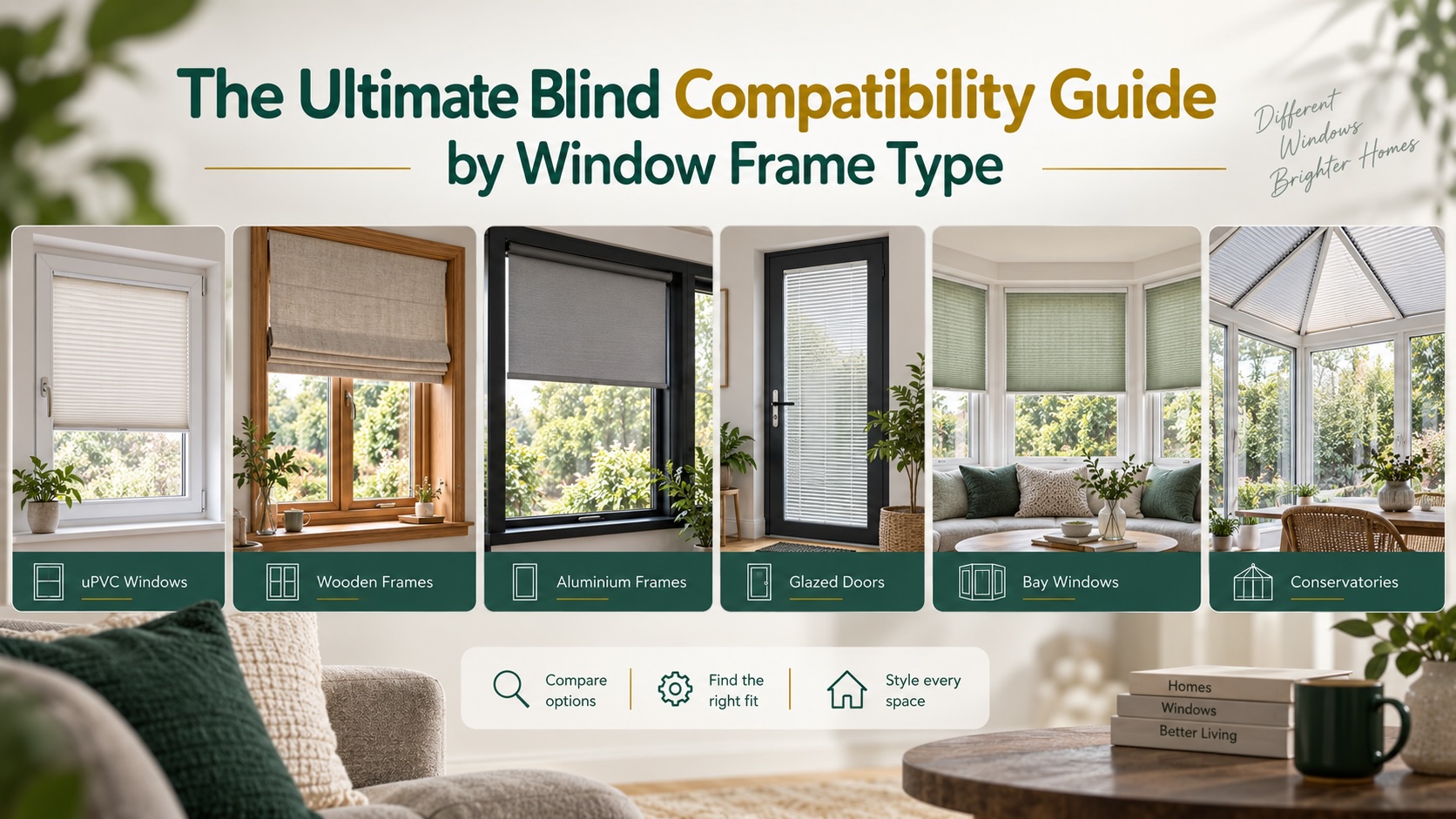
Choosing a blind is not only about colour, fabric or style. The window frame and the way the window itself is built can determine which blind types are genuinely suitable.
A blind that works perfectly on a standard uPVC window may be less suitable for a shallow recess, an inward-opening window or a narrow glazed door panel. Likewise, a blind that looks ideal across a large bay or conservatory may need much more careful consideration because several panes, angles or opening sections are involved.
The main compatibility factors usually include:
- Frame material, such as uPVC, timber or aluminium
- Whether the window opens inward
- Available recess depth
- Handle position and projection
- Whether the glazing is fixed or forms part of an opening sash or door
- The number and arrangement of glazed panels
- Whether drilling into the frame is desirable
- Any window warranty conditions relating to permanent frame alterations
This is why frame type alone does not always give the full answer.
For example, an aluminium window may also open inward and sit within a shallow recess. A uPVC door may contain several glazed panels with protruding handles. A bay window may combine multiple individual openings at different angles.
Each of these factors can affect blind compatibility.
Some blinds are naturally more flexible than others. Roller blinds work with a very wide range of standard windows because they do not depend on a particular glazing-bead system. Perfect Fit and No Drill blinds can be especially useful on compatible opening windows and glazed doors because they avoid the need for permanent frame alteration. Vertical blinds make more sense across wide glazing, while Metal Venetian blinds can be useful where available depth is more limited.
In this guide, we compare the main blind types used in UK homes and then look at the best options for uPVC, wooden and aluminium frames, inward-opening windows, shallow recesses, doors and glazed panels, bay windows and conservatories.
The aim is simple: to help you identify which blinds are most compatible with the window you actually have, before style becomes the deciding factor.
In This Guide
Use this guide to compare blind compatibility across different window frames, opening styles, recess depths, glazed doors, bay windows and conservatories.
1. Blind Types and General Compatibility
2. Compatibility by Frame Material
3. Opening Style and Recess Restrictions
4. Doors and Glazed Panels
5. Bay Windows
6. Conservatory Windows
7. Comparing Compatibility
Quick Answer: Which Blinds Work With Which Window Frames?
The best blind depends on more than the frame material alone. Opening direction, recess depth, handles, glazing layout and whether you want to avoid drilling into the frame can all affect compatibility.
As a general guide:
- uPVC windows: Perfect Fit or Roller blinds
- Wooden windows: Roller or Roman blinds
- Aluminium windows: Roller or compatible No Drill blinds
- Inward-opening windows: Perfect Fit or No Drill blinds
- Shallow recesses: Roller or Metal Venetian blinds
- Doors and glazed panels: Perfect Fit or Roller blinds
- Bay windows: Roller or Venetian blinds
- Conservatories: Perfect Fit or Pleated blinds, where the frame and glazing system are compatible
The Most Universally Compatible Blind
For standard windows, Roller blinds are usually one of the most flexible options.
They do not rely on a specific glazing-bead profile and can work with a wide range of uPVC, timber and aluminium windows, provided there is enough space around the opening and handles.
Best Where You Want to Avoid Drilling Into the Frame
Where preserving the frame is important, Perfect Fit and No Drill blinds can be particularly useful.
They are often well suited to:
- Opening windows
- Glazed doors
- Newer uPVC frames
- Situations where warranty conditions are a concern
However, not every frame is automatically compatible with every no-drill system, so the exact frame profile still needs to be suitable.
Best for Large Glazed Areas
For wide glazing such as patio doors, Vertical blinds often make more sense because they are designed to cover larger openings.
For conservatories and multiple individual glazed panels, panel-specific options such as Perfect Fit or Pleated blinds can be more practical where compatible.
The Main Rule
The best blind for a window is the one that works with:
frame material + opening style + available depth + handles + glazing layout + any warranty restrictions
That combination is more important than the frame material on its own.
The Main Types of Blinds Used in UK Homes
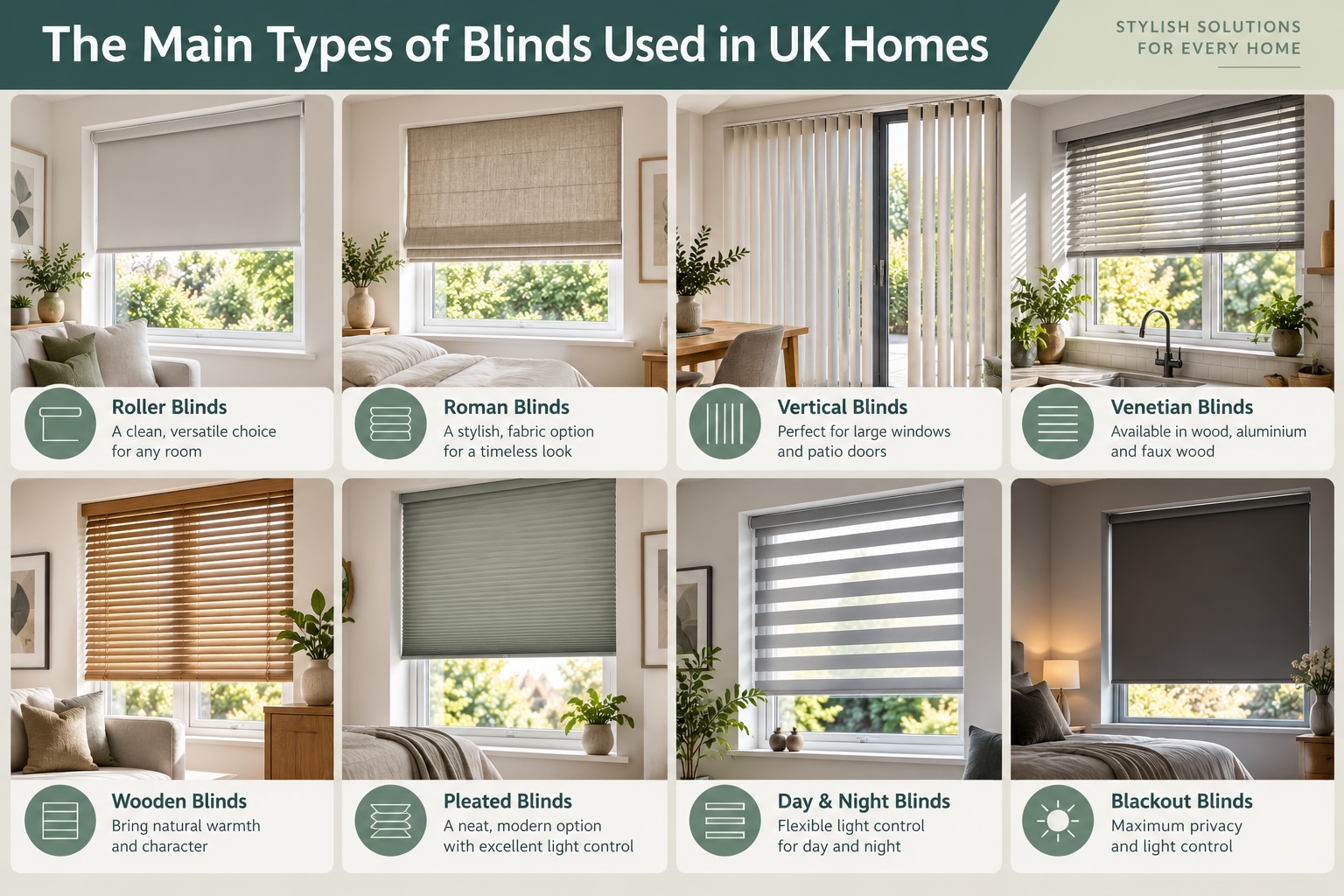
Before comparing blind compatibility by window type, it helps to understand the main blind styles and how they differ physically.
Some blinds are naturally more flexible because they are compact and do not depend on a specific frame profile. Others need more depth, more clearance or a particular type of glazing arrangement.
Roller Blinds
Roller blinds use a single sheet of fabric that rolls around a tube.
Their simple construction makes them one of the most broadly compatible blind types for standard windows.
They are especially useful where:
- Recess space is limited
- The window treatment should remain compact
- A simple, unobtrusive blind is preferred
Their main compatibility consideration is clearance around handles, opening sections and the top of the window.
Roman Blinds
Roman blinds use fabric that folds into soft horizontal sections when raised.
They are more decorative than Roller blinds but also create more depth and a larger fabric stack.
This means they generally need more space around the window and are less forgiving where the recess is shallow or the opening area is restricted.
Venetian Blinds
Venetian blinds use horizontal slats that can be tilted to control light and privacy.
Their compatibility depends partly on:
- Slat width
- Headrail depth
- Window handles
- Available clearance
They work with many standard windows but need more attention where space is tight.
Wood Venetian Blinds
Wood and wood-effect Venetian blinds are more substantial than metal versions.
Their wider slats and larger headrails can make them less suitable for:
- Very shallow recesses
- Small opening windows
- Tight spaces around handles
They are generally better suited to windows with enough depth and clearance.
Metal Venetian Blinds
Metal Venetian blinds usually have slimmer slats and a lighter overall profile.
This can make them easier to accommodate where space is limited.
They are particularly useful on compact windows or where precise light control is needed without the physical bulk of wider slats.
Vertical Blinds
Vertical blinds use individual vertical louvres suspended from a headrail.
They are best suited to:
- Wide windows
- Patio doors
- Large glazed areas
- Full-height glazing
They are usually less appropriate for small individual opening panes because the louvres are designed to work across a broader area.
Day & Night Blinds
Day & Night blinds use alternating sheer and opaque fabric bands.
They are based on a Roller-style mechanism but usually include a more substantial headrail or cassette.
They work with many standard windows, but the available depth around the opening can become important.
Perfect Fit Blinds
Perfect Fit blinds are designed to sit closely with the individual glazed panel rather than acting as one large blind across the whole window.
They can be particularly useful where:
- The window opens inward
- The blind needs to move with the opening sash
- Drilling into the frame is undesirable
- The window is part of a glazed door
However, compatibility depends on the exact frame and glazing-bead profile. Not every window is automatically suitable.
No Drill Blinds
No Drill blinds are designed to avoid permanent screw fixing into the window frame.
They can be useful where:
- Frame alteration is undesirable
- The property is rented
- The window is relatively new
- Warranty conditions are a concern
- The blind needs to work closely with an opening pane
Different No Drill systems use different methods, so compatibility still needs to be checked against the specific frame.
Why Blind Type Matters for Compatibility
The key difference between blind types is not simply how they look.
Each style has a different:
depth + headrail size + slat or fabric profile + relationship with the frame + clearance requirement
These physical differences determine whether a blind will work comfortably with a particular window configuration.
Blind Type Compatibility at a Glance
The table below compares the main blind types by how flexible they are across different window and frame configurations.
| Blind Type | Compatibility Flexibility | Best Suited To | Main Compatibility Limitation |
|---|---|---|---|
| Roller | Excellent | Most standard windows, shallow spaces, simple openings | Needs sufficient clearance around handles and opening sections |
| Roman | Very Good | Standard timber, uPVC and aluminium windows with adequate space | Fabric folds and stack require more depth and clearance |
| Metal Venetian | Very Good | Compact windows, standard frames, tighter spaces | Headrail and slats still need clearance from handles |
| Wood Venetian | Good | Larger standard windows with sufficient depth | Wider slats and larger headrails need more space |
| Day & Night | Very Good | Most standard windows where light and privacy control are important | Cassette or headrail depth can be restrictive in shallow spaces |
| Vertical | Situational | Wide windows, patio doors and large glazed areas | Less suited to small individual opening panes |
| Perfect Fit | Excellent Where Compatible | Suitable uPVC windows, inward-opening panes and glazed doors | Requires a compatible frame and glazing-bead profile |
| No Drill | Excellent Where Compatible | Frames where permanent alteration is undesirable | Compatibility depends on the specific no-drill system and frame profile |
| Pleated / Cellular | Good | Compact glazing, conservatories and compatible panel systems | Suitability depends heavily on the specific system and available frame space |
What the Table Tells Us
For the widest range of conventional windows, Roller blinds are generally the most flexible starting point.
Where the blind needs to move with an opening pane or door, Perfect Fit and compatible No Drill systems can be stronger choices.
Where glazing is very wide, Vertical blinds become more appropriate, while Metal Venetian blinds are useful where space is relatively tight but adjustable light control is still wanted.
The key point is that compatibility is not determined by blind style alone. The same blind can be highly suitable on one window and awkward on another because of frame profile, handles, opening movement or available depth.
Best Blinds for uPVC Window Frames
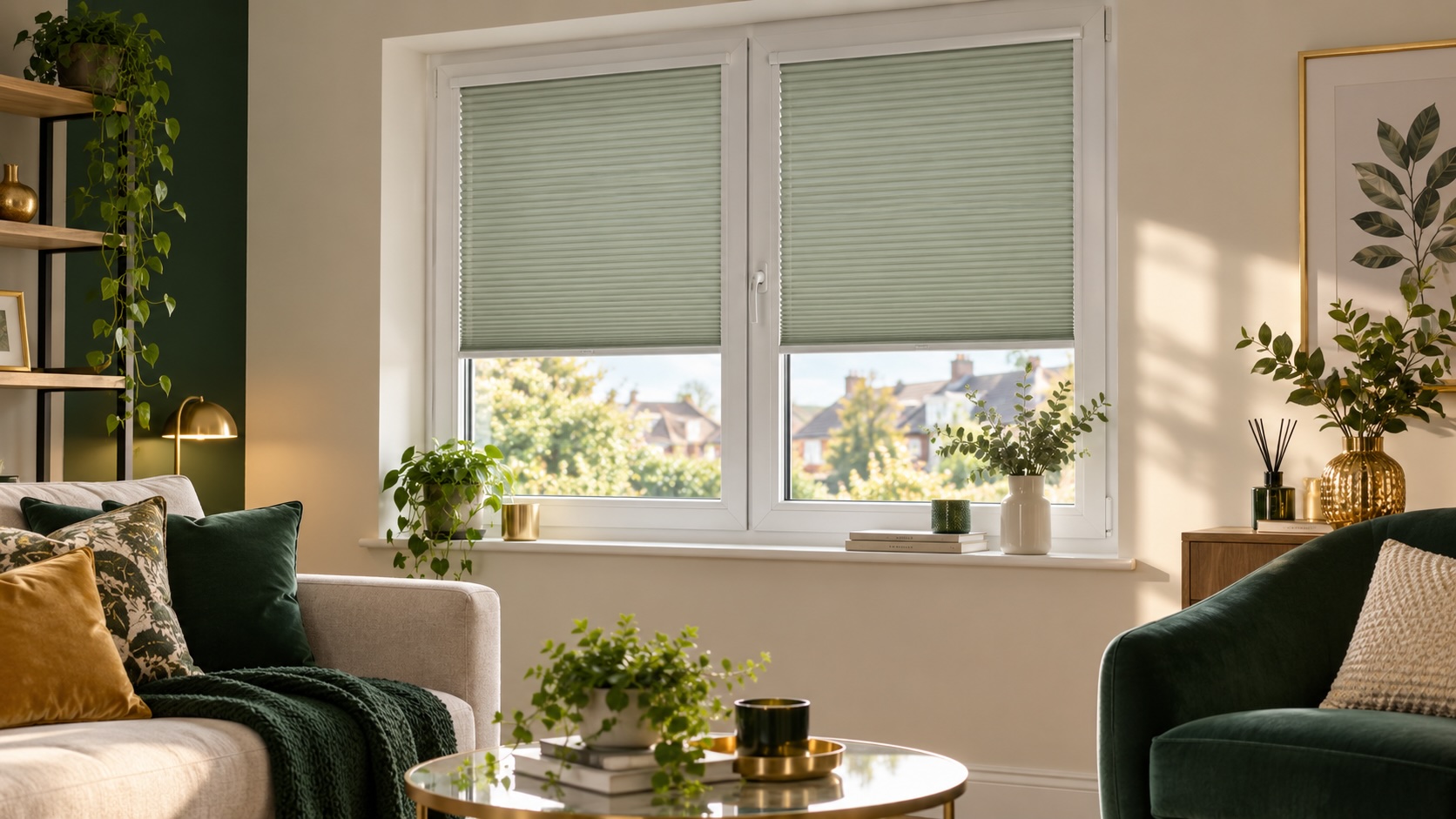
uPVC is one of the most common window frame materials in UK homes, but blind compatibility still depends on the exact frame profile, glazing beads, handles and the way the window opens.
The two strongest options are usually:
1. Perfect Fit blinds
2. Roller blinds
Perfect Fit Blinds
Perfect Fit blinds can be particularly well suited to compatible uPVC windows because they sit closely with the individual glazed panel.
This can be useful where:
- The window opens inward
- The blind needs to move with the sash
- Drilling into the frame is undesirable
- Handles project into the room
- The window forms part of a glazed door
Their main advantage is that they can integrate closely with the window rather than sitting independently across the whole recess.
However, not every uPVC frame is automatically compatible.
Suitability depends on factors such as:
- Glazing-bead shape
- Bead depth
- Frame profile
- Available clearance around the glass
Roller Blinds
Roller blinds are one of the most flexible alternatives for uPVC windows.
They work well because they do not depend on a specific glazing-bead system.
They are particularly useful where:
- The window is a standard opening
- There is enough clearance around the frame
- A simple blind is preferred
- The recess is relatively shallow
The main compatibility check is whether the blind will interfere with handles or the opening movement of the window.
What About Venetian Blinds?
Venetian blinds can also work well with uPVC windows, particularly where precise light and privacy control is important.
Metal Venetian blinds are usually easier to accommodate than wider Wood Venetian blinds where space is limited.
The main issue is clearance around:
- Handles
- Opening sashes
- Headrails
- Slats
Best Overall Choice
For compatible uPVC windows, Perfect Fit blinds are often the strongest option where the blind needs to move with the opening pane or drilling into the frame is best avoided.
Where that is not required, Roller blinds offer excellent overall compatibility and simplicity.
The key is to assess the exact uPVC frame rather than assuming every window of this type works in the same way.
Can You Drill Into uPVC Window Frames?
Sometimes, but it should not be treated as the default approach.
Drilling into a uPVC frame creates a permanent alteration, so the more important question is not simply whether it is physically possible, but whether it is appropriate for that particular window.
Why Caution Is Needed
Depending on the frame design, drilling can potentially affect:
- The appearance of the frame
- Internal reinforcement or structure
- Seals and drainage paths
- Future replacement or repair
- Manufacturer warranty terms
For newer windows in particular, it is sensible to check the warranty before making any permanent modification.
Warranty Conditions Can Vary
There is no universal rule that drilling into a uPVC frame automatically invalidates the entire window warranty.
However, some manufacturers may exclude damage caused by:
- Drilling
- Screwing into the frame
- Altering the profile
- Interfering with seals or drainage
The exact wording can vary considerably between manufacturers and installers.
No Drill Options Can Avoid the Issue
Where preserving the frame is a priority, a compatible Perfect Fit or No Drill blind can be a better choice.
These systems can be especially useful for:
- Newer uPVC windows
- Rented properties
- Inward-opening windows
- Glazed doors
- Situations where warranty protection matters
Best Approach
Before altering a uPVC window frame, check:
the blind fixing method + the frame profile + the window manufacturer’s warranty
If there is any doubt, choosing a blind that does not require permanent modification to the frame is usually the safer compatibility choice.
Best Blinds for Wooden Window Frames
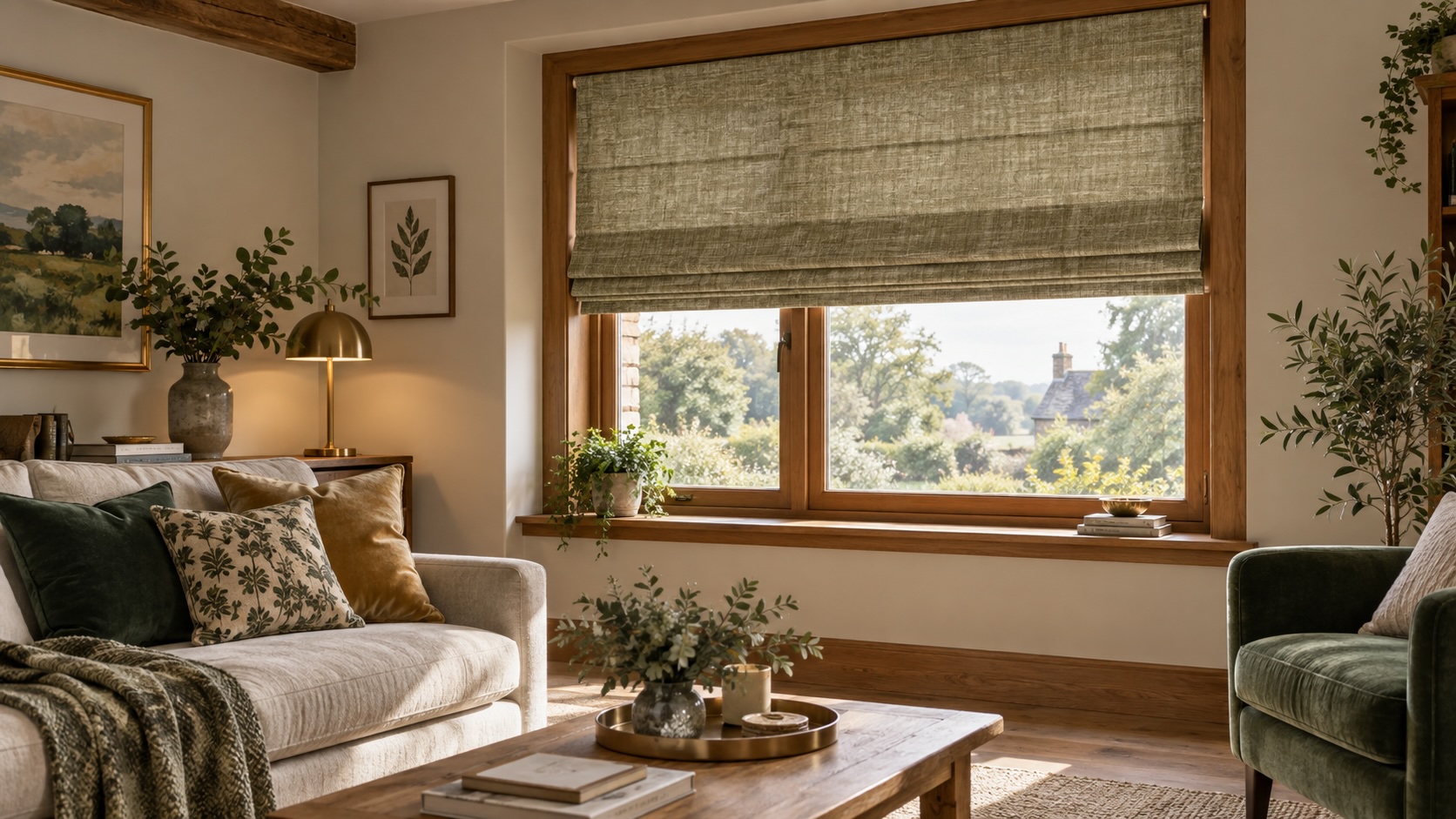
Wooden window frames are generally compatible with a wide range of blind styles, particularly where there is enough clearance around the opening and the recess is not unusually shallow.
The two strongest options are usually:
1. Roller blinds
2. Roman blinds
Roller Blinds
Roller blinds are a particularly flexible choice for wooden frames because they have a simple profile and do not rely on a specific glazing-bead system.
They are well suited where:
- The window opening is straightforward
- The recess has limited depth
- A compact blind is preferred
- The frame itself is a strong decorative feature
Because Roller blinds are visually simple, they can also work well where the timber frame is intended to remain prominent.
Roman Blinds
Roman blinds can be a strong choice where the room needs a softer, more decorative finish.
They suit wooden frames particularly well in:
- Traditional interiors
- Period properties
- Bedrooms
- Living rooms
- Rooms with other timber features
The main compatibility issue is space.
Roman blinds create more fabric depth and a larger stack when raised, so they need more clearance than a Roller blind.
Venetian Blinds Are Also a Good Alternative
Both Metal and Wood Venetian blinds can work well with wooden frames.
Wood Venetian blinds can create a particularly cohesive look where the window already has:
- Timber detailing
- Wooden flooring
- Traditional joinery
- Warm neutral finishes
The main consideration is slat and headrail depth, especially on smaller windows.
Opening Clearance Still Matters
A wooden frame does not automatically mean every blind will be suitable.
Compatibility can still be affected by:
- Inward-opening sashes
- Protruding handles
- Shallow recesses
- Decorative mouldings
- Deep frame profiles
These factors may be more important than the frame material itself.
Best Overall Choice
For maximum flexibility, Roller blinds are usually the strongest all-round option for wooden windows.
Where the room calls for a more decorative treatment and there is enough space, Roman blinds are an excellent alternative.
The main advantage of wooden frames is that they generally give you a broad choice, provided the blind does not interfere with the opening movement or available recess space.
Does the Window Warranty Matter With Wooden Frames?
Yes, particularly with newer timber windows.
Wooden frames are often assumed to be straightforward to alter, but drilling or fixing directly into the frame can still affect the terms of a manufacturer or installer warranty.
Why Warranty Terms Can Matter
A timber window may be covered for issues such as:
- Frame construction
- Joinery
- Factory-applied finishes
- Glazing seals
- Hardware
- Weather resistance
If the frame is drilled, screwed into or otherwise modified, a manufacturer may exclude damage that results from that alteration.
This does not mean that fitting a blind automatically invalidates the entire warranty.
The important point is that warranty terms vary, and permanent changes to the frame can sometimes affect specific areas of cover.
New Timber Windows Need More Care
With recently installed wooden windows, it is worth checking the warranty before making any alteration.
This is especially relevant if the frame has:
- Specialist coatings
- Factory-finished paint or stain
- Engineered timber construction
- Integrated drainage or sealing details
The Frame Is Not Always the Only Fixing Surface
From a compatibility point of view, a blind does not necessarily need to rely on the wooden frame itself.
Depending on the window configuration, a treatment may work without permanently altering the frame.
This can be useful where maintaining warranty protection is important.
Best Approach
Before modifying a wooden window frame, check:
the blind type + the proposed fixing location + the manufacturer’s warranty conditions
Timber is generally a very flexible frame material for blinds, but that does not mean permanent alterations should be made without considering the warranty first.
Best Blinds for Aluminium Window Frames
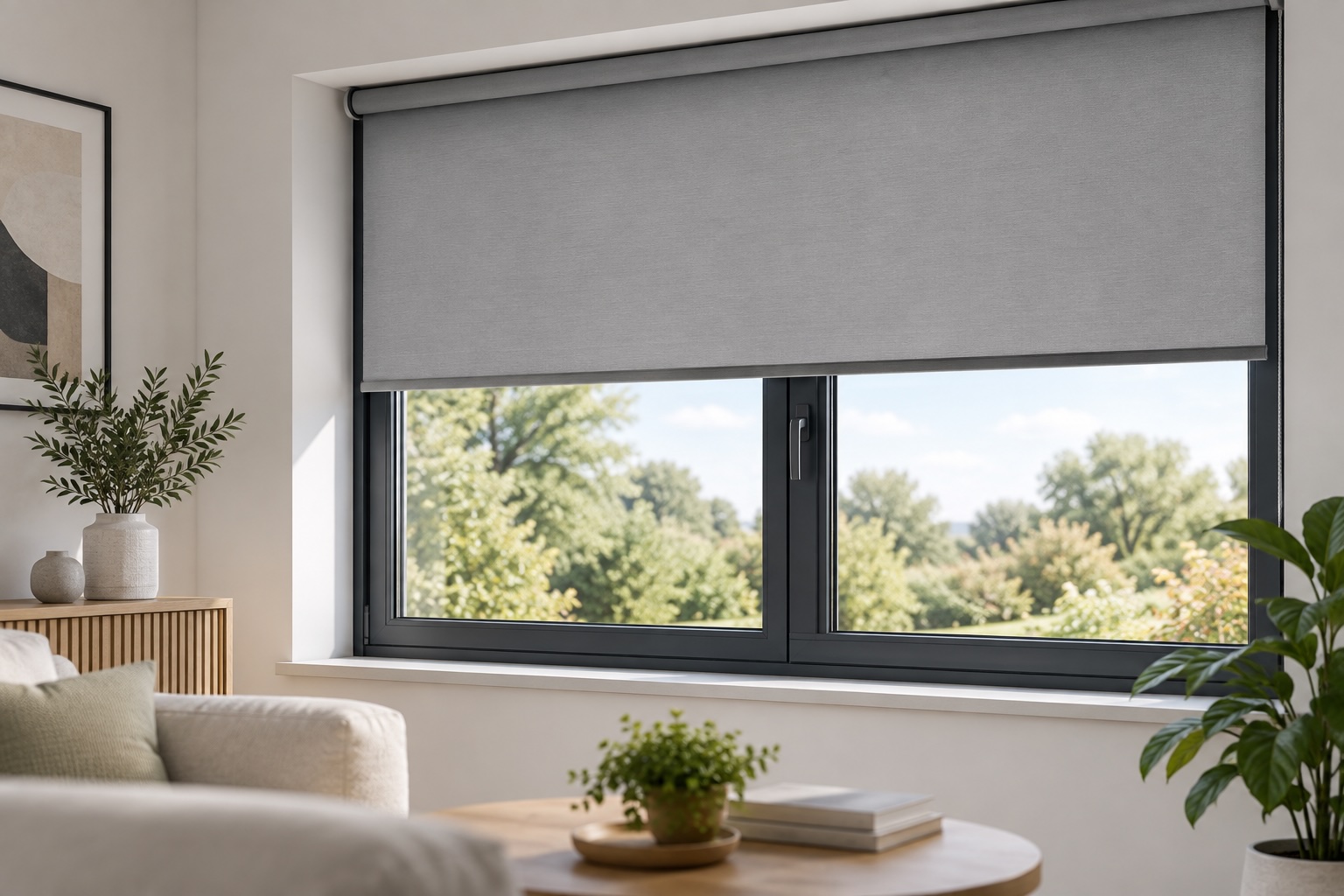
Aluminium window frames are common in modern homes, extensions and contemporary glazing systems. Their slim profiles can look clean and minimal, but they can also create tighter compatibility conditions than bulkier uPVC or timber frames.
The two strongest options are usually:
1. Roller blinds
2. Compatible No Drill or Perfect Fit-style blinds
Roller Blinds
Roller blinds are one of the safest choices for aluminium frames because they do not depend on a particular glazing-bead arrangement.
They work well where:
- The frame profile is slim
- The recess is shallow
- The window has a modern appearance
- A compact blind is preferred
Their main compatibility consideration is clearance around handles and opening sashes.
No Drill or Perfect Fit-Style Blinds
Where drilling into the aluminium frame is undesirable, compatible no-drill systems can be particularly useful.
They may suit:
- Inward-opening aluminium windows
- Glazed doors
- Newer frame systems
- Situations where the blind needs to move with the opening pane
- Installations where permanent frame alteration is best avoided
However, aluminium frame profiles vary considerably, so compatibility should be checked against the exact system.
Why Aluminium Frames Need Careful Assessment
Aluminium frames are often narrower than uPVC frames.
That can mean:
- Less surface area around the glass
- Less room for bulky blind hardware
- Tighter clearance around handles
- Greater sensitivity to headrail or cassette depth
This makes the physical dimensions of the blind especially important.
Venetian Blinds Can Also Work Well
Metal Venetian blinds can be a good match for aluminium windows, particularly in modern interiors.
Their slimmer slats and clean appearance suit contemporary frames well.
The main issue is still clearance, especially where the window opens inward.
Best Overall Choice
For most aluminium windows, Roller blinds offer the broadest compatibility.
Where avoiding permanent changes to the frame is important, a compatible No Drill or Perfect Fit-style system may be the better option.
The key is to check the exact aluminium profile rather than assuming all slim metal frames behave in the same way.
Should You Drill Into Aluminium Window Frames?
In general, drilling directly into an aluminium window frame should be approached cautiously because it creates a permanent modification to the frame.
The main concern is not simply whether aluminium can be drilled. It is whether doing so is compatible with the frame design, structural components, seals and warranty conditions.
Why Aluminium Frames Need More Caution
Modern aluminium windows can contain:
- Narrow internal chambers
- Reinforcement
- Thermal breaks
- Drainage paths
- Sealing systems
- Powder-coated or anodised finishes
Drilling in the wrong area can potentially interfere with one or more of these features.
Warranty Conditions May Be Relevant
As with uPVC and timber windows, there is no universal rule that drilling into an aluminium frame automatically cancels the entire warranty.
However, a manufacturer may exclude damage resulting from:
- Drilling
- Screwing into the frame
- Altering the profile
- Damaging finishes
- Interfering with drainage or seals
For newer windows, it is sensible to check the warranty before making any permanent alteration.
Finish Damage Is Another Consideration
Aluminium frames often have a factory-applied finish.
Once drilled, that finish is permanently breached at the fixing point.
Even where the blind can be fitted securely, the visual impact of the hole remains if the blind is later removed.
No Drill Systems Can Be the Better Compatibility Choice
Where preserving the frame is important, a compatible No Drill or Perfect Fit-style blind may be preferable.
This can be especially useful for:
- New aluminium windows
- Rented properties
- Inward-opening windows
- Glazed doors
- Situations where warranty conditions matter
Best Approach
Before drilling into an aluminium frame, check:
the frame profile + the blind fixing method + the window manufacturer’s warranty
If there is any uncertainty, a blind that avoids permanent alteration to the aluminium frame is usually the safer compatibility option.
Best Blinds for Inward-Opening Windows
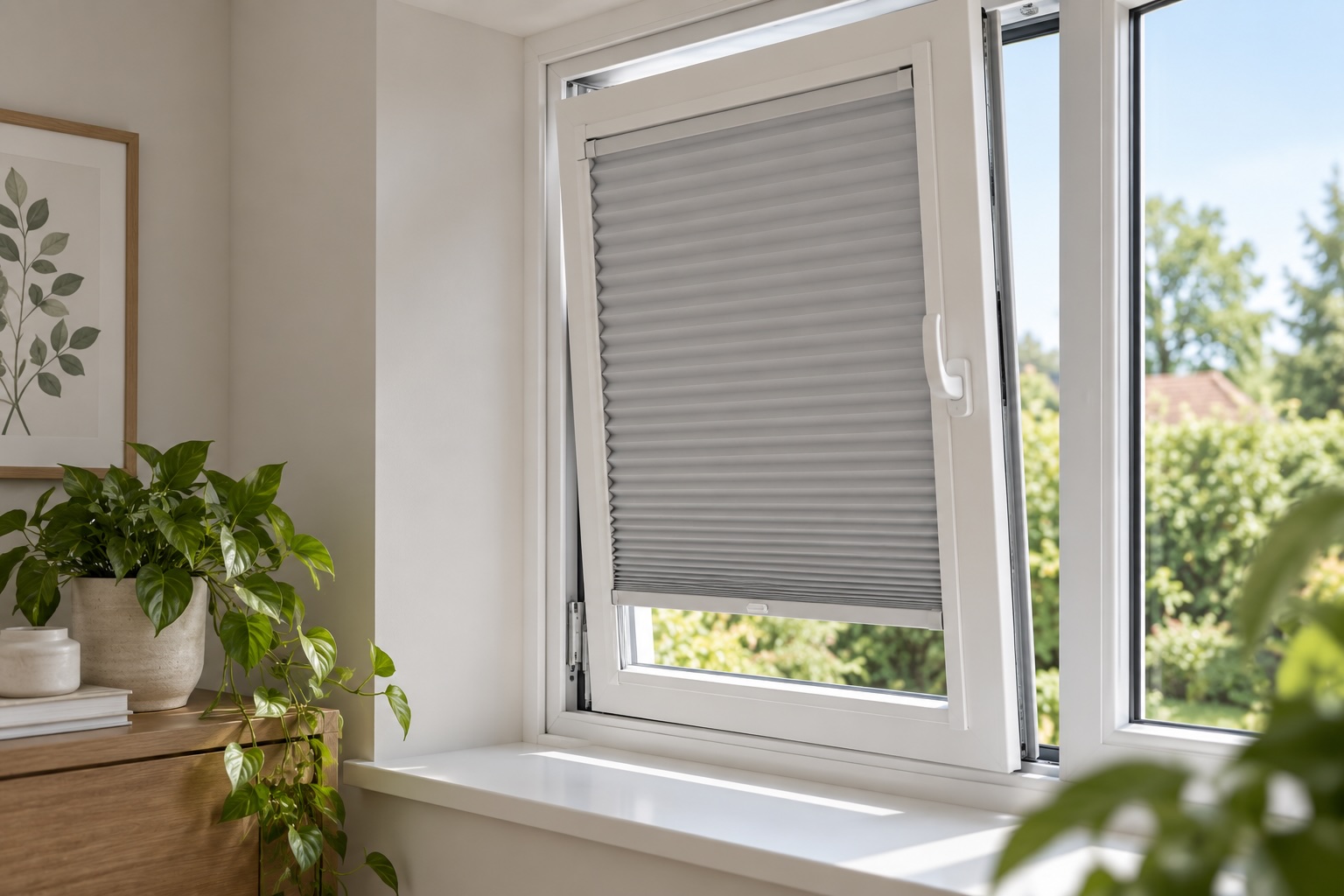
Inward-opening windows need more careful blind selection because the sash moves into the room.
A blind that sits across the opening path can prevent the window from opening fully or create contact with the blind, headrail or fabric.
The two strongest options are usually:
1. Perfect Fit blinds
2. Compatible No Drill blinds
Perfect Fit Blinds
Perfect Fit blinds can be particularly well suited to inward-opening windows because the blind sits closely with the individual glazed panel and moves with the opening sash.
This can help avoid the clearance problems created by a blind positioned independently across the recess.
They are especially useful where:
- The sash opens fully into the room
- Handles project into the room
- There is limited space above or around the window
- Drilling into the frame is undesirable
- Each opening pane needs to operate independently
The main limitation is compatibility with the exact frame and glazing-bead profile.
No Drill Blinds
Compatible No Drill blinds can offer similar advantages where a frame-mounted or pane-associated system is available.
They can be useful where:
- Permanent frame alteration is best avoided
- The window is relatively new
- Warranty conditions are a concern
- The sash needs to open without interference
As with Perfect Fit, the exact system must suit the frame.
Why Conventional Blinds Need More Thought
Roller, Roman and Venetian blinds can still work with inward-opening windows, but their position becomes much more important.
Potential conflicts include:
- The sash hitting the blind when opened
- Handles contacting the fabric or slats
- The headrail restricting opening movement
- A lowered blind blocking access to the handle
The issue is therefore not that these blinds are inherently incompatible. It is that they need enough clearance from the opening path.
Roller Blinds Can Still Be a Strong Alternative
Where the blind can sit clear of the moving sash, a Roller blind remains a practical option.
Its compact profile is useful, but the key question is whether the window can still open freely when the blind is raised.
Best Overall Choice
For inward-opening windows, a blind that moves with the sash is usually the cleanest compatibility solution.
That makes Perfect Fit and suitable No Drill systems particularly strong options.
Where these are not compatible with the frame, a conventional blind can still work, but only if it sits fully clear of the window’s opening movement.
Why Handles Matter With Inward-Opening Windows
Window handles can be one of the main compatibility issues with inward-opening windows.
Even when the blind itself appears to fit the frame, a projecting handle can interfere with the fabric, slats, cassette or headrail as the sash opens.
Where Problems Usually Occur
Compatibility issues can arise when:
- The handle projects significantly into the room
- The blind sits very close to the glass
- The sash opens through the same space as the blind
- The blind has a deep cassette or headrail
- Slats or fabric extend across the handle position
This is why checking the window width and height alone is not enough.
Perfect Fit and No Drill Systems Can Help
Where compatible, Perfect Fit and certain No Drill blinds can reduce the problem because the blind sits closely with the individual glazed panel.
This can allow the blind and sash to move together rather than occupying separate layers of the same space.
Roller Blinds Need Clear Space
A Roller blind can still work well, but there needs to be enough clearance between:
- The blind fabric
- The handle
- The opening path of the sash
If the handle projects too far, the blind may sit awkwardly or the window may not open as freely as intended.
Venetian Blinds Need Similar Consideration
Venetian slats can also come into contact with handles, particularly when they are lowered.
Slimmer Metal Venetian blinds may be easier to accommodate than wider Wood Venetian blinds, but clearance still needs to be checked.
Best Approach
With inward-opening windows, handle projection should be treated as a separate compatibility check alongside:
frame type + opening direction + recess depth + blind depth
A window can have enough room for a blind in principle, but still be incompatible with a particular style if the handle occupies the same space.
Best Blinds for Shallow Window Recesses
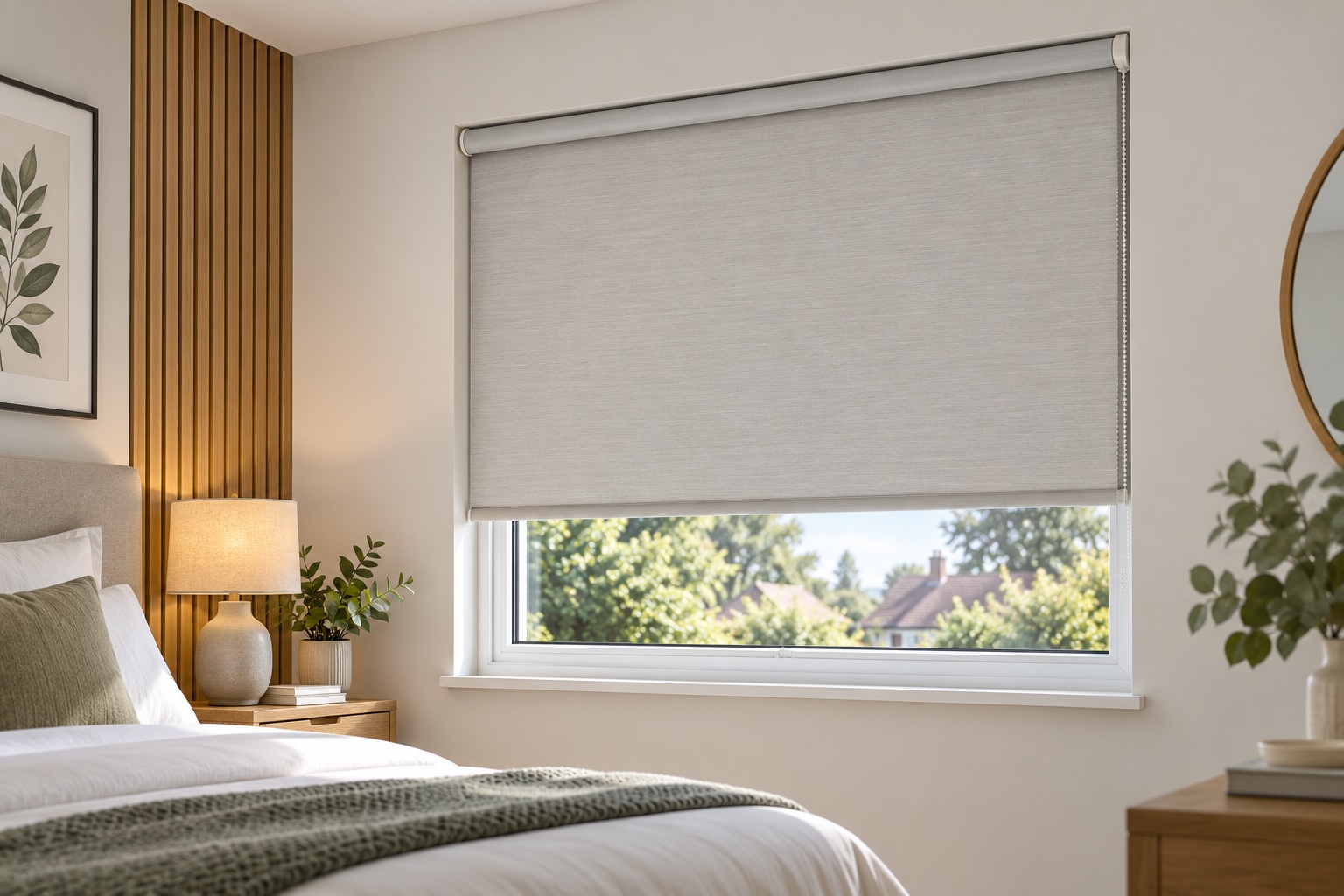
A shallow recess can limit blind choice because some systems need more depth for the headrail, cassette, slats or folded fabric.
The two strongest options are usually:
1. Roller blinds
2. Metal Venetian blinds
Roller Blinds
Roller blinds are often the most practical choice for shallow recesses because they have a relatively compact profile.
They work particularly well where:
- Available depth is limited
- The window is small or standard-sized
- A simple blind is preferred
- Minimal visual bulk is important
The main thing to check is whether the roller mechanism and fabric can sit comfortably without interfering with handles or the opening sash.
Metal Venetian Blinds
Metal Venetian blinds can also work well because their slats and headrails are generally slimmer than bulkier blind types.
They are especially useful where adjustable light and privacy control are important.
Compared with Wood Venetian blinds, they usually need less space and can therefore be easier to accommodate in tighter recesses.
Why Roman Blinds Need More Space
Roman blinds create folded fabric when raised.
That stack can occupy more depth around the top of the window and may feel cramped in a shallow recess.
They can still work, but they are generally less forgiving where space is restricted.
Wood Venetian Blinds Can Be Too Bulky
Wood and wood-effect Venetian blinds typically use wider slats and larger headrails.
That extra depth can make them harder to accommodate where the recess is particularly shallow.
They are usually better suited to windows with more generous space.
Day & Night Blinds Also Need Depth
Day & Night blinds often include a more substantial cassette or headrail than a simple Roller blind.
They may still be compatible, but shallow recesses can become a limiting factor.
Best Overall Choice
For shallow recesses, the safest starting point is usually:
Roller blinds for maximum compactness
Metal Venetian blinds where adjustable light control is needed
The key compatibility factor is not simply the recess width and height. Available depth is just as important.
Does a Blind Have to Sit Inside the Recess?
No. A blind does not have to sit inside the window recess.
For shallow recesses in particular, choosing a blind that sits outside the recess can sometimes remove the depth restriction entirely.
Why Outside-Recess Positioning Can Help
A shallow recess may not have enough room for:
- A deep cassette
- A large headrail
- Wide Venetian slats
- Folded Roman fabric
- A Day & Night mechanism
If the blind sits outside the recess instead, the available wall space can allow more freedom.
It Can Widen the Choice of Blind Styles
An outside-recess treatment can make it possible to use blind types that would otherwise feel cramped inside a shallow opening.
This can include:
- Roller blinds
- Roman blinds
- Day & Night blinds
- Venetian blinds
The exact choice still depends on the surrounding wall space and window layout.
It Changes the Visual Effect
Inside-recess blinds usually look more contained within the architecture.
Outside-recess blinds can make the window treatment feel larger and more prominent.
That may be desirable where the window itself is small, but less so where the aim is to keep the blind visually minimal.
Opening Windows Still Need Clearance
Moving the blind outside the recess does not automatically solve every compatibility issue.
You still need to consider:
- How the window opens
- Handle projection
- Whether the sash swings inward
- Whether the blind sits in the opening path
The recess depth may no longer be the problem, but opening clearance can still be.
Best Approach
A shallow recess does not mean that blind choice is severely limited.
It simply means that inside-recess compatibility may be more restricted.
Where depth is insufficient, an outside-recess blind can significantly widen the range of suitable options, provided the blind still clears the opening window and surrounding hardware.
Best Blinds for Doors and Glazed Panels
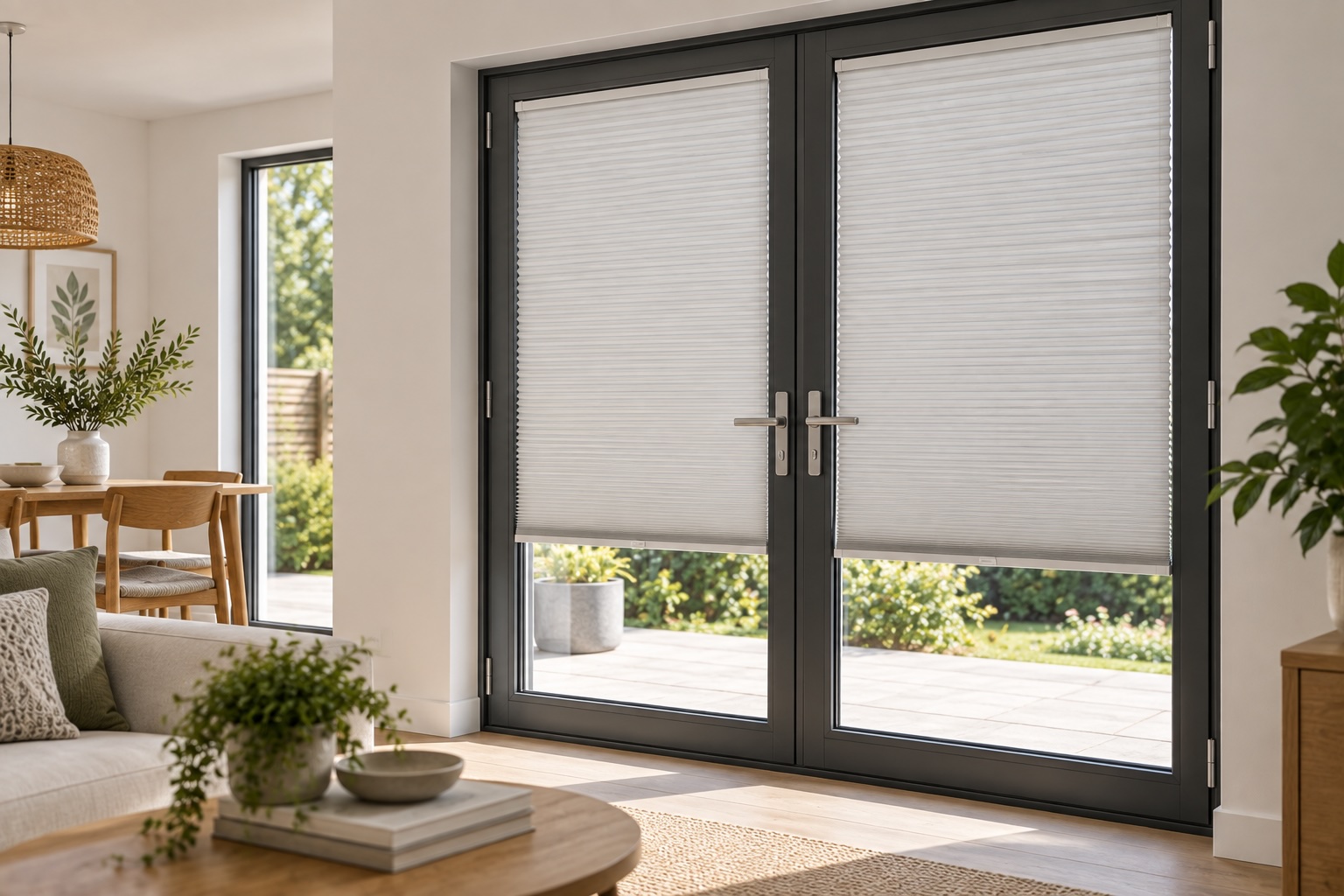
Doors with glazed sections need a blind that works with the movement of the door, the position of the handles and the dimensions of the glass.
The two strongest options are usually:
1. Perfect Fit blinds
2. Roller blinds
Perfect Fit Blinds
Perfect Fit blinds are particularly well suited to compatible glazed doors because the blind sits closely with the individual glazed panel.
This can be useful where:
- The door opens regularly
- The blind needs to move with the door
- Handles project into the room
- Drilling into the frame is undesirable
- The glass occupies most of the door panel
Because the blind remains associated with the glazed section, it can avoid some of the clearance problems created by a larger blind positioned independently in front of the doorway.
Roller Blinds
Roller blinds are a flexible alternative, especially where the glazed panel is fixed or the surrounding layout provides enough clearance.
They work well because they are:
- Compact
- Simple
- Suitable for a wide range of frame materials
- Available in different opacity levels
The main compatibility question is whether the blind can remain clear of the door as it opens and closes.
Door Handles Need Extra Attention
Handles are especially important on glazed doors because they are often larger or more prominent than standard window handles.
A blind that sits too close to the glass can interfere with:
- Lever handles
- Pull handles
- Lock mechanisms
- The movement of the door itself
This makes handle projection an important compatibility check.
Fixed Glazed Panels Are Easier
Where the glass is fixed and does not move with the door, compatibility is usually simpler.
Roller, Venetian or Day & Night blinds may all be suitable depending on the available space.
The challenge becomes greater when the blind needs to work with an opening door rather than a fixed glazed section.
Best Overall Choice
For compatible opening glazed doors, Perfect Fit blinds are often the strongest option because they can move with the door and avoid permanent frame alteration.
For fixed glazed panels or simpler door layouts, Roller blinds offer broader flexibility.
The key is to assess whether the blind needs to move with the door or simply cover the glazing.
Best Blinds for French Doors
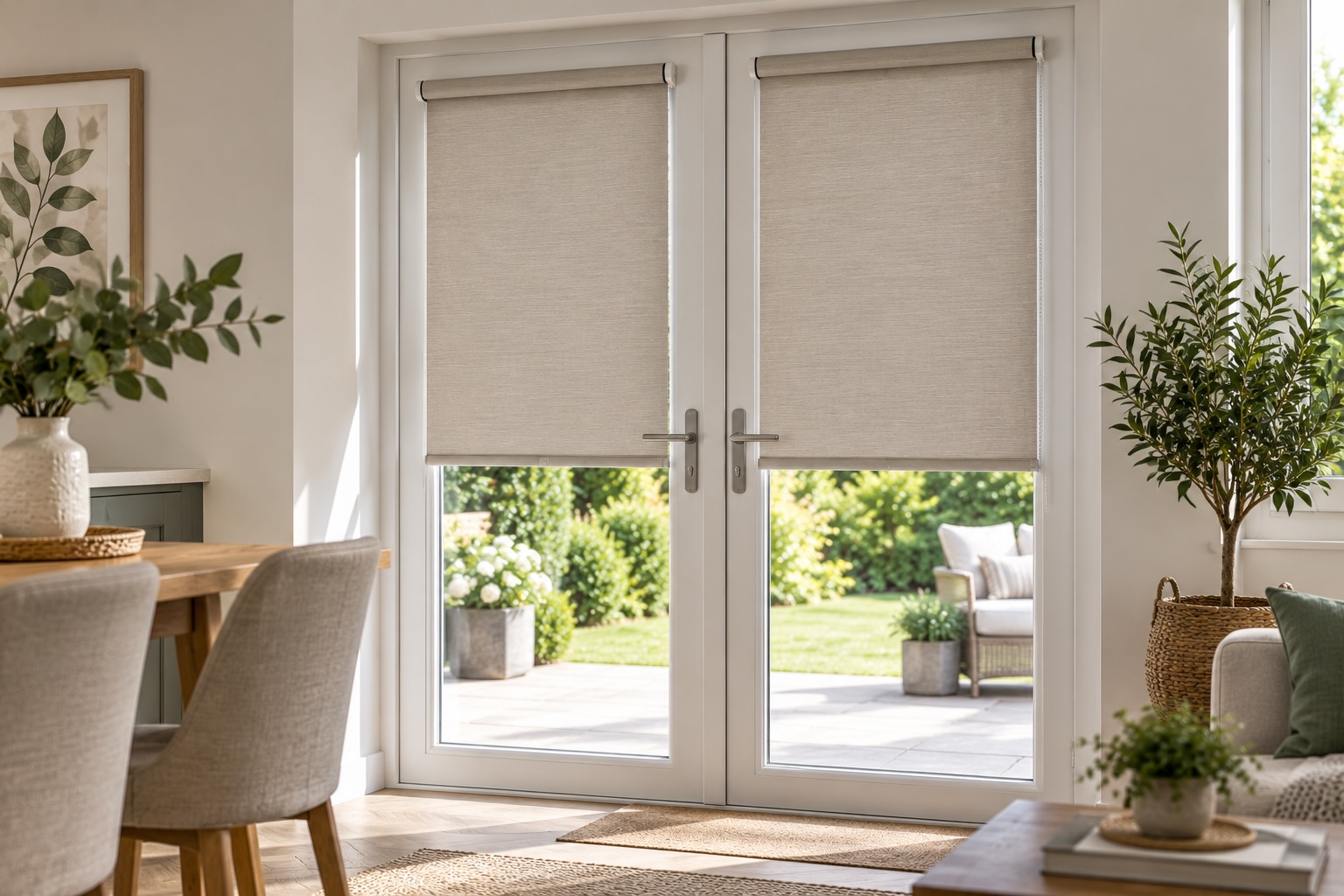
French doors need blinds that work with two independently opening door leaves, prominent handles and relatively narrow glazed panels.
The two strongest options are usually:
1. Perfect Fit blinds
2. Compatible No Drill blinds
Perfect Fit Blinds
Perfect Fit blinds are often particularly well suited to French doors because each blind can sit closely with an individual glazed panel.
This can help because the blind:
- Moves with the door
- Does not need to span across both door leaves
- Can avoid obstructing the opening movement
- Keeps the treatment visually contained
- Can avoid permanent drilling into the frame where compatible
This is especially useful where the glazed area forms a large part of each door.
No Drill Blinds
Compatible No Drill blinds can offer similar advantages.
They are especially useful where:
- The doors are relatively new
- Permanent frame alteration is undesirable
- Warranty conditions are a concern
- The property is rented
- Each door needs to operate independently
As always, compatibility depends on the exact frame and glazing system.
Roller Blinds Can Work in Some Layouts
Roller blinds can still be suitable, particularly where there is enough space above or around the doors.
However, they need more careful consideration because a blind positioned across the doorway must remain clear of:
- The opening leaves
- Door handles
- Locking points
- The passage through the doorway
For that reason, a panel-specific blind is often the cleaner solution.
Why One Large Blind Is Usually Less Ideal
A single blind across the full width of French doors can restrict access or need to be raised before either door can be used.
That does not necessarily make it incompatible, but it is less convenient than treating each door leaf separately.
Best Overall Choice
For compatible French doors, Perfect Fit or suitable No Drill blinds are usually the strongest options because they can work with each glazed panel independently.
The key compatibility principle is that the blind should move with the door rather than obstructing the doorway.
Best Blinds for Patio Doors
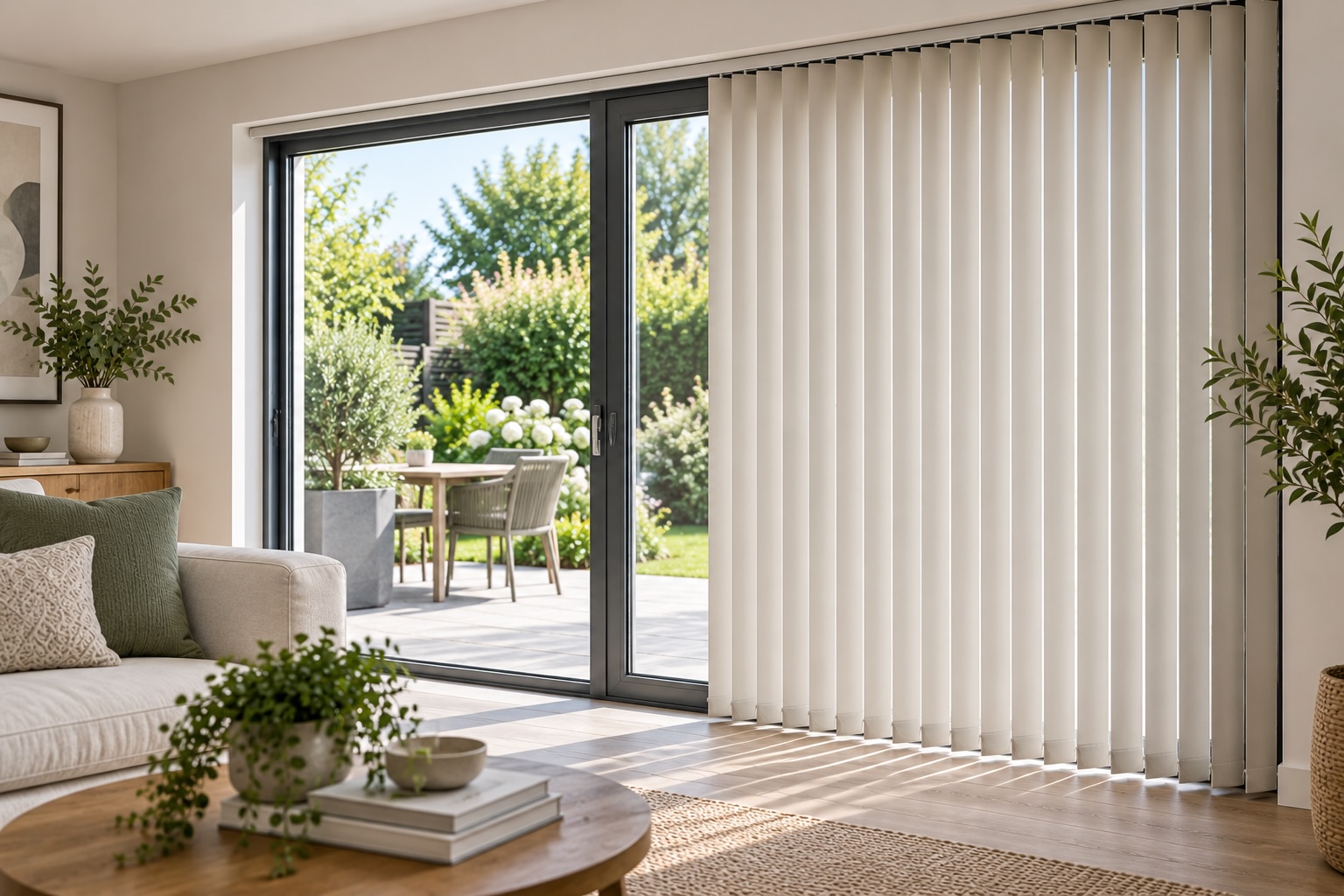
Patio doors usually involve wide expanses of glazing and frequent access, so the blind needs to cover a large area without making the doorway awkward to use.
The two strongest options are usually:
1. Vertical blinds
2. Roller blinds
Vertical Blinds
Vertical blinds are particularly well suited to patio doors because their individual louvres are designed to work across wide openings.
They are useful where:
- The glazing is broad
- The doors are used regularly
- Adjustable privacy is important
- Light needs to be controlled across a large area
- The blind should stack to one side rather than above the opening
Because the louvres can be tilted, Vertical blinds also allow more flexible control than a single opaque panel.
Roller Blinds
Roller blinds can also work well, particularly where the patio doors have a simpler layout.
They are useful where:
- A cleaner, more minimal appearance is preferred
- The blind can sit fully clear of the opening when raised
- The glazing is divided into manageable sections
- A broad range of fabric options is wanted
For very wide openings, separate Roller blinds may sometimes make more sense than one oversized blind.
Why Door Access Matters
A blind that covers the whole doorway can become inconvenient if it has to be fully opened every time someone goes outside.
This is why patio door compatibility is not only about whether the blind fits the glazing.
It is also about whether the treatment allows practical access through the door.
What About Perfect Fit?
Perfect Fit can be useful on some glazed door systems, particularly where blinds can sit with individual glazed panels.
However, patio doors vary considerably in construction, so this is more dependent on the exact door and frame system than with standard uPVC windows.
Best Overall Choice
For most wide patio doors, Vertical blinds are usually the strongest overall option because they suit broad glazing and allow flexible access and light control.
Where a simpler appearance is preferred and the opening layout allows it, Roller blinds are a strong alternative.
Best Blinds for Bi-Fold Doors
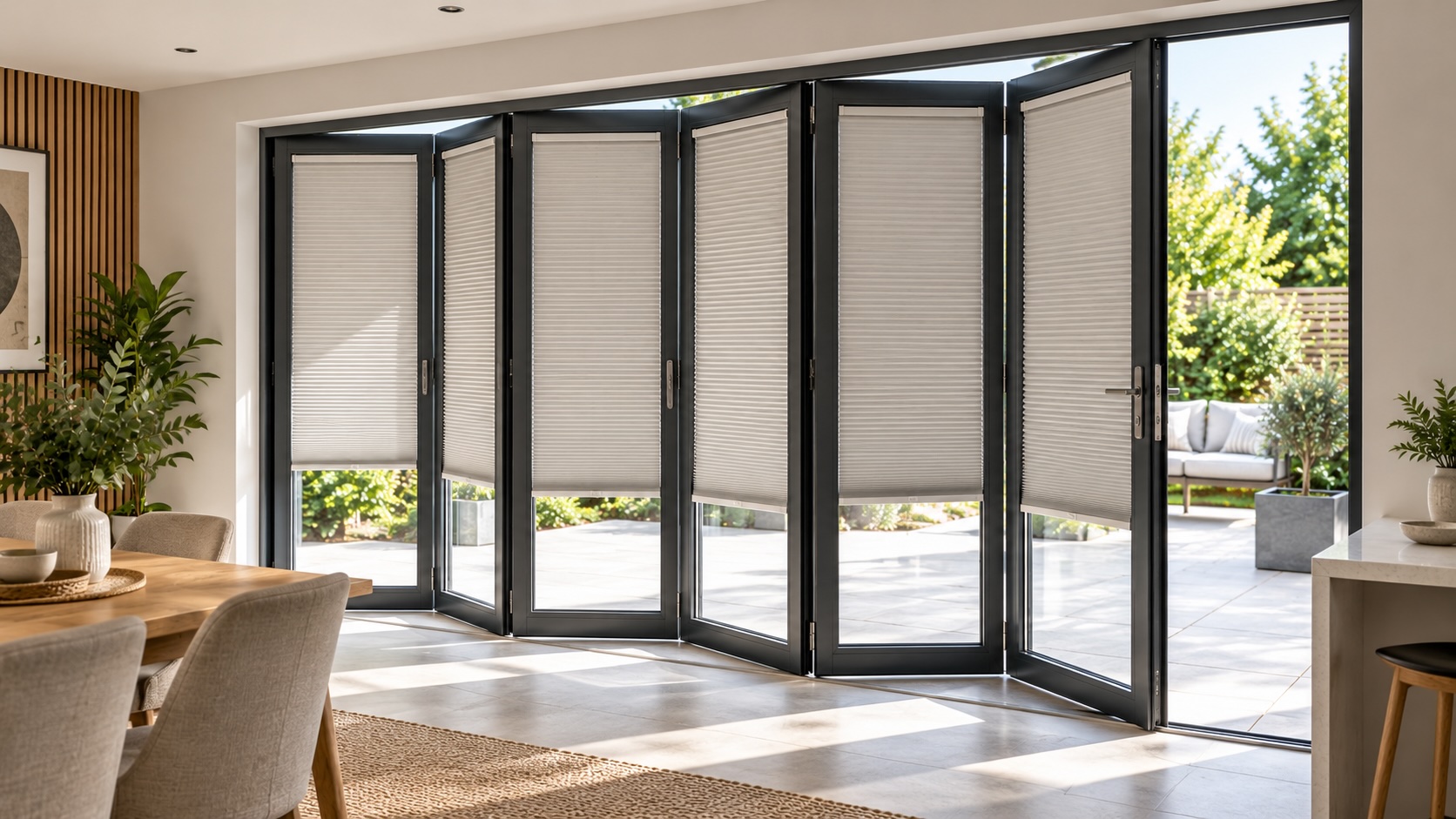
Bi-fold doors need especially careful blind selection because the door panels fold and stack against one another, which can create much tighter clearance than standard patio or French doors.
The two strongest options are usually:
1. Perfect Fit or compatible panel-mounted blinds
2. Roller blinds where the layout permits
Perfect Fit or Panel-Mounted Blinds
Where compatible, a blind that sits closely with each individual glazed panel can be particularly effective.
This can help because the blind:
- Moves with the door panel
- Does not need to span the full opening
- Keeps each section independently usable
- Reduces interference with the folding action
- Avoids creating one large blind across the entire doorway
This is often the cleanest solution where the frame and glazing profile allow it.
Roller Blinds
Roller blinds can also work well, especially where the doors are divided into clear sections and there is enough room above the opening.
They are useful where:
- A simple appearance is preferred
- Each glazed section can have its own blind
- The blinds can be fully raised before the doors fold
- There is sufficient clearance around the frame
One large Roller blind across the full width can be less practical if it has to be completely raised before the doors can operate.
Why the Folding Action Matters
Bi-fold doors are different from ordinary doors because multiple panels move together.
A blind can become incompatible if it:
- Projects too far from the glass
- Interferes with neighbouring door panels
- Prevents the panels from stacking correctly
- Clashes with handles or hinges
- Needs to remain closed across the full opening
This is why blind depth matters particularly strongly with bi-fold doors.
Handles and Hinges Need Clearance
Bi-fold doors often have more hardware than standard glazed doors.
That can include:
- Main handles
- Intermediate handles
- Hinges
- Locking mechanisms
- Panel joints
A blind may fit the glass but still be unsuitable if it interferes with any of these components.
Best Overall Choice
For compatible bi-fold doors, a slim blind that sits with each individual glazed panel is usually the strongest option.
Where that is not possible, separate Roller blinds can work well provided they remain clear of the folding and stacking movement.
The main compatibility rule is simple: the blind should never compromise the way the door panels fold together.
Best Blinds for Bay Windows
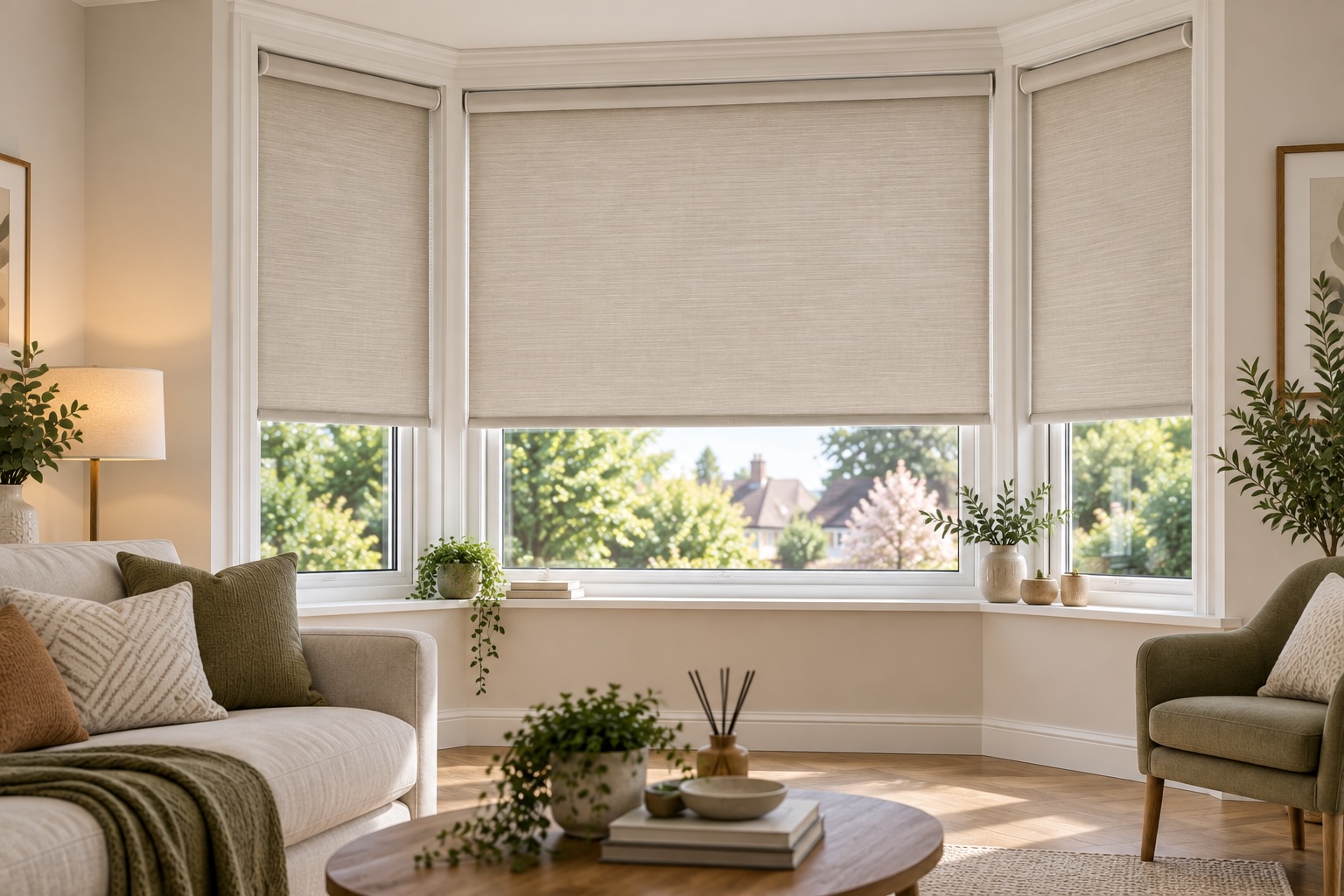
Bay windows need more careful blind selection because several glazed sections meet at angles, often with limited space between neighbouring blinds.
The two strongest options are usually:
1. Roller blinds
2. Venetian blinds
Roller Blinds
Roller blinds are one of the safest choices for bay windows because they have a relatively compact profile and can be used separately across individual sections of the bay.
They work particularly well where:
- The bay contains several individual windows
- A simple, uncluttered appearance is preferred
- Available depth is limited
- Each section needs to operate independently
Their relatively slim construction can help reduce crowding where adjoining blinds meet at the bay angles.
Venetian Blinds
Venetian blinds are another strong option, particularly where flexible light and privacy control is important.
They can work well because each blind can be adjusted independently across the different sections of the bay.
This is useful where one side of the bay receives stronger sunlight or faces a more exposed direction.
Metal Venetian blinds are generally easier to accommodate in tighter bays because their slimmer slats and headrails create less bulk.
Why Bay Angles Matter
A blind can fit each individual window correctly but still create problems where two neighbouring blinds meet.
Potential issues include:
- Headrails touching
- Slats overlapping
- Fabric rolls projecting into neighbouring sections
- Blind controls becoming crowded
- Reduced clearance at tighter bay angles
This is why bay window compatibility should be considered across the whole bay, not one window at a time.
Wood Venetian Blinds Need More Space
Wood and wood-effect Venetian blinds can look very good in a bay window, but their wider slats and larger headrails need more room.
In a compact bay, that extra depth can make adjacent blinds feel crowded.
They are generally better suited to larger bays with more generous spacing between each section.
Roman Blinds Can Work, but Add More Bulk
Roman blinds can also suit bay windows, particularly in traditional interiors, but their fabric folds and stack create more visual and physical depth.
Where the bay is narrow or heavily angled, this may make the arrangement feel more congested.
Best Overall Choice
For most bay windows, Roller blinds offer the simplest and most flexible solution, particularly where space between sections is limited.
Where adjustable privacy and light control are more important, Venetian blinds are a strong alternative.
The main compatibility consideration is not just whether each blind fits the individual window, but whether all of the blinds can sit comfortably together across the angles of the bay.
Why Blind Depth Matters in a Bay Window
Blind depth is especially important in a bay window because neighbouring blinds often sit very close together at the points where the window sections meet.
A blind can fit the width and height of each individual pane correctly but still clash with the blind beside it if the headrail, cassette, slats or fabric project too far forward.
Where Problems Can Occur
Depth becomes important where:
- Two blinds meet at a tight angle
- Headrails extend beyond the individual window section
- Wide slats project into the neighbouring blind
- Roller mechanisms sit too far forward
- Fabric folds occupy significant space
- Controls are positioned close to adjacent blinds
The tighter the bay angle, the more carefully blind depth needs to be considered.
Roller Blinds Usually Need Less Space
Roller blinds are often one of the easiest styles to accommodate because their overall profile is relatively compact.
This can make them a strong choice for smaller bays where several blinds need to sit close together.
Metal Venetian Blinds Can Also Work Well
Metal Venetian blinds generally have slimmer slats and headrails than Wood Venetian blinds.
This can make them easier to position across multiple sections without the blinds feeling physically crowded.
Wood Venetian Blinds Need More Clearance
Wide wooden or wood-effect slats create more depth.
On a generous bay this may not be a problem, but in a tighter bay the additional projection can cause neighbouring blinds to interfere with one another.
Roman Blinds Add Fabric Depth
Roman blinds create folds at the top of the window when raised.
That additional fabric stack can make the treatment feel more substantial and may be less suitable where several blinds need to meet closely at angled sections.
The Whole Bay Needs to Be Considered
Bay window compatibility should never be judged one pane at a time.
The key question is whether:
each blind fits individually + neighbouring blinds clear one another + the angles remain unobstructed
For this reason, blind depth can be just as important as blind width when choosing a suitable treatment for a bay window.
Roller vs Venetian Blinds for Bay Windows
Roller and Venetian blinds are both strong options for bay windows, but they solve slightly different compatibility problems.
The better choice usually depends on whether you value simplicity and compactness or adjustable light and privacy control more.
Roller Blinds
Roller blinds are usually the simpler option.
They work particularly well where:
- The bay is relatively compact
- Several blinds need to sit close together
- The angles between windows are tight
- You want minimal visual and physical bulk
- Each section should operate independently
Their main advantage is that the mechanism and fabric are relatively compact, which can make it easier to avoid clashes between neighbouring blinds.
Venetian Blinds
Venetian blinds are a stronger choice where light and privacy control matter more.
Because the slats can be tilted, each section of the bay can be adjusted independently.
This can be useful where:
- One side of the bay receives more direct sunlight
- Privacy needs vary across the different panes
- The bay faces a street or neighbouring property
- You want to redirect light rather than simply open or close the blind
Metal Venetian Usually Works Better in Tighter Bays
Where space is limited, Metal Venetian blinds generally have an advantage over Wood Venetian blinds because the slats and headrails are usually slimmer.
That can reduce the risk of neighbouring blinds interfering with one another at the bay angles.
Which Is Better for a Small Bay?
For a compact bay with tight angles, Roller blinds are usually the safer choice.
They create less depth and are less likely to crowd the corners.
Which Is Better for a Larger Bay?
For a larger bay with more generous spacing, Venetian blinds can offer more flexibility because each section can be adjusted for light and privacy independently.
Best Overall Choice
Choose Roller blinds if your priority is:
compactness + simplicity + easier compatibility across tight bay angles
Choose Venetian blinds if your priority is:
adjustable privacy + directional light control + independent control across each section
Both can work very well, but the geometry of the bay should determine which is the better fit.
Best Blinds for Conservatory Windows
Conservatories need a slightly different approach because they usually contain multiple individual glazed panels, opening windows, doors and relatively slim frame sections.
The two strongest options are usually:
1. Perfect Fit blinds
2. Pleated blinds
Perfect Fit Blinds
Perfect Fit blinds can be particularly well suited to compatible conservatory windows because each blind sits closely with the individual glazed panel.
This can be useful where:
- Several opening panes sit next to one another
- The blind needs to move with the window
- Doors are incorporated into the conservatory
- Drilling into the frame is undesirable
- A neat, panel-by-panel appearance is preferred
Because each blind works with a specific glazed section, the overall treatment can remain more controlled than using one large blind across several panes.
Pleated Blinds
Pleated blinds can also work well because they usually have a slim profile and are well suited to individual glazed sections.
They are especially useful where:
- Space around the glazing is limited
- The conservatory contains many narrow panes
- A lightweight appearance is preferred
- The blind needs to remain visually compact
Their relatively small profile can make them easier to accommodate around multiple adjoining windows.
Why Large Single Blinds Are Often Less Suitable
A conservatory rarely behaves like one large conventional window.
The glazing is usually divided into many separate sections, some of which may open independently.
One oversized blind can therefore create problems with:
- Access to opening panes
- Door operation
- Handles
- Frame joints
- Independent light control
Treating the glazing panel by panel is often the more compatible approach.
Frame Compatibility Still Matters
Many conservatories use uPVC frames, but that does not automatically mean every Perfect Fit or No Drill system will be suitable.
Compatibility can still depend on:
- Glazing-bead profile
- Frame depth
- Handle position
- Opening mechanism
- Available clearance around each pane
Best Overall Choice
For compatible conservatories, Perfect Fit blinds are often the strongest option because they work neatly with individual glazed panels and opening sections.
Where a slimmer, lighter treatment is preferred, Pleated blinds are a strong alternative.
The main principle is to treat the conservatory as a series of individual glazed sections rather than one conventional window.
Why Conservatory Blinds Have Different Compatibility Requirements
Conservatories are more complex than standard windows because they usually combine multiple glazed panels, opening sections, doors and narrow frame profiles within one structure.
That means compatibility needs to be assessed across the whole conservatory rather than treating every pane as if it were an ordinary standalone window.
Multiple Individual Panes
Conservatories often divide glazing into several separate sections.
Each section may have its own:
- Frame profile
- Opening mechanism
- Handle
- Glazing bead
- Available clearance
A blind that works on one pane may therefore not automatically suit the one beside it.
Opening Windows and Doors
Some conservatory panels may be fixed, while others open inward or form part of a door.
This makes independent operation important.
Panel-specific blinds can be particularly useful because they allow each opening section to function without being blocked by a larger treatment.
Narrow Frame Profiles
Conservatory frames can leave relatively little room around the glass.
That can make bulky blind systems harder to accommodate.
Slimmer options such as Pleated blinds or compatible Perfect Fit systems may therefore be easier to integrate.
Handles Can Create Localised Restrictions
Handles on opening windows and doors can project into the same space needed by the blind.
This is particularly important where several opening sections sit close together.
A blind can fit the glazed area but still be incompatible if it interferes with the handle or opening movement.
Large Single Blinds Are Less Flexible
One large blind across multiple conservatory panes may look simple, but it can create practical compatibility problems.
It may:
- Block access to individual opening panes
- Interfere with doors
- Cover several frame joints
- Reduce independent control across different parts of the conservatory
That is why conservatories often benefit from a more segmented approach.
Best Approach
The key compatibility factors for conservatory blinds are:
individual pane size + opening movement + handle position + frame profile + available depth
This is why Perfect Fit and Pleated blinds are often strong choices where compatible. They can work with the structure panel by panel rather than treating the conservatory as one large conventional window.
Best Blind by Window Frame Type
The table below summarises the strongest blind options for the main frame materials and window configurations covered in this guide.
| Frame or Window Type | Best Choice | Second Choice | Main Compatibility Consideration |
|---|---|---|---|
| uPVC Windows | Perfect Fit | Roller | Perfect Fit depends on glazing-bead and frame-profile compatibility. |
| Wooden Windows | Roller | Roman | Check opening clearance, recess depth and any warranty restrictions before altering the frame. |
| Aluminium Windows | Roller | Compatible No Drill | Slim profiles can restrict fixing area and available clearance. |
| Inward-Opening Windows | Perfect Fit | Compatible No Drill | The blind must not obstruct the sash, handle or opening path. |
| Shallow Recesses | Roller | Metal Venetian | Headrail, cassette and slat depth can become limiting. |
| Glazed Doors | Perfect Fit | Roller | The blind must work with door movement, handles and locking hardware. |
| French Doors | Perfect Fit | Compatible No Drill | Each door leaf should remain independently usable. |
| Patio Doors | Vertical | Roller | The treatment must suit wide glazing without making access awkward. |
| Bi-Fold Doors | Compatible Panel-Mounted / Perfect Fit | Separate Roller Blinds | Blind depth must not interfere with folding and stacking panels. |
| Bay Windows | Roller | Venetian | Neighbouring blinds must clear one another at the bay angles. |
| Conservatories | Perfect Fit | Pleated | Multiple panes, opening sections and frame profiles need to be considered individually. |
The Main Pattern
Roller blinds are the most consistently flexible option across conventional window types.
Perfect Fit and compatible No Drill blinds become particularly valuable where the blind needs to work closely with an opening pane or door, or where permanent frame alteration is undesirable.
Vertical blinds are strongest on wide glazed openings, while Metal Venetian blinds are useful where available depth is restricted.
The important point is that the frame material gives only part of the answer. Final compatibility depends on the complete window configuration, including opening movement, recess depth, handles, glazing arrangement and frame profile.
Which Blind Is Most Universally Compatible?
For most conventional windows, Roller blinds are usually the most universally compatible option.
Their main advantage is that they do not rely on a particular glazing-bead profile, frame material or specialist panel system. That makes them suitable for a very broad range of uPVC, timber and aluminium windows.
Why Roller Blinds Are So Flexible
Roller blinds have a relatively simple construction and compact profile.
They can work well with:
- Standard recessed windows
- Shallow recesses
- Wooden frames
- uPVC frames
- Aluminium frames
- Bay windows
- Fixed glazed panels
- Some door and patio-door layouts
Their main compatibility requirement is usually enough clearance around the opening window, handles and surrounding structure.
Where Roller Blinds Are Not Always the Best Choice
Universal compatibility does not mean they are the best answer in every situation.
For example:
- Inward-opening windows may work better with Perfect Fit or No Drill systems
- French doors may be better served by panel-specific blinds
- Wide patio doors often suit Vertical blinds better
- Conservatories may benefit more from Perfect Fit or Pleated blinds
- Bi-fold doors need especially careful consideration because of their folding movement
So Roller blinds are often the best starting point, but the window configuration can still favour another style.
Perfect Fit Has Stronger Compatibility in Specific Situations
Perfect Fit blinds are not as universally compatible because they depend on a suitable frame and glazing-bead profile.
Where they are compatible, however, they can be a better solution than Roller blinds for:
- Opening uPVC windows
- Glazed doors
- French doors
- Conservatory panels
- Situations where drilling into the frame is undesirable
Best Overall Answer
If you need one blind type with the broadest compatibility across conventional windows, Roller blinds are usually the strongest choice.
If the window or door opens inward and the blind needs to move with the glazed panel, Perfect Fit or a compatible No Drill system may be the better solution.
The distinction is useful:
Roller blinds offer the widest general compatibility.
Perfect Fit blinds offer stronger compatibility with certain opening glazed panels where the frame profile allows them.
When Is a No Drill Blind the Better Choice?
A No Drill blind is often the better option where preserving the window frame matters as much as the blind itself.
This is especially relevant with newer windows, rented properties and frames where permanent alteration may be undesirable.
Where No Drill Blinds Make Most Sense
They are particularly useful when:
- You do not want to drill into the frame
- The window is relatively new
- Warranty conditions may restrict frame alteration
- The property is rented
- The window opens inward
- The blind needs to sit closely with the glazed panel
- The frame has limited suitable fixing area
They Can Be a Strong Choice for Opening Windows
With inward-opening windows, a No Drill blind can be advantageous if it sits with the individual opening section rather than across the whole recess.
This can help the sash open more freely and reduce the chance of the blind obstructing the opening path.
They Can Be Useful on Glazed Doors
No Drill systems can also work well on compatible glazed doors, French doors and some conservatory panels.
In these situations, avoiding permanent alteration to the door or frame can be particularly desirable.
Warranty Concerns Can Tip the Decision
If the window is still under warranty, a No Drill solution may be preferable simply because it avoids making permanent holes in the frame.
That does not mean conventional blinds are unsuitable, but it removes one potential source of concern.
Compatibility Still Needs to Be Checked
The main limitation is that No Drill does not mean universally compatible.
Different systems rely on different frame or glazing characteristics.
Compatibility can still depend on:
- Frame profile
- Glazing-bead shape
- Available clearance
- Handle position
- Opening movement
Best Overall Use
Choose a No Drill blind where the priority is:
avoiding permanent frame alteration + maintaining opening movement + preserving flexibility
They are particularly valuable where the window itself is new, specialised or difficult to modify without consequence.
Can Installing Blinds Affect a Window Warranty?
Potentially, yes. Installing a blind does not automatically invalidate a window warranty, but drilling into or permanently altering the frame may affect certain parts of the cover.
The exact position depends on the window manufacturer, installer and warranty terms.
Why Warranty Terms Matter
Window warranties may cover areas such as:
- Frame construction
- Seals
- Glazing units
- Hardware
- Finishes
- Drainage systems
- Weather resistance
If a blind installation involves drilling into the frame or interfering with one of these components, the manufacturer may exclude damage connected with that alteration.
It Does Not Usually Mean the Whole Warranty Is Lost
A common misconception is that one fixing hole automatically voids the entire warranty.
That is not necessarily the case.
More often, the issue is whether a later fault can reasonably be linked to the modification.
For example, damage around a drilled section may be treated differently from an unrelated sealed-glass failure elsewhere in the window.
uPVC, Timber and Aluminium Frames Can All Be Affected
Warranty concerns are not limited to one material.
With uPVC, the issue may involve frame chambers, drainage or reinforcement.
With timber, it may involve finishes, joinery or weather protection.
With aluminium, it may involve thermal breaks, coatings, drainage or the integrity of the profile.
No Drill Blinds Can Reduce the Risk
Where the window is:
- New
- Still under warranty
- Part of a rented property
- Expensive or specialist
- Difficult to modify safely
a compatible Perfect Fit or No Drill blind may be worth considering.
These systems can avoid permanent holes in the frame.
Check the Actual Warranty
There is no single rule covering every window manufacturer.
Before making permanent alterations, check the specific warranty wording or ask the original supplier whether the proposed modification affects cover.
Best Approach
Treat the warranty as another compatibility factor alongside:
frame material + opening style + recess depth + handles + glazing arrangement
If there is any uncertainty, choosing a blind that avoids permanent frame alteration is usually the lower-risk option.
Blind Compatibility Checklist
Before choosing a blind, check the window itself rather than relying on the frame material alone.
A simple compatibility check can prevent most problems.
- What is the frame made from?
Identify whether the frame is uPVC, timber or aluminium. This affects which fixing methods and blind systems are likely to be suitable. - Does the window open inward?
If the sash moves into the room, the blind must remain clear of its opening path. - How deep is the recess?
Shallow recesses can restrict blinds with larger headrails, cassettes, wide slats or deep fabric stacks. - Where are the handles?
Measure how far handles project from the frame. A blind may fit the window dimensions but still clash with the hardware. - Is the glazing fixed or opening?
Fixed panes are generally easier to accommodate. Opening panes often benefit from blinds that work with the individual sash. - Is the window part of a door?
Glazed doors, French doors and bi-fold doors need blinds that do not interfere with regular door movement. - Are several windows positioned close together?
Bay windows and conservatories require consideration of how neighbouring blinds interact, not just whether each blind fits individually. - Do you want to avoid drilling into the frame?
If so, Perfect Fit or compatible No Drill systems may be worth prioritising. - Is the window still under warranty?
Check whether permanent alterations to the frame could affect any manufacturer or installer guarantee.
The Key Principle
Blind compatibility is best assessed using:
frame material + opening direction + recess depth + handle clearance + glazing arrangement + warranty requirements
Once those factors are known, it becomes much easier to narrow the choice to the blind types that are genuinely suitable for the window.
Best Blind by Compatibility Problem
Sometimes the easiest way to choose a blind is to start with the specific compatibility issue rather than the frame material.
The table below summarises the strongest options for common problems.
| Compatibility Problem | Best Option to Consider | Why It Helps |
|---|---|---|
| Do not want to drill into the frame | Perfect Fit / No Drill | Avoids permanent frame alteration where the system is compatible. |
| Window opens inward | Perfect Fit / No Drill | Can move with the opening sash instead of sitting across its path. |
| Very shallow recess | Roller | Its relatively compact profile makes it easier to accommodate where depth is limited. |
| Large patio doors | Vertical | Designed to work across wide glazed openings while allowing flexible light control. |
| Small individual glazed door panels | Perfect Fit | Keeps the blind closely associated with each glazed section. |
| Tight bay window angles | Roller / Metal Venetian | Compact profiles reduce the chance of neighbouring blinds clashing. |
| Multiple conservatory panes | Perfect Fit / Pleated | Works well with individual glazed sections where the frame system is compatible. |
| Need the broadest general compatibility | Roller | Works with a wide range of standard uPVC, timber and aluminium windows. |
| Large projecting handles | Compact blind with adequate clearance | Reduces the risk of the blind fabric, slats or headrail interfering with the hardware. |
| Bi-fold doors | Panel-mounted / Perfect Fit-style system | Keeps each blind with the individual door panel and reduces interference with folding movement. |
Start With the Problem, Not the Product
If the main issue is limited depth, start by looking at compact blind types.
If the issue is opening movement, prioritise blinds that work closely with the sash or door panel.
If the concern is avoiding permanent frame alteration, focus on compatible No Drill or Perfect Fit systems.
If the challenge is large glazing, choose a treatment designed to work across a wider opening.
This approach is often more reliable than choosing a blind first and trying to make it fit the window afterwards.
Common Blind Compatibility Mistakes
Blind compatibility problems often happen because the decision is based on the window size alone.
Width and height matter, but they are only part of the picture.
Assuming Every uPVC Window Suits Perfect Fit
Perfect Fit blinds can be an excellent choice for many uPVC windows, but not every frame and glazing-bead profile is compatible.
The exact frame system still needs to be checked.
Choosing by Width and Height Only
A blind can be the correct width and drop but still be unsuitable because of:
- Recess depth
- Handle projection
- Opening movement
- Headrail size
- Slat depth
Compatibility is three-dimensional.
Ignoring Inward-Opening Movement
A blind positioned across the path of an inward-opening sash can restrict how far the window opens.
This is especially important with:
- Roller blinds
- Roman blinds
- Venetian blinds
- Day & Night blinds
The blind may fit the recess but still obstruct the window.
Forgetting About Handles
Handles are one of the most common sources of interference.
A projecting handle can clash with:
- Blind fabric
- Slats
- Cassettes
- Headrails
- Panel-mounted systems
Handle clearance should always be checked separately.
Choosing a Bulky Blind for a Shallow Recess
Some blind types need more depth than others.
Wide Wood Venetian slats, deep Roman folds and larger Day & Night cassettes can be difficult to accommodate where recess depth is limited.
Treating Every Glazed Door Like a Standard Window
Doors move differently from windows and usually have larger handles, locking hardware and more frequent use.
The blind needs to work with the movement of the door, not simply cover the glass.
Ignoring Bay Window Angles
With bay windows, each blind may fit its individual pane correctly but still interfere with the blind beside it.
The whole bay needs to be assessed as one arrangement.
Overlooking Bi-Fold Door Movement
A blind on a bi-fold door may fit the glass but still prevent the panels from folding or stacking correctly.
Blind depth and hardware clearance are particularly important here.
Assuming Drilling Cannot Affect the Warranty
Drilling into uPVC, timber or aluminium frames does not automatically invalidate every warranty, but it may affect parts of the cover.
The safest approach is to check the manufacturer’s terms before making permanent alterations.
Best Approach
The most reliable compatibility check is:
window size + frame profile + recess depth + handles + opening movement + glazing layout + warranty requirements
Most blind compatibility mistakes come from overlooking one of those factors.
Which DotcomBlinds Blind Is Best for Your Window Type?
The best DotcomBlinds blind depends on the window configuration first and the style second.
For most standard windows, Roller blinds provide the broadest compatibility. More specialist openings, such as inward-opening windows, glazed doors, bays and conservatories, often benefit from more targeted blind types.
Standard uPVC Windows
For compatible uPVC frames, Perfect Fit blinds are often a strong choice where the blind needs to sit closely with the glazed panel.
Where a more conventional treatment is preferred, Roller blinds offer broad compatibility and a compact profile.
Wooden Windows
For timber frames, Roller blinds are usually the safest all-round option.
Where more softness and decoration are wanted, Roman blinds can work well if there is enough depth and clearance.
Aluminium Windows
For aluminium frames, Roller blinds are generally the most flexible choice.
Where drilling into the frame is undesirable, a compatible No Drill system may be preferable.
Inward-Opening Windows
Where the sash opens into the room, Perfect Fit or compatible No Drill blinds are usually the strongest options because they can work more closely with the moving panel.
Shallow Recesses
For limited recess depth, Roller blinds are usually the best starting point.
Metal Venetian blinds can also work well where adjustable light and privacy control are important.
French Doors and Glazed Doors
Where compatible, Perfect Fit blinds are usually one of the strongest choices because they can move with each individual door panel.
Compatible No Drill blinds can offer a similar advantage.
Patio Doors
For wide patio glazing, Vertical blinds are often the most suitable option.
They are well suited to broad openings and allow flexible light control.
Roller blinds can also work where the door layout and available space allow them to remain clear of regular access.
Bi-Fold Doors
Bi-fold doors usually benefit from slim panel-mounted blinds that remain with each individual section.
Where the frame system permits it, Perfect Fit-style solutions can work well.
Separate Roller blinds may also be suitable if they remain clear of the folding and stacking action.
Bay Windows
For most bay windows, Roller blinds are the strongest option where compactness and easy coordination across several angled panes matter.
Venetian blinds are a strong alternative where adjustable light and privacy control are more important.
Conservatories
For compatible conservatory frames, Perfect Fit blinds are often one of the strongest choices because they can work panel by panel.
Pleated blinds can also suit conservatories particularly well where a slim treatment is needed across multiple glazed sections.
The Best DotcomBlinds Choice Depends on the Window
A simple way to narrow the range is:
Roller: broadest general compatibility
Perfect Fit: opening glazed panels and doors where compatible
No Drill: where permanent frame alteration is undesirable
Metal Venetian: tighter spaces with adjustable light control
Vertical: wide glazing and patio doors
Roman: conventional windows with enough space for a softer treatment
Pleated: compact glazing and conservatory applications where compatible
The window should determine the shortlist. Colour, fabric and finish can then be chosen from within the blind types that are genuinely compatible.
Final Verdict: Choosing a Blind That Actually Suits the Window
The best blind is not simply the one that looks right. It is the one that is physically compatible with the way the window, door or glazed panel is built and used.
The most reliable decisions come from considering:
frame material + opening direction + recess depth + handle clearance + glazing layout + warranty requirements
Roller Blinds Are the Broadest All-Round Option
For most conventional windows, Roller blinds offer the widest general compatibility.
They work well with a broad range of:
- uPVC frames
- Wooden frames
- Aluminium frames
- Shallow recesses
- Bay windows
- Fixed glazed panels
Their simple construction and relatively compact profile make them a strong starting point.
Perfect Fit and No Drill Blinds Solve Different Problems
Where the blind needs to work closely with an opening pane or glazed door, Perfect Fit and compatible No Drill systems can be more suitable.
They are particularly useful where:
- The sash opens inward
- The blind needs to move with the panel
- Drilling into the frame is undesirable
- The window is still under warranty
- The glazing forms part of a French door or conservatory panel
Their main limitation is that compatibility depends on the exact frame and glazing system.
Vertical Blinds Suit Wide Glazing
For patio doors and broad glazed openings, Vertical blinds are often the strongest option.
They are less suited to small individual panes, but their proportions and operating style make them well matched to larger spans of glass.
Metal Venetian Blinds Suit Tighter Spaces
Where recess depth is limited but adjustable light control is still important, Metal Venetian blinds can be a strong choice.
They generally have a slimmer profile than Wood Venetian blinds and can therefore be easier to accommodate.
Bay Windows Need to Be Assessed as a Whole
With bay windows, compatibility is not only about whether each blind fits each pane.
You also need to consider whether neighbouring blinds will interfere where the window sections meet.
This is why Roller and slimmer Venetian blinds are often the most practical options.
Conservatories Benefit From Panel-by-Panel Thinking
Conservatories typically combine multiple panes, opening sections and doors.
Where compatible, Perfect Fit or Pleated blinds can work particularly well because they treat the glazing as individual sections rather than one large window.
The Main Rule
The safest approach is to choose the compatible blind type first, then decide on colour, fabric, finish and design.
A blind can look perfect for the room and still be the wrong choice if it clashes with a handle, blocks an inward-opening sash, sits too deeply in a shallow recess or requires a frame alteration you would rather avoid.
The window should determine the shortlist. The style should come second.