Order Tracking
 0800 1422417

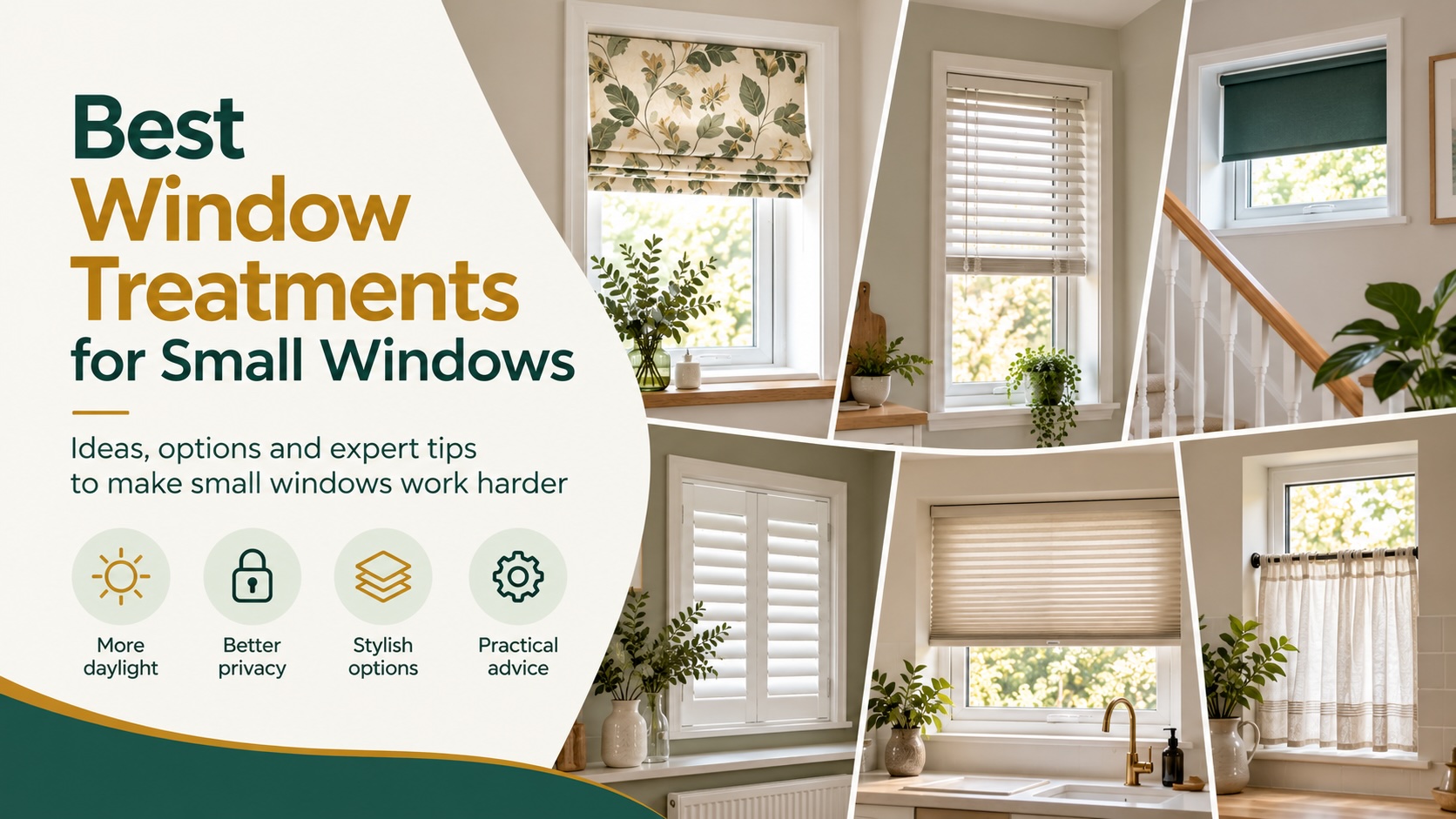
Small windows can be surprisingly difficult to dress well.
The challenge is not simply finding a blind, curtain or shutter that physically fits. On a small window, the treatment itself takes up a much greater proportion of the available space, so a bulky headrail, deep fabric stack or heavy frame can quickly make the opening feel smaller and reduce the amount of visible glass.
That means the best window treatment for a small window needs to balance several priorities at once:
- Preserve as much natural light as possible
- Avoid unnecessary visual bulk
- Provide the right level of privacy
- Remain easy to operate
- Suit the proportions of the window
- Work with the room rather than overpowering it
In some cases, a compact roller or pleated blind will be the most practical choice. In others, a Roman blind, Venetian blind, shutter or even a well-positioned curtain treatment can work better.
The right answer depends on the size and shape of the window, how much privacy or blackout you need, whether the room is humid, and whether you want the window treatment to blend in or become a feature.
This guide focuses specifically on small windows, comparing the best treatment options and explaining where each one works best.
Quick Answer: What Is the Best Window Treatment for a Small Window?
For most small windows, the best treatments are those that provide the required privacy and light control without covering too much of the glass or adding unnecessary visual bulk.
Roller Blinds
A strong all-round choice because they are compact, simple and available with privacy, dimout or blackout fabrics.
Venetian Blinds
Particularly useful where adjustable privacy and precise light control are important.
Pleated Blinds
A compact option that can work especially well where you want to minimise the amount of visible fabric when the blind is open.
Roman Blinds
Best where you want a softer, more decorative finish and there is enough space for the fabric stack at the top.
Shutters
A good permanent option where privacy, architectural character and adjustable light control are priorities.
Curtains
Useful where there is enough wall space to stack the fabric away from the window and create a softer look.
Choose the treatment that gives you the privacy, blackout or light control you need while leaving as much of the small window visible and unobstructed as possible.
Why Window Treatment Choice Matters More on a Small Window
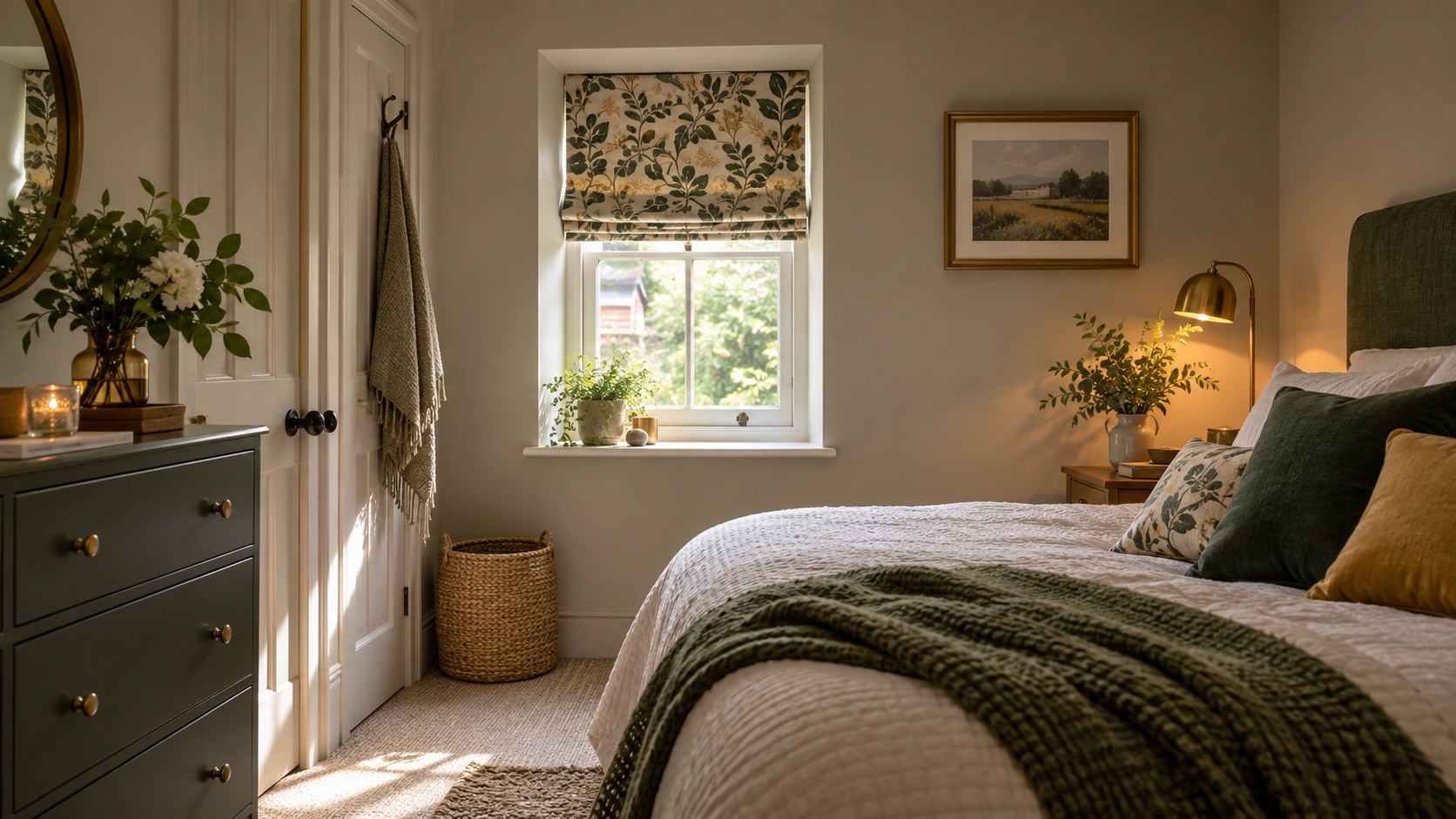
Choosing a window treatment becomes more important as the window gets smaller because the treatment itself occupies a greater proportion of the available opening.
On a large window, a headrail, cassette, fabric stack or shutter frame may represent only a small part of the overall glazing area. On a small window, the same components can take up a much larger percentage of the visible glass.
That can affect both daylight and proportion.
Small Windows Have Less Glass to Spare
If a treatment covers even a modest amount of glass when open, the effect can be noticeable.
This is particularly important where the window is already responsible for bringing limited natural light into the room.
For small windows, it is therefore worth considering:
- How much of the glass remains visible when the treatment is open
- How much space the headrail or cassette occupies
- Whether fabric stacks at the top or sides
- Whether a shutter frame reduces the visible opening
- Whether the treatment can be fitted outside the recess instead
Visual Bulk Matters More
A treatment that looks balanced on a large window can feel oversized on a small one.
For example, a deep Roman blind stack may look elegant on a tall window but take up a significant proportion of a short window.
Likewise, a substantial shutter frame can become visually dominant if the opening itself is very narrow.
The aim is not necessarily to choose the smallest possible treatment, but to choose one whose proportions suit the window.
Small Windows Often Have Specific Jobs
Small windows are common in places such as:
- Bathrooms
- Cloakrooms
- Kitchens
- Utility rooms
- Stairwells
- Landings
- Small bedrooms
These rooms often have specific requirements such as privacy, moisture resistance or easy cleaning.
That means the best treatment has to solve practical problems without making the window feel even more restricted.
The Treatment Can Change How Large the Window Feels
The physical window size does not change, but the way it is framed can influence how prominent or open it feels.
A compact blind that sits neatly within the opening may create a clean, simple appearance.
A treatment mounted above or beyond the recess may allow more glass to remain visible when open.
Curtains fitted wider than the window can also make a small opening appear broader by extending the treatment beyond the frame.
Small Windows Need Proportion, Not Just Fit
A treatment technically fitting the window does not necessarily mean it is the best choice.
For small windows, consider:
visible glass + treatment bulk + privacy requirements + room function + visual proportion
Getting these elements right can help the window feel brighter, better balanced and more intentional within the room.
The Five Things to Prioritise on a Small Window
Small windows benefit from a slightly different set of priorities than larger openings. The goal is usually to get the required privacy and light control without allowing the treatment itself to overwhelm the window.
1. Preserve as Much Daylight as Possible
A small window already has a limited glazing area, so anything that permanently covers part of the glass can make a noticeable difference.
Look at how much of the window remains clear when the treatment is open.
This is where compact systems can be particularly useful because they minimise the amount of material sitting in front of the glass.
2. Minimise Visual Bulk
The smaller the window, the more important proportion becomes.
Bulky components can quickly dominate a small opening, including:
- Deep headrails
- Large cassettes
- Thick fabric stacks
- Heavy curtain headings
- Wide shutter frames
This does not mean these treatments should be avoided. It means their proportions need to suit the size of the window.
3. Keep the Glazing Area Clear When Open
How a treatment behaves when open is just as important as how it looks when closed.
For a small window, ask:
- Does the blind stack neatly at the top?
- Can curtains stack beyond the window rather than over the glass?
- Does the shutter frame reduce the visible opening?
- Can the treatment be fitted outside the recess to expose more glass?
The more glazing that remains visible, the brighter and more open the window is likely to feel.
4. Make Sure It Is Easy to Operate
Small windows are often found in awkward positions, such as:
- Above sinks
- In bathrooms
- On stairwells
- In utility rooms
- At high level
The treatment should therefore be easy to reach and simple to operate.
A compact treatment is of little benefit if the controls are difficult to access or the window itself becomes harder to open.
5. Balance Privacy With Natural Light
Privacy is often one of the main reasons small windows need treatment in the first place.
This is especially true for:
- Bathrooms
- Cloakrooms
- Street-facing rooms
- Ground-floor windows
- Kitchens
The best solution is often one that provides privacy without blocking more daylight than necessary.
Venetian blinds, shutters, café curtains and privacy film can all be useful where partial screening is more appropriate than fully covering the window.
Practical Takeaway
For most small windows, the best treatment is the one that achieves the right balance of:
daylight + compactness + clear glazing + easy operation + privacy
That combination is usually more important than choosing a treatment based on style alone.
Should a Small Window Treatment Sit Inside or Outside the Recess?
For small windows, the choice between an inside-recess fit and an outside-recess fit can make a noticeable difference to how much glass remains visible and how large the window feels.
There is no single correct answer. The better option depends on the depth of the recess, the window hardware and whether your priority is a neat finish or maximum visible glazing.
Inside-Recess Fitting
An inside-recess blind sits within the window opening.
This can create a:
- Clean, compact appearance
- Neat architectural finish
- More integrated look
- Less visually intrusive treatment
It can work particularly well where the recess is deep enough to accommodate the blind without interfering with handles or the opening window.
For small windows, however, the main drawback is that the blind, headrail or cassette may occupy part of the limited glazing area.
That matters more on a small opening than it would on a large window.
Outside-Recess Fitting
An outside-recess treatment is fitted to the wall or surface above and around the window.
This can be useful on a small window because the blind can potentially stack above the opening when raised, leaving more of the glass exposed.
It can also help where:
- The recess is shallow
- Window handles project into the recess
- The window opens inward
- The internal dimensions are too restricted
- Maximum visible glazing is a priority
Outside-Recess Fitting Can Make a Small Window Feel Larger
A treatment fitted beyond the edges of the window can visually extend the area around the opening.
This is particularly effective with:
- Roller blinds fitted above the recess
- Roman blinds positioned higher than the window
- Curtain poles extending beyond the frame
The physical window remains the same size, but the treatment can alter its perceived proportions.
Inside-Recess Fitting Can Look More Minimal
If the aim is to keep the treatment visually contained, an inside fit may work better.
This can be especially effective with:
- Compact roller blinds
- Venetian blinds
- Pleated blinds
The treatment remains within the boundaries of the window rather than extending onto the wall.
Check the Recess Before Deciding
Before choosing an inside fit, check:
- Recess depth
- Window handles
- Trickle vents
- Hinges
- Opening direction
- Any tiles, trim or projecting frames
A blind that technically fits the width may still interfere with the window hardware.
Practical Takeaway
For small windows:
Inside recess is usually best when you want a neat, contained appearance and there is enough depth.
Outside recess is often better when you want to preserve more visible glass or the recess is too shallow.
The key question is not simply where the treatment looks best, but how much of the already-limited window area it will occupy when open.
Can the Right Window Treatment Make a Small Window Look Bigger?
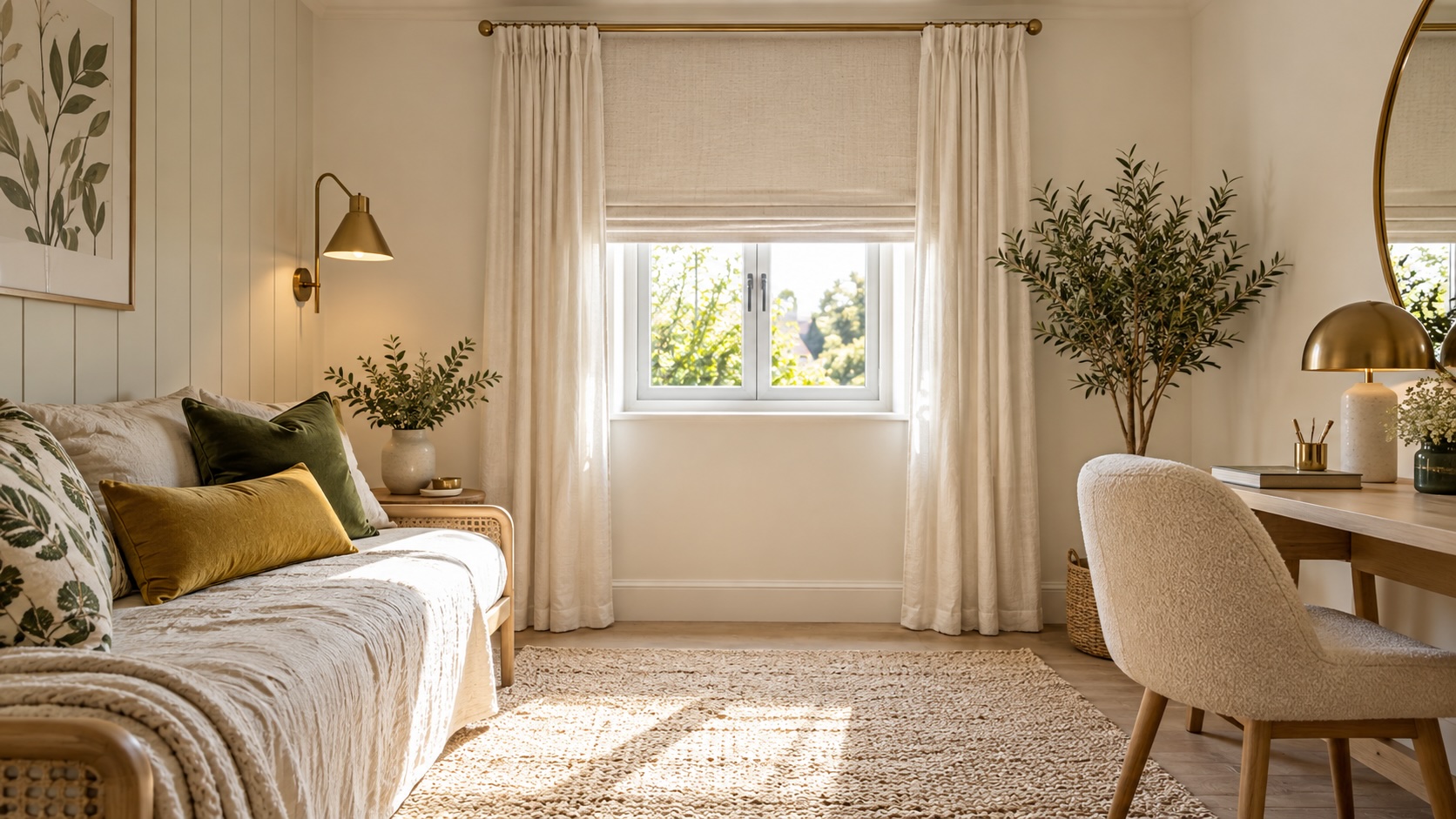
Yes, although the window itself does not change size, the way it is dressed can influence how large, open or prominent it feels.
For small windows, this is mainly about proportion, contrast and how much of the glass remains visible.
Keep More of the Glass Visible
The more glazing that remains uncovered, the larger and brighter the window is likely to feel.
This can be achieved by choosing a treatment that:
- Stacks compactly
- Fits neatly within the recess
- Can be mounted above the opening
- Can sit beyond the sides of the window when open
This is especially important on short or narrow windows where even a small amount of fabric can cover a noticeable proportion of the glass.
Use Lighter Colours to Reduce Visual Weight
Lighter blinds or curtains can help a small window feel less enclosed because they usually create less visual weight than darker treatments.
Useful options include:
- White
- Cream
- Pale grey
- Soft beige
- Light blue
- Muted green
This does not mean dark treatments cannot work, but they tend to make the window area feel more defined and visually substantial.
Reduce Contrast With the Surrounding Wall
A treatment that is close in colour to the wall can make the window feel more integrated.
For example, a pale blind against a pale wall may create a smoother visual transition than a black blind against white paint.
Lower contrast can help reduce the sense that the small window is being outlined or boxed in.
Mounting Position Can Change Perceived Proportion
Where appropriate, fitting a blind slightly above the window can make the opening appear taller.
Curtains can also be used to extend the perceived width of a small window by fitting the pole beyond the actual frame.
The aim is to let the treatment frame the opening rather than sit heavily inside it.
Avoid Overwhelming the Window
Small windows can easily become dominated by:
- Heavy fabric
- Large patterns
- Deep pelmets
- Thick frames
- Oversized headings
A simpler treatment often preserves the proportions of the opening more effectively.
Use Pattern Carefully
Pattern can work well on a small window, particularly with Roman blinds or curtains, but scale matters.
Small or medium-scale patterns are usually easier to balance on compact openings than very large motifs, which may not display fully.
Practical Takeaway
To make a small window feel larger, prioritise:
visible glazing + low visual bulk + softer contrast + appropriate mounting position
The most effective treatment is usually one that frames the window without making the treatment itself feel larger than the opening.
Roller Blinds for Small Windows
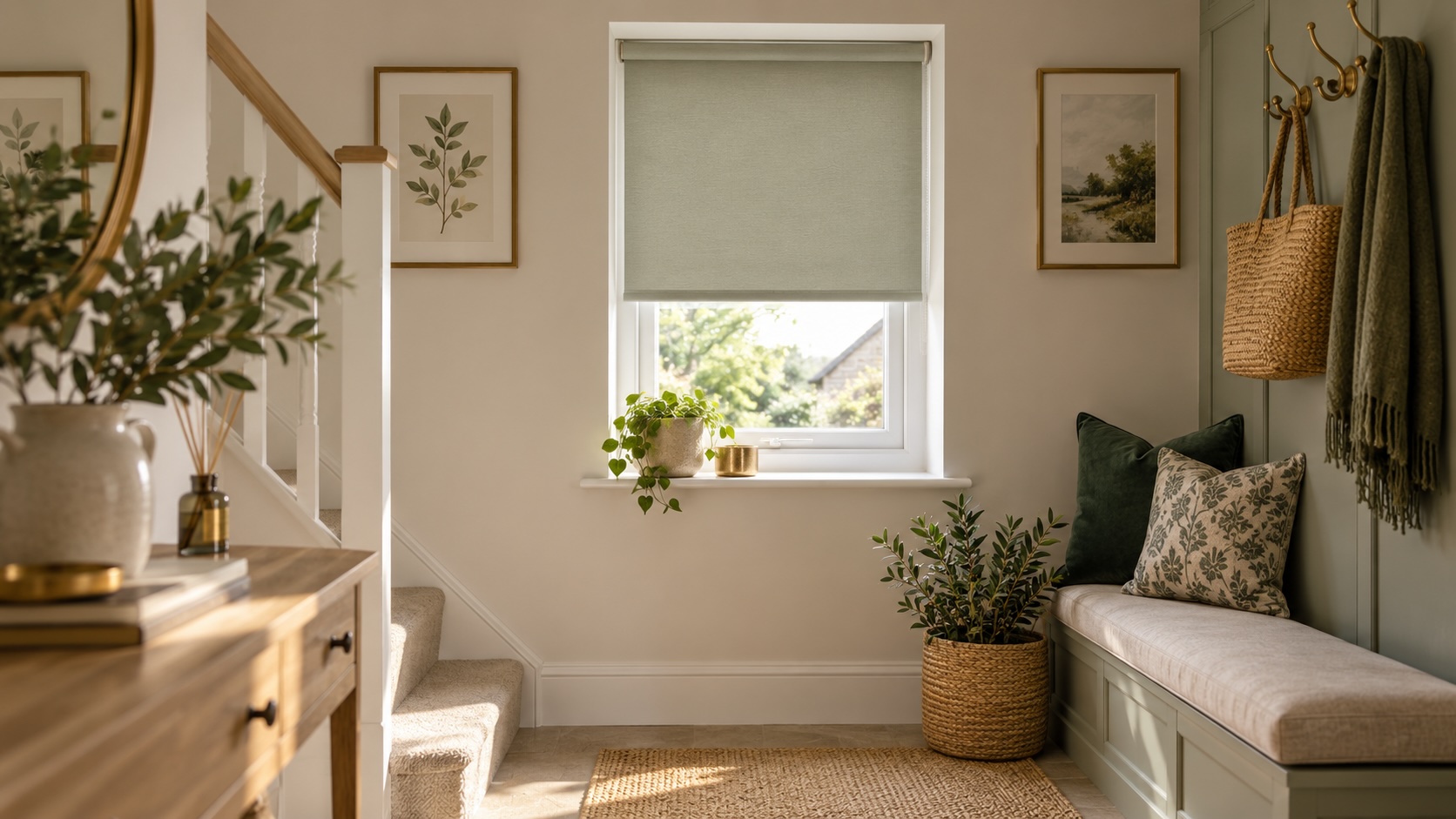
Roller blinds are one of the strongest all-round choices for small windows because they combine compact construction, simple operation and relatively low visual bulk.
When fitted well, they can provide privacy or blackout without making a small opening feel overcrowded.
Why Roller Blinds Work Well on Small Windows
A roller blind uses a single piece of fabric that rolls around a tube at the top of the window.
This keeps the treatment visually simple and means there is no large fabric stack at the sides.
For a small window, that can help preserve:
- More visible glass
- Cleaner proportions
- A less cluttered appearance
- Easier access to the window
They Can Be Fitted Inside or Outside the Recess
Roller blinds are flexible because they can usually be fitted either:
- Inside the recess
- Above the recess
- Onto the face of the wall or frame
For a very small window, fitting above the recess can be useful because more of the glazing may remain exposed when the blind is raised.
Inside-recess fitting can create a neater, more contained appearance where the recess is deep enough.
Roller Blinds Suit Different Light-Control Needs
The fabric choice can be matched to the room.
Depending on the product, options may include:
- Light-filtering fabrics
- Dimout fabrics
- Blackout fabrics
- Moisture-resistant fabrics
This makes roller blinds suitable for a wide range of small-window locations.
They Work Particularly Well in Practical Rooms
Small roller blinds can be especially useful in:
- Bathrooms
- Kitchens
- Utility rooms
- Cloakrooms
- Bedrooms
- Home offices
Their simple surface can also make them easier to maintain than more elaborate fabric treatments.
Minimal Styling Can Help a Small Window Feel Larger
Because roller blinds have relatively few visible components, they can work well where the aim is to keep the window visually quiet.
Choosing a blind in a colour close to the surrounding wall can make the treatment feel even less dominant.
A contrasting colour can be used instead if the small window is intended to become a feature.
Check the Roll and Hardware
On a particularly short window, the size of the roller tube, brackets or cassette can become proportionally significant.
Before choosing a system, it is worth checking:
- The overall height of the hardware
- How much of the glass it covers when raised
- Whether handles interfere with the fabric
- Whether the recess is deep enough
- Whether an outside-recess fit would expose more glazing
When Is a Roller Blind Best for a Small Window?
A roller blind is particularly suitable when you want:
- A compact treatment
- Simple operation
- Minimal visual bulk
- Privacy or blackout
- Easy maintenance
- A clean, modern appearance
Practical Takeaway
For many small windows, a roller blind is one of the safest choices because it delivers good light and privacy control while keeping the treatment itself relatively unobtrusive.
The key is to choose the right fitting position, fabric and hardware size for the dimensions of the window.
Roman Blinds for Small Windows
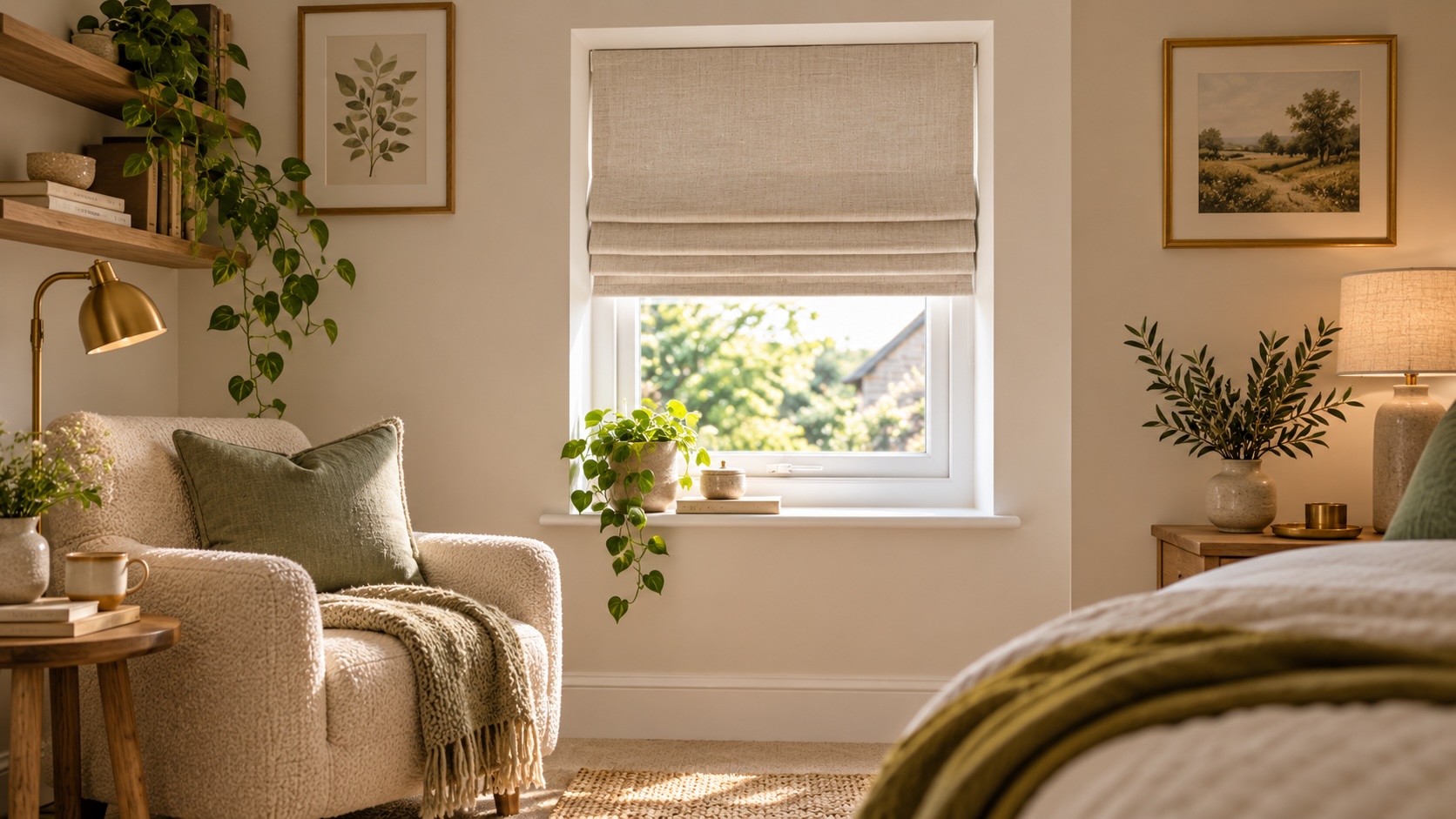
Roman blinds are a strong choice for small windows when you want a softer, more decorative finish than a roller or Venetian blind can provide.
They work particularly well where the window needs to feel intentionally dressed rather than purely functional.
Why Roman Blinds Work Well on Small Windows
Roman blinds use a single piece of fabric that folds into horizontal pleats as the blind is raised.
This gives them a softer appearance than many more minimal blind types while still keeping the treatment contained within the window area.
For a small window, Roman blinds can add:
- Texture
- Colour
- Pattern
- A more furnished appearance
- Greater decorative impact
The Fabric Stack Matters
The main consideration with a Roman blind on a small window is the stack of folded fabric at the top.
On a tall window, this may occupy only a small proportion of the overall opening.
On a short window, the same stack can cover a much more noticeable amount of glass.
That means it is important to consider:
- The depth of the finished folds
- The total stack height
- Whether the blind is fitted inside or outside the recess
- How much glazing remains visible when the blind is raised
Outside-Recess Fitting Can Work Well
For a small window, mounting the Roman blind above the recess can often be useful because the folded fabric can sit partly or largely above the opening when raised.
This can help preserve more visible glass.
It can also make the window appear taller by extending the treatment beyond the actual frame.
Roman Blinds Are Good for Pattern and Colour
Small windows can sometimes look insignificant within a larger wall.
A Roman blind can turn the opening into a deliberate design feature.
This makes them useful where you want to introduce:
- Pattern
- Stronger colour
- Decorative fabric
- Texture
- A softer focal point
Because the fabric is displayed as a relatively flat panel when lowered, pattern can be shown more clearly than on heavily gathered curtains.
They Suit Rooms Where Appearance Matters
Roman blinds can work particularly well on small windows in:
- Bedrooms
- Living rooms
- Dining rooms
- Home offices
- Guest rooms
They are often less suited to rooms where frequent splashing or moisture is expected unless the fabric and construction are specifically appropriate for that environment.
Keep the Pattern Proportional
If using patterned fabric, consider the size of the design.
On a small blind, very large motifs may not be fully visible.
Smaller or medium-scale patterns can often work better because more of the repeat can be seen within the limited width and drop.
When Is a Roman Blind Best for a Small Window?
A Roman blind is particularly suitable when you want:
- A decorative fabric treatment
- More softness than a roller blind
- Colour or pattern at the window
- A more traditional or furnished appearance
- A small window to become a deliberate design feature
Practical Takeaway
Roman blinds can work very well on small windows, but the stack height needs careful consideration.
Where preserving daylight is important, fitting the blind above the recess can help keep more of the glass clear while still providing the decorative effect that makes Roman blinds particularly appealing.
Venetian Blinds for Small Windows
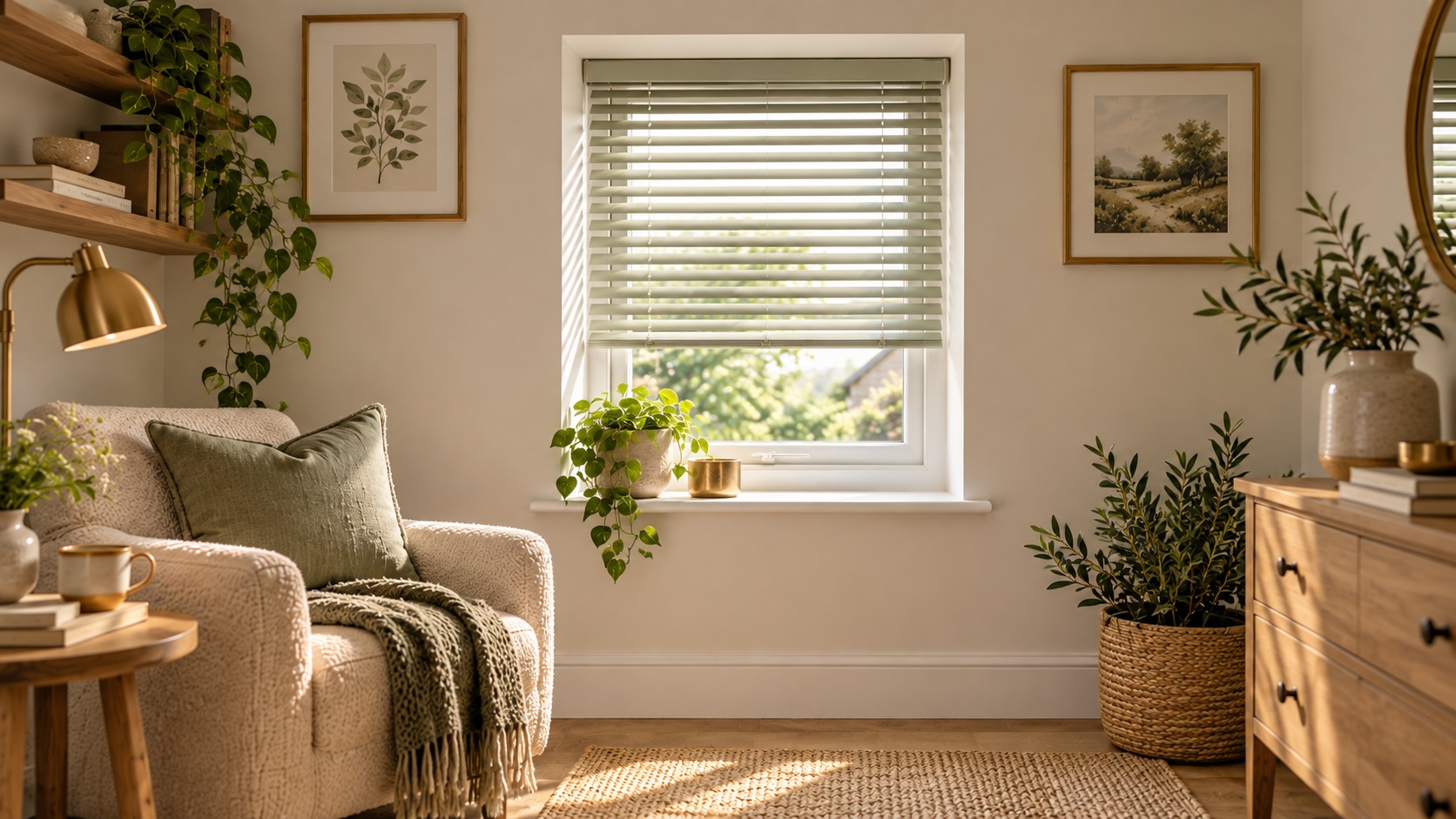
Venetian blinds are a particularly good choice for small windows where privacy and precise light control matter.
Unlike a roller or Roman blind, they do not always need to be fully raised to let in daylight. The slats can be tilted to control the view through the window while still allowing light into the room.
Why Venetian Blinds Work Well on Small Windows
Venetian blinds use horizontal slats that can be tilted, raised or lowered.
For a small window, this gives you more control over how much of the opening is covered at any one time.
They can be especially useful where you want to:
- Maintain privacy
- Reduce glare
- Redirect daylight
- Keep some visibility through the window
- Avoid fully covering the glass
Slat Size Matters
On a small window, the proportion of the slats is important.
Narrower slats generally look more balanced on compact openings, while very wide slats can feel oversized.
The aim is to choose a slat size that suits the scale of the window rather than dominates it.
Aluminium Venetians Can Feel Particularly Compact
Aluminium Venetian blinds are often a strong option for small windows because they tend to have:
- Slim slats
- Compact headrails
- Low visual bulk
- Easy-clean surfaces
That makes them useful in practical spaces where the window itself is small.
They Are Useful for Privacy Without Losing All Daylight
This is one of the main advantages of Venetian blinds.
By tilting the slats, you can obscure direct views into the room while still allowing daylight to pass through.
That can make them particularly useful for:
- Bathrooms
- Cloakrooms
- Ground-floor rooms
- Street-facing windows
- Kitchens
- Home offices
They Can Work Well in Shallow Spaces
A slim Venetian system can fit neatly within many small recesses, provided there is enough clearance for the headrail and window handles.
As with any inside-recess fitting, it is important to check:
- Recess depth
- Handle projection
- Window opening direction
- Trickle vents
- Frame shape
Colour Can Change How Heavy They Feel
On a small window, lighter Venetian blinds can help keep the treatment visually restrained.
White, cream, pale grey and lighter metallic finishes often feel less dominant.
Darker Venetians can still work well, especially if the aim is to create stronger contrast or make the small window more noticeable.
When Is a Venetian Blind Best for a Small Window?
A Venetian blind is particularly suitable when you want:
- Adjustable privacy
- Precise daylight control
- A compact appearance
- Easy cleaning
- A more structured look
- Flexibility without fully raising the blind
Practical Takeaway
Venetian blinds are one of the best options for small windows where privacy and daylight need to be balanced carefully.
Their biggest advantage is slat control, which allows the window to remain useful even when privacy is required.
Pleated Blinds for Small Windows
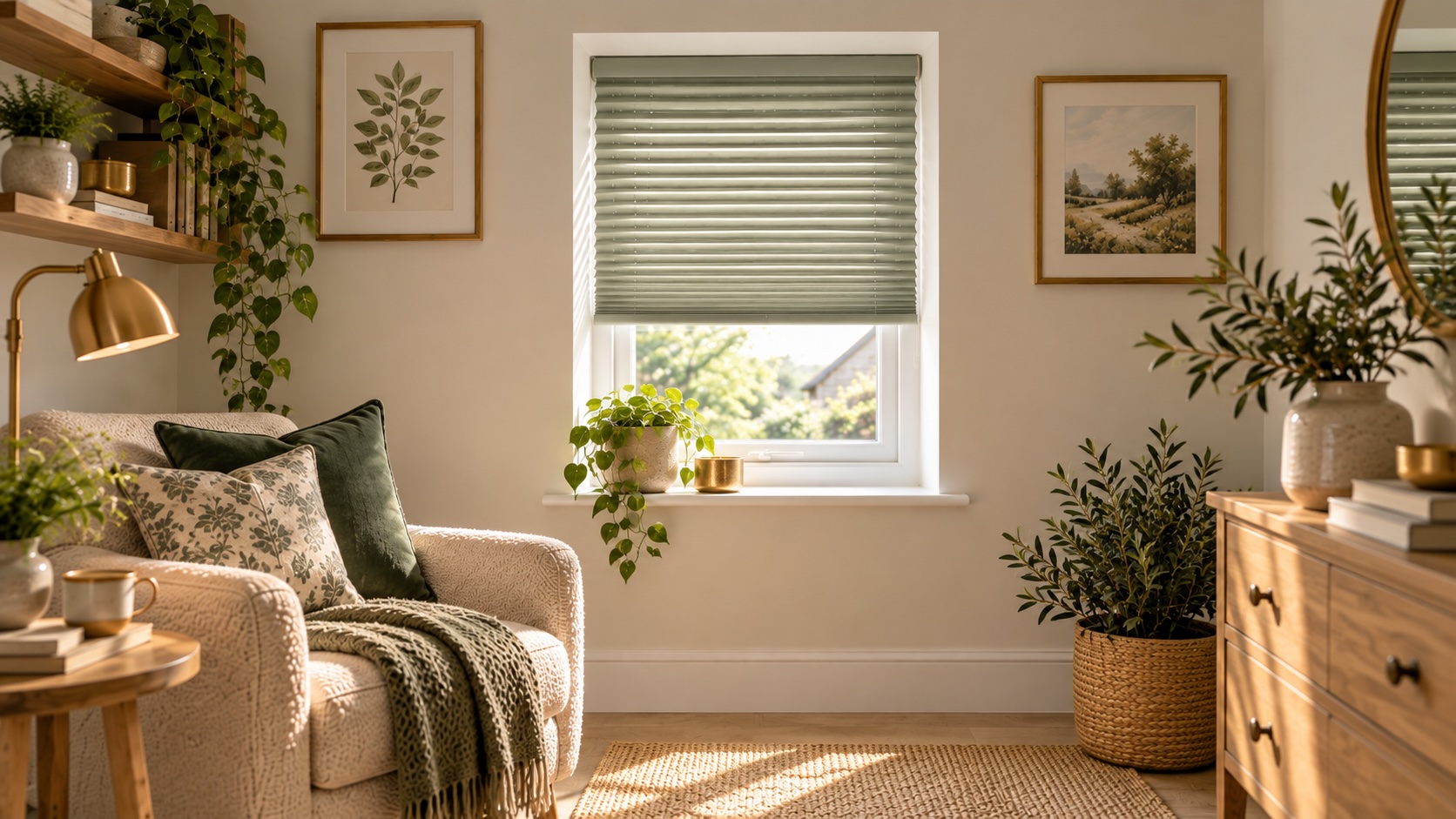
Pleated blinds are another strong option for small windows because they are lightweight, compact and visually unobtrusive.
They use a single piece of fabric folded into neat pleats, which means the blind can stack into a relatively small space when raised.
Why Pleated Blinds Work Well on Small Windows
On a small window, every centimetre of visible glass matters.
Pleated blinds can help because they are typically:
- Slim
- Lightweight
- Neat when raised
- Easy to integrate into compact spaces
- Less visually bulky than many heavier fabric treatments
This makes them particularly useful where the main priority is to keep the window looking as open as possible.
Compact Stacking Is a Major Advantage
One of the biggest benefits of a pleated blind on a small window is the relatively small stack at the top.
Compared with a Roman blind, the folds are usually much slimmer.
That means more of the glazing can remain visible when the blind is open.
This can be especially useful on short windows where a deeper fabric stack would otherwise cover a significant proportion of the glass.
They Can Work Well in Shallow Recesses
Pleated blinds are often suitable for windows with limited recess depth, depending on the exact system.
That can make them useful where:
- The recess is narrow
- Window handles project into the opening
- A larger cassette would feel intrusive
- Space around the glazing is limited
As always, the exact dimensions of the blind system should be checked before ordering.
Good for Light Filtering and Privacy
Pleated fabrics can provide different levels of light control depending on the material.
They can be useful where you want:
- Softened daylight
- Increased privacy
- Reduced glare
- A lighter visual appearance
Some pleated systems are also available with more opaque or specialist fabrics where greater light control is required.
They Suit Modern, Minimal Interiors
Because pleated blinds are visually light, they work particularly well in rooms where you want the window treatment to remain understated.
They can suit:
- Bathrooms
- Bedrooms
- Home offices
- Kitchens
- Utility rooms
- Modern living spaces
Colour Choice Can Keep the Window Feeling Open
On a very small window, pale or muted pleated fabrics can help reduce visual weight.
White, cream, soft grey and pale neutrals are useful where the aim is to keep the treatment as discreet as possible.
Stronger colours can still work if the intention is to make the window a feature.
When Is a Pleated Blind Best for a Small Window?
A pleated blind is particularly suitable when you want:
- Minimal visual bulk
- A compact stack
- Soft light filtering
- A lightweight appearance
- A clean, contemporary finish
- Maximum visible glazing when raised
Practical Takeaway
Pleated blinds are one of the best choices for very small windows because they can provide useful privacy and light control while keeping the treatment itself compact.
Their main advantage is simple: they take up relatively little space, which is exactly what many small windows need.
Cellular / Honeycomb Blinds for Small Windows
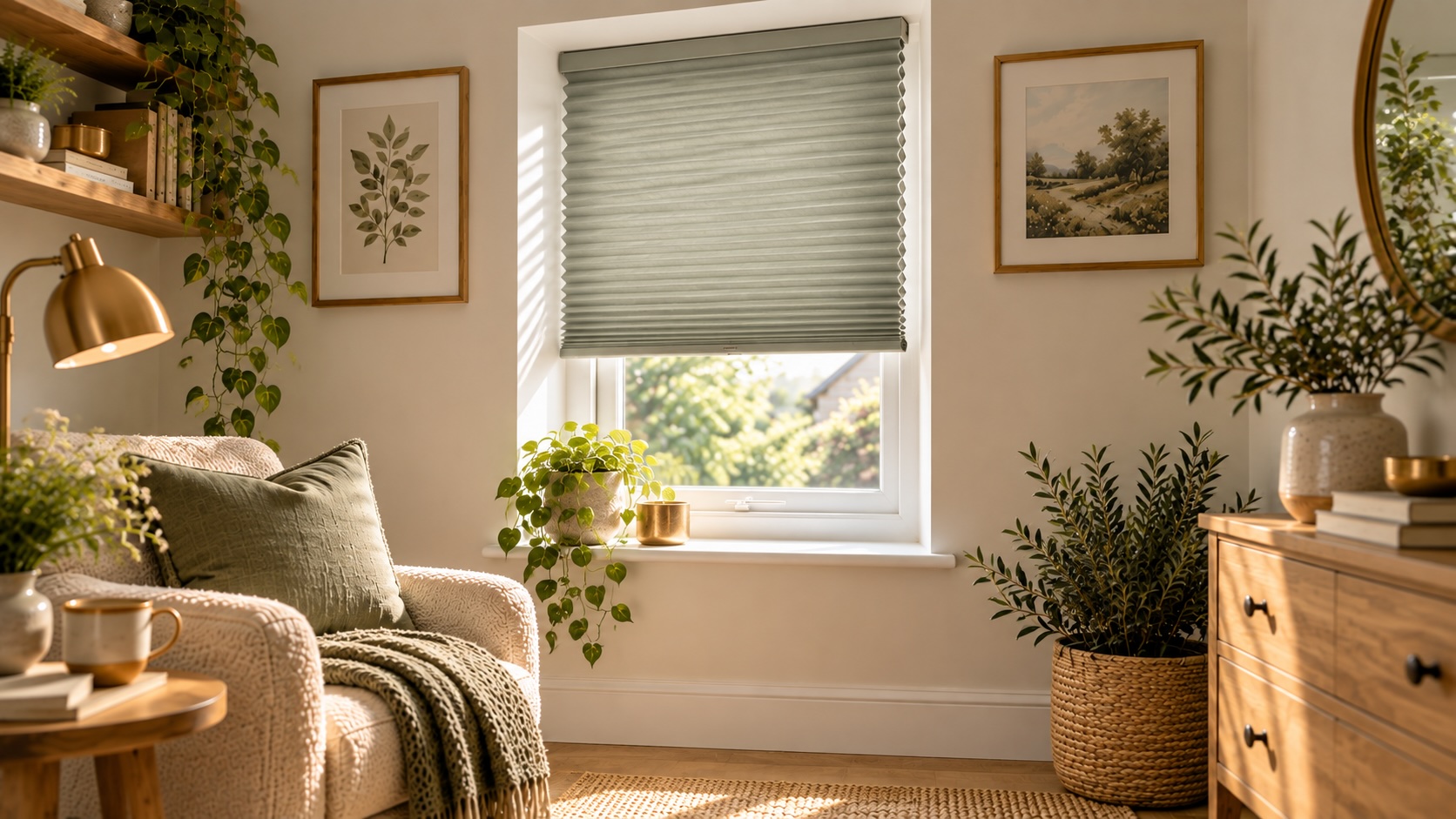
Cellular blinds, also known as honeycomb blinds, can work well on small windows where you want a treatment that feels compact while also improving insulation around the glazing.
Their distinctive structure contains small air pockets within the fabric, which can help reduce heat transfer at the window.
Why Cellular Blinds Work Well on Small Windows
Cellular blinds are generally neat and lightweight in appearance.
For a small window, this can help avoid the sense of overcrowding that can come with heavier treatments.
They can offer:
- A compact profile
- Soft light control
- Good privacy
- A clean, modern appearance
- Additional thermal performance
The Honeycomb Structure Adds Insulation
The main difference between a cellular blind and a standard pleated blind is the internal honeycomb construction.
This creates pockets of trapped air within the blind.
For small windows, the total area is limited, so the overall thermal effect on the room may also be limited compared with a large window. However, the blind can still help reduce heat transfer through the individual opening.
This can be useful for small windows in:
- Bedrooms
- Bathrooms
- Landings
- Home offices
- Older properties
- Rooms with exposed external walls
They Can Stack Neatly
Cellular blinds can usually fold into a relatively compact stack when raised.
That is particularly important on a short window, where a large stack can otherwise obscure a noticeable proportion of the glazing.
The exact stack size will depend on the blind dimensions and system, so it is worth checking before ordering.
Different Opacities Suit Different Rooms
Depending on the fabric and system, cellular blinds may be available in different levels of opacity.
That can make them useful where the requirement is:
- Soft daylight filtering
- Privacy
- Greater room darkening
- Blackout
For a small bedroom window, for example, a more opaque cellular blind can combine compact proportions with stronger light control.
They Have a Softer Appearance Than Venetian Blinds
While Venetian blinds create a more structured appearance through horizontal slats, cellular blinds use continuous fabric.
This gives them a softer visual effect while retaining a relatively minimal design.
They can therefore work well where you want something more understated than a decorative Roman blind but softer than aluminium Venetian blinds.
Check the Exact System Dimensions
For a very small window, the hardware still matters.
Check:
- Minimum available blind width
- Headrail dimensions
- Recess depth
- Stack height
- Window handles
- Opening direction
Not every cellular system will be suitable for every very small window.
When Is a Cellular Blind Best for a Small Window?
A cellular blind is particularly suitable when you want:
- A compact fabric blind
- Good privacy
- A softer appearance
- Reduced visual bulk
- Additional insulation at the window
- Different light-control options
Practical Takeaway
Cellular blinds can be a very effective small-window treatment where compactness and thermal performance are both priorities.
They are particularly worth considering when you want the neat proportions of a pleated-style treatment with the additional benefit of a honeycomb structure.
Shutters for Small Windows
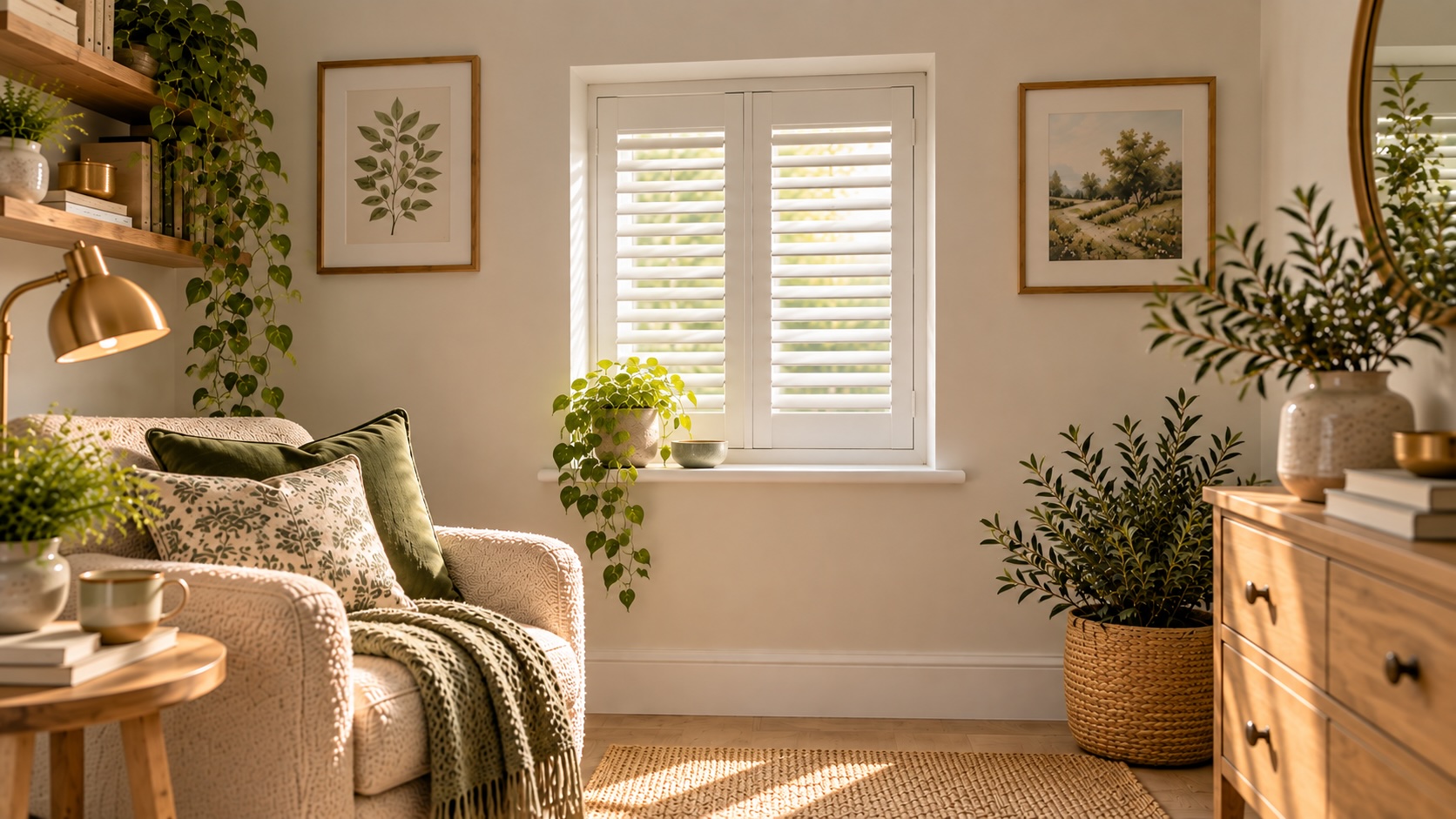
Shutters can work very well on small windows when you want a treatment that provides privacy, adjustable light control and a more architectural finish.
They are more permanent and visually substantial than most blinds, so the key on a small window is getting the proportions right.
Why Shutters Work Well on Small Windows
Shutters sit directly within or around the window opening and use adjustable louvres to control light and privacy.
That makes them particularly useful where the window needs to remain functional throughout the day without being fully covered.
They can offer:
- Adjustable privacy
- Good control over incoming light
- A clean, fitted appearance
- Strong visual definition
- A permanent finish
Café-Style Shutters Can Be Especially Useful
For a small window where privacy is needed mainly at lower level, café-style shutters can be a very effective option.
They cover only the lower portion of the window, leaving the upper section open.
This can help retain daylight while still providing privacy.
They can be particularly suitable for:
- Bathrooms
- Ground-floor rooms
- Street-facing windows
- Small living-room windows
- Cloakrooms
Frame Size Matters on a Small Opening
On a small window, the shutter frame can occupy a noticeable proportion of the overall opening.
That means it is important to consider:
- Frame width
- Louvre size
- Available glazing area
- Recess depth
- Window handles
- Opening direction
A shutter system that looks balanced on a large window may feel heavy on a very compact one.
Louvre Size Affects Proportion
Larger louvres can create a more open look when tilted, but on a very small window they may feel oversized.
Smaller louvres can sometimes suit compact openings better because they remain more proportional to the window.
The right choice depends on the size and shape of the opening.
Shutters Can Make a Small Window Feel More Intentional
A small window can sometimes look visually insignificant within a larger wall.
Shutters can help turn it into a deliberate architectural feature.
This works particularly well in:
- Traditional interiors
- Period properties
- Bathrooms
- Bedrooms
- Rooms where the window needs more visual presence
They Are Good for Adjustable Privacy
Like Venetian blinds, shutters allow the louvres to be angled rather than fully opened or closed.
This gives useful control over:
- Direct views into the room
- Daylight
- Glare
- Privacy
That can make them especially effective on small windows that face neighbouring properties or public areas.
When Are Shutters Best for a Small Window?
Shutters are particularly suitable when you want:
- A permanent fitted treatment
- Adjustable privacy
- Architectural character
- Good control over light
- A stronger visual feature
- Café-style screening
Practical Takeaway
Shutters can work very well on small windows, especially where privacy and architectural appearance are more important than keeping the treatment as visually minimal as possible.
The key is to choose a frame and louvre size that remain in proportion to the opening.
Curtains for Small Windows
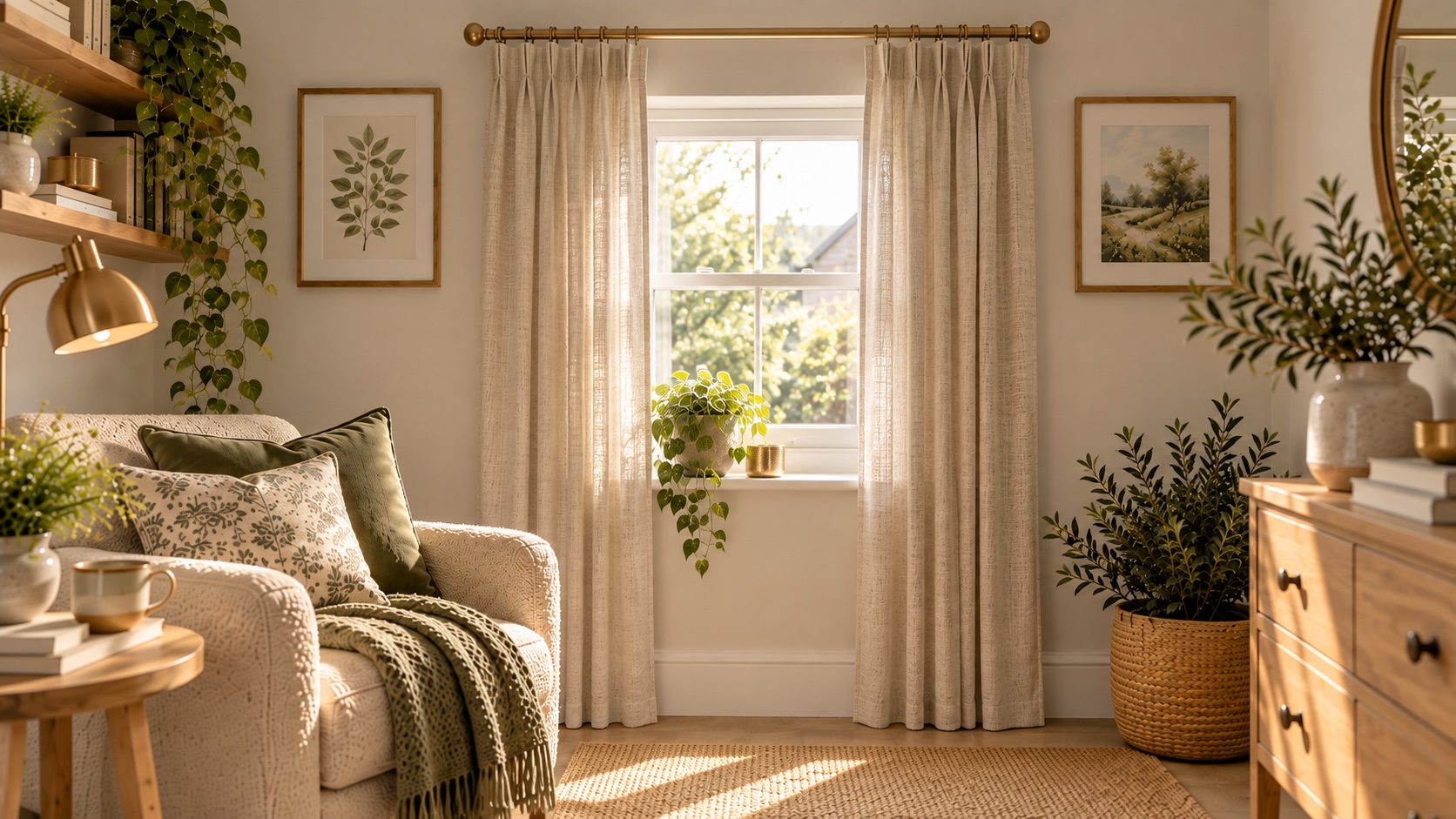
Curtains can work very well on small windows when you want a softer, more decorative treatment and there is enough wall space around the opening.
Unlike a blind, curtains do not have to sit directly in front of the glass when open. If fitted correctly, they can stack beyond the window and leave most of the glazing visible.
Why Curtains Can Work on Small Windows
Curtains can help a small window feel more substantial within the room.
They can add:
- Softness
- Texture
- Pattern
- Colour
- A more finished appearance
This can be useful where a small window would otherwise look visually insignificant.
Fit the Pole Wider Than the Window
One of the most effective approaches is to extend the curtain pole beyond the actual window frame.
This allows the curtains to stack onto the wall rather than over the glass.
On a small window, that can help:
- Preserve more daylight
- Keep more of the glazing visible
- Make the window appear wider
- Reduce the sense of a cramped opening
Mounting Higher Can Change the Proportion
Positioning the curtain pole above the top of the window can also make the opening appear taller.
This is especially useful on short windows.
The treatment visually extends beyond the actual frame, which can make the window feel more important within the wall.
Curtain Fullness Should Suit the Window
Very heavy or excessively full curtains can overwhelm a compact opening.
For small windows, lighter or more restrained fabrics often create a better balance.
Consider:
- Fabric weight
- Curtain heading
- Stack-back
- Pole size
- Length
- Overall fullness
The aim is to frame the window rather than bury it in fabric.
Curtains Can Add Blackout and Insulation
Curtains can also provide useful functional benefits.
Depending on the fabric and lining, they can offer:
- Blackout
- Increased privacy
- Reduced draughts
- Improved thermal comfort
This can make them particularly useful for small bedroom windows.
They Work Best Where There Is Wall Space
Curtains need room to stack at the sides.
They are therefore more suitable where:
- The window is surrounded by clear wall space
- Furniture does not block the curtains
- There is enough width for the fabric to sit beyond the glazing
- The window is not immediately beside a corner or fitted unit
When Are Curtains Best for a Small Window?
Curtains are particularly suitable when you want:
- A softer decorative treatment
- More colour or pattern
- The window to appear wider or taller
- Blackout or lined fabric
- A traditional or layered interior look
Practical Takeaway
Curtains can be very effective on a small window if they are fitted to frame the opening rather than cover it.
Extending the pole beyond the window and allowing the fabric to stack onto the wall can preserve daylight while making the small window feel visually larger and more intentional.
Café Curtains for Small Windows
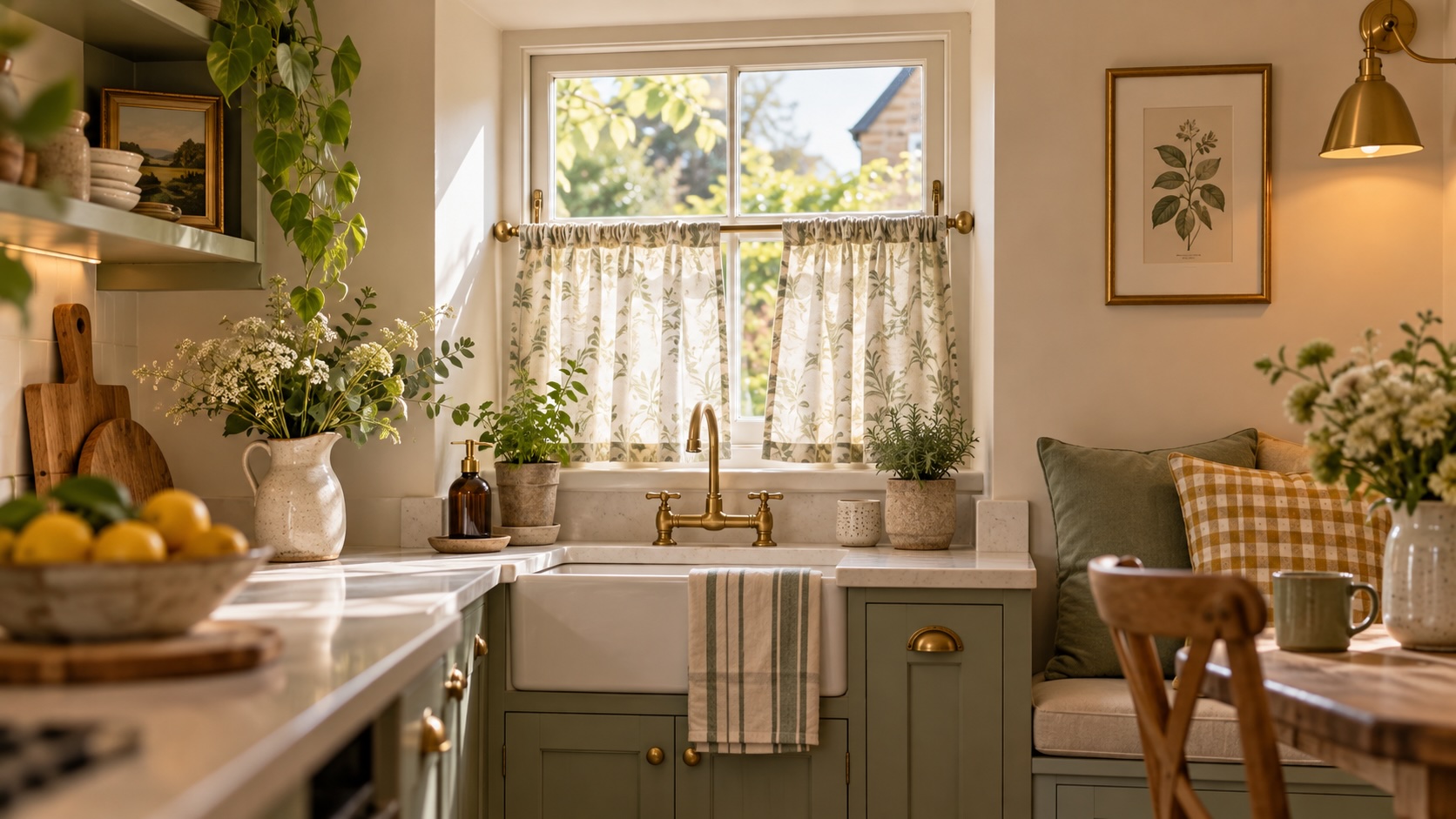
Café curtains are particularly well suited to small windows where you want privacy without covering the entire opening.
They usually cover only the lower section of the window, leaving the upper portion exposed to daylight.
Why Café Curtains Work Well on Small Windows
For a small window, full coverage can sometimes make the opening feel more enclosed than necessary.
Café curtains offer a useful middle ground by screening the lower part of the glass while keeping the top open.
This can help maintain:
- Natural light
- A sense of openness
- Partial views outside
- Privacy at eye level
They Are Particularly Useful for Privacy
Café curtains can work especially well on windows where passers-by or neighbouring properties can see into the lower part of the room.
That makes them useful for:
- Kitchens
- Bathrooms
- Cloakrooms
- Ground-floor rooms
- Street-facing windows
The upper section of the window remains uncovered, so the room can still benefit from daylight.
They Add Softness Without Heavy Fabric
Compared with full-length curtains, café curtains use much less fabric.
That can make them feel more proportionate on a small window.
They can add:
- Softness
- Pattern
- Colour
- A traditional or informal feel
without surrounding the whole opening with fabric.
Fabric Choice Matters
Lightweight fabrics can work particularly well because they keep the treatment visually soft.
Depending on the room, suitable choices may include:
- Voile
- Cotton
- Linen-look fabrics
- Light patterned fabrics
For bathrooms or kitchens, the fabric should also be appropriate for the environment and easy to maintain.
They Can Make a Small Window Feel Less Boxed In
Because only part of the glazing is covered, café curtains preserve more of the window’s visual openness.
This can be particularly useful where the window is small and natural light is already limited.
When Are Café Curtains Best for a Small Window?
Café curtains are particularly suitable when you want:
- Privacy at lower level
- Maximum daylight above
- A soft decorative look
- Minimal fabric
- A more traditional or informal style
Practical Takeaway
Café curtains are one of the best choices for small windows where privacy is needed but full coverage is unnecessary.
Their main advantage is simple: they protect privacy while leaving part of the window completely open to daylight.
Window Film for Small Windows
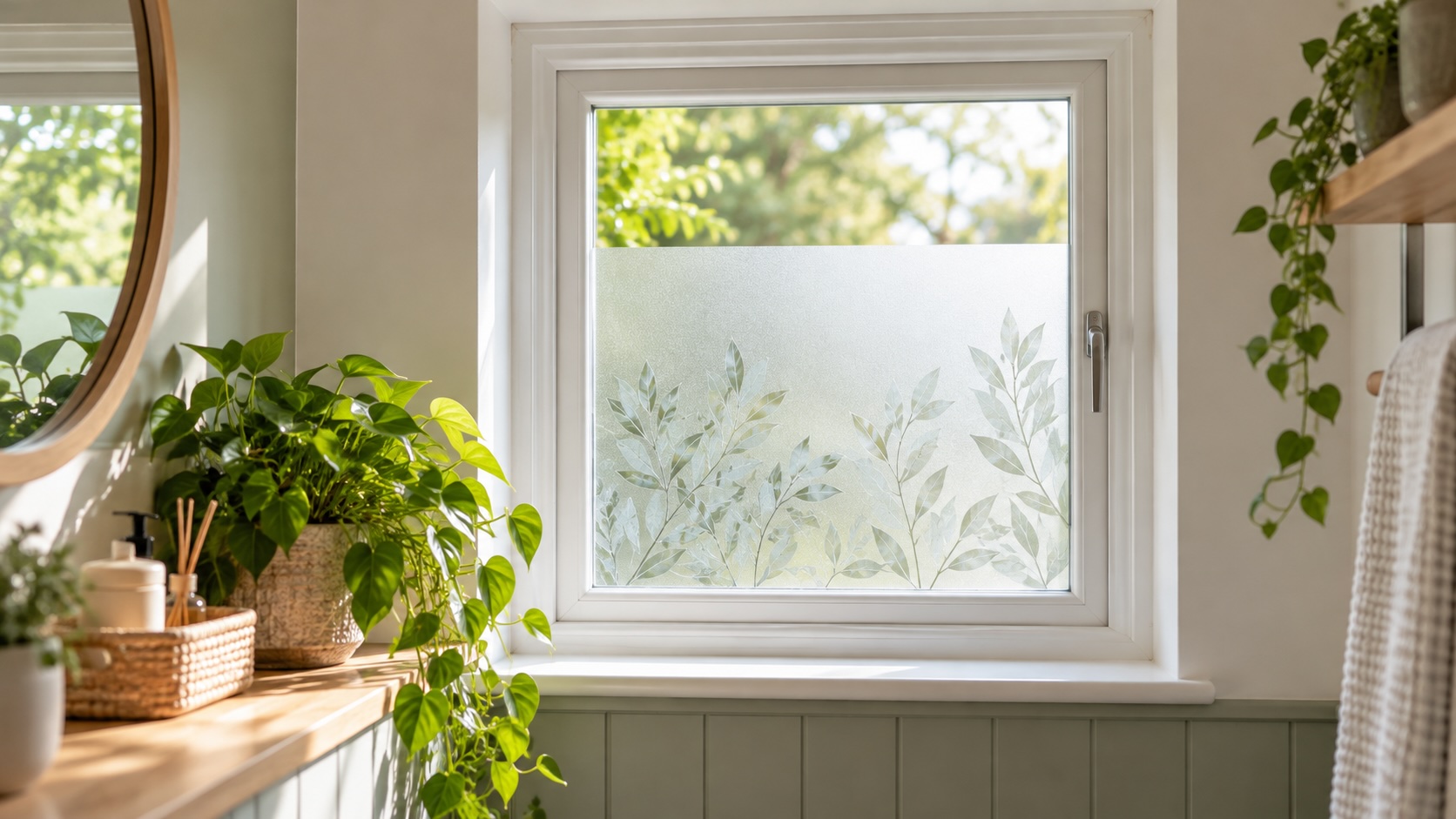
Window film can be a useful choice for very small windows where privacy matters more than adjustable light control.
Unlike blinds, curtains or shutters, film sits directly on the glass, so it adds virtually no bulk and does not reduce the size of the opening through a headrail, frame or fabric stack.
Why Window Film Works Well on Small Windows
For compact windows, one of the biggest advantages is that film does not occupy any additional space around the opening.
It can help preserve:
- The full window shape
- Maximum visible glazing
- A clean, uncluttered appearance
- Natural daylight
This makes it particularly useful where the window is too small for a conventional treatment to feel proportionate.
Privacy Film Can Retain Daylight
Frosted or obscured privacy films are commonly used where you want to reduce visibility through the glass without blocking the window completely.
This can be particularly useful in:
- Bathrooms
- Cloakrooms
- Ground-floor rooms
- Utility rooms
- Small kitchen windows
- Street-facing windows
The exact level of privacy depends on the film type and lighting conditions.
It Adds Almost No Visual Bulk
This is where window film has a clear advantage on very small openings.
There is no:
- Headrail
- Fabric stack
- Curtain pole
- Shutter frame
- Control mechanism
That can make the window feel much less crowded.
It Is Best Where Adjustable Privacy Is Not Essential
The main limitation is that privacy film is usually fixed in place.
Unlike Venetian blinds or shutters, it cannot normally be tilted or raised when you want a clearer view.
That makes it most suitable where permanent or semi-permanent privacy is acceptable.
Decorative Film Can Add Interest
Window film does not have to be plain.
Depending on the design, it can include:
- Frosted finishes
- Etched-glass effects
- Patterns
- Decorative motifs
This can make a small window more visually interesting without adding physical bulk.
It Can Also Be Combined With Another Treatment
Window film does not necessarily need to be the only treatment.
For example, privacy film can be combined with:
- A roller blind
- A Roman blind
- Curtains
- A pleated blind
This can provide privacy during the day while allowing the second treatment to handle blackout or additional light control.
When Is Window Film Best for a Small Window?
Window film is particularly suitable when you want:
- Minimal visual bulk
- Daytime privacy
- Maximum use of the glazing area
- A simple solution
- No moving parts
- A clean appearance
Practical Takeaway
Window film is one of the most space-efficient treatments for very small windows.
It works best where privacy is the main requirement and adjustable light control is less important, making it particularly useful for bathrooms, cloakrooms and other compact spaces.
Small Window Treatment Comparison Table
| Window Treatment | Preserves Daylight | Compact Appearance | Privacy Control | Blackout Potential | Easy to Clean | Decorative Impact | Good for Very Small Windows |
|---|---|---|---|---|---|---|---|
| Roller Blind | Excellent when raised | Excellent | Good | Excellent with suitable fabric and fitting | Very good | Moderate | Excellent |
| Roman Blind | Good, depending on stack height | Moderate | Good | Very good with blackout lining | Moderate | Excellent | Good |
| Venetian Blind | Very good | Very good | Excellent | Moderate | Excellent, especially aluminium | Moderate | Excellent |
| Pleated Blind | Excellent | Excellent | Good | Good, depending on fabric | Good | Good | Excellent |
| Cellular / Honeycomb Blind | Very good | Very good | Good | Very good with suitable fabric | Good | Good | Very good |
| Shutters | Good | Moderate | Excellent | Good | Very good | Excellent | Good |
| Curtains | Very good if stacked clear of the window | Moderate | Good | Excellent with suitable lining and fitting | Moderate | Excellent | Good where wall space allows |
| Café Curtains | Excellent | Good | Good for lower-level privacy | Low | Moderate | Excellent | Very good |
| Privacy Window Film | Excellent | Excellent | Excellent for fixed privacy | Low | Excellent | Low to moderate | Excellent |
What the Table Shows
For most small windows, roller, Venetian and pleated blinds perform particularly well because they combine compact proportions with strong practical performance.
The best choice changes depending on the priority:
- Best all-rounder: Roller blind
- Best for adjustable privacy: Venetian blind
- Best for minimum visual bulk: Pleated blind
- Best for thermal performance: Cellular / honeycomb blind
- Best decorative blind: Roman blind
- Best architectural treatment: Shutters
- Best soft-furnishing option: Curtains
- Best for partial privacy while retaining daylight: Café curtains
- Best for maximum glazing and fixed privacy: Window film
The most important factor is not simply which treatment scores highest overall, but which one solves the main problem of the particular small window.
Final Verdict: What Is the Best Window Treatment for a Small Window?
There is no single best window treatment for every small window.
The strongest choice depends on what the window needs to do, how much glazing you want to preserve, and how much visual bulk the treatment adds to the opening.
For many small windows, roller, Venetian and pleated blinds are particularly effective because they combine compact proportions with good privacy and light control.
Other treatments can be better where a different priority matters more.
For example:
- Roller blinds are a strong all-round option for compactness, privacy and blackout
- Venetian blinds are excellent for adjustable privacy and precise light control
- Pleated blinds work well where minimal bulk and visible glazing are priorities
- Cellular blinds are useful where compact proportions and thermal performance both matter
- Roman blinds are ideal when you want more decorative impact
- Shutters work well where privacy and architectural character are important
- Curtains can make a small window feel larger when they are fitted wider and higher than the frame
- Café curtains are useful where you need lower-level privacy but want to retain daylight above
- Privacy film is one of the best choices where the window is extremely small and fixed privacy is more important than adjustable light control
Think About the Window When the Treatment Is Open
For small windows, this is one of the most important considerations.
Ask how much of the glazing remains visible when the treatment is:
- Raised
- Open
- Stacked
- Folded
- Tilted
A treatment that covers only a small amount of glass on a large window can occupy a significant proportion of a small one.
Prioritise Proportion
The treatment should feel appropriate for the scale of the opening.
That means considering:
- Headrail size
- Fabric stack
- Curtain stack-back
- Shutter frame width
- Slat or louvre size
- Recess depth
- Available wall space
Match the Treatment to the Main Priority
A useful way to make the final decision is to identify the single most important requirement.
If it is maximum daylight, prioritise compact treatments that leave the glazing clear.
If it is privacy, consider Venetian blinds, shutters, café curtains or privacy film.
If it is blackout, a roller blind, Roman blind, cellular blind or lined curtain may be the better choice.
If it is decorative impact, Roman blinds, curtains or shutters are usually stronger options.
Final Takeaway
For a small window, the best treatment is usually the one that provides the required privacy, light control and style while occupying as little of the available glazing as possible.
The smaller the window, the more important proportion becomes.
Choose the treatment not only by how it looks when closed, but by how much light, glass and visual space it leaves available when open.