Order Tracking
 0800 1422417
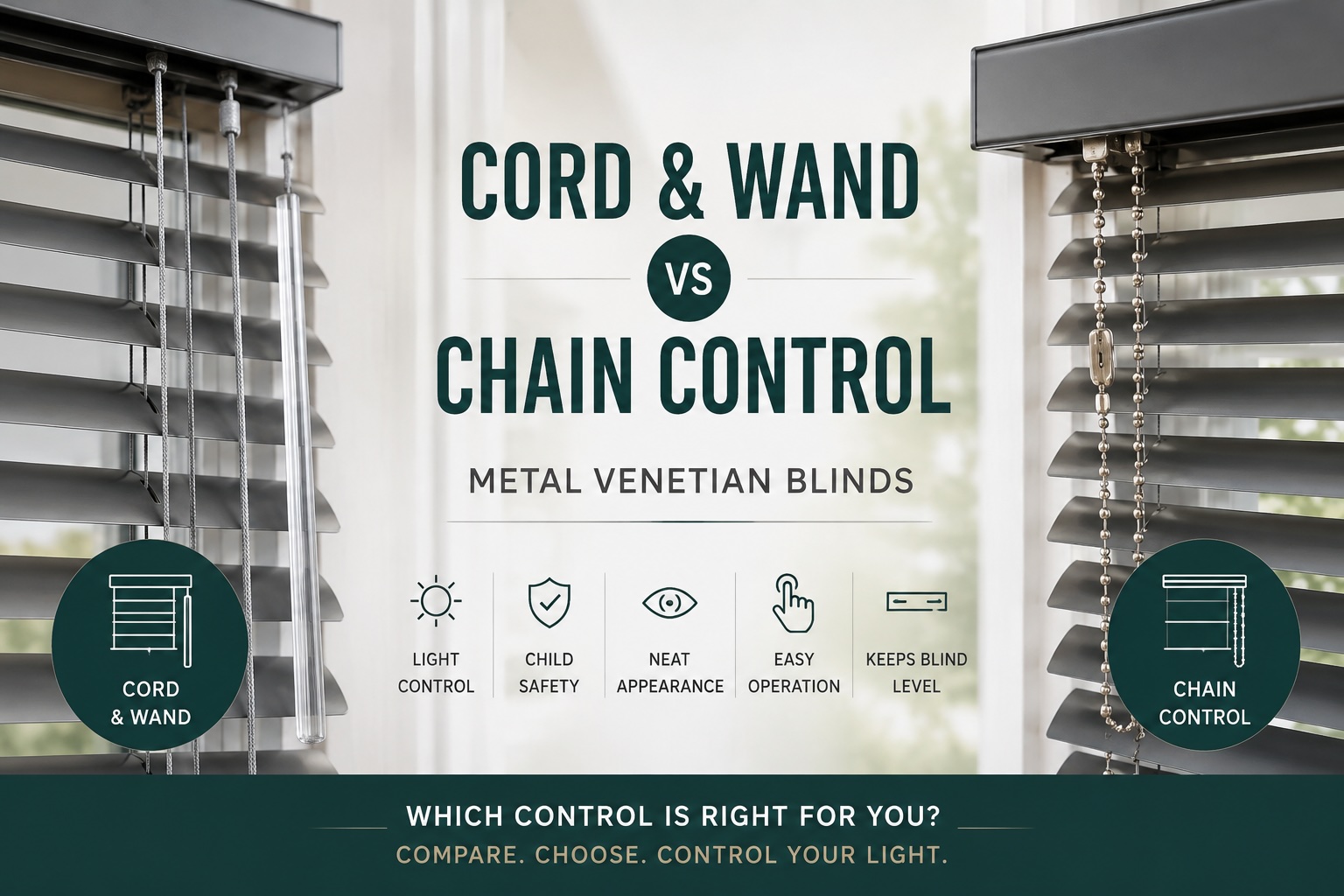
Metal Venetian blinds offer precise control over both privacy and natural light, but the way you operate the blind can make a noticeable difference to everyday use.
At DotcomBlinds, Metal Venetian Blinds are available with two control configurations: a traditional cord and wand system, or a more streamlined chain control system. Both allow you to raise and lower the blind and adjust the angle of the slats, but they do so in different ways.
With the cord and wand option, the cord controls the height of the blind while the wand adjusts the slats. With chain control, a single chain performs both functions, creating a neater overall appearance and simplifying the operating mechanism.
Neither option is automatically better for every room or customer. The right choice depends on how you prefer to use the blind, the look you want to achieve and which type of control feels most practical for your space.
In this guide, we compare cord and wand operation with chain control to help you decide which Metal Venetian Blind control is the best fit for your window.
What Are the Control Options for Metal Venetian Blinds?
DotcomBlinds Metal Venetian Blinds are available with two main control configurations:
- Cord and wand
- Chain control
With the traditional cord and wand system, the two controls have separate jobs. The cord raises and lowers the blind, while the wand is used to tilt the slats and control how much light enters the room.
With chain control, a single chain operates both functions. It raises and lowers the blind and also adjusts the angle of the slats.
The main difference therefore comes down to whether you prefer separate controls for each function or one combined control. Both options give you control over the position of the blind and the angle of the slats, but the way you interact with the blind is different.
How Does a Cord & Wand Venetian Blind Work?
The cord and wand system is the more traditional way to operate a Metal Venetian Blind, with each control responsible for a different function.
The cord is used to raise and lower the blind, allowing you to position it at the height you want.
The wand is used to tilt the slats. Rotating the wand changes the angle of the slats, helping you control the amount of light entering the room and adjust privacy without needing to raise the blind.
This separation of functions can make the blind straightforward to operate because each control has one clear purpose.
A cord and wand system may suit you if you prefer the familiar feel of a traditional Venetian blind and like having independent control over the height of the blind and the angle of the slats.
How Does a Chain-Controlled Venetian Blind Work?
A chain-controlled Metal Venetian Blind uses a single chain to manage both of the blind’s main functions.
The chain is used to:
- Raise and lower the blind
- Tilt the slats to adjust light and privacy
Because both functions are combined into one control, there is no separate lifting cord or wand. This gives the blind a cleaner, more streamlined appearance.
The chain mechanism is also designed to help the blind remain level as it is raised, while allowing the slats to be angled accurately.
For customers who prefer a more integrated control system with fewer visible operating components, chain control can be an appealing alternative to the traditional cord and wand arrangement.
Cord & Wand vs Chain: The Main Differences
Both control systems let you raise and lower the blind and adjust the angle of the slats, but they organise those functions differently.
| Feature | Cord & Wand | Chain |
|---|---|---|
| Raise and lower the blind | Cord | Chain |
| Tilt the slats | Wand | Chain |
| Number of controls | Two | One |
| Appearance | More traditional | Cleaner and more streamlined |
| Slat adjustment | Separate wand control | Integrated into the chain |
| Keeping the blind level when raised | Conventional operation | Mechanism designed to help the blind stay level |
The cord and wand system separates the two functions, which can feel familiar and intuitive if you have used Venetian blinds before.
The chain system combines everything into one control. This reduces the number of visible components and gives the blind a neater overall appearance.
The better choice comes down largely to whether you prefer separate controls with a traditional feel or a single integrated control with a more streamlined look.
Which Option Gives You the Best Light Control?
Both cord and wand and chain-controlled Metal Venetian Blinds give you good control over the angle of the slats, which is the main way Venetian blinds manage light and privacy.
With the cord and wand system, the wand is dedicated entirely to tilting the slats. This makes it easy to make small adjustments without affecting the height of the blind.
With the chain system, the same chain used to raise and lower the blind also controls the tilt of the slats. This creates a more integrated operating system, and the mechanism is designed to allow accurate slat positioning.
In practical terms, both options let you fine-tune how much light enters the room. The difference is mainly in how you prefer to make those adjustments:
- Choose cord and wand if you prefer a separate control specifically for slat angle.
- Choose chain control if you prefer one mechanism to manage both blind height and slat position.
For most users, the difference is less about overall light control and more about which operating style feels more natural and convenient.
Which Control Gives the Neatest Appearance?
If you prefer a cleaner, more streamlined look, chain control has the advantage.
With the cord and wand system, the blind has two separate operating components: the lifting cord and the wand used to tilt the slats. This is the more traditional Venetian blind appearance.
With chain control, both functions are handled by a single chain positioned at one end of the blind. There is no separate wand and no separate lifting cord, which reduces the number of visible controls.
This can make the blind look tidier, particularly in modern interiors where a more minimal finish is preferred.
The difference is mainly aesthetic rather than functional. If you like the familiar look of a traditional Venetian blind, cord and wand may suit you perfectly well. If you want fewer visible components and a more integrated appearance, chain control is likely to be the better choice.
Which Is Easier to Operate?
Both systems are straightforward to use, but they offer a different operating experience.
With cord and wand control, each function is clearly separated. The cord raises and lowers the blind, while the wand adjusts the slat angle. Some users may prefer this because each control has one specific purpose.
With chain control, a single chain manages both the height of the blind and the angle of the slats. This reduces the number of controls and can make the blind feel more streamlined in everyday use.
Which feels easier will largely come down to personal preference:
- Choose cord and wand if you prefer separate controls with clearly defined functions.
- Choose chain control if you prefer managing everything from one control.
Neither option is inherently difficult to use. The better choice is simply the one that feels more intuitive for the way you want to operate the blind.
Which Is Better for Keeping the Blind Level?
One of the practical advantages of chain control is that the mechanism is designed to help the blind remain level as it is raised.
With a traditional cord and wand system, the blind uses the conventional lifting arrangement. This works well for normal operation, but the chain mechanism offers a more controlled lifting action.
That can be useful if keeping the blind looking even and balanced while raising it is particularly important to you.
It is not necessarily a reason on its own to choose chain control, but when combined with the neater appearance and single-control operation, it can make the chain option more appealing for customers who prefer a more streamlined system.
Cord & Wand vs Chain: Which Should You Choose?
The best control option depends on whether you prefer a traditional two-control system or a more streamlined single-control mechanism.
Cord and wand may be the better choice if you:
- Prefer the familiar operation of a traditional Venetian blind
- Like having separate controls for raising the blind and adjusting the slats
- Want a dedicated wand for changing the slat angle
- Are comfortable with a slightly more traditional appearance
Chain control may be the better choice if you:
- Prefer a cleaner, more minimal look
- Want one control to operate both the blind height and slat angle
- Like the idea of fewer visible operating components
- Want a mechanism designed to help the blind stay level as it is raised
There is no single option that will suit every customer. Both systems provide control over light, privacy and blind height. The main difference is how those functions are operated and how much visible hardware you want around the blind.
What About Child Safety?
Child safety is an important consideration when choosing any blind with cords or chains.
DotcomBlinds Metal Venetian Blinds are designed with safety measures built into the control system. These differ slightly depending on the operating method.
With cord-operated blinds, the cords are supplied at a maximum length of one metre. A cleat is also provided with looped cord-operated blinds so the cord can be wrapped securely around it after use.
With chain-operated Venetian blinds, a chain tensioner, sometimes called a P-clip, is supplied to help keep the chain secured and correctly tensioned.
Whichever control option you choose, the important point is to install and use the supplied safety devices correctly. This helps keep loose cords and chains controlled, particularly in homes where young children may be present.
Final Verdict: Cord & Wand or Chain?
Both control options work well, but they suit slightly different preferences.
Cord and wand is the more traditional choice. It keeps the two functions separate, with the cord used to raise and lower the blind and the wand used to adjust the slats. This can feel familiar and intuitive if you have used Venetian blinds before.
Chain control offers a more streamlined alternative. A single chain controls both the blind height and the slat angle, reducing the number of visible controls and creating a neater overall appearance. The mechanism is also designed to help the blind remain level as it is raised.
If you prefer a conventional Venetian blind setup with separate controls, cord and wand is likely to suit you best. If you favour a cleaner look and a single integrated control, chain operation is likely to be the better choice.
Frequently Asked Questions
Quick answers to common questions about cord and wand versus chain controls for Metal Venetian Blinds.
Cord and wand offers the familiar traditional setup, while chain control provides a cleaner single-control system.