Order Tracking
 0800 1422417
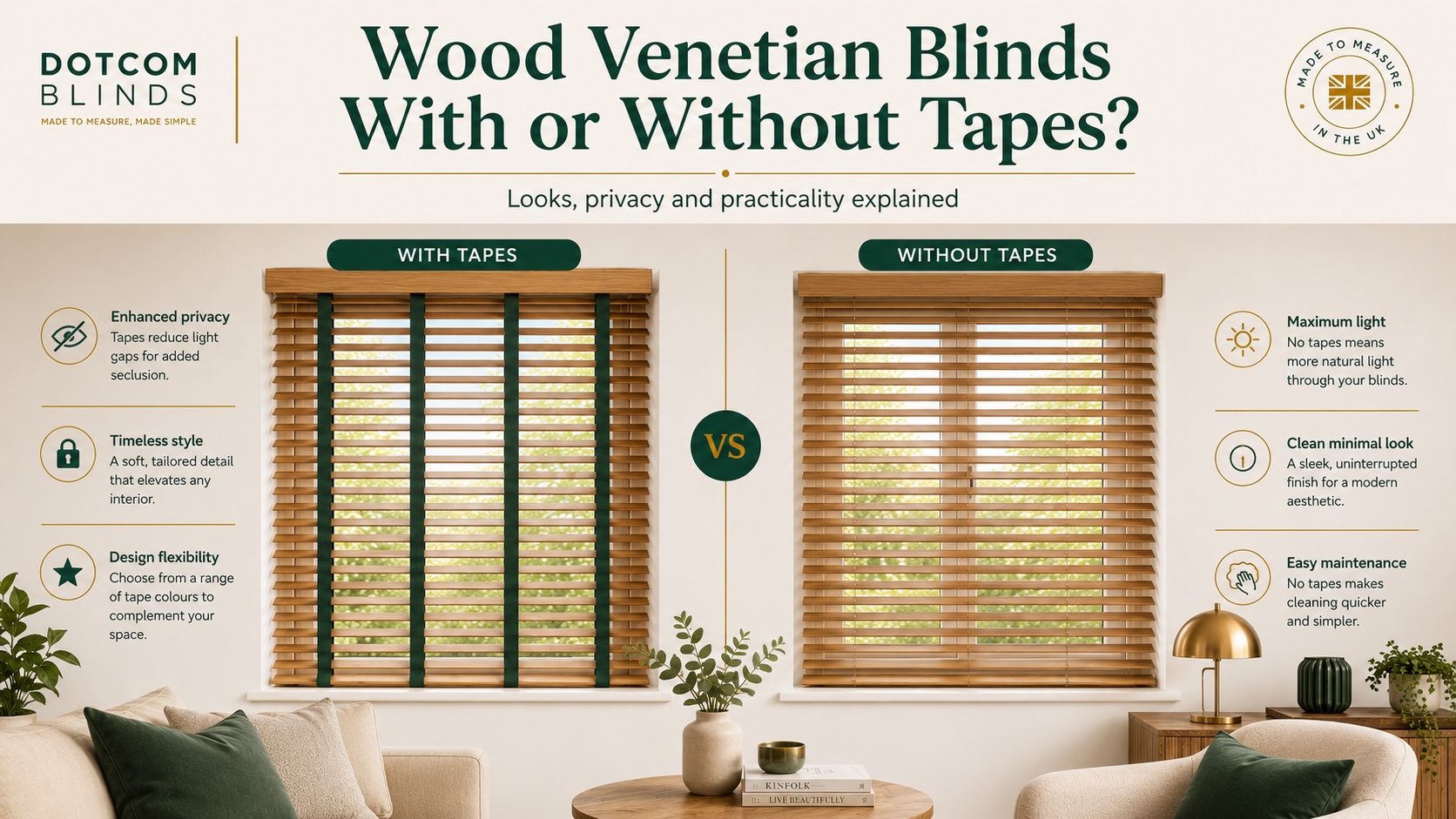
Wood Venetian blinds are a popular choice because they combine practical light control with a warm, structured look. When ordering either faux wood or real wood Venetian blinds, one of the design decisions you may come across is whether to add fabric privacy tapes.
These tapes run vertically down the blind and cover the small gaps where the slat ladder passes through the slats. They add a more decorative finish, but they also have a practical purpose by covering the openings that would otherwise remain visible.
Without tapes, the blind has a cleaner and more minimal appearance. With tapes, the look becomes more detailed and traditional, while also helping to reduce small points of light and improve privacy slightly.
Neither option is automatically better. The right choice depends on the style you prefer, how much importance you place on privacy and light control, and how much maintenance you want.
In this guide, we compare wood Venetian blinds with and without tapes, including appearance, privacy, light control, cleaning and overall practicality.
What Are Privacy Tapes on Venetian Blinds?
Privacy tapes are fabric strips that run vertically down the face of a Venetian blind.
On faux wood and real wood Venetian blinds, the slats are held together by a ladder system. This creates small openings where the ladder passes through the slats. Privacy tapes sit over these areas and cover those gaps.
As well as hiding the ladder holes, the tapes become part of the overall design of the blind. Depending on the colour you choose, they can either blend in with the slats or create a more noticeable contrast.
Their role is therefore both decorative and practical. They change the appearance of the blind while also adding an extra layer of coverage over the small openings in the slats.
What Do Venetian Blinds Look Like With Tapes?
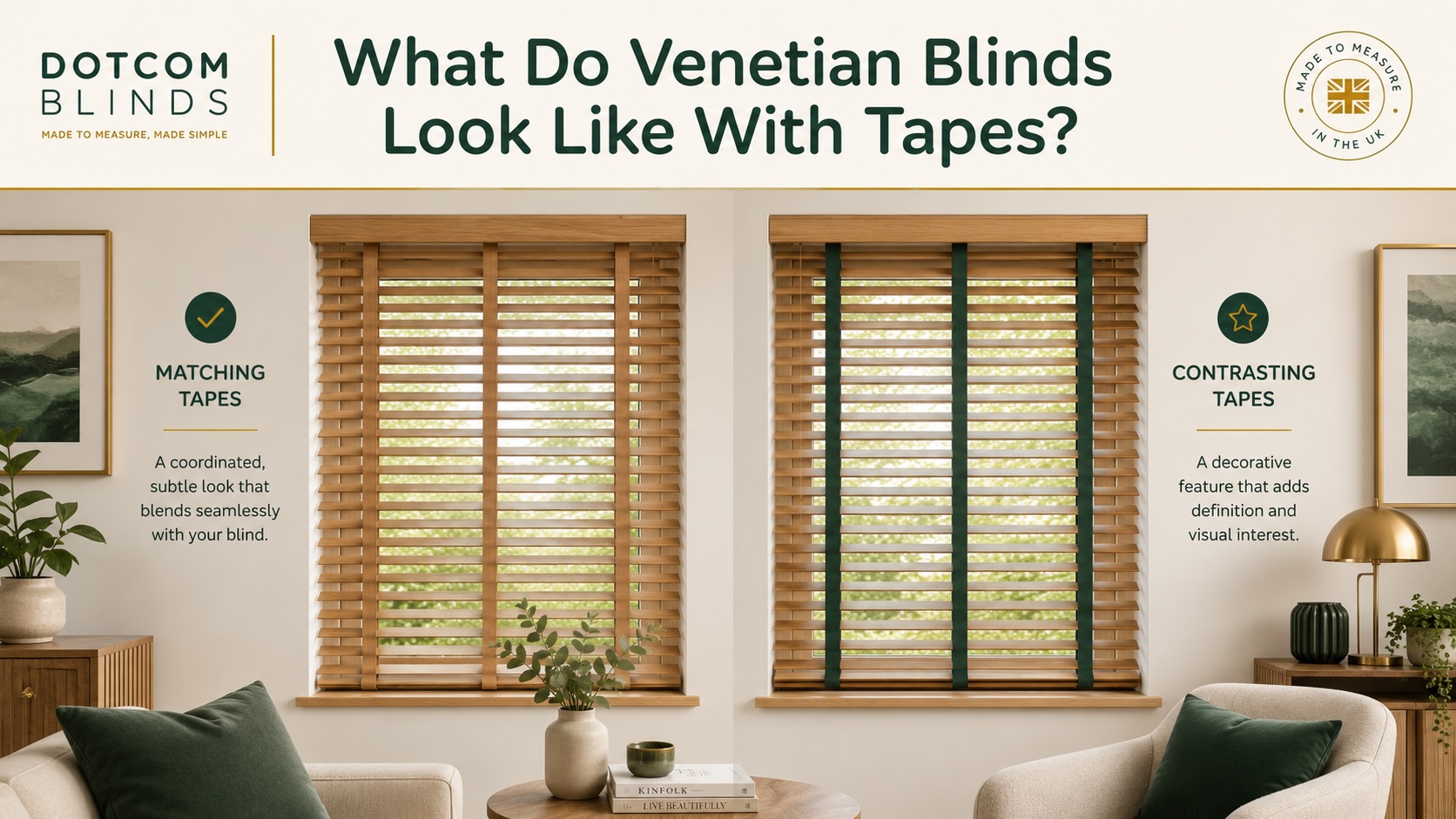
Adding privacy tapes gives wood Venetian blinds a more decorative and structured appearance.
The vertical fabric strips break up the horizontal lines of the slats, creating a more traditional, tailored look. On real wood blinds, this can add to the sense of depth and detail, while on faux wood blinds it can introduce an extra design feature beyond the slat colour itself.
The overall effect depends heavily on the tape colour:
- Matching tapes create a more coordinated and understated finish.
- Contrasting tapes make the vertical lines more prominent and turn the tapes into a stronger design feature.
Tapes can therefore be used either to blend into the blind or to make it more visually distinctive.
For customers who prefer a softer, more decorative finish, privacy tapes can add character without changing the basic operation of the blind.
What Do Venetian Blinds Look Like Without Tapes?
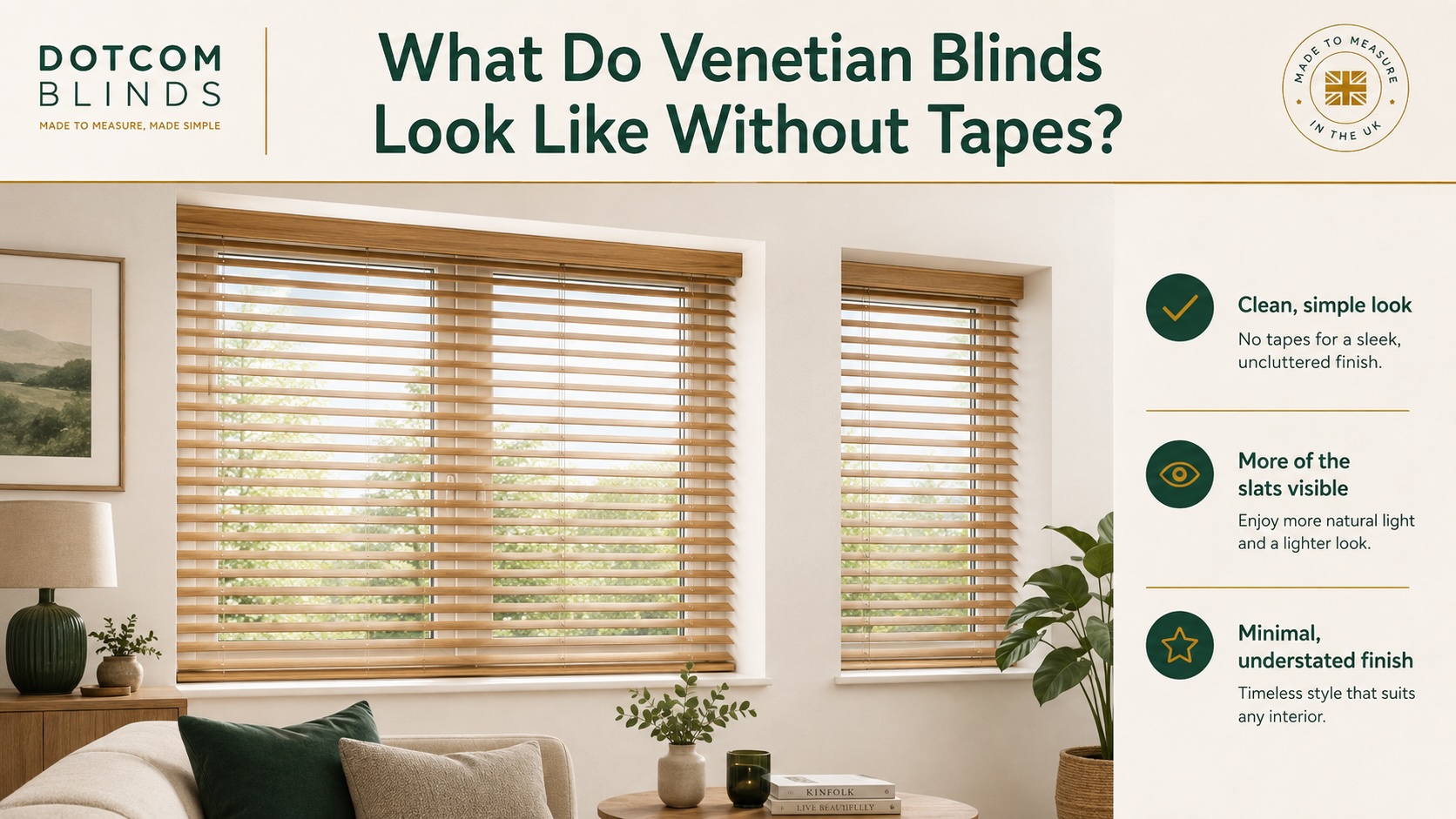
Without privacy tapes, wood Venetian blinds have a cleaner and more understated appearance.
The horizontal slats remain the main visual feature, with fewer vertical elements interrupting the overall look. This can make an untaped blind feel slightly more minimal and contemporary.
On real wood blinds, the absence of tapes allows more attention to remain on the natural grain and finish of the slats. On faux wood blinds, it creates a simple, uniform appearance that can work well in modern interiors.
The main visual difference is therefore one of emphasis:
- With tapes: more decorative and detailed
- Without tapes: cleaner and simpler
If you prefer a streamlined blind where the slats themselves are the focus, the untaped option is likely to appeal more.
With Tapes vs Without: Which Looks Better?
There is no single better-looking option. The choice depends on the style you want the blind to create in the room.
Choose tapes if you prefer:
- A more decorative, detailed finish
- Stronger vertical lines across the blind
- The option to match or contrast the tape colour with the slats
- A slightly more traditional or tailored appearance
Choose no tapes if you prefer:
- A cleaner, simpler look
- The horizontal slats to remain the main visual feature
- A more minimal or contemporary appearance
- Fewer decorative elements around the window
In many cases, the decision comes down to how prominent you want the blind to be as part of the room design. Tapes can make the blind feel more styled and intentional, while an untaped blind tends to sit more quietly within the overall interior.
Do Privacy Tapes Actually Improve Privacy?
Yes, privacy tapes can provide a small but useful improvement in privacy.
On a standard wood Venetian blind, the ladder system passes through small openings in the slats. Even when the slats are closed, these openings remain.
Privacy tapes cover those areas, reducing the small gaps through which someone outside might otherwise be able to see.
This does not mean that a Venetian blind without tapes offers poor privacy. With the slats closed, both faux wood and real wood Venetian blinds already provide a high level of coverage.
The main difference is that tapes cover the remaining ladder holes, creating a more complete visual barrier.
If maximum privacy is important to you, particularly for rooms overlooked by neighbouring properties or facing a busy street, tapes can therefore offer a useful extra layer of coverage.
Do Tapes Make Venetian Blinds Darker?
Privacy tapes can help reduce the small amounts of light that pass through the ladder holes in a wood Venetian blind.
When the slats are closed, both taped and untaped Venetian blinds already block a significant amount of incoming light. However, on an untaped blind, direct sunlight can sometimes pass through the small openings where the ladder system runs through the slats. This may create narrow lines or points of light in the room.
Privacy tapes cover these openings, helping to reduce that effect and create a slightly more complete barrier.
They should not be treated as a blackout feature, but if you want to minimise those small areas of light leakage, tapes can provide a useful improvement.
Are Venetian Blinds With Tapes Harder to Clean?
Venetian blinds with privacy tapes require a little more care than blinds without them because you are cleaning two different materials: the slats and the fabric tapes.
The slats can still be cleaned in the usual way for the particular blind material, but the tapes should be treated more gently.
In practical terms:
- Dust can settle on the fabric tapes as well as on the slats.
- The tapes may need gentle dusting or careful vacuuming with a soft attachment.
- Fabric tapes should not automatically be cleaned in the same way as faux wood or real wood slats.
- Stains may require more careful treatment than simple surface dust.
Without tapes, cleaning is generally more straightforward because there are fewer fabric components to maintain.
The difference is not dramatic, but if ease of cleaning is one of your main priorities, an untaped Venetian blind is the simpler option.
Which Is Easier to Maintain: With Tapes or Without?
If low maintenance is a priority, wood Venetian blinds without tapes are generally the simpler option.
With an untaped blind, there are fewer fabric elements to look after, so routine cleaning mainly focuses on the slats and the blind hardware.
With taped blinds, the fabric strips add another surface that can collect dust and may need occasional gentle cleaning.
In simple terms:
- Without tapes: easier and quicker to maintain
- With tapes: slightly more care required because of the fabric sections
For most households, this is unlikely to be a major inconvenience. However, if you want the most straightforward option from a cleaning and maintenance point of view, choosing the blind without tapes has the advantage.
Are Tapes a Good Choice for Kitchens and Bathrooms?
Privacy tapes can still be considered for kitchens and bathrooms, but the additional fabric element is worth thinking about before you choose them.
In these rooms, blinds may be exposed to more moisture, condensation, cooking residue or airborne grease than they would be in a bedroom or living room. While the slats themselves may be relatively straightforward to wipe clean, fabric tapes usually require gentler care.
For that reason:
- Without tapes may be the more practical option if easy cleaning is your priority.
- With tapes may still appeal if you value the decorative finish and additional privacy more highly.
- Extra care may be needed to keep the tapes looking clean in rooms where moisture or residue is common.
The best choice therefore depends on the balance between appearance and maintenance. If you want the simplest option for a harder-working room, untaped blinds are generally easier to look after.
Tapes on Faux Wood vs Real Wood Venetian Blinds
Privacy tapes are available on both faux wood and real wood Venetian blinds, and their basic purpose is the same in each case.
They:
- Cover the small gaps where the slat ladder runs
- Add an extra decorative element
- Help improve privacy
- Reduce small amounts of light passing through the ladder holes
The main difference is how the tapes interact visually with the material of the blind.
On real wood Venetian blinds, tapes can complement the natural grain and character of the timber, giving the blind a more traditional or furniture-like finish.
On faux wood Venetian blinds, tapes can add contrast and make the overall design feel more detailed, especially if you choose a tape colour that differs from the slats.
In both cases, the decision is mainly about the look you want to achieve and whether the additional privacy benefit is important to you.
Should Your Tape Match or Contrast With the Blind?
The colour of the privacy tape can make a noticeable difference to the overall appearance of a wood Venetian blind.
If you choose a matching or similar tape colour, the tapes blend more naturally with the slats. This creates a softer, more coordinated look and keeps the blind relatively understated.
A contrasting tape colour creates a stronger visual effect. The vertical tapes become a more obvious design feature, adding definition and making the blind feel more decorative.
A simple way to think about it is:
- Matching tapes: subtle, coordinated and understated
- Contrasting tapes: bolder, more decorative and more noticeable
You can also use the tape colour to coordinate with other elements in the room, such as window frames, furniture, flooring or soft furnishings.
There is no right or wrong choice. If you want the slats themselves to remain the main feature, a closely matched tape is usually the safer option. If you want the blind to make more of a design statement, a contrasting tape can add character.
Do Tapes Make Venetian Blinds Look More Traditional?
Privacy tapes can give wood Venetian blinds a more traditional and decorative appearance because they introduce visible vertical fabric strips across the horizontal slats.
This can make the blind feel more detailed and tailored, particularly when the tape colour contrasts with the slats.
However, tapes do not automatically make a blind look old-fashioned. The overall effect depends heavily on the colour combination and surrounding interior.
For example:
- High-contrast tapes tend to create a stronger, more decorative look.
- Closely matched tapes can appear much more subtle and contemporary.
- No tapes generally gives the cleanest and most minimal appearance.
So while tapes often suit classic or traditional interiors particularly well, they can also work successfully in modern rooms when the colour choice is kept understated.
Wood Venetian Blinds With or Without Tapes: Quick Comparison
Here is the simplest way to compare the two options:
| Consideration | With Tapes | Without Tapes |
|---|---|---|
| Appearance | More decorative and detailed | Cleaner and simpler |
| Ladder holes | Covered | Remain visible |
| Privacy | Slightly enhanced | Still provides good privacy |
| Light through ladder holes | Reduced | Small points or lines of light may remain |
| Cleaning | Requires a little extra fabric care | Generally easier to maintain |
| Design options | Can match or contrast with the slats | Slat colour remains the main feature |
| Overall style | More tailored or traditional | More minimal or contemporary |
The practical differences are relatively small, so for many customers the decision will come down mainly to appearance.
Choose tapes if you want a more decorative finish and like the added benefit of covering the ladder holes. Choose no tapes if you prefer a cleaner look and slightly simpler maintenance.
Who Should Choose Venetian Blinds With Tapes?
Privacy tapes are likely to suit you if you want your wood Venetian blinds to have a more decorative finish as well as a little extra coverage.
They may be the better choice if you:
- Prefer a more traditional or tailored appearance
- Want to cover the small ladder holes in the slats
- Would like to reduce small points of light passing through those openings
- Want a little extra privacy when the slats are closed
- Like the option of matching the tape colour to the blind
- Want to introduce contrast and make the blind more of a design feature
The main reason to choose tapes is usually appearance, with the privacy and light-control benefits acting as useful extras.
If you like the stronger vertical detailing and do not mind the slightly greater cleaning requirement, tapes can be a good addition to both faux wood and real wood Venetian blinds.
Who Should Choose Venetian Blinds Without Tapes?
Venetian blinds without tapes are likely to suit you if you prefer a cleaner, simpler appearance and want the slats themselves to remain the main visual feature.
They may be the better choice if you:
- Prefer a more minimal or contemporary look
- Want fewer decorative elements across the blind
- Like the horizontal slats to remain visually dominant
- Prefer slightly simpler cleaning and maintenance
- Are satisfied with the privacy provided by closed slats
- Do not mind the small ladder holes remaining visible
Choosing no tapes does not mean giving up the main benefits of a wood Venetian blind. You still retain control over light and privacy through the slats, while keeping the overall design more understated.
For customers who value simplicity and easy upkeep, an untaped faux wood or real wood Venetian blind is often the more natural choice.
Final Verdict: Are Privacy Tapes Worth It?
Privacy tapes are best viewed as a design choice with a few practical benefits rather than an essential feature.
They add a more decorative finish to faux wood and real wood Venetian blinds, while also covering the small ladder holes in the slats. This can provide a little extra privacy and reduce small points or lines of light passing through those openings.
Choosing blinds without tapes gives you a cleaner, simpler appearance and makes routine maintenance slightly easier.
So the choice comes down to what matters most to you:
- Choose with tapes if you want a more detailed look, extra coverage and the option to match or contrast the tape colour.
- Choose without tapes if you prefer a more minimal appearance and simpler upkeep.
Both options retain the main benefits of Venetian blinds, so there is no wrong choice. It is mainly a question of style, privacy preference and maintenance.