Order Tracking
 0800 1422417
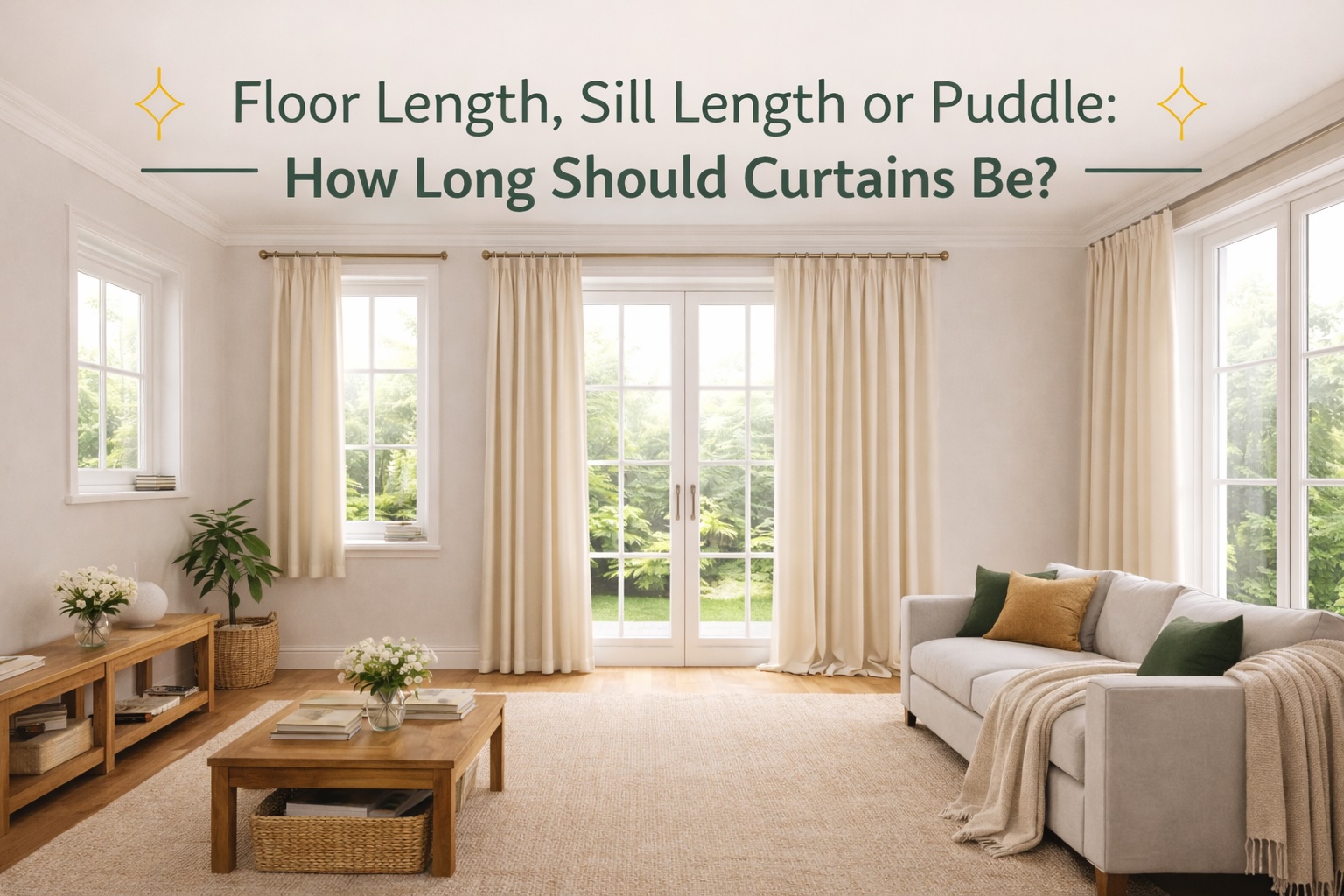
Choosing curtains often feels like a simple decision. Pick a fabric you love, select a colour that suits the room, and you are done. In reality, curtain length is one of the most important design choices you will make, and it is the detail that quietly separates a room that feels finished from one that feels slightly off.
Too short and curtains can look accidental or dated. Too long and they can become impractical very quickly. Get the length just right, however, and curtains can make ceilings feel taller, windows appear wider, and an entire room look more polished and intentional.
The truth is, there is no single “correct” curtain length. The right choice depends on the room, the style you want to achieve, the fabric you choose, and how you actually live in the space. From neat and practical sill length curtains, to floor length styles that designers swear by, to dramatic puddled curtains that bring instant luxury, each option has its place.
In this guide, we will walk through the three main curtain lengths, explain when each works best, and share the expert measuring tips that most people only learn after making an expensive mistake. If you want curtains that look right from day one and still work for your lifestyle months down the line, you are in exactly the right place.
Table of Contents
The Three Curtain Lengths Explained

Before measuring, mounting poles, or choosing fabric, it helps to understand the three main curtain lengths and what each one brings to a room. Each style creates a very different look and suits different spaces, so there is no universal best choice, only the right one for your home.
Sill Length Curtains
Sill length curtains finish at, or just below, the window sill. They are neat, practical, and intentionally understated.
The vibe: Casual, tidy, functional
Best used for: Kitchens, bathrooms, utility rooms, or any window positioned above furniture such as a desk, worktop, or radiator
This style is often chosen for rooms where practicality matters more than drama. Sill length curtains are easier to keep clean, less likely to interfere with heat sources, and ideal where long fabric would get in the way of daily use. While they do not create the same visual impact as longer curtains, they are a sensible and stylish solution in the right setting.
Floor Length Curtains
Floor length curtains are widely considered the gold standard for modern interiors. They extend down to the floor, either just touching it or hovering slightly above.
The vibe: Polished, modern, clean
Best used for: Living rooms, bedrooms, dining rooms, and home offices
This length creates a tailored, intentional look and works well with most interior styles. Floor length curtains frame a window beautifully, help control light and privacy, and instantly elevate a space. When people imagine “perfect” curtains, this is usually what they have in mind.
Later in the guide, we will explain the subtle but important difference between curtains that gently touch the floor and those that hang just clear of it.
Puddle Curtains
Puddle curtains are deliberately longer than the floor, allowing fabric to pool softly at the bottom.
The vibe: Romantic, luxurious, grand
Best used for: Formal dining rooms, period properties, and rooms with high ceilings
This style is all about drama and softness. Puddled curtains can look stunning in traditional or character-filled homes, especially where ceilings are tall and space is generous. However, they are a style choice rather than a practical one, and they demand more maintenance than other options.
If you love the look but worry about everyday living, do not worry. We will cover the practical realities, and potential compromises, later in the article.
Start Here First: Curtains Are Measured From the Hardware

One of the most common mistakes people make when buying curtains is measuring from the window instead of the curtain pole or track. In reality, curtain length is dictated by where the fabric starts, not where the window ends. Without knowing your hardware, even the most careful measurements can be wrong.
The Breaking Point: Header Types Explained
Different header styles change where the curtain fabric begins, which directly affects the finished length.
-
Grommets or eyelets
These sit directly on the pole. The top of the fabric usually starts around 1 to 2 inches above the pole, which slightly shortens the visible drop. -
Rings or clips
Rings and clips add extra space between the pole and the curtain fabric. This usually increases the overall drop by 1 to 2 inches, depending on the hardware used. -
Rod pocket
With a rod pocket header, the fabric starts exactly at the pole. What you measure is what you get.
Why This Matters
If you measure without accounting for your header type, you can easily end up with curtains that hover too high, puddle unintentionally, or miss the floor altogether. This is especially important when aiming for floor length or a precise “kiss” at the floor.
Top tip: Always choose and install your curtain pole or track before taking final measurements. Once the hardware is in place, you can measure from the correct starting point and order curtains that fit exactly as intended.
Now that the technical side is clear, it is time to talk about the design trick that makes rooms look taller, wider, and more expensive than they really are.
The “High and Wide” Rule: The Designer Trick That Changes Everything

If there is one secret that interior designers rely on time and time again, this is it. Hanging curtains high and wide can completely transform how a room looks, often without changing anything else.
Go High
Instead of fixing your curtain pole directly above the window frame, mount it higher.
-
Position the pole 4 to 6 inches above the window frame, or
-
Place it halfway between the top of the window and the ceiling
This draws the eye upwards, making ceilings appear taller and the room feel more open and airy.
Go Wide
Extend the curtain pole beyond the sides of the window.
-
Allow 6 to 10 inches on each side of the window frame
When the curtains are open, they sit mostly over the wall rather than blocking the glass, letting in more light and making the window appear much larger.
The Result
Using the high and wide rule creates a more balanced, high-end look and gives the illusion of a bigger, brighter space. It also explains why many people are surprised when they realise they need longer curtains than expected once the pole is positioned correctly.
This technique works with all three curtain lengths, but it is especially effective with floor length and puddled curtains, where the added height really comes into its own.
The Kiss vs the Hover: How Close Should Curtains Be to the Floor?

When choosing floor length curtains, the final decision is not just whether they reach the floor, but how they reach it. This small detail has a big impact on both appearance and practicality.
The Kiss
“The kiss” describes curtains that just graze the floor, creating a clean, tailored finish.
This is the look many people associate with luxury interiors and professionally styled rooms. When done correctly, it feels intentional and elegant, with the fabric falling naturally into place without excess pooling.
However, the kiss requires very accurate measuring. Even a small miscalculation, or natural fabric stretch over time, can turn a perfect kiss into an unplanned puddle.
The Hover
“The hover” refers to curtains that hang around half an inch above the floor.
Visually, the difference is subtle, but practically it can be a game changer. Hovering curtains are easier to clean around, less likely to collect dust, and more forgiving if floors are not perfectly level.
For busy households, modern interiors, or homes with pets and robot vacuums, the hover is often the smarter choice while still looking polished and intentional.
Which One Is Right for You?
If you want a classic, high-end finish and are confident in your measurements, the kiss is hard to beat. If you value ease of maintenance and flexibility, the hover delivers almost the same look with far fewer compromises.
Fabric Weight and “The Stretch”: What Happens After Curtains Are Hung

Not all curtain fabrics behave the same way once they are up at the window. This is something many people only discover weeks after installation, when curtains no longer fall quite where they originally did.
Heavier Fabrics Can Settle Over Time
Fabrics such as linen blends, thick cottons, and heavy velvets have weight, and that weight can cause them to relax and stretch slightly after hanging.
If you aim for a perfect kiss at the floor on day one, there is a real chance that, after a few weeks, the fabric will have settled enough to create an unintended puddle. This is especially noticeable with longer drops and wider curtains, where gravity has more impact.
Lighter Fabrics Behave Differently
Sheer and lightweight fabrics are far less likely to stretch. They tend to keep their original length, but because they are light and airy, they can move easily with drafts or open windows.
For this reason, many sheer curtains include a weighted hem, which helps them hang neatly and prevents them from floating or billowing excessively.
What This Means for Measuring
If you are choosing a heavier fabric and want a precise finish, it is wise to allow a small margin for settling. Opting for a slight hover rather than a strict kiss can help future-proof your curtains and keep them looking intentional long after they are installed.
Solving “Wonky” Floors in Older Homes

In many UK homes, especially period properties, floors are rarely perfectly level. It might only be a few millimetres, but when it comes to curtains, even small differences can become surprisingly noticeable.
Imagine measuring one side of a window at 84 inches to the floor and the other at 84.5 inches. With floor length curtains, that half inch difference can make one panel appear too short, instantly drawing the eye to the unevenness.
When Floor Length Highlights the Problem
Very precise floor length curtains, particularly those aiming for a clean hover or a perfect kiss, can unintentionally emphasise sloping floors. What should look tailored can end up looking slightly off balance.
Using Extra Length to Your Advantage
Adding a small amount of extra fabric can be a clever solution.
-
A soft break at the floor
-
A light puddle of 1 to 2 inches
Both options allow the fabric to disguise uneven floor levels far more effectively. The eye reads the folds and movement of the fabric rather than the exact point where it meets the floor.
The Practical Takeaway
If you know your floors are not level, perfection is not always your friend. A little flexibility in curtain length can create a more forgiving, harmonious finish and help your windows look balanced, even if the floor beneath them is not.
Maintenance Realities: The Honest Bit Most Guides Skip

Curtains can look beautiful in photos, but they also have to work in real homes. This is where being honest about day-to-day living really matters, because the most dramatic option is not always the most practical one.
Dust, Pets and Cleaning
Long curtains that touch or pool on the floor are magnets for dust, pet hair, and everything else that settles at ground level. If you have shedding pets, especially dogs, or use a robot vacuum, puddled curtains can quickly become frustrating.
In these homes, curtains that hover slightly above the floor are often the sweet spot. You still get a polished, high-end look, without constantly battling dust bunnies or rescuing fabric from a vacuum cleaner’s path.
Radiators and Heat Sources
If there is a radiator directly beneath the window, curtain length becomes more than a style decision.
-
Floor length curtains can block heat, reducing efficiency
-
Fabric resting on or near a radiator can be a fire risk
-
Sill length curtains are often the safest and most sensible choice
This is particularly important in kitchens and bathrooms, where moisture and heat are already factors to consider.
Style vs Reality
Puddled curtains are undeniably beautiful, but they suit calmer, lower-traffic rooms best. In busy family spaces, bedrooms with pets, or homes where ease of cleaning matters, a more restrained length usually delivers better long-term satisfaction.
Which Curtain Length Works Best in Each Room?

While personal taste always plays a role, some curtain lengths naturally suit certain rooms better than others. Thinking about how each space is used can help narrow down the best option and avoid practical frustrations later.
Living Room
Floor length curtains are usually the best choice here. They create a polished, welcoming look and frame the window beautifully. A gentle kiss or a small hover both work well, depending on your preference and cleaning needs. In more formal living rooms, a subtle puddle can also look striking.
Bedroom
Floor length curtains are again the most popular option, especially when paired with blackout linings. They feel calm and cohesive, and help create a cosy, finished atmosphere. If the bed is close to the window or you want easier cleaning, a hover is often more practical than a kiss.
Dining Room
This is where you can lean into drama. Puddled curtains can look particularly effective in dining rooms, especially in period homes or spaces with higher ceilings. Floor length curtains also work well if you prefer something more understated.
Kitchen
Sill length curtains are usually the most sensible option. They avoid heat sources, stay clear of worktops and sinks, and are easier to keep clean. In kitchens, practicality almost always wins over length.
Bathroom
Sill length is the safest and most functional choice here. Shorter curtains cope better with moisture, ventilation, and limited space, while still adding softness to the room.
Home Office
Floor length curtains can work beautifully in a home office, helping with light control and acoustics. If there is furniture beneath the window, sill length curtains may be more practical.
Choosing curtain length room by room ensures your home feels cohesive without forcing one solution to work everywhere.
Before You Buy: The Curtain Length Checklist
Before placing your order, it is worth taking a few minutes to double check the details. This simple checklist can help you avoid the most common mistakes and make sure your curtains look right from the moment they are hung.
-
Is your curtain pole or track chosen and installed?
-
Do you know which header type you are using?
-
Are you measuring from the correct starting point, such as the bottom of the ring or the top of the eyelet?
-
Are you aiming for a kiss, a hover, or a puddle at the floor?
-
Have you allowed for fabric settling if you are choosing a heavier material?
-
Is the floor level, or would a small break help disguise unevenness?
-
Do you have pets, a robot vacuum, or radiators beneath the window that could affect your choice?
Answering these questions before you buy will save time, frustration, and the cost of reordering.
Final Thought
Choosing the right curtain length is about more than following a trend. It is about understanding your space, measuring carefully, and selecting a style that works just as well in everyday life as it does on day one. When these details are right, curtains do more than dress a window. They elevate the entire room.
If you are investing in made to measure curtains, working with a specialist makes all the difference. DotcomBlinds offers expertly crafted curtains made in the UK, designed to fit your windows precisely and suit your home perfectly. To help you choose with confidence, free fabric samples are available, allowing you to see colours, textures, and finishes in your own space before you order.
With the right measurements, the right length, and the right fabric, you can achieve a result that looks considered, polished, and truly made for your home.