Order Tracking
 0800 1422417
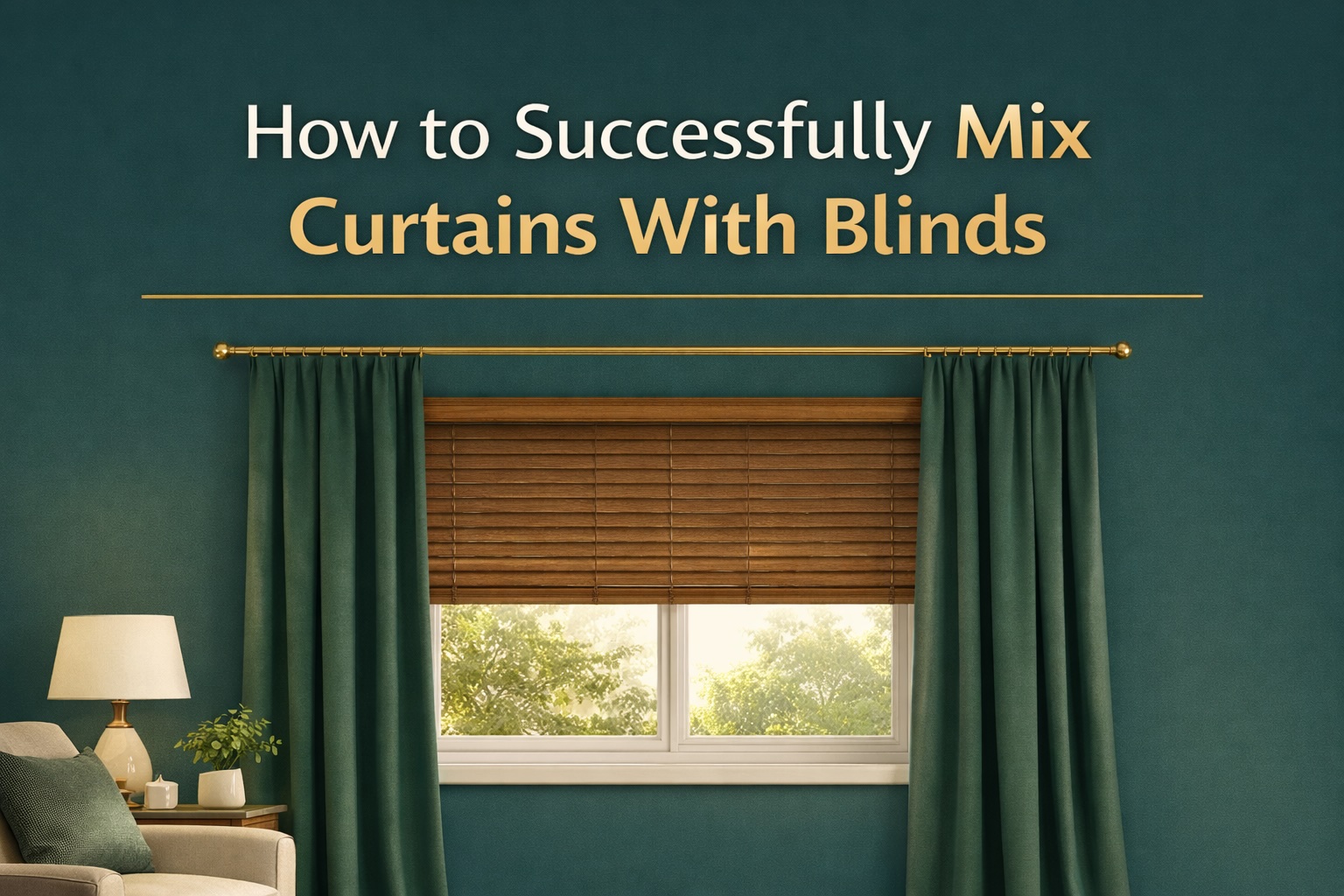
Mixing curtains with blinds is one of those interior design choices that instantly makes a room feel more considered. It is the difference between a window that looks purely functional and one that looks properly finished. When done well, this combination adds depth, balance, and a sense of intention that blinds or curtains alone often cannot achieve.
Despite this, many people shy away from the idea. The most common concerns are that the window will look too heavy, too busy, or visually cluttered. Others worry about clashing colours, awkward proportions, or losing the practical benefits of their blinds altogether. These concerns are understandable, but they usually stem from a lack of clear guidance rather than a flaw in the idea itself.
The reality is that combining curtains and blinds is not just a styling decision. It is one of the most effective ways to manage light, privacy, and insulation in a space, while also elevating the overall look of the room. The key lies in understanding scale, colour coordination, and how the two treatments should be installed together.
In this guide, we will break down exactly how to mix curtains with blinds successfully. From choosing the right pairings to avoiding common mistakes, you will learn how to create window treatments that look polished, balanced, and deliberately designed rather than overdone.
Why Mix Curtains With Blinds? Function Meets Fashion

At first glance, combining curtains and blinds might seem like doubling up. In reality, each serves a different purpose, and together they create a window treatment that is both more practical and more visually appealing than either option alone.
Layered Privacy and Light Control
Blinds offer precise control over light and privacy throughout the day. Options such as Venetian, wooden, or roller blinds allow you to tilt, raise, or lower them to let light in while still maintaining privacy. Curtains, by contrast, provide full coverage when needed and help frame the window, softening hard lines and adding visual warmth.
This layered approach means you can enjoy filtered daylight during the day and complete privacy in the evening, without compromising on style.
Improved Insulation and Comfort
Using both curtains and blinds also improves a room’s thermal performance. The space between the blind and the curtain creates an insulating air pocket that helps reduce heat loss in winter and limits heat gain in summer. While this will not replace proper insulation, it can make a noticeable difference to comfort, particularly in rooms with large or older windows.
A More Finished, Designer-Led Look
From a design perspective, curtains add height and elegance, while blinds keep the window looking clean and functional. Together, they give the impression that the window has been intentionally designed rather than simply covered. This is why the combination is so often used in hotels, show homes, and professionally styled interiors.
Choosing the Right Pairings: What Works Well Together

One of the biggest misconceptions about mixing curtains and blinds is that any combination will work as long as the colours match. In reality, some pairings naturally complement each other, while others can feel awkward or overly heavy. The key is to balance structure with softness.
Roman Blinds With Full-Length Curtains
This is one of the most timeless and versatile combinations. Roman blinds behave more like a tailored fabric feature than a traditional blind, which makes them easy to pair with long curtains. The blind provides neat light control within the window frame, while the curtains add softness, height, and a sense of luxury.
This pairing works particularly well in living rooms, dining rooms, and bedrooms where a warm, refined look is desired.
Wooden Blinds With Linen Curtains
Wooden or faux wood blinds bring structure and texture, while linen curtains soften the overall look. This contrast creates an effortlessly relaxed feel that suits farmhouse, coastal, and boho-inspired interiors.
Neutral wood tones and natural fabrics work best together, allowing the window to feel layered without becoming visually busy.
Roller Blinds With Sheer Curtains
For modern and minimalist spaces, roller blinds paired with sheer curtains offer the best of both worlds. The roller blind handles privacy and blackout when required, while the sheer curtain filters daylight and adds movement and softness.
This combination is ideal for contemporary living spaces and bedrooms where you want a clean aesthetic without sacrificing comfort.
Venetian Blinds With Tailored Curtains
Venetian blinds can work well with curtains, provided the proportions are kept slim and the colour palette is restrained. Neutral tones and simple curtain styles help prevent the window from feeling cluttered.
When paired carefully, this combination delivers excellent light control alongside a more polished, structured appearance.
The Golden Rule of Patterns, Colour and Texture

Mixing curtains with blinds often feels risky because of pattern and colour choices. Many people worry that combining two window treatments will make the space feel chaotic. In reality, a few simple guidelines are enough to keep everything looking balanced.
Solid and Pattern: The Safest Combination
If either the blind or the curtain features a pattern, the other should remain plain. For example, a floral or geometric Roman blind pairs best with a solid-colour curtain. Choosing a curtain shade that appears within the pattern helps tie the look together without drawing attention away from the window as a whole.
This approach creates interest while still feeling controlled and intentional.
Solid With Solid: Let Texture Do the Work
When both the blind and curtain are solid in colour, texture becomes the design feature. Pairing different materials, such as a smooth roller blind with a woven linen curtain or a bamboo blind with a velvet drape, adds depth without overwhelming the space.
This method is ideal for neutral interiors where subtle variation is more effective than bold contrast.
Why Pattern With Pattern Rarely Works
Combining two patterned treatments often leads to visual competition, especially when the patterns are similar in scale. Unless you are deliberately aiming for a bold, maximalist look, it is usually best to limit each window to one statement pattern.
Choosing a single “hero” element ensures the window feels styled rather than cluttered.
Installation and Proportions: How to Get the Balance Right

Even the best curtain and blind combination can fall flat if it is installed incorrectly. Proportions, placement, and clearance all play a major role in whether the window looks elegant or overcrowded.
Inside Mount vs Outside Mount
In most cases, blinds should be fitted inside the window recess. This keeps them visually contained and prevents them from adding unnecessary bulk. Curtains, on the other hand, work best when fitted outside the recess, mounted above and wider than the window frame.
This approach allows each element to do its job without competing for space and helps the window feel larger and more open.
Hang Curtains High and Wide
To create a more spacious feel, curtain poles should be mounted higher than the window frame, typically around 4 to 6 inches above it. This draws the eye upward and makes ceilings appear taller. Extending the pole beyond the sides of the window also allows the curtains to sit clear of the glass when open, letting in more light and avoiding crowding.
Allow Enough Clearance for Operation
When combining curtains and blinds, it is essential to ensure that one does not interfere with the other. Curtains should be able to open fully without catching on the blind, and the blind should operate freely without being obstructed by the curtain fabric or pole.
Proper clearance keeps the setup practical as well as visually clean.
How to Avoid the “Too Heavy” or Cluttered Look

The biggest hesitation people have about mixing curtains with blinds is the fear that the window will feel bulky or overdone. In practice, this only happens when a few key details are overlooked. With the right choices, the window will read as layered and intentional rather than crowded.
| To Avoid Bulk… | Do This |
|---|---|
| Slim the hardware | If the blind is chunky, such as a wide wooden or faux wood blind, choose a slim, minimalist curtain pole to balance it. |
| Keep a tight colour palette | Using colours from the same family creates a unified look and stops the window feeling visually split. |
| Choose the right curtain header | Ring-top or pinch pleat curtains sit flatter than grommets, which tend to project too far forward. |
| Watch fabric weight | Heavy curtains work best with structured blinds, while lighter curtains suit rollers or sheers. |
| Avoid over-fullness | Curtains that are too wide can overwhelm smaller windows. Aim for fullness, not excess. |
When these principles are followed, the window feels cohesive and well-proportioned, even with two treatments layered together.
Why Curtains and Blinds Work Better as a Team
When mixed correctly, curtains and blinds do not compete with each other, they complement each other. What often feels like a risky design choice is actually one of the most reliable ways to create a window that looks polished, balanced, and intentionally styled.
The secret lies in restraint and structure. Choosing compatible pairings, keeping colours and patterns under control, and installing each element in the right position ensures the window feels layered rather than cluttered. Blinds handle the practical demands of light and privacy, while curtains soften the space, add height, and frame the room.
Once you understand that this combination is about proportion rather than excess, the fear of bulk disappears. Instead, the window becomes a focal point that enhances both comfort and design.
Done well, mixing curtains with blinds is not an extra step, it is the finishing touch that makes a room feel complete.