Order Tracking
 0800 1422417

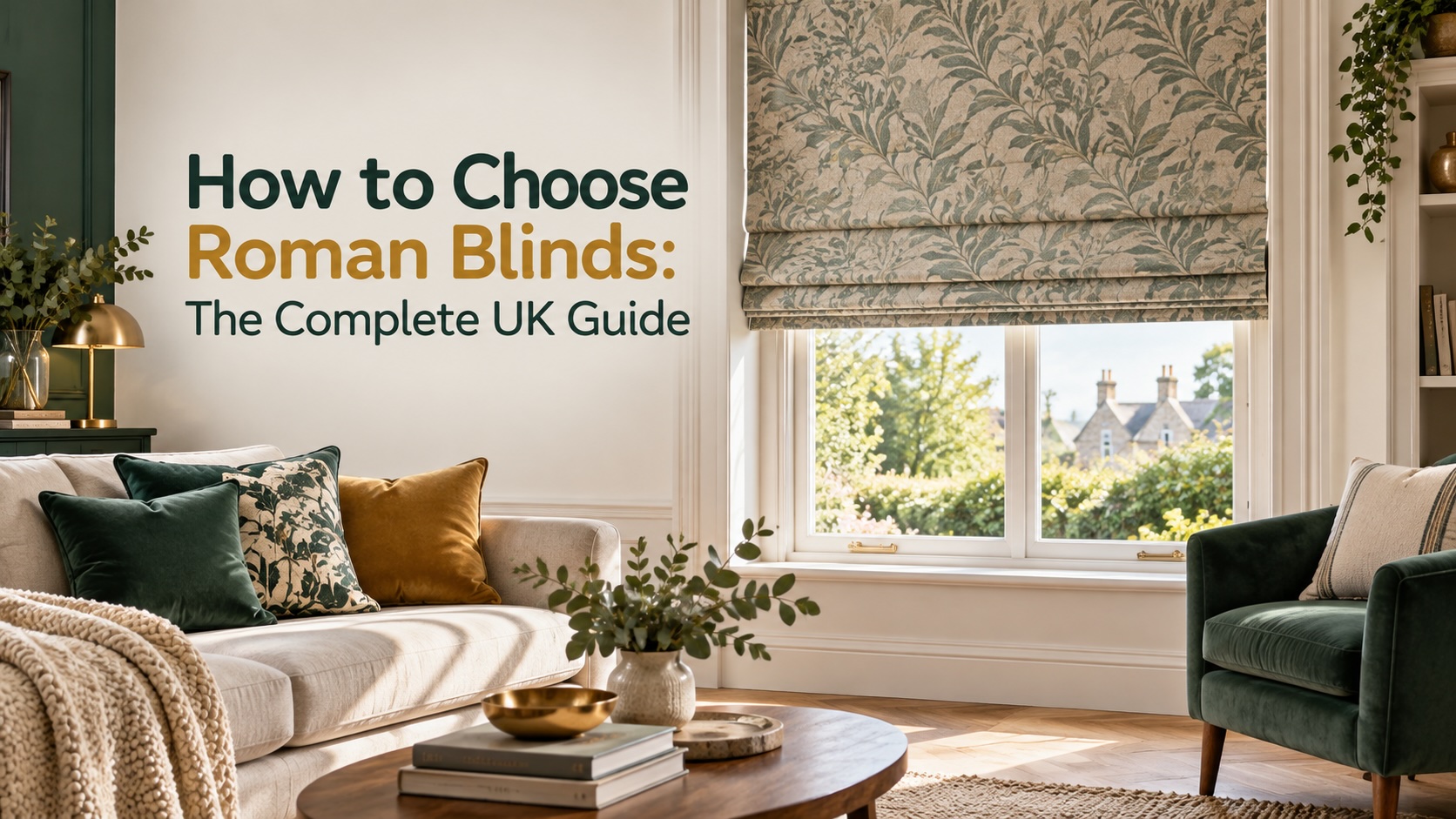
Roman blinds are one of the most decorative types of window covering, but choosing the right one involves more than simply picking a fabric you like.
The best Roman blind should suit the room, light level, privacy requirement, window size, interior style and way you want the blind to operate.
The main choices usually include:
- Blackout or dimout fabric
- Thermal or standard construction
- Plain or patterned fabric
- Sheer voile
- Chain control
- Headbox
- Colour and pattern scale
- Inside or outside recess fitting
- Designer or non-designer fabric collections
These decisions can change how the blind looks, how much light it reduces, how much fabric remains visible when raised and how well it works with the rest of the room.
A bedroom, for example, may benefit from a blackout or thermal Roman blind, while a living room may suit a dimout, plain or patterned design. A small window may look better with a restrained pattern, while a larger feature window can usually carry something bolder.
The right order is important.
Start with what the blind needs to do, then choose the fabric, style and colour.
In this guide, we look at every major decision involved in choosing a Roman blind, from blackout versus dimout and thermal performance to pattern scale, chain control, headboxes, room suitability and designer collections.
Roman Blind Buying Guide
Use the sections below to find the Roman blind information most relevant to your room, window and requirements.
1. Understanding Roman Blinds
2. Light Control
3. Thermal Performance
4. Fabric, Pattern & Colour
5. Controls & Mechanisms
6. Choosing Roman Blinds by Room
7. Choosing Roman Blinds by Interior Style
8. Designer Roman Blind Collections
- How to Choose a Roman Blind by Designer Brand
- William Morris Roman Blinds
- Laura Ashley Roman Blinds
- Cath Kidston Roman Blinds
- Sophie Allport Roman Blinds
- Emily Bond Roman Blinds
- Orla Kiely Roman Blinds
- Sara Miller Roman Blinds
- Ted Baker Roman Blinds
- Bluebellgray Roman Blinds
- Land & Shore Roman Blinds
- Shabby Chic by Rachel Ashwell Roman Blinds
- DotcomBlind Roman Blinds
9. Measuring, Fit & Window Size
10. Mistakes & What to Avoid
11. Comparisons & Final Buying Decision
Quick Answer: How Do You Choose the Right Roman Blind?
The best way to choose a Roman blind is to start with function first, then style.
Ask what the blind needs to do before choosing colour or pattern.
A useful starting point is:
- Bedroom: Blackout or Thermal Roman blind
- Living room: Dimout, Plain or Patterned Roman blind
- Dining room: Plain or Patterned Roman blind
- Home office: Dimout or Plain Roman blind
- Cold or draught-prone room: Thermal Roman blind
- Feature window: Patterned or Designer Roman blind
- Minimal interior: Plain Roman blind
- Soft filtered daylight: Sheer Voile Roman blind
Choose Light Control First
If reducing light is the priority, decide between:
Blackout for stronger light reduction.
Dimout where you want privacy and softer daylight without making the room very dark.
Sheer Voile where the goal is mainly to soften daylight rather than block it.
Then Consider Thermal Performance
If the room feels cold or the window is a noticeable source of heat loss, a Thermal Roman blind may be the better choice.
Thermal and blackout are not the same feature, so check whether the blind offers one or both.
Then Choose Plain or Patterned
Choose a Plain Roman blind if the room already contains strong pattern, wallpaper or decorative furniture.
Choose a Patterned Roman blind if the window is intended to become more of a focal point.
Finally, Consider Operation and Fit
Before ordering, check:
- Whether you want the blind inside or outside the recess
- Available recess depth
- Control side
- Whether a headbox is preferred
- How much fabric will stack at the top
- Whether curtains will also be used
The simplest rule is:
choose the performance first + choose the fabric second + choose the colour and design last.
What Is a Roman Blind?
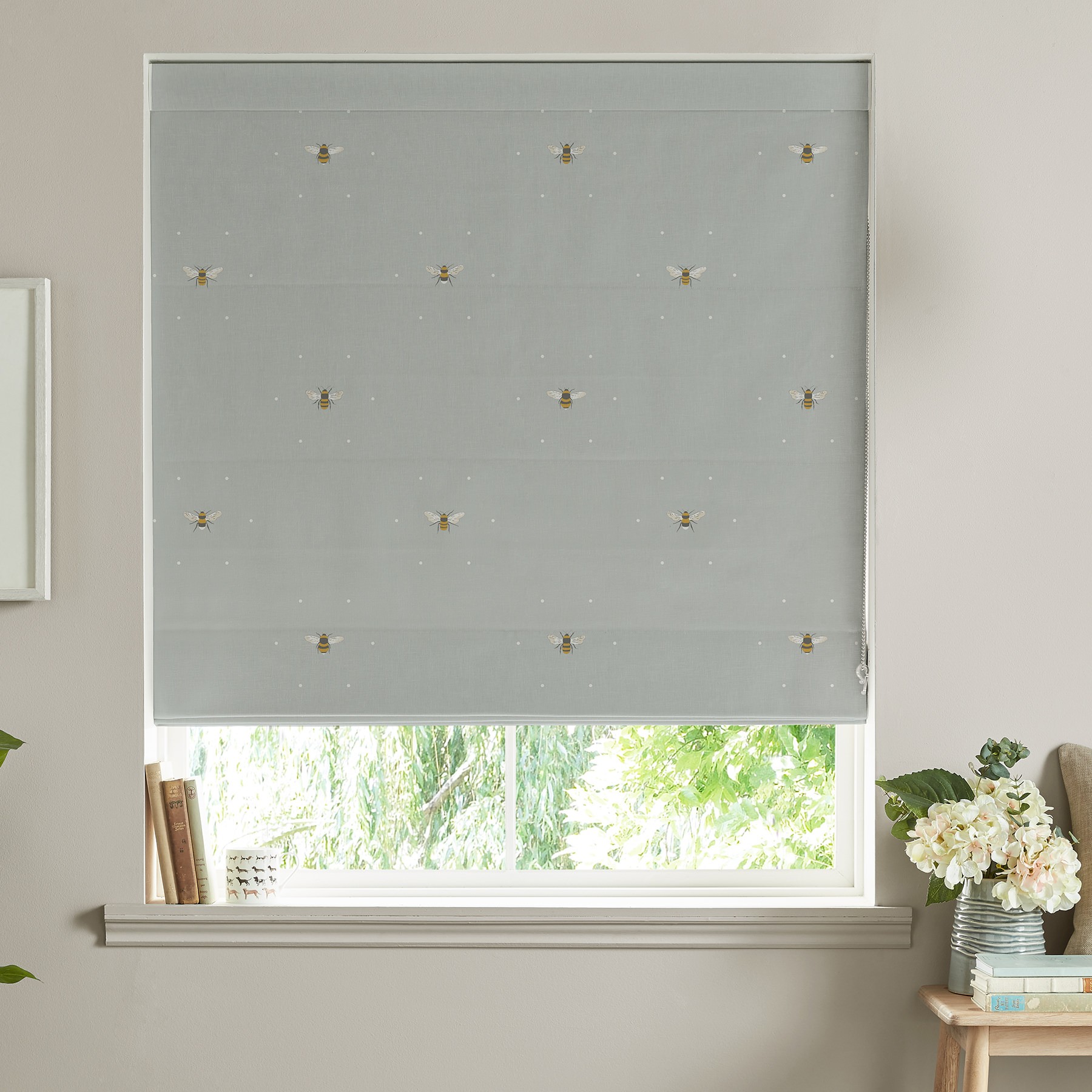
A Roman blind is a fabric window blind that folds into neat horizontal pleats as it is raised.
When fully lowered, the fabric sits relatively flat across the window. As the blind is raised, the fabric stacks into soft folds at the top.
This gives Roman blinds a more decorative appearance than many other blind types.
What Makes Roman Blinds Different?
Roman blinds are primarily about combining:
- Fabric
- Structure
- Soft folds
- Light control
- Decorative impact
They can be made in a wide range of colours, textures and patterns, which is one of the reasons they work in such a broad range of interiors.
Roman Blind Fabric Options
Roman blinds can be available in several different fabric types, including:
- Plain fabric
- Patterned fabric
- Dimout fabric
- Blackout fabric
- Thermal fabric
- Sheer voile
The fabric choice changes both the appearance and the practical performance of the blind.
Roman Blinds Can Be Subtle or Decorative
A plain neutral Roman blind can sit quietly within a room.
A patterned Roman blind can become a much stronger feature.
This makes Roman blinds suitable for everything from minimalist bedrooms to traditional living rooms and more decorative period interiors.
What to Remember Before Choosing One
Unlike Roller blinds, Roman blinds do not disappear almost completely when raised.
The folded fabric remains visible at the top of the window.
That means the fabric thickness, window height and pattern choice all affect how the blind looks in both its open and closed positions.
The key point is:
A Roman blind is not just a practical window covering. It is also a significant fabric feature within the room.
How Roman Blinds Actually Fold
Roman blinds work by drawing the fabric upwards into a series of horizontal folds.
When the blind is lowered, the fabric sits relatively flat. As it rises, each section folds neatly behind or beneath the next, creating the characteristic layered appearance.
The Fold Stack Is Part of the Design
Because the fabric gathers rather than rolls away, a Roman blind always leaves a visible stack at the top when raised.
The size of that stack depends on factors such as:
- The overall height of the blind
- The thickness of the fabric
- The lining used
- The number and depth of the folds
- The construction of the blind
A taller or more heavily lined Roman blind will generally create a more substantial stack.
Pattern Changes as the Blind Is Raised
This matters particularly with patterned fabrics.
When the blind is fully lowered, the design can be seen across the full fabric panel.
When raised, that pattern becomes compressed into the folds.
This means a large-scale floral, geometric or heritage print may look very different in the open position.
Why This Matters When Choosing Fabric
If the blind will often remain partly raised, consider how the fabric works both:
- Fully lowered
- Partially raised
- Fully stacked
A pattern that looks excellent across a flat sample may become much busier once folded.
Plain Fabrics Are More Forgiving
Plain Roman blinds are generally easier to accommodate visually because the folds become the main feature.
Textured plains can work particularly well because they add depth without relying on a printed design.
Patterned Fabrics Need More Thought
With patterned Roman blinds, pay attention to:
- Pattern scale
- Repeat size
- Direction of the design
- How much of the pattern will remain visible when raised
The main takeaway is:
A Roman blind should be chosen for how it looks folded as well as how it looks fully lowered.
How Much Space Does a Roman Blind Take Up When Raised?
A Roman blind does not disappear completely when it is opened. The fabric folds into a visible stack at the top of the window, so the amount of space this takes up should be considered before ordering.
What Affects the Size of the Stack?
The raised stack is influenced by:
- The height of the blind
- Fabric thickness
- Lining thickness
- Whether the blind is thermal or blackout
- The depth and number of folds
- The construction of the headrail or headbox
A taller blind will generally create a larger stack than a shorter one, while heavier fabrics and thicker linings can add more bulk.
Why the Stack Matters
The raised fabric can cover part of the upper glazing.
This matters particularly where:
- The window is small
- Natural light is limited
- The blind sits inside the recess
- The top section of the window is important for daylight
- The room relies on the window for a sense of openness
On a large window, the stack may feel proportionate. On a small or narrow window, it can become much more noticeable.
Inside-Recess Fitting
If the Roman blind sits inside the recess, the folded stack remains within the window opening.
This can create a neat integrated appearance, but it also means some glazing may stay covered even when the blind is fully raised.
Outside-Recess Fitting
Mounting the Roman blind above the recess can sometimes allow more of the glazing to remain visible.
If there is enough wall space above the window, the blind can be positioned higher so that more of the folded fabric sits above the opening rather than directly in front of the glass.
Fabric Choice Also Matters
A lightweight plain Roman blind will generally look less bulky when raised than a heavily lined or thicker decorative fabric.
That does not necessarily make one better than the other, but it should be part of the decision.
Practical Takeaway
Before choosing a Roman blind, consider not only how it looks when fully lowered, but also how much of the window you are comfortable covering when it is raised.
For smaller windows or rooms where daylight is especially important, the stack size can be just as important as the fabric design.
Blackout Roman Blinds: When Are They the Best Choice?
Blackout Roman blinds are the strongest option where reducing incoming light is the main priority.
They are particularly well suited to rooms where the blind needs to do more than simply provide privacy.
Best Rooms for Blackout Roman Blinds
They are especially useful in:
- Bedrooms
- Children’s rooms
- Guest bedrooms
- Media rooms
- Rooms affected by street lighting
- Spaces that receive strong early-morning or evening sun
What Blackout Fabric Actually Does
Blackout fabric is designed to prevent light passing through the fabric itself.
That is useful where a standard decorative or dimout Roman blind would allow too much light into the room.
However, blackout fabric does not automatically mean complete darkness.
Light can still enter around the edges of the blind depending on:
- Whether the blind sits inside or outside the recess
- The size of the gaps around the blind
- How closely the blind overlaps the window opening
This is important when choosing a Roman blind for a bedroom.
Inside-Recess vs Outside-Recess Blackout
An inside-recess Roman blind can look very neat, but small gaps around the edges may allow more light through.
An outside-recess Roman blind can provide greater overlap around the window opening, which may help reduce edge light.
The best fitting position depends on the window and the look you want.
Blackout Does Not Have to Mean Dark Fabric
A blackout Roman blind can still be:
- White
- Cream
- Beige
- Soft grey
- Pastel
- Patterned
The light-blocking performance comes from the blackout construction, not simply from choosing a dark colour.
Best Overall Use
Choose a Blackout Roman blind where the priorities are:
stronger light reduction + privacy + a softer decorative appearance than a simpler blind
For bedrooms in particular, blackout is usually the first Roman blind feature to consider before choosing colour, pattern or brand.
Dimout Roman Blinds: When Are They Better Than Blackout?
Dimout Roman blinds are often the better choice where you want to reduce light and improve privacy without making the room feel completely dark.
They sit between standard decorative fabric and full blackout.
Best Rooms for Dimout Roman Blinds
Dimout Roman blinds work particularly well in:
- Living rooms
- Dining rooms
- Guest rooms
- Home offices
- Bedrooms where full blackout is not essential
- Rooms that receive strong daylight but still need to feel bright
How Dimout Fabric Differs From Blackout
Dimout fabric reduces the amount of light passing through the blind, but it does not block it as completely as blackout fabric.
The result is usually a softer, more filtered effect.
This can make dimout a better option where the aim is to:
- Reduce glare
- Improve privacy
- Soften strong daylight
- Keep the room feeling comfortable rather than dark
Better for Daytime Living Spaces
In living rooms and dining rooms, full blackout can sometimes feel too heavy during the day.
Dimout fabric allows more natural light to remain in the room while still giving the Roman blind more practical light control than a lighter decorative fabric.
Dimout Can Also Suit Bedrooms
Not every bedroom needs full blackout.
A guest bedroom, for example, may be perfectly suited to a dimout Roman blind if the room is not heavily affected by street lighting or early morning sun.
Pattern and Colour Options
Dimout Roman blinds can still be decorative.
They can be:
- Plain
- Patterned
- Neutral
- Colourful
- Traditional
- Contemporary
The dimout performance relates to the fabric construction rather than the visual style.
Dimout vs Blackout: The Simple Choice
Choose Blackout where stronger light reduction is the priority.
Choose Dimout where you want:
privacy + softer daylight + reduced glare + a lighter daytime feel
For living rooms and other daytime spaces, dimout is often the more balanced Roman blind option.
Sheer Voile Roman Blinds: When Do They Make Sense?
Sheer voile Roman blinds are best where the aim is to soften daylight and add a decorative fabric layer without making the window feel heavy.
They are very different from blackout or dimout options because they are designed to remain light and translucent.
Best Rooms for Sheer Voile Roman Blinds
They can work particularly well in:
- Living rooms
- Dining rooms
- Bedrooms where privacy is provided by another treatment
- Conservatories
- Rooms with attractive views
- Windows already paired with curtains
What Sheer Voile Actually Does
A sheer voile Roman blind filters rather than blocks light.
It can help:
- Soften bright daylight
- Reduce harsh contrast at the window
- Add a softer decorative finish
- Preserve a sense of openness
The room generally remains much brighter than it would with dimout or blackout fabric.
Privacy Is Limited
This is the most important point.
A sheer voile Roman blind should not be treated as a strong privacy solution, especially after dark when internal lighting can make the room more visible from outside.
If privacy is important, voile is usually better used:
- In a room that is not overlooked
- With curtains
- As part of a layered treatment
- Where daytime softness matters more than night-time screening
Good for Layering With Curtains
Sheer voile Roman blinds can work especially well with full-length curtains.
The blind can remain lowered during the day to soften the light, while the curtains provide stronger privacy when needed.
This creates a lighter alternative to using a heavier Roman blind behind curtains.
Best Overall Use
Choose a Sheer Voile Roman blind where the priorities are:
soft daylight + decorative layering + a light, airy appearance
Do not choose it where the main requirement is blackout, strong privacy or significant light reduction.
Blackout vs Dimout vs Sheer Roman Blinds
The easiest way to choose between blackout, dimout and sheer voile Roman blinds is to decide how much light and privacy you actually need.
Each fabric type serves a different purpose.
| Fabric Type | Light Control | Privacy | Best For | Main Limitation |
|---|---|---|---|---|
| Blackout | Strongest light reduction | High when lowered | Bedrooms, children’s rooms, media rooms | Some edge light may remain depending on fitting |
| Dimout | Moderate light reduction | Good when lowered | Living rooms, dining rooms, home offices | Will not provide full blackout |
| Sheer Voile | Filters and softens daylight | Limited, especially at night | Bright living spaces, layered windows, decorative use | Not suitable where strong privacy or darkness is required |
Choose Blackout If Darkness Is the Priority
Blackout is usually the best starting point for bedrooms and rooms affected by strong exterior light.
It is also useful where the blind needs to provide a strong sense of enclosure when lowered.
Choose Dimout for a Balance of Light and Privacy
Dimout is often more suitable for everyday living spaces.
It reduces glare and bright sunlight without making the room feel as closed off as blackout fabric can.
Choose Sheer Voile for Softness and Daylight
Sheer voile works best where the blind is primarily decorative or where preserving natural light matters more than screening the room.
It is especially effective as part of a layered window treatment.
Which One Is Best?
There is no single best option.
The right choice depends on the room:
- Need maximum light reduction? Choose Blackout.
- Need privacy without making the room very dark? Choose Dimout.
- Want filtered daylight and a softer look? Choose Sheer Voile.
For most buyers, this is one of the first decisions to make before moving on to colour, pattern or designer collection.
What Is a Thermal Roman Blind?
A thermal Roman blind is designed to provide an extra layer of insulation at the window, helping to reduce heat transfer between the room and the glass.
The exact construction varies by product, but thermal performance is typically achieved through a more insulating fabric, lining or layered construction.
How Thermal Roman Blinds Can Help
Windows are often one of the weaker points in a room’s thermal envelope.
A properly fitted Roman blind can add an extra fabric layer between the room and the window, which may help:
- Reduce heat loss during colder weather
- Reduce the feeling of cold radiating from the glass
- Improve comfort around windows
- Provide some additional protection against heat entering during warmer periods
The effect will depend on the blind construction, fit, glazing and window type.
Thermal Does Not Mean the Same as Blackout
This is an important distinction.
A Roman blind can be:
- Thermal but not blackout
- Blackout but not specifically thermal
- Both thermal and blackout
- Neither
Blackout describes light control.
Thermal describes insulating performance.
The two features can overlap, but they are not interchangeable.
Where Thermal Roman Blinds Are Most Useful
They can be particularly worthwhile in:
- Bedrooms
- Older properties
- North-facing rooms
- Rooms with larger areas of glazing
- Period homes
- Rooms where the window area feels noticeably colder in winter
Thermal Roman Blinds and Existing Windows
A thermal Roman blind can improve comfort, but it should not be treated as a replacement for effective glazing, draught-proofing or window maintenance.
If a window is poorly sealed, the underlying issue should still be addressed.
Choosing Thermal for the Right Reason
Choose a Thermal Roman blind where comfort and insulation support are important priorities.
If your main concern is darkness rather than heat transfer, look first at blackout performance. If both matter, check whether the Roman blind offers both thermal and blackout features.
When Should You Choose a Thermal Roman Blind?
A Thermal Roman blind is most useful where reducing heat loss and improving comfort around the window are genuine priorities.
It is not automatically the best option for every room, but it can make sense in several common situations.
Older Properties
Older homes often have:
- Larger areas of exposed glazing
- Less efficient windows
- More noticeable cold spots around window openings
A Thermal Roman blind can add an extra insulating layer and make the room feel more comfortable, particularly during colder months.
North-Facing Rooms
North-facing rooms tend to receive less direct sunlight and can feel cooler for longer periods of the day.
A thermal blind can be useful where the window contributes to that colder feel.
Bedrooms
Bedrooms are a strong use case because thermal performance and light control are often both important.
A Thermal Roman blind may be particularly suitable for:
- Bedrooms above garages
- Rooms with older windows
- North-facing bedrooms
- Rooms that feel noticeably colder overnight
If darkness is also important, check whether the blind combines thermal and blackout properties.
Large Windows
The larger the glazed area, the more noticeable heat transfer can become.
Roman blinds on larger windows can provide an additional fabric barrier, although the blind must still be suitable for the width and weight involved.
Period Homes
Period properties can suit Roman blinds particularly well from a design perspective, but they may also benefit from the additional insulating layer that thermal construction provides.
This can be useful in homes with:
- Sash windows
- Bay windows
- Traditional timber frames
- Older glazing
Rooms With Noticeable Draughts
A thermal blind may help improve comfort near the window, but it should not be relied on to solve an actual draught problem.
If air is entering around the frame, the window itself may need:
- Adjustment
- Sealing
- Maintenance
- Draught-proofing
The blind should be seen as an additional layer rather than a repair.
When Thermal May Not Be Necessary
You may not need a thermal Roman blind if:
- The room already has highly efficient glazing
- Heat loss is not a concern
- The main priority is simply decoration
- A lighter fabric better suits the space
The Practical Rule
Choose a Thermal Roman blind where the window is a noticeable weak point for comfort.
Then decide whether you also need:
- Blackout
- Dimout
- Plain fabric
- Patterned fabric
Thermal performance should be one part of the decision, not the only one.
Thermal vs Blackout Roman Blinds: What Is the Difference?
Thermal and blackout Roman blinds are often grouped together, but they are designed to solve different problems.
The simplest distinction is:
- Blackout is about reducing light.
- Thermal is about reducing heat transfer.
A Roman blind can offer one of these features, both of them, or neither.
What Does a Blackout Roman Blind Do?
A blackout Roman blind is designed to stop most light from passing through the fabric itself.
It is most useful where you want:
- A darker bedroom
- Better control of early morning light
- Reduced disturbance from street lighting
- Stronger light control in media rooms
The main purpose is visual comfort and darkness rather than insulation.
What Does a Thermal Roman Blind Do?
A thermal Roman blind is designed to add an insulating layer at the window.
It is most useful where you want:
- Better comfort near cold windows
- Reduced heat loss
- Additional insulation in older properties
- A warmer feel in bedrooms or north-facing rooms
Its main purpose is thermal performance rather than light reduction.
Can a Roman Blind Be Both Thermal and Blackout?
Yes.
Some Roman blinds combine thermal and blackout properties, which can be particularly useful in bedrooms.
This gives you:
- Stronger light reduction
- Additional insulation
- More privacy when the blind is lowered
If both features matter, check the product specification rather than assuming that one automatically includes the other.
Which Should You Choose?
Choose Blackout if your main priority is reducing light.
Choose Thermal if your main priority is improving insulation and comfort.
Choose Thermal + Blackout if you want both.
Quick Comparison
| Feature | Main Purpose | Best For |
|---|---|---|
| Blackout | Reducing light | Bedrooms, children’s rooms, media rooms |
| Thermal | Reducing heat transfer | Older homes, colder rooms, north-facing rooms |
| Thermal + Blackout | Light reduction and insulation | Bedrooms where both darkness and warmth matter |
The key is not to assume that a blackout Roman blind is automatically thermal, or that a thermal Roman blind will provide blackout performance. Always check which features are actually specified.
Plain Roman Blinds: When Are They the Better Choice?
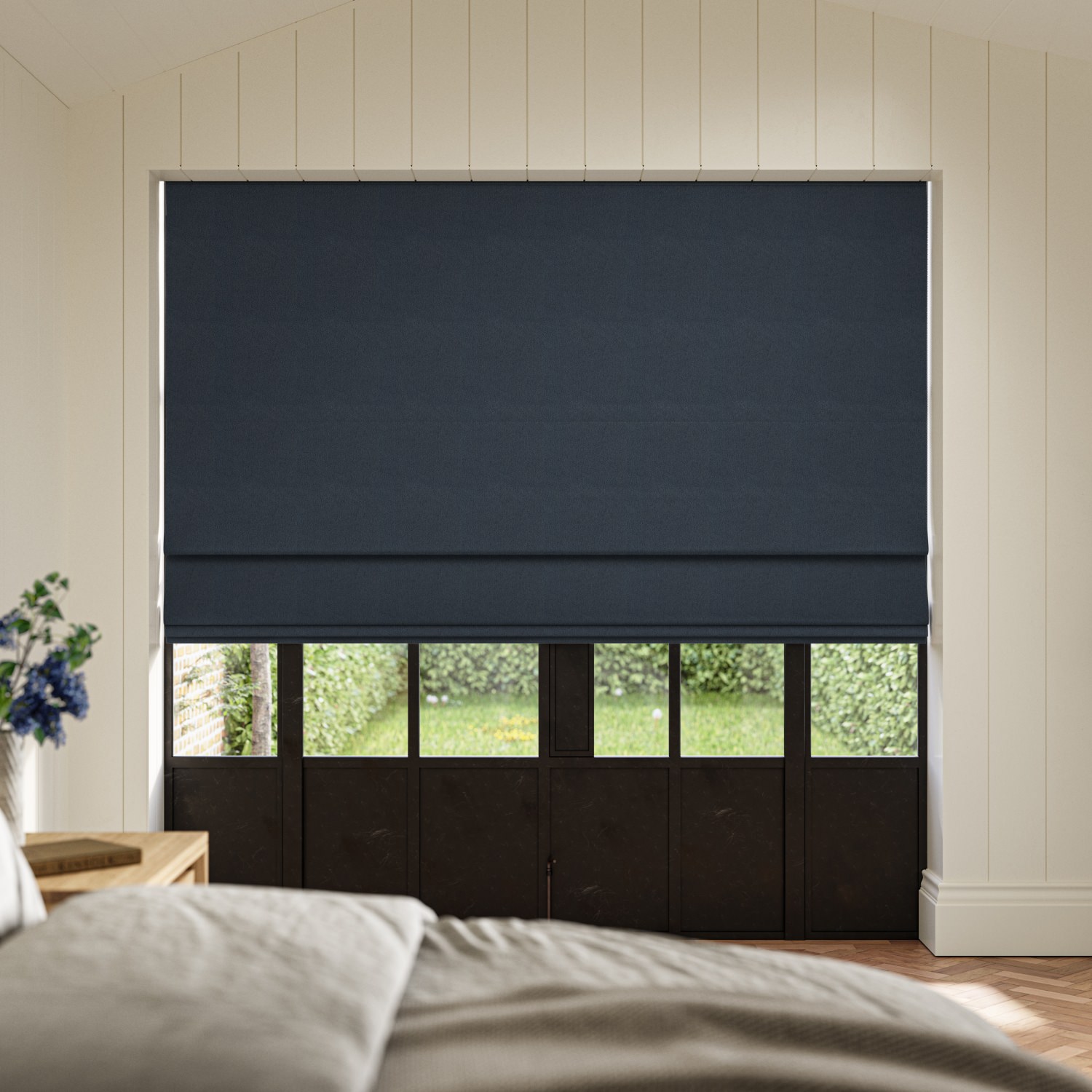
Plain Roman blinds are often the best choice when you want the window treatment to feel calm, flexible and easy to coordinate.
They can work in almost any interior because the focus is on colour, texture and the soft folds of the blind rather than on a printed design.
Best Rooms for Plain Roman Blinds
They are particularly useful in:
- Modern living rooms
- Minimalist bedrooms
- Home offices
- Dining rooms with patterned wallpaper
- Rooms with statement furniture
- Interiors where curtains or upholstery already provide pattern
Why Plain Fabric Is So Versatile
A plain Roman blind can either:
- Blend into the room
- Complement an existing colour scheme
- Create a subtle contrast
- Add texture without adding visual clutter
This makes plain fabric a safer choice where there is already a lot happening elsewhere in the room.
Good for Smaller Windows
Plain Roman blinds can also work well on smaller windows because there is no pattern repeat to crop awkwardly.
The folds remain visually simple whether the blind is:
- Fully lowered
- Partially raised
- Fully stacked
Plain Does Not Have to Mean Boring
A plain Roman blind can still have plenty of character through:
- Fabric texture
- Weave
- Colour depth
- Soft neutral tones
- Richer colours such as navy, olive or charcoal
The structure of the Roman blind itself also adds softness and depth.
Best for Layering With Other Patterns
If the room includes:
- Floral curtains
- Patterned wallpaper
- Geometric cushions
- Strong artwork
- Decorative upholstery
a plain Roman blind can help balance the scheme rather than compete with it.
When Plain Is Usually the Better Choice
Choose a Plain Roman blind when you want:
versatility + visual calm + easy coordination + a softer alternative to a more decorative patterned blind
It is often the best starting point when you are unsure whether a patterned Roman blind might make the room feel too busy.
Patterned Roman Blinds: When Should You Choose Them?
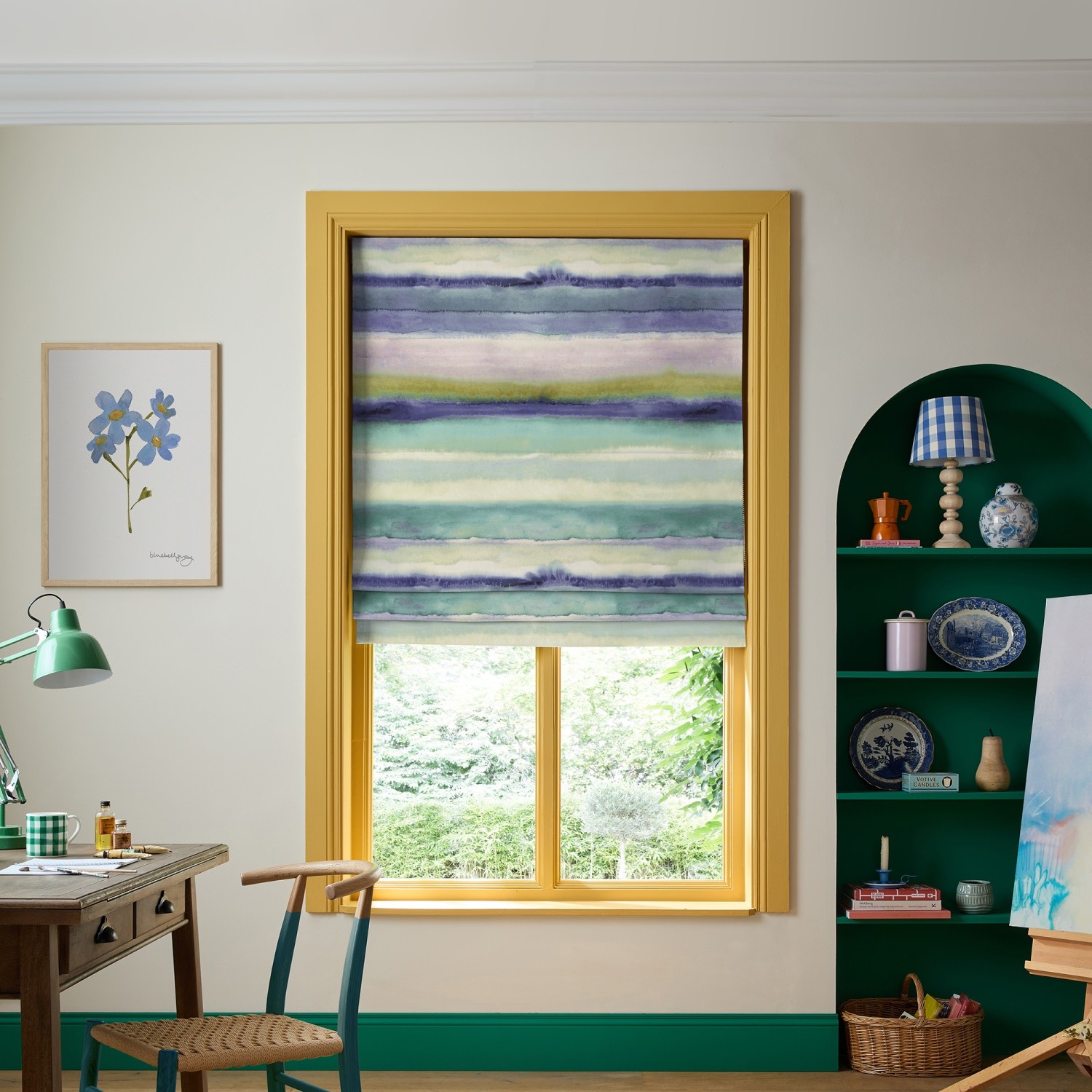
Patterned Roman blinds are a strong choice when you want the window to become part of the room’s decorative scheme rather than simply blend into the background.
Because the fabric is displayed across a broad, relatively flat surface when the blind is lowered, Roman blinds can show off pattern particularly well.
Best Rooms for Patterned Roman Blinds
They can work especially well in:
- Living rooms
- Bedrooms
- Dining rooms
- Period properties
- Country and cottage interiors
- Rooms with plain walls
- Spaces where the window is intended to become a focal point
Pattern Works Best When the Rest of the Room Is Controlled
A patterned Roman blind usually has more impact when it is not competing with too many other strong elements.
It can work particularly well with:
- Plain painted walls
- Neutral upholstery
- Simple bedding
- Restrained curtains
- Natural wood furniture
- A limited colour palette
Large Patterns vs Small Patterns
Pattern scale matters.
A large floral or geometric design can look striking on a wide Roman blind, but may feel oversized on a narrow window.
Smaller repeats are often easier to use on compact blinds because more of the pattern remains visible.
Pattern Placement Matters
With Roman blinds, the fabric folds as the blind is raised.
This means a design that looks balanced when the blind is fully lowered may appear very different when it is partly raised.
Before choosing a bold pattern, consider:
- The size of the repeat
- Where the main motifs will sit
- How much of the design will disappear into the folds
- Whether the blind will usually be raised or lowered
Patterned Roman Blinds in Traditional Interiors
Roman blinds are particularly suited to decorative fabrics such as:
- Florals
- Botanicals
- Heritage prints
- Nature-inspired designs
- Soft traditional patterns
These can work especially well in period homes, country interiors and more classic rooms.
Patterned Roman Blinds in Contemporary Interiors
Pattern does not have to mean traditional.
Geometric, abstract and graphic designs can work well in:
- Mid-century interiors
- Modern homes
- Colour-led rooms
- More eclectic contemporary spaces
When Patterned Is the Better Choice
Choose a Patterned Roman blind when you want:
a stronger decorative feature + more personality at the window + a fabric that contributes directly to the room’s style
The safest approach is usually to let the patterned Roman blind become one of the main visual features rather than surrounding it with several competing patterns.
Plain vs Patterned Roman Blinds
Choosing between a plain and patterned Roman blind is mainly about deciding how much visual attention you want the window to attract.
Both can work well. The better choice depends on the room, the size of the window and how much pattern is already present elsewhere.
Choose Plain if the Room Is Already Busy
A plain Roman blind is usually the safer option where the room already includes:
- Patterned wallpaper
- Printed curtains
- Decorative upholstery
- Strong artwork
- Bold rugs
- Several accent colours
The blind can support the scheme without competing with it.
Choose Patterned if the Window Should Be a Feature
A patterned Roman blind works well when the surrounding room is relatively restrained.
It can add:
- Colour
- Character
- Movement
- Decorative detail
- A stronger focal point
This is particularly effective on windows that naturally draw attention.
Window Size Matters
On a smaller window, a plain blind or small-scale pattern can often look more balanced.
On a larger window, there is generally more room for:
- Larger motifs
- Wider pattern repeats
- Stronger colour
- More decorative designs
The key is to make sure enough of the pattern is visible for it to make sense.
Pattern Scale Is More Important Than Pattern Type
A floral design is not automatically more traditional, and a geometric design is not automatically more modern.
Scale, colour and context matter just as much.
For example:
- A large botanical print can feel contemporary in a restrained palette
- A small geometric repeat can feel subtle and traditional
- A bold retro print can become the main feature of the room
Consider the Blind in Both Positions
A Roman blind looks very different when raised.
A plain fabric remains visually consistent.
A patterned fabric becomes compressed into folds, so large motifs may disappear or become fragmented.
This is worth considering if the blind will spend much of the day partially raised.
A Simple Decision Rule
Choose Plain when you want:
- Flexibility
- Calm
- Easy coordination
- A quieter window treatment
Choose Patterned when you want:
- More personality
- A decorative focal point
- Stronger colour or design
- The blind to contribute more visibly to the interior
Neither is inherently better. The right choice is the one that gives the window the correct visual role within the room.
How to Choose the Right Pattern Scale for a Roman Blind
Pattern scale can make a major difference to how a Roman blind looks once it is made up.
A design that looks balanced on a fabric sample can feel very different when it is spread across a full window or divided into folds.
Small Windows Usually Suit Smaller Repeats
On narrower or shorter Roman blinds, smaller-scale patterns are often easier to use.
They allow more of the design to remain visible and reduce the risk of:
- Large motifs being cut off
- A single oversized element dominating the blind
- The pattern looking incomplete
- The folds breaking up the design too heavily
Small florals, fine geometrics and compact repeating motifs can all work well.
Larger Windows Can Carry Bigger Patterns
A wide Roman blind gives larger-scale patterns more room to breathe.
This can suit:
- Large florals
- Botanical designs
- Bold geometrics
- Heritage prints
- More decorative designer fabrics
A larger surface allows the pattern repeat to be seen more clearly.
Consider the Pattern Repeat
The repeat is the distance before the design begins again.
A large repeat can look impressive on a large blind, but on a narrow blind only part of the design may be visible.
Before choosing a fabric, consider whether the repeat suits the width and drop of the finished blind.
Think About the Blind When Raised
Roman blinds compress the fabric into folds.
This means a large motif that looks balanced when the blind is lowered may become fragmented once raised.
If the blind will spend much of the day open, a smaller or more evenly distributed pattern may remain visually coherent.
Multiple Roman Blinds Need Extra Thought
If several Roman blinds sit next to each other, such as across a bay window or a row of windows, pattern scale becomes even more important.
A strong repeat can look effective across multiple blinds, but differences in pattern placement may become noticeable.
If you want a calmer overall appearance, a smaller repeat or plain fabric may be easier to coordinate.
Pattern Scale Should Match the Room Too
The window itself is not the only factor.
A large pattern can work well in a spacious room with simple furniture and broad wall areas.
A smaller pattern may be more suitable where:
- The room is compact
- There are several other patterns
- The décor is already detailed
- The blind should support rather than dominate the scheme
A Useful Rule of Thumb
- Small window: small or medium-scale pattern
- Medium window: small, medium or controlled large-scale pattern
- Large feature window: medium or large-scale pattern
- Busy room: smaller or quieter pattern
- Minimal room: stronger pattern can work well
The aim is not to choose the biggest or smallest design, but to select a pattern that still looks balanced when the Roman blind is fully lowered, partly raised and completely stacked.
How to Choose Roman Blind Colour
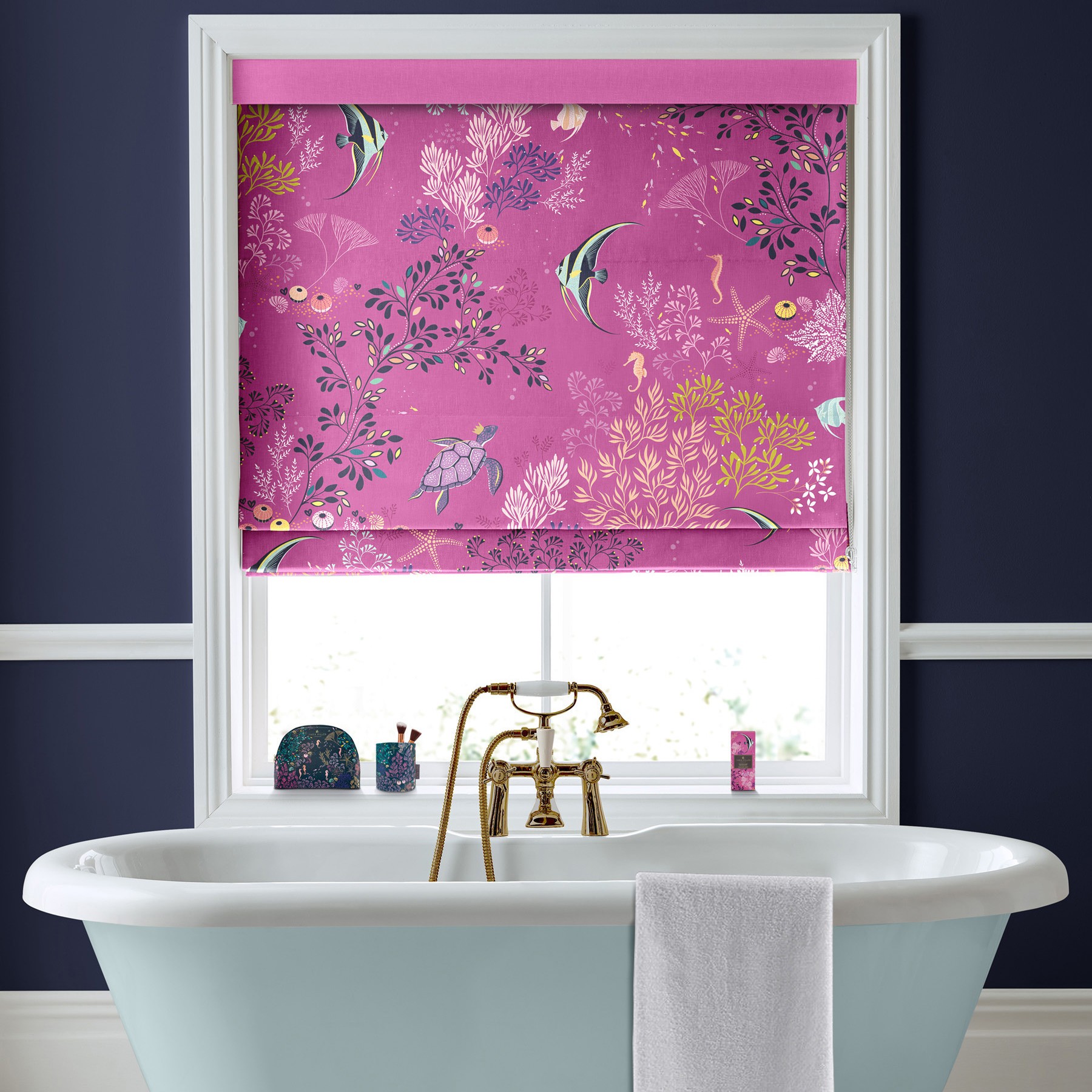
Once you have decided on the practical features of the blind, colour becomes one of the most important design choices.
The best Roman blind colour should work with the walls, flooring, furniture, existing fabrics and overall mood of the room.
Start With the Role of the Blind
Decide whether the Roman blind should:
- Blend into the room
- Coordinate with existing colours
- Create contrast
- Become a focal point
That decision will usually narrow the colour choice quickly.
Choose Tonal Colours for a Calmer Look
A tonal Roman blind uses a colour that sits close to the surrounding scheme.
For example:
- Cream blind with warm white walls
- Taupe blind with beige interiors
- Soft grey blind with cooler neutral walls
- Sage blind with muted green décor
This usually creates a softer, more integrated appearance.
Use Contrast When You Want the Blind to Stand Out
A darker or more saturated Roman blind can give the window more definition.
Examples include:
- Navy against warm white
- Olive against cream
- Charcoal against pale grey
- Deep green against neutral walls
This approach works particularly well when the Roman blind is intended to become part of the room’s design rather than disappear into it.
Watch Warm and Cool Undertones
Two neutral colours can still clash if their undertones are different.
For example:
- Warm cream can look awkward beside a cool blue-grey
- Warm taupe may not sit comfortably with a very cool white
- Yellow-based beige can conflict with a pink-based neutral
The safest approach is to compare fabric samples in the actual room.
Consider Natural Light
Roman blind colours can look very different depending on the direction of the window and the time of day.
A colour may appear:
- Warmer in strong sunlight
- Cooler in a north-facing room
- Darker when backlit
- More saturated under artificial lighting
This is especially important with deeper colours and subtle neutrals.
Dark Colours Add Visual Weight
A dark Roman blind can create a strong, tailored feature.
However, on a small window or in a compact room, very dark fabric can make the window feel more visually dominant.
That may be desirable, but it should be intentional.
Light Colours Keep the Window Softer
White, cream, stone and pale grey Roman blinds can make the window feel quieter and lighter.
They work particularly well in:
- Minimal interiors
- Small rooms
- Rooms with patterned wallpaper
- Schemes where other elements should take priority
Repeat the Colour Elsewhere
If you choose a stronger Roman blind colour, repeating it elsewhere in small amounts can help the room feel more considered.
This could be through:
- Cushions
- Upholstery
- Artwork
- Rugs
- Decorative accessories
The colours do not need to match exactly.
The Simplest Colour Rule
Choose:
- Neutral or tonal if you want the blind to blend in
- Deeper or contrasting colour if you want the window to stand out
- A colour from an existing pattern if you want the blind to tie the room together
Whenever possible, order a fabric sample and view it beside the window before making the final decision.
Chain Control Roman Blinds: What Should You Know?
Chain control is a common way to operate a Roman blind. A side chain is used to raise, lower and position the blind, allowing it to stop at different heights.
For most buyers, the main considerations are ease of use, control position and child safety.
How Chain Control Works
The chain operates the mechanism within the blind’s headrail or headbox.
Pulling one side raises the blind, while pulling the other lowers it.
This allows you to:
- Fully raise the blind
- Fully lower it
- Stop it at an intermediate position
- Adjust the amount of light entering the room
Why Choose Chain Control?
Chain operation can be particularly useful where:
- The blind is relatively large or heavy
- You want precise control over its position
- The blind will be adjusted regularly
- You prefer a straightforward manual operating system
The mechanism helps lift the fabric smoothly, which can make larger Roman blinds easier to manage.
Choosing the Control Side
Before ordering, think about which side of the blind will be easiest to reach.
Consider:
- Window handles
- Beds or sofas
- Curtains
- Radiators
- Nearby furniture
- Access to the window
- Which side is most convenient in everyday use
The best control side depends on the room layout.
Child Safety Is Essential
Looped chains can present a risk to young children, so Roman blinds using chain operation should be fitted with the appropriate safety devices supplied with the blind.
These may include:
- Chain tensioning devices
- Breakaway components
- Other child-safe operating features
Any supplied safety device should be installed correctly and treated as an essential part of the blind rather than an optional extra.
Furniture that children could climb on should also be kept away from blind chains where possible.
When Chain Control Makes Sense
Choose a Chain Control Roman blind when you want:
easy manual operation + precise positioning + convenient everyday adjustment
Just make sure the control side and safety requirements are considered before ordering.
What Is a Roman Blind Headbox?
A Roman blind headbox is the top mechanism that supports and operates the blind.
It sits above the fabric and contains the components that allow the blind to raise and lower.
What Does the Headbox Do?
The headbox helps:
- Support the weight of the blind
- Keep the operating mechanism contained
- Provide a neat fixing point
- Help the blind raise and lower smoothly
- Keep the top of the blind looking more structured
For larger or heavier Roman blinds, the quality and suitability of the headbox can be particularly important.
Does the Headbox Affect Appearance?
Yes.
A headbox can give the top of the blind a cleaner, more finished look by keeping the operating parts concealed.
This can be especially useful in:
- Modern interiors
- Neat recess installations
- Rooms where the top of the blind is clearly visible
- Larger Roman blinds where a more substantial mechanism is needed
Does a Headbox Need Extra Space?
Potentially.
The headbox has depth, so the available fixing space should be checked before ordering.
This matters particularly if the Roman blind is being fitted:
- Inside a shallow recess
- Close to window handles
- Near opening windows
- Behind curtains
- Beneath a low lintel
A deeper headbox may affect how far the blind projects from the window.
Headbox and Recess Depth
If the blind is being fitted inside the recess, there needs to be enough room for the headbox without interfering with:
- Window handles
- Opening sections
- Trickle vents
- Other fittings
If space is limited, an outside-recess installation may be more practical.
Is a Headbox Worth Choosing?
A headbox can be a good choice if you want:
a neater top finish + a contained mechanism + a more structured Roman blind installation
It is especially worth considering on larger blinds or where the operating mechanism will be visible.
Headbox vs Traditional Roman Blind Mechanisms
Roman blinds can use different operating systems, and one of the main distinctions is whether the blind uses a more enclosed headbox or headrail system or a simpler traditional mechanism.
The right choice depends on the size of the blind, the look you want and the available fitting space.
Headbox Systems
A headbox contains the operating mechanism within a more structured top section.
Potential advantages include:
- Neater appearance
- More contained mechanism
- Good support for the blind
- Smooth operation
- Cleaner finish at the top
This can suit larger Roman blinds or rooms where the blind mechanism will be visible.
Traditional Roman Blind Mechanisms
Simpler Roman blind systems may have a less enclosed top mechanism.
These can work well where:
- The blind is smaller
- A more traditional construction is preferred
- There is limited fitting depth
- The mechanism will be largely hidden from view
The exact design varies between manufacturers, so it is worth checking how the blind is constructed before ordering.
Appearance
A headbox generally creates a more structured finish.
A simpler mechanism can feel slightly less architectural and may suit softer or more traditional interiors.
However, once the blind is fitted and the fabric is lowered, the visual difference may be relatively subtle.
Space Requirements
Headbox systems can require more depth.
This is important for:
- Shallow recesses
- Windows with projecting handles
- Opening windows
- Trickle vents
- Curtains fitted close to the window
If space is limited, the dimensions of the mechanism should be checked before ordering.
Which Should You Choose?
Choose a headbox if you want:
- A cleaner top finish
- A more contained mechanism
- Strong support for a larger blind
Choose a simpler traditional mechanism if you want:
- A less bulky top section
- A softer overall look
- A solution that may work better where fitting space is restricted
The most important point is to make sure the mechanism suits both the size of the Roman blind and the available space around the window.
Does the Control Side Matter?
Yes. The side you choose for the Roman blind control can make a noticeable difference to how convenient the blind is to use.
It is worth deciding this before ordering rather than simply accepting a default position.
Think About How You Will Reach the Blind
Choose the side that gives you the easiest everyday access.
Consider:
- Sofas
- Beds
- Desks
- Radiators
- Cabinets
- Curtains
- Window handles
- Other furniture close to the window
A control that looks fine on a plan can become awkward if furniture blocks access.
Check the Window Hardware
Make sure the chain will not interfere with:
- Window handles
- Opening sashes
- Locks
- Trickle vents
- Other fittings
This is especially important where the blind is installed inside the recess.
Consider Curtains
If the Roman blind will be used with curtains, think about where the curtains stack when open.
A chain positioned directly behind a curtain stack can be inconvenient to reach.
In that situation, placing the control on the clearer side of the window may make more sense.
Think About the Room Layout
The most practical control side may also depend on how you enter and use the room.
For example:
- Beside a bed, choose the easier side to reach without leaning across furniture
- Behind a desk, avoid positioning the chain where the desk blocks access
- In a living room, keep the control away from large furniture where possible
Child Safety Still Applies
If the Roman blind uses a chain control, the chain and any supplied safety device must be positioned and installed correctly.
The control side should therefore be chosen with both convenience and safety in mind.
The Practical Rule
Choose the control side that gives:
easy access + clear operation + minimal interference with furniture, curtains and window hardware
It is a small decision, but getting it right makes the blind much easier to live with.
Best Roman Blinds for Bedrooms
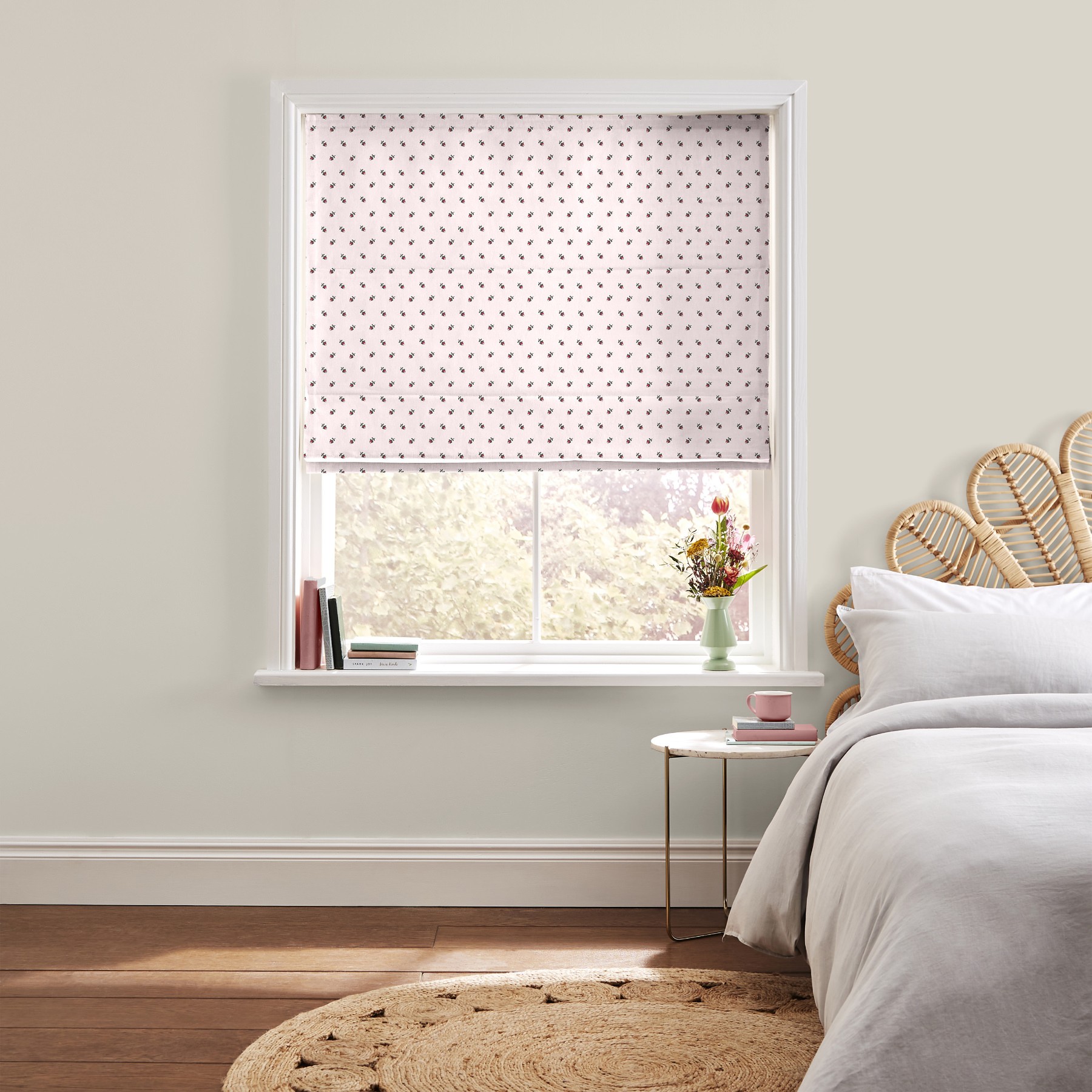
Bedrooms are one of the most common places to use Roman blinds because they combine a softer, more decorative look with useful light control.
The main priorities are usually:
- Light reduction
- Privacy
- Thermal comfort
- Colour and pattern
- How much of the window remains covered when the blind is raised
Blackout Is Usually the First Feature to Consider
If early morning light, street lighting or general darkness matters, a Blackout Roman blind is usually the best starting point.
Blackout fabric helps reduce light passing through the blind itself, making it particularly useful for:
- Main bedrooms
- Children’s bedrooms
- Guest rooms
- Bedrooms facing bright street lighting
- East-facing rooms affected by early morning sun
Remember that some light can still enter around the edges depending on how the blind is fitted.
Thermal Can Be Useful in Colder Bedrooms
A Thermal Roman blind can be a good choice where the room:
- Feels cold overnight
- Has older glazing
- Is north-facing
- Has a large window
- Is in a period property
If both darkness and warmth matter, look for a Roman blind that combines thermal and blackout performance.
Plain or Patterned?
Both can work well in bedrooms.
Choose Plain if you want:
- A calmer look
- Easier coordination with bedding
- A more minimal style
- Less visual competition with wallpaper or curtains
Choose Patterned if you want:
- More personality
- A stronger focal point
- A decorative feature at the window
- To introduce colour or pattern into an otherwise simple room
Pattern Scale Matters
Large patterns can look impressive on wider bedroom windows, while smaller repeats are often better suited to narrow or compact windows.
If the bedroom already includes patterned bedding, wallpaper or curtains, a plain Roman blind may keep the room feeling more balanced.
Consider Privacy as Well as Darkness
In bedrooms, privacy is usually important.
Blackout and dimout fabrics both provide stronger privacy when lowered than sheer voile.
Sheer voile Roman blinds are therefore better used where privacy is provided in another way, such as with curtains.
Best Bedroom Starting Points
A useful rule is:
- Need maximum light reduction: Blackout Roman blind
- Need warmth as well: Thermal + Blackout Roman blind
- Want a softer decorative look: Patterned Roman blind
- Want a calm bedroom: Plain Roman blind
- Need privacy but not full blackout: Dimout Roman blind
For most bedrooms, the best Roman blind is the one that gets the practical requirements right first, then fits the style of the room.
Best Roman Blinds for Living Rooms
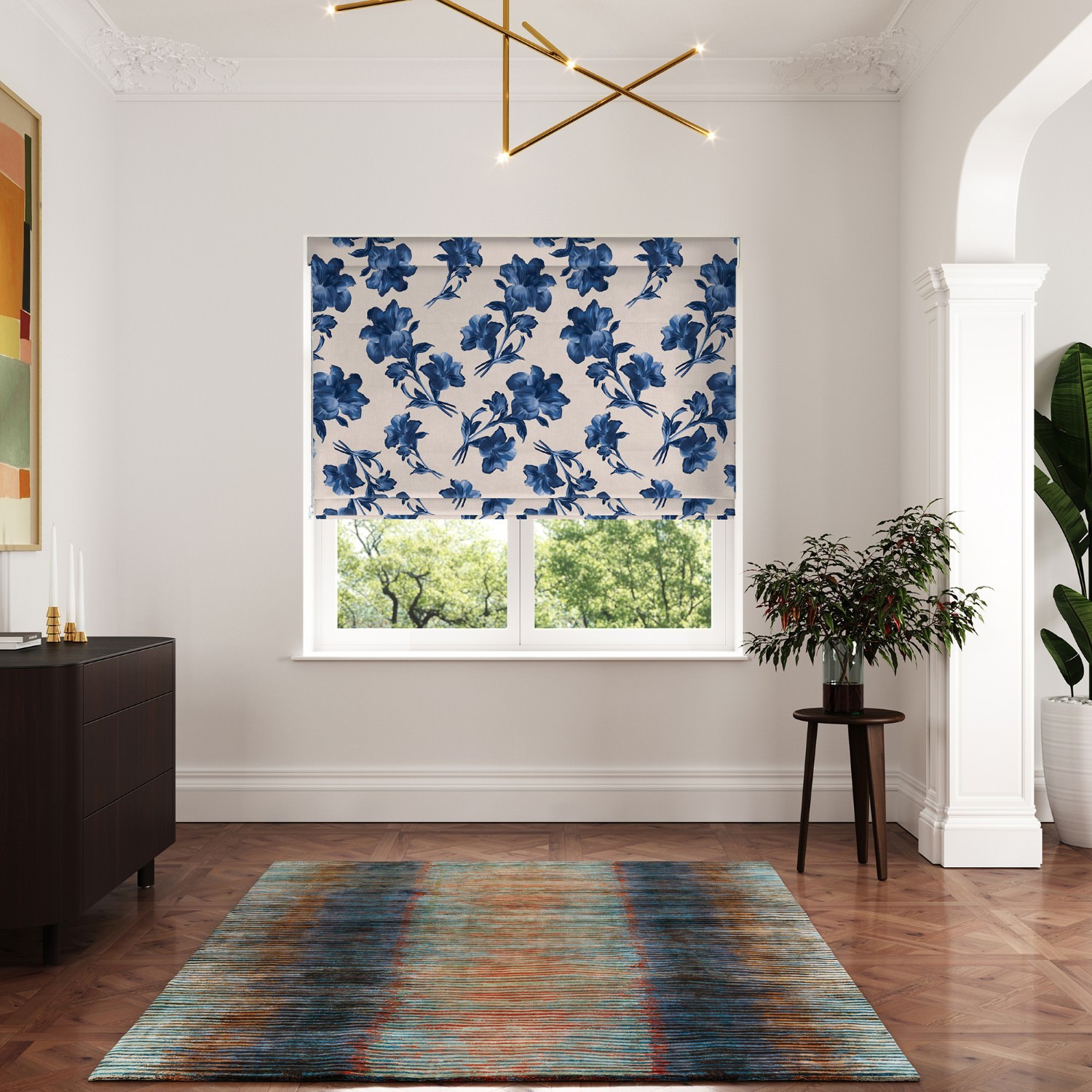
Living rooms usually need a balance of light control, privacy and appearance, which makes Roman blinds particularly versatile in this setting.
The right choice depends on how much daylight you want to retain and how prominent you want the blind to be within the room.
Dimout Is Often a Strong Starting Point
A Dimout Roman blind can work especially well in a living room because it reduces harsh daylight without making the room feel overly dark.
It can be useful where you want to:
- Reduce glare
- Improve daytime privacy
- Soften strong sunlight
- Keep the room feeling bright
This makes dimout a good middle ground between sheer voile and blackout.
Patterned Roman Blinds Can Create a Feature
Living rooms often have enough visual space to carry a stronger fabric design.
A Patterned Roman blind can work particularly well where:
- The walls are plain
- The upholstery is restrained
- The window is a natural focal point
- You want to introduce colour or character
Botanical, floral, geometric and heritage-inspired designs can all work, depending on the interior style.
Plain Roman Blinds Are More Flexible
Choose Plain if the room already includes:
- Patterned wallpaper
- Decorative cushions
- Strong artwork
- Statement furniture
- Patterned curtains
A plain Roman blind can help balance the room rather than compete with other elements.
Thermal Can Be Useful in Older Living Rooms
A Thermal Roman blind may be worth considering in:
- Period properties
- Rooms with older glazing
- North-facing living rooms
- Large windows
- Rooms that feel noticeably cooler near the glass
If light reduction is also important, check whether the blind combines thermal and dimout or blackout properties.
Sheer Voile Can Work in Brighter Rooms
A Sheer Voile Roman blind can suit living rooms where the main aim is to soften daylight rather than provide strong privacy.
It works particularly well where:
- The room is not heavily overlooked
- Curtains provide privacy at night
- You want to preserve natural light
- The window has an attractive outlook
Best Living Room Starting Points
A useful guide is:
- Want balanced light and privacy: Dimout Roman blind
- Want a feature window: Patterned Roman blind
- Want a quieter look: Plain Roman blind
- Need extra insulation: Thermal Roman blind
- Want soft filtered daylight: Sheer Voile Roman blind
For most living rooms, the Roman blind should support the overall interior rather than being chosen purely for function.
Best Roman Blinds for Dining Rooms
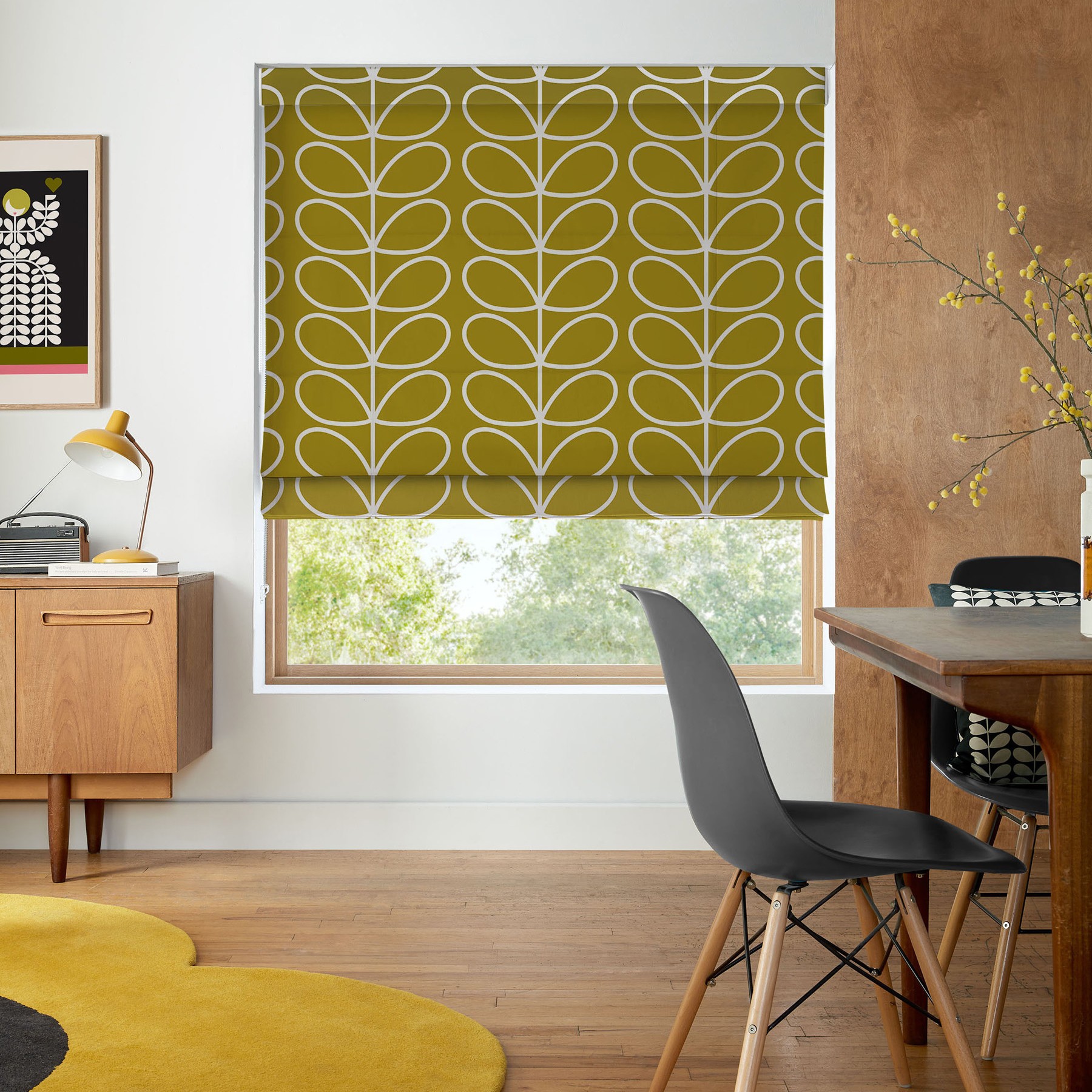
Dining rooms give you more freedom to choose a Roman blind for style as well as function.
Unlike bedrooms, complete darkness is rarely the priority, so the decision usually comes down to light control, privacy and how decorative you want the window to feel.
Patterned Roman Blinds Work Particularly Well
Dining rooms are often a good place to use a stronger fabric design.
A Patterned Roman blind can help:
- Introduce colour
- Create a focal point
- Add character to a simple room
- Tie together furniture, artwork and accessories
Floral, botanical, geometric and heritage-inspired patterns can all work well depending on the interior style.
Plain Roman Blinds Suit More Restrained Schemes
Choose Plain if the dining room already includes:
- Patterned wallpaper
- Statement lighting
- Decorative dining chairs
- Strong artwork
- Bold rugs or accessories
A plain fabric can keep the window looking elegant without competing with the rest of the room.
Dimout Can Be a Good Practical Choice
A Dimout Roman blind can work well where:
- The room receives strong sunlight
- Glare is an issue during meals
- Extra privacy is useful
- You want to soften daylight without creating a dark room
This can be especially helpful on west-facing dining rooms that receive strong afternoon or evening sun.
Thermal Can Be Useful in Older Dining Rooms
A Thermal Roman blind may be worth considering in:
- Period homes
- Dining rooms with large windows
- North-facing rooms
- Spaces with older glazing
- Rooms that feel noticeably cooler in winter
If the room is only used occasionally, improving comfort around the window can make it feel more welcoming when occupied.
Consider How the Blind Looks When Raised
Dining rooms often use the blind more decoratively than functionally, so the fabric may spend much of the day partially or fully raised.
That makes pattern scale and fold appearance important.
A design should ideally look good both:
- Fully lowered
- Partially raised
- Stacked at the top
Best Dining Room Starting Points
A useful guide is:
- Want a decorative focal point: Patterned Roman blind
- Want a cleaner, quieter look: Plain Roman blind
- Need softer light and privacy: Dimout Roman blind
- Need extra insulation: Thermal Roman blind
Dining rooms are one of the best places to be slightly more adventurous with Roman blind colour and pattern, provided the blind still works with the rest of the room.
Best Roman Blinds for Home Offices
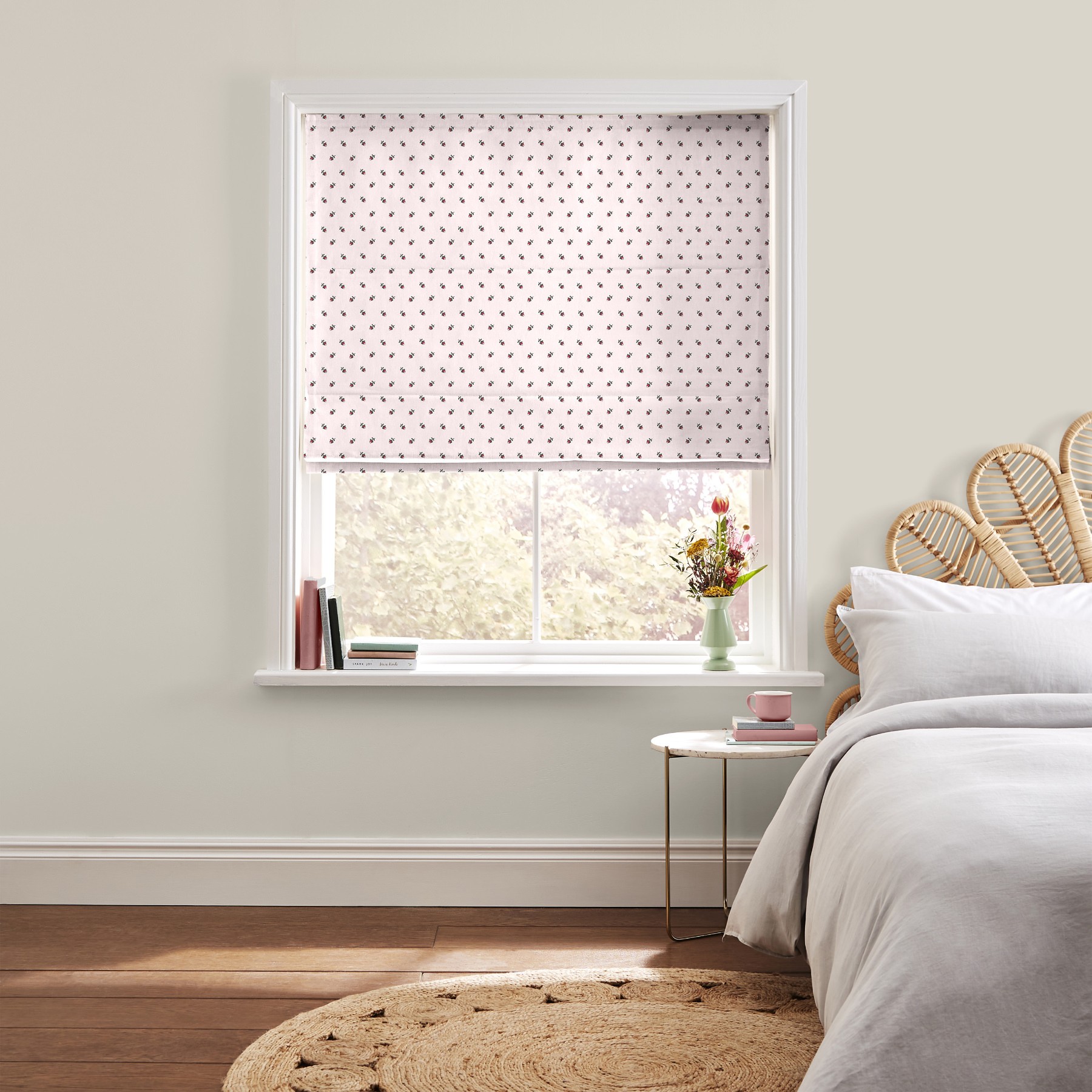
Home offices usually need a balance of glare control, privacy and a calm working environment.
A Roman blind can work well because it allows you to control daylight while keeping the room softer and more decorative than a purely functional workspace.
Dimout Is Often the Best Starting Point
A Dimout Roman blind can be particularly useful in a home office because it reduces harsh daylight without making the room unnecessarily dark.
It can help where:
- Sunlight falls directly onto a screen
- Glare makes video calls uncomfortable
- The room is overlooked
- You still want natural light during the day
This makes dimout one of the most practical choices for many home offices.
Plain Roman Blinds Keep the Space Calm
Plain fabrics often work well in workspaces because they reduce visual distraction.
Good choices include:
- Soft grey
- Stone
- Taupe
- Cream
- Muted green
- Navy
These can create a more settled backdrop without drawing too much attention away from the rest of the room.
Patterned Roman Blinds Can Still Work
A patterned blind is not automatically unsuitable for a home office.
It can work well where:
- The walls are plain
- The rest of the room is restrained
- You want the workspace to feel less corporate
- The blind is positioned away from the main field of view
Smaller-scale or more controlled patterns are often easier to live with than very bold designs in a working environment.
Consider Screen Position
The best fabric also depends on where your monitor sits in relation to the window.
If the window is:
- Directly behind the screen, strong contrast can be tiring
- Opposite the screen, reflections may become more noticeable
- To the side, adjustable light control can be particularly useful
A Roman blind that can be partially lowered gives you more flexibility throughout the day.
Thermal Can Help in Colder Workspaces
A Thermal Roman blind may be worth considering if the office is:
- In an older part of the house
- North-facing
- Above a garage
- In a converted loft
- Noticeably colder near the window
This can make the room more comfortable during longer periods of use.
Best Home Office Starting Points
A useful guide is:
- Need glare control: Dimout Roman blind
- Want a calm workspace: Plain Roman blind
- Want more personality: Patterned Roman blind
- Need extra warmth: Thermal Roman blind
For most home offices, the best Roman blind is one that keeps daylight manageable without making the room feel too enclosed.
Best Roman Blinds for Children’s Bedrooms
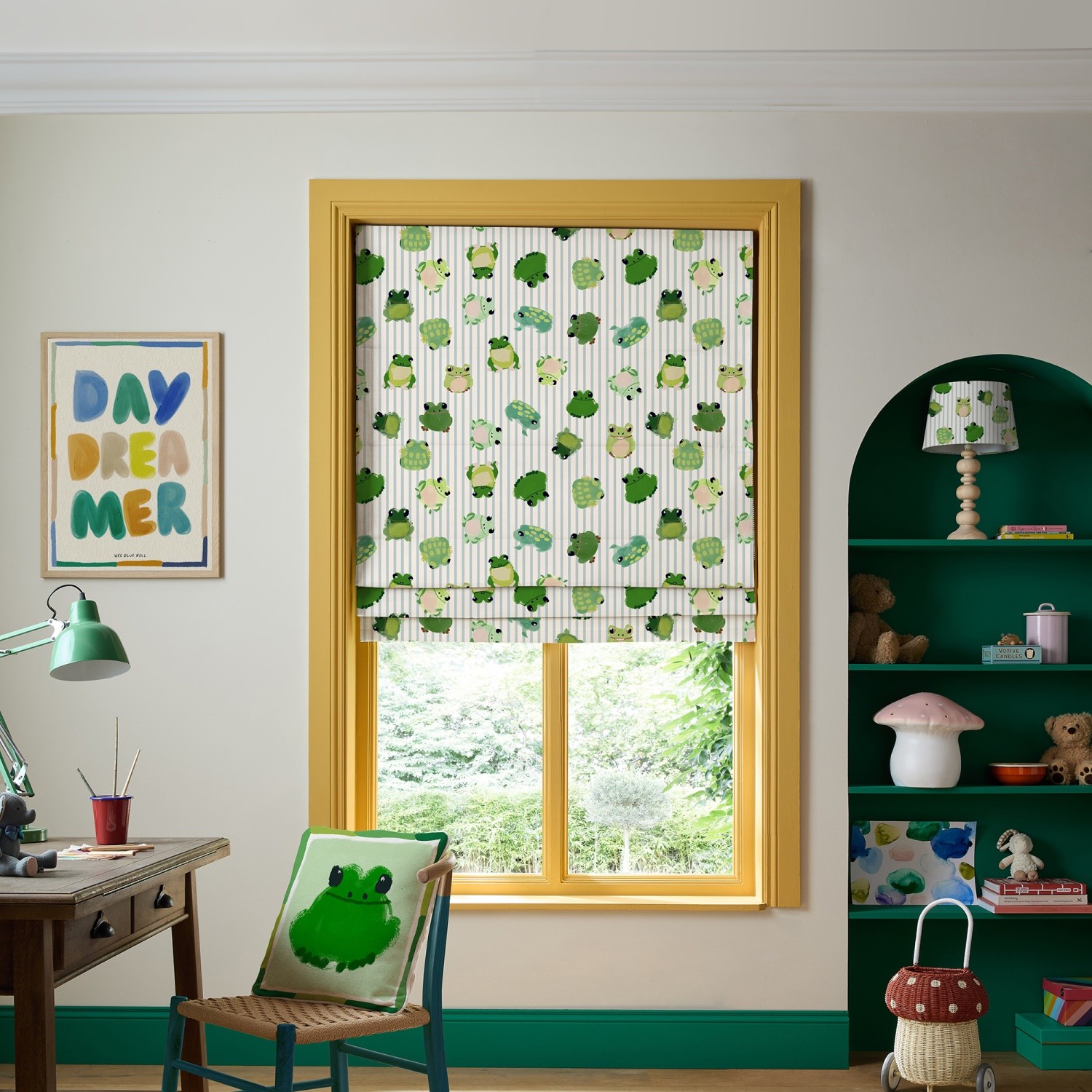
Children’s bedrooms usually need a combination of light control, privacy, comfort and safe operation.
The practical requirements should come first, with colour and pattern chosen afterwards.
Blackout Is Often the Best Starting Point
A Blackout Roman blind can be particularly useful in children’s bedrooms because it helps reduce light entering through the fabric.
This can be helpful where:
- Early morning light is disruptive
- The room faces street lighting
- Daytime naps are still needed
- Summer evenings remain bright
As with other blackout blinds, some light may still enter around the edges depending on how the blind is fitted.
Thermal Can Be Useful in Colder Rooms
A Thermal Roman blind may be worth considering where the bedroom:
- Has older glazing
- Is north-facing
- Feels cold overnight
- Has a large window
- Is in an older property
If both warmth and darkness are important, look for a Roman blind that combines thermal and blackout properties.
Plain or Patterned?
Both can work well.
Choose Plain if you want:
- A calmer look
- Easier coordination with bedding
- More flexibility as the room changes over time
- Less visual clutter
Choose Patterned if you want:
- More personality
- A decorative focal point
- A theme-led room
- A stronger use of colour
Smaller-scale patterns can be especially useful on compact windows.
Think About Longevity
Children’s rooms can change quickly as tastes develop.
A highly themed pattern may suit the room now but feel less suitable later.
A more flexible option can be:
- A plain Roman blind
- A subtle pattern
- A restrained colour
- A design that works beyond one age group
Child Safety Is Essential
If the Roman blind uses a chain control, the supplied safety system must be installed correctly.
Consider:
- Keeping the control inaccessible to young children
- Avoiding placing cots, beds or climbable furniture near the chain
- Following the fitting instructions for any supplied safety device
Safety should be part of the product choice from the beginning, not an afterthought.
Best Children’s Bedroom Starting Points
A useful guide is:
- Need stronger light reduction: Blackout Roman blind
- Need warmth as well: Thermal + Blackout Roman blind
- Want a calmer room: Plain Roman blind
- Want more character: Patterned Roman blind
For most children’s bedrooms, the right Roman blind is one that combines practical light control and safe operation with a fabric that can continue to work as the room changes.
Best Roman Blinds for Modern Interiors
Modern interiors usually suit Roman blinds that feel clean, restrained and well integrated with the rest of the room.
The fabric can still add softness, but the overall effect is usually strongest when colour and pattern are controlled.
Plain Roman Blinds Are Often the Best Fit
Plain fabrics work particularly well in modern rooms because they keep the window looking simple.
Popular directions include:
- Warm white
- Stone
- Taupe
- Soft grey
- Charcoal
- Muted green
- Navy
These colours can either blend into the room or create a deliberate contrast without making the blind feel overly decorative.
Texture Can Add Interest Without Pattern
A plain Roman blind does not need to look flat.
A subtle weave or textured fabric can add depth while keeping the overall scheme minimal.
This can work especially well where the room already includes:
- Timber
- Stone
- Metal
- Upholstery
- Architectural detailing
The blind adds softness without competing with those materials.
Keep Pattern Controlled
Pattern can still work in a modern interior, but it is usually more effective when it is:
- Geometric
- Abstract
- Graphic
- Limited in colour
- Relatively simple in repeat
A strong pattern can work as a feature, but the surrounding room should generally remain quieter.
Dimout Works Well in Modern Living Spaces
A Dimout Roman blind can be a strong practical choice in modern living rooms and home offices.
It helps reduce glare and soften daylight while keeping the room from feeling too enclosed.
Blackout Suits Modern Bedrooms
For modern bedrooms, a plain Blackout Roman blind can combine a simple appearance with stronger light reduction.
Neutral colours, deep greens, navy and charcoal can all work well depending on the wider scheme.
Headbox Can Suit a Cleaner Look
Where available, a headbox can complement a modern interior by giving the top of the blind a more structured, contained appearance.
This can be especially useful where the blind is fitted inside a neat recess or where the mechanism is visible.
Best Modern Interior Starting Points
A useful guide is:
- Minimal room: Plain Roman blind
- Need glare control: Dimout Roman blind
- Modern bedroom: Plain Blackout Roman blind
- Want subtle depth: Textured plain fabric
- Want a feature window: Controlled geometric or abstract pattern
- Want a cleaner top finish: Headbox option
For modern interiors, the strongest Roman blinds are usually those that add softness without introducing unnecessary visual complexity.
Best Roman Blinds for Traditional Interiors
Traditional interiors often suit Roman blinds that feel softer, more decorative and more closely connected to the room’s fabrics and furnishings.
This is one of the settings where Roman blinds are particularly effective because the folds naturally complement a more layered interior style.
Patterned Roman Blinds Work Especially Well
Traditional rooms can carry more decorative fabric than minimalist spaces.
Good pattern directions include:
- Florals
- Botanicals
- Heritage-inspired prints
- Nature motifs
- Small repeating patterns
- Larger statement designs on wider windows
These can work particularly well in living rooms, dining rooms and period bedrooms.
Plain Fabrics Can Still Be the Better Choice
A traditional interior does not always need a patterned blind.
Choose Plain if the room already includes:
- Patterned wallpaper
- Decorative curtains
- Upholstered furniture with print
- Detailed rugs
- Strong artwork
A plain Roman blind in a warm neutral, muted green, blue or taupe can help keep the room balanced.
Richer Colours Can Work Well
Traditional schemes often suit deeper or warmer colours such as:
- Olive
- Sage
- Navy
- Burgundy
- Warm cream
- Taupe
- Muted blue
- Soft gold tones
These can feel more integrated than very cool or stark neutrals.
Thermal Can Be Useful in Period Homes
Traditional interiors are often found in older properties, where thermal performance may also matter.
A Thermal Roman blind can be useful in rooms with:
- Sash windows
- Timber frames
- Older glazing
- Larger window openings
- Noticeable cold spots
This allows the blind to support both the look and the comfort of the room.
Blackout Works Well in Traditional Bedrooms
A patterned or plain Blackout Roman blind can work particularly well in a traditional bedroom.
This gives you:
- Stronger light reduction
- Privacy
- Decorative fabric
- A softer alternative to a more utilitarian blind
Best Traditional Interior Starting Points
A useful guide is:
- Want a decorative feature: Patterned Roman blind
- Already have lots of pattern: Plain Roman blind
- Period home with colder windows: Thermal Roman blind
- Traditional bedroom: Blackout Roman blind
- Want a classic feel: Floral, botanical or heritage-inspired fabric
For traditional interiors, Roman blinds work best when the fabric feels connected to the wider room rather than treated as a separate element.
Best Roman Blinds for Country and Cottage Interiors
Country and cottage interiors often suit Roman blinds that feel soft, relaxed and connected to natural materials and traditional patterns.
Roman blinds work particularly well in this style because the folded fabric adds warmth without feeling overly formal.
Florals and Botanicals Are a Natural Fit
Patterned Roman blinds can work especially well in country and cottage rooms.
Good choices include:
- Small florals
- Botanical prints
- Nature-inspired patterns
- Soft checks
- Heritage-style motifs
- Gentle repeating designs
These patterns can add character without overwhelming the room.
Warm, Natural Colours Usually Work Best
Country interiors often suit colours such as:
- Cream
- Warm white
- Sage
- Olive
- Soft blue
- Taupe
- Muted rose
- Natural beige
These tones tend to work well with timber furniture, painted cabinetry, stone and other natural materials.
Plain Roman Blinds Can Balance a Busier Room
If the room already includes floral wallpaper, patterned upholstery or decorative curtains, a Plain Roman blind may be the better choice.
A quiet fabric can help prevent the room from feeling too busy.
Thermal Can Be Especially Useful
Country and cottage properties are often older, so thermal performance may be an important consideration.
A Thermal Roman blind can be useful where the room has:
- Older glazing
- Timber windows
- Noticeable draughts
- North-facing windows
- Larger traditional openings
This can add an extra layer of comfort without changing the character of the room.
Blackout Works Well in Cottage Bedrooms
For country-style bedrooms, a Blackout Roman blind can combine decorative fabric with practical light control.
Floral or softly patterned blackout options can work particularly well where the blind is intended to be both functional and decorative.
Best Country and Cottage Starting Points
A useful guide is:
- Want a traditional feature: Patterned Roman blind
- Room already has lots of pattern: Plain Roman blind
- Older or colder room: Thermal Roman blind
- Bedroom: Blackout Roman blind
- Want a softer look: Floral, botanical or small-scale repeat
For country and cottage interiors, Roman blinds usually work best when they feel warm, natural and slightly informal rather than overly crisp or architectural.
Best Roman Blinds for Mid-Century Interiors
Mid-century interiors often suit Roman blinds with strong colour, graphic pattern and a slightly more playful design language.
This style gives you more freedom to use pattern than a minimal interior, while still benefiting from a controlled overall palette.
Geometric Patterns Work Particularly Well
Mid-century schemes often suit:
- Geometric prints
- Repeating motifs
- Abstract shapes
- Rounded forms
- Graphic botanical designs
A Roman blind is a good format for these patterns because the fabric is displayed across a relatively flat surface when lowered.
Warm Retro Colours Can Work Well
Typical colour directions include:
- Mustard
- Olive
- Burnt orange
- Teal
- Rust
- Cream
- Brown
- Charcoal
These colours can work especially well with walnut, teak and other warm timber tones.
Plain Roman Blinds Can Balance Strong Furniture
If the room already includes:
- Statement furniture
- Patterned rugs
- Retro wallpaper
- Strong artwork
- Bold upholstery
a Plain Roman blind may be the better choice.
Muted olive, warm grey, cream or rust can support the scheme without competing with it.
Pattern Scale Matters
Large geometric patterns can work well on wider windows, while smaller repeating designs are often easier to use on narrow blinds.
The pattern should still look balanced when the blind is partially raised and the fabric is folded.
Blackout Can Work Well in Retro Bedrooms
A Blackout Roman blind in a strong plain colour or controlled pattern can work particularly well in a mid-century bedroom.
This allows you to keep the decorative character while improving light control.
Best Mid-Century Starting Points
A useful guide is:
- Want a statement: Geometric or abstract Patterned Roman blind
- Room already has bold furniture: Plain Roman blind
- Want a classic retro palette: Mustard, olive, rust or teal
- Bedroom: Blackout Roman blind
- Small window: Smaller repeating pattern
For mid-century interiors, Roman blinds work best when they feel graphic and intentional without making the room visually chaotic.
Best Roman Blinds for Contemporary Luxe Interiors
Contemporary luxe interiors usually suit Roman blinds that feel refined, tailored and visually rich without becoming overly ornate.
This style works especially well with Roman blinds because the soft folds add fabric depth while the overall shape remains structured.
Rich Plain Fabrics Work Very Well
Plain Roman blinds are often the strongest choice in luxe interiors.
Good colour directions include:
- Deep green
- Navy
- Charcoal
- Warm taupe
- Soft gold
- Cream
- Deep blue
- Muted jewel tones
These colours can create a more substantial, polished look while still allowing furniture and accessories to take the lead.
Pattern Can Work as a Statement
Patterned Roman blinds can also suit contemporary luxe schemes, particularly where the room is otherwise restrained.
Good choices include:
- Decorative botanicals
- Large-scale florals
- Elegant geometric prints
- Richly coloured designer patterns
- More artistic statement fabrics
The key is to avoid combining too many strong decorative elements at once.
Blackout Can Suit Luxe Bedrooms
A Blackout Roman blind can work particularly well in a contemporary bedroom where both appearance and light control matter.
A deep plain fabric or sophisticated pattern can make the blind feel intentional rather than purely functional.
Dimout Works Well in Living Spaces
Dimout Roman blinds can suit:
- Living rooms
- Dining rooms
- Home offices
- Larger open-plan spaces
They provide a softer daytime effect while still giving the window a more substantial fabric presence.
Headbox Can Support a Cleaner Finish
A headbox can work particularly well in contemporary luxe interiors because it gives the top of the blind a more contained and structured appearance.
This can help the blind feel:
- Neater
- More tailored
- Better integrated with the architecture
- More polished overall
Best Contemporary Luxe Starting Points
A useful guide is:
- Want a refined look: Rich Plain Roman blind
- Want a statement feature: Patterned Roman blind
- Bedroom: Blackout Roman blind
- Living room: Dimout Roman blind
- Want a cleaner top finish: Headbox option
- Want stronger colour: Jewel tones or deep neutrals
For contemporary luxe interiors, Roman blinds work best when the fabric feels considered, substantial and coordinated with the wider room rather than simply decorative.
How to Choose a Roman Blind by Designer Brand
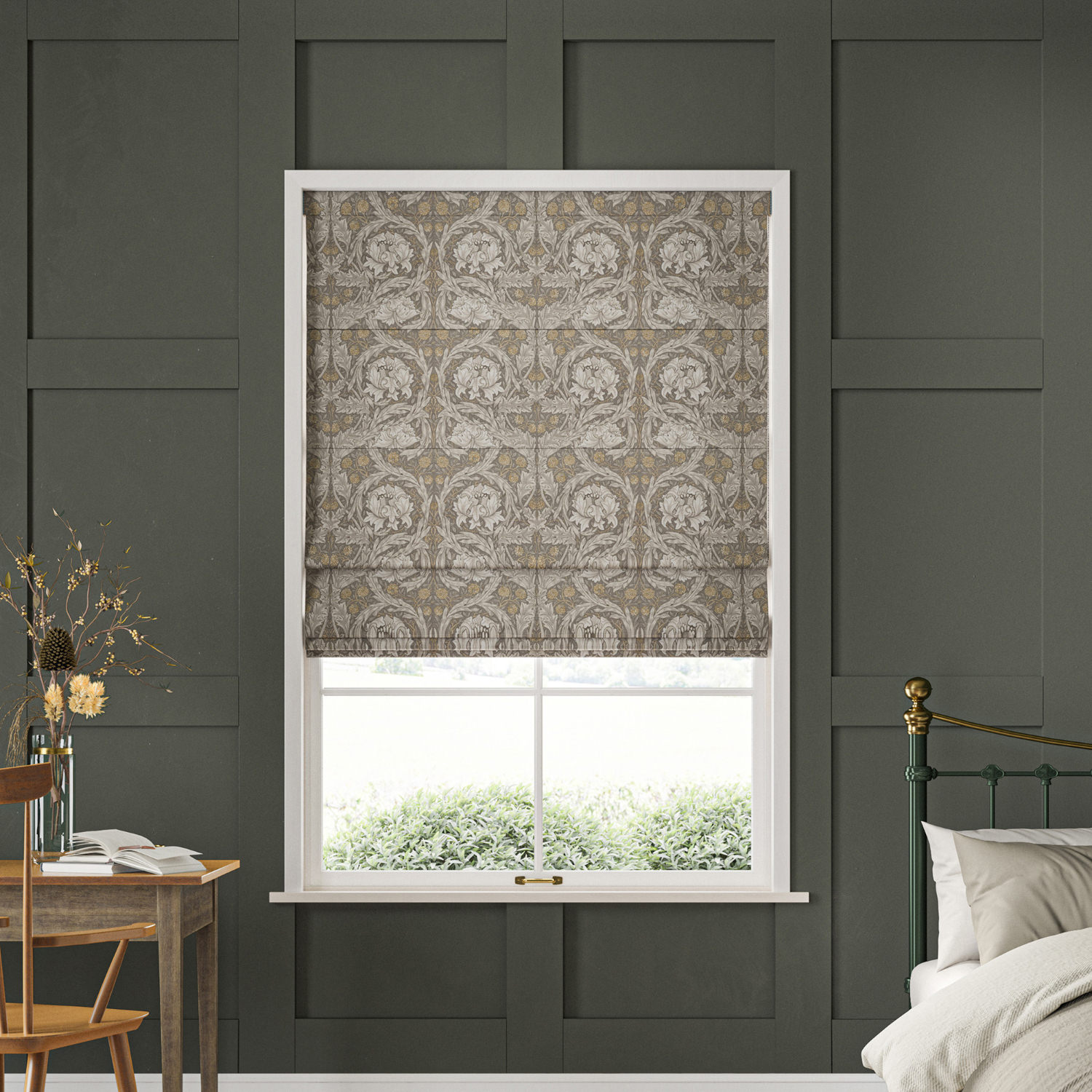
Designer Roman blinds are useful when you want the blind to contribute more strongly to the character of the room.
The best approach is not to choose a brand simply because you recognise the name. Instead, look at the type of patterns, colours and overall style that each collection tends to offer.
Choose the Brand to Match the Interior
A useful starting point is:
- William Morris for heritage, Arts & Crafts and traditional interiors
- Laura Ashley for classic, country and softer traditional schemes
- Cath Kidston for playful florals and cottage-inspired interiors
- Sophie Allport for relaxed country and rural-inspired rooms
- Emily Bond for rustic, natural and country styling
- Orla Kiely for mid-century, retro and graphic interiors
- Sara Miller for decorative, colourful and contemporary luxe schemes
- Ted Baker for polished, contemporary interiors
- Bluebellgray for artistic, colourful and expressive rooms
- Land & Shore for relaxed contemporary and natural schemes
- Shabby Chic by Rachel Ashwell for vintage, romantic and cottage interiors
- DotcomBlind for broader plain, versatile and more understated options
Think About Pattern Before Brand Name
Two designs from the same brand can still look very different.
When comparing collections, look at:
- Pattern scale
- Colour palette
- How busy the design is
- Whether the motif is traditional or contemporary
- How the pattern will look once folded
- Whether the room already contains other patterns
The individual fabric should always be judged on its own merits.
Designer Does Not Automatically Mean Bold
A designer Roman blind does not have to dominate the room.
Many collections include quieter designs that can work as a supporting layer rather than a focal point.
This can be useful where you want:
- A recognisable design language
- Better coordination with existing interiors
- Something more distinctive than a basic plain fabric
- A softer pattern rather than a statement print
Match the Brand to the Room, Not Just Personal Taste
A fabric you like in isolation may not work in the actual room.
Before choosing, consider:
- Wall colour
- Furniture style
- Flooring
- Existing curtains
- Upholstery
- Artwork
- The size of the window
The best designer Roman blind should feel like part of the room rather than an addition made afterwards.
The Practical Rule
Choose the interior style first, then shortlist the designer collections that naturally fit it.
After that, compare the actual fabrics based on:
colour + pattern scale + light-control requirement + how prominent you want the blind to be.
William Morris Roman Blinds
William Morris Roman blinds are particularly well suited to traditional, heritage and Arts & Crafts-inspired interiors.
Their strength is usually in richly detailed patterns, botanical motifs and designs that feel decorative without looking overly contemporary.
Best Interior Styles
William Morris Roman blinds can work especially well in:
- Period homes
- Victorian and Edwardian interiors
- Traditional living rooms
- Heritage-style bedrooms
- Country houses
- Arts & Crafts-inspired schemes
Why Roman Blinds Suit William Morris Patterns
Roman blinds provide a broad fabric surface, which helps detailed heritage patterns remain visible when the blind is lowered.
This can work particularly well with:
- Botanical motifs
- Repeating foliage
- Floral designs
- Nature-inspired patterns
Because the fabric folds as the blind is raised, pattern scale should still be considered carefully.
Best Colour Pairings
William Morris designs often work well with:
- Warm cream
- Olive
- Sage
- Deep green
- Navy
- Burgundy
- Muted blue
- Natural timber tones
These colours can help the blind feel integrated into a more traditional room.
Keep the Rest of the Room Balanced
If the Roman blind uses a strong William Morris pattern, it is usually best to keep some surrounding elements more restrained.
For example:
- Plain walls
- Simple upholstery
- Neutral bedding
- Plain curtains
This allows the blind to become a feature without making the room feel too busy.
Best Starting Point
Choose a William Morris Roman blind if you want:
heritage character + botanical pattern + a decorative focal point + a strong connection to traditional interiors
They are particularly effective where the window is intended to contribute visibly to the room rather than blend into the background.
Laura Ashley Roman Blinds
Laura Ashley Roman blinds are well suited to classic, country and softly traditional interiors.
The collection works particularly well where you want the blind to feel decorative, but not as visually dominant as a very bold heritage print.
Best Interior Styles
Laura Ashley Roman blinds can work especially well in:
- Traditional bedrooms
- Country-style living rooms
- Cottage interiors
- Classic dining rooms
- Softer period schemes
- Rooms with a romantic or relaxed traditional feel
Why Roman Blinds Suit Laura Ashley Designs
Roman blinds display fabric across a broad, flat surface when lowered, making them a good way to show off decorative prints and softer pattern work.
This can suit:
- Florals
- Botanical designs
- Gentle repeating motifs
- Softer traditional prints
Best Colour Pairings
Laura Ashley-style Roman blinds often work well with:
- Soft cream
- Warm white
- Sage
- Dusty blue
- Muted pink
- Taupe
- Natural beige
- Soft grey
These colours can help the blind feel calm and integrated rather than overly decorative.
Keep the Look Soft and Balanced
If the Roman blind has a noticeable floral or botanical design, pair it with simpler elements elsewhere in the room.
For example:
- Plain bedding
- Neutral walls
- Simple upholstery
- Restrained accessories
This helps the Roman blind add character without making the scheme feel overly busy.
Best Starting Point
Choose a Laura Ashley Roman blind if you want:
soft traditional styling + floral or botanical detail + a classic decorative look + an easy fit with country and cottage interiors
They are particularly useful where you want the blind to add warmth and personality without becoming the strongest feature in the room.
Cath Kidston Roman Blinds
Cath Kidston Roman blinds are well suited to playful, cottage-inspired and softly traditional interiors.
They are a good choice where you want the window to introduce colour and personality without losing the softer fabric look that makes Roman blinds distinctive.
Best Interior Styles
Cath Kidston Roman blinds can work especially well in:
- Cottage interiors
- Country-style bedrooms
- Family rooms
- Children’s rooms
- Relaxed kitchens and dining spaces
- Playful traditional schemes
Why Roman Blinds Suit Cath Kidston Designs
Roman blinds provide a broad fabric surface that can show off printed designs clearly when lowered.
They can work particularly well with:
- Florals
- Small repeating motifs
- Cheerful decorative prints
- Softer vintage-inspired patterns
Best Colour Pairings
Cath Kidston-style Roman blinds can work well with:
- Soft blue
- Cream
- Warm white
- Muted red
- Pink
- Sage
- Soft green
- Natural wood tones
These colours can help the blind feel fresh and decorative without overwhelming the room.
Think About Pattern Scale
Many Cath Kidston-style patterns can be quite detailed, so window size matters.
On a smaller Roman blind, a compact repeat is often easier to read.
On a wider window, larger motifs can work well as long as the rest of the room is relatively restrained.
Best Starting Point
Choose a Cath Kidston Roman blind if you want:
colour + floral or decorative pattern + cottage character + a softer, playful traditional look
They work particularly well where the blind is intended to add warmth and personality rather than disappear into the background.
Sophie Allport Roman Blinds
Sophie Allport Roman blinds are particularly well suited to country, rural-inspired and relaxed classic interiors.
They are a good choice where you want the window to feel decorative and characterful without becoming overly formal.
Best Interior Styles
Sophie Allport Roman blinds can work especially well in:
- Country homes
- Cottage interiors
- Farmhouse-style rooms
- Relaxed bedrooms
- Family living spaces
- Rural-inspired kitchens and dining rooms
Why Roman Blinds Suit Sophie Allport Designs
Roman blinds provide a wide fabric surface, which helps illustrated and repeating motifs remain visible when the blind is lowered.
They can work particularly well with:
- Nature-inspired designs
- Animal motifs
- Botanical elements
- Small repeating prints
- Soft country patterns
Best Colour Pairings
Sophie Allport-style Roman blinds can work well with:
- Warm white
- Cream
- Sage
- Soft blue
- Olive
- Taupe
- Natural beige
- Light timber tones
These colours help reinforce the relaxed country feel.
Keep the Rest of the Room Balanced
If the blind has a noticeable motif, it usually works best with simpler surrounding elements.
For example:
- Plain walls
- Neutral upholstery
- Simple curtains
- Natural wood furniture
This allows the Roman blind to add personality without making the room feel too busy.
Best Starting Point
Choose a Sophie Allport Roman blind if you want:
country character + nature-inspired pattern + a relaxed decorative look + an easy fit with rural and cottage interiors
They are particularly effective where you want the blind to feel warm, approachable and connected to the rest of the room.
Emily Bond Roman Blinds
Emily Bond Roman blinds are particularly well suited to country, rustic and relaxed traditional interiors.
They are a good choice where you want the window to feel warm and decorative while still fitting naturally with timber, neutral colours and more informal room schemes.
Best Interior Styles
Emily Bond Roman blinds can work especially well in:
- Country homes
- Cottage interiors
- Rustic bedrooms
- Relaxed living rooms
- Farmhouse-inspired spaces
- Traditional dining rooms
Why Roman Blinds Suit Emily Bond Designs
Roman blinds show patterned fabric clearly when lowered, which makes them a good format for country-inspired prints.
They can work particularly well with:
- Nature motifs
- Animal-inspired designs
- Repeating rural patterns
- Soft decorative prints
- Subtle country themes
Best Colour Pairings
Emily Bond-style Roman blinds can work well with:
- Warm white
- Cream
- Sage
- Olive
- Taupe
- Soft grey
- Muted blue
- Natural timber tones
These colours help reinforce a softer, more relaxed interior.
Keep the Scheme Natural
Emily Bond designs often work best when paired with materials and finishes such as:
- Wood
- Linen
- Wool
- Painted furniture
- Natural flooring
- Neutral walls
This helps the blind feel integrated into the room rather than added as a separate decorative feature.
Best Starting Point
Choose an Emily Bond Roman blind if you want:
rustic character + country-inspired pattern + a relaxed decorative feel + easy coordination with natural materials
They are particularly effective in rooms where the overall style is warm, informal and rooted in traditional country design.
Orla Kiely Roman Blinds
Orla Kiely Roman blinds are particularly well suited to mid-century, retro and graphic contemporary interiors.
They are a strong choice where you want the blind to become a noticeable design feature through distinctive pattern and colour.
Best Interior Styles
Orla Kiely Roman blinds can work especially well in:
- Mid-century interiors
- Retro-inspired rooms
- Contemporary living spaces
- Colour-led bedrooms
- Modern dining rooms
- Eclectic interiors
Why Roman Blinds Suit Orla Kiely Designs
Roman blinds provide a relatively flat fabric surface when lowered, making them a good format for bold repeating patterns.
They can work particularly well with:
- Geometric motifs
- Stylised botanical designs
- Repeating graphic forms
- Strong retro-inspired patterns
Best Colour Pairings
Orla Kiely-style Roman blinds can work well with:
- Mustard
- Olive
- Burnt orange
- Cream
- Charcoal
- Teal
- Warm brown
- Soft grey
These colours tend to sit naturally with mid-century furniture and warm timber finishes.
Keep Other Patterns Controlled
Because Orla Kiely designs can be visually distinctive, the blind often works best when other elements are more restrained.
For example:
- Plain walls
- Simple upholstery
- Neutral flooring
- Unpatterned curtains
- Limited use of competing prints
This allows the Roman blind to act as the main graphic feature.
Best Starting Point
Choose an Orla Kiely Roman blind if you want:
graphic pattern + retro character + strong colour + a clear mid-century influence
They are particularly effective where the window is intended to become a focal point rather than simply blend into the room.
Sara Miller Roman Blinds
Sara Miller Roman blinds are particularly well suited to contemporary luxe, decorative and colour-rich interiors.
They are a strong choice where you want the blind to feel sophisticated and eye-catching, with pattern playing a clear role in the room.
Best Interior Styles
Sara Miller Roman blinds can work especially well in:
- Contemporary luxe interiors
- Colour-led living rooms
- Elegant bedrooms
- Decorative dining rooms
- Eclectic schemes
- Statement interiors
Why Roman Blinds Suit Sara Miller Designs
Roman blinds provide a broad, flat fabric surface when lowered, which allows detailed and decorative designs to be appreciated properly.
They can work particularly well with:
- Botanical motifs
- Rich decorative prints
- Elegant florals
- Jewel-toned designs
- Artistic statement patterns
Best Colour Pairings
Sara Miller-style Roman blinds can work well with:
- Deep green
- Navy
- Teal
- Plum
- Gold-toned accents
- Cream
- Charcoal
- Warm neutrals
These colours can help the blind feel luxurious without becoming visually disconnected from the room.
Let the Blind Lead the Scheme
Because Sara Miller patterns can be visually strong, they often work best when the Roman blind becomes the main decorative feature.
Pair it with:
- Plain walls
- Restrained upholstery
- Simple curtains
- Controlled accessories
- A limited number of competing patterns
Best Starting Point
Choose a Sara Miller Roman blind if you want:
rich colour + decorative pattern + a luxurious feel + a statement window
They are particularly effective in rooms where the blind is intended to contribute strongly to the overall design rather than sit quietly in the background.
Ted Baker Roman Blinds
Ted Baker Roman blinds are particularly well suited to contemporary, polished and more refined interiors.
They are a good choice where you want the blind to feel distinctive and design-led without necessarily making the room feel traditional.
Best Interior Styles
Ted Baker Roman blinds can work especially well in:
- Contemporary living rooms
- Modern bedrooms
- Polished dining spaces
- Luxe interiors
- Urban apartments
- Design-led home offices
Why Roman Blinds Suit Ted Baker Designs
Roman blinds provide a broad fabric surface that allows more decorative prints to remain visible when the blind is lowered.
They can work particularly well with:
- Refined florals
- Graphic motifs
- Contemporary decorative patterns
- Richer colour combinations
- Statement prints
Best Colour Pairings
Ted Baker-style Roman blinds can work well with:
- Navy
- Charcoal
- Deep green
- Warm neutral tones
- Cream
- Soft grey
- Muted jewel colours
These shades can help create a more tailored and sophisticated feel.
Keep the Surrounding Scheme Controlled
If the blind uses a stronger Ted Baker pattern, it usually works best with simpler elements elsewhere.
For example:
- Plain walls
- Restrained upholstery
- Simple curtains
- Minimal accessories
- Limited competing pattern
Best Starting Point
Choose a Ted Baker Roman blind if you want:
a polished contemporary look + distinctive pattern + stronger colour + a more design-led window treatment
They are particularly effective where you want the blind to feel stylish and noticeable without pushing the room into a traditional or rustic direction.
Bluebellgray Roman Blinds
Bluebellgray Roman blinds are particularly well suited to artistic, colourful and contemporary interiors.
They are a strong choice where you want the blind to feel expressive, with colour and pattern becoming an important part of the room rather than simply providing background decoration.
Best Interior Styles
Bluebellgray Roman blinds can work especially well in:
- Contemporary living rooms
- Colour-led bedrooms
- Artistic interiors
- Eclectic spaces
- Modern dining rooms
- Rooms with a softer, painterly feel
Why Roman Blinds Suit Bluebellgray Designs
Roman blinds provide a broad fabric surface when lowered, which allows expressive prints and colour combinations to be seen clearly.
They can work particularly well with:
- Painterly florals
- Abstract botanical designs
- Watercolour-style motifs
- Softly blended colours
- Larger decorative prints
Best Colour Pairings
Bluebellgray-style Roman blinds can work well with:
- Soft blue
- Teal
- Green
- Blush
- Warm white
- Cream
- Muted pink
- Natural neutrals
These shades can help the blind feel colourful without making the room feel overly heavy.
Let the Pattern Be the Feature
Because Bluebellgray designs can be visually expressive, they often work best when the rest of the room is more restrained.
For example:
- Plain walls
- Neutral upholstery
- Simple bedding
- Minimal competing pattern
- Accessories that repeat one or two colours from the blind
Best Starting Point
Choose a Bluebellgray Roman blind if you want:
artistic pattern + expressive colour + a contemporary feel + a softer decorative statement
They are particularly effective where the blind is intended to bring colour and personality into an otherwise simple room.
Land & Shore Roman Blinds
Land & Shore Roman blinds are particularly well suited to relaxed contemporary, natural and coastal-inspired interiors.
They are a good choice where you want the blind to feel calm and understated, with an emphasis on softer colour, natural influence and an easy, lived-in look.
Best Interior Styles
Land & Shore Roman blinds can work especially well in:
- Relaxed contemporary interiors
- Coastal-inspired rooms
- Natural, neutral schemes
- Bedrooms
- Living rooms
- Light-filled dining spaces
Why Roman Blinds Suit Land & Shore Designs
Roman blinds add softness at the window, which works well with interiors that favour natural textures and a more relaxed atmosphere.
They can suit:
- Soft stripes
- Nature-inspired patterns
- Subtle coastal motifs
- Muted prints
- Plain or lightly textured fabrics
Best Colour Pairings
Land & Shore-style Roman blinds can work well with:
- Warm white
- Sand
- Stone
- Soft blue
- Sage
- Muted green
- Taupe
- Natural beige
These shades help reinforce a calm, easy-going interior.
Keep the Scheme Light and Natural
They tend to work especially well alongside:
- Timber furniture
- Linen and cotton fabrics
- Natural flooring
- Woven textures
- Soft neutral walls
- Simple accessories
Best Starting Point
Choose a Land & Shore Roman blind if you want:
a relaxed look + soft natural colour + subtle pattern + easy coordination with contemporary or coastal interiors
They are particularly effective where you want the blind to feel integrated and understated rather than highly decorative.
Shabby Chic by Rachel Ashwell Roman Blinds
Shabby Chic by Rachel Ashwell Roman blinds are particularly well suited to vintage, romantic and cottage-inspired interiors.
They are a good choice where you want the blind to feel soft, decorative and slightly timeworn rather than crisp or highly contemporary.
Best Interior Styles
Shabby Chic by Rachel Ashwell Roman blinds can work especially well in:
- Cottage bedrooms
- Vintage-inspired living rooms
- Romantic interiors
- Soft traditional schemes
- Country homes
- Rooms with painted or distressed furniture
Why Roman Blinds Suit This Style
Roman blinds naturally have a softer appearance than many other blind types, which works well with the relaxed character of shabby chic interiors.
They can suit:
- Delicate florals
- Faded botanical patterns
- Soft stripes
- Gentle vintage motifs
- Muted decorative prints
Best Colour Pairings
Shabby Chic-style Roman blinds can work well with:
- Warm white
- Ivory
- Blush
- Soft blue
- Sage
- Dusty rose
- Pale grey
- Muted beige
These colours help create a softer, more layered look.
Keep the Scheme Light
This style generally works best when the blind is combined with:
- Painted timber furniture
- Linen and cotton textures
- Soft neutral walls
- Vintage accessories
- Light or weathered finishes
Very dark or highly saturated colours can feel less natural unless used deliberately as contrast.
Best Starting Point
Choose a Shabby Chic by Rachel Ashwell Roman blind if you want:
soft vintage character + romantic pattern + a relaxed cottage feel + gentle colour
They are particularly effective where you want the Roman blind to add warmth and charm without feeling formal.
DotcomBlind Roman Blinds
DotcomBlind Roman blinds are a strong option when you want a versatile, practical and easy-to-coordinate design without necessarily choosing a designer-led pattern.
They are particularly useful where the priority is to get the right combination of light control, thermal performance, colour and simplicity.
Best Interior Styles
DotcomBlind Roman blinds can work well in:
- Modern interiors
- Traditional rooms
- Bedrooms
- Living rooms
- Dining rooms
- Home offices
- Neutral or understated schemes
Why Choose a More Versatile Roman Blind
A broader non-designer range can make it easier to focus on the practical specification first.
That may include choosing between:
- Blackout
- Dimout
- Thermal
- Plain fabric
- Patterned fabric
- Sheer voile
- Chain control
- Headbox
This can be especially useful where performance matters more than having a recognisable designer print.
Plain Fabrics Are Particularly Flexible
Plain Roman blinds are often the easiest to use across different room styles.
They can work well where you want:
- A quiet background
- Easy coordination
- A more minimal look
- A Roman blind that will remain suitable as décor changes
Patterned Options Can Still Add Character
A non-designer Roman blind does not have to be plain.
Patterned options can still work well where you want more visual interest without building the whole room around a particular designer collection.
Best Starting Point
Choose a DotcomBlind Roman blind if you want:
flexibility + practical feature choice + easy coordination + a broad range of styles
They are particularly useful when the first decision is what the blind needs to do, rather than which designer name you want at the window.
Should Roman Blinds Sit Inside or Outside the Recess?
Roman blinds can usually be fitted either inside the window recess or outside the recess, and the best option depends on the available space, the look you want and how much of the window you want the blind to cover.
Neither position is automatically better. Each creates a different result.
Inside-Recess Roman Blinds
An inside-recess fit places the Roman blind within the window opening.
This can create a neat, integrated appearance because the blind sits closer to the glass and within the architectural lines of the window.
It can work particularly well where:
- The recess is deep enough
- Window handles do not project too far
- The blind will not obstruct opening sections
- You want a cleaner, more contained look
Advantages of Inside-Recess Fitting
Potential benefits include:
- Neater appearance
- Less projection into the room
- Window frame remains more visible
- Works well in minimal or contemporary interiors
However, the folded Roman blind will remain within the window opening when raised, so part of the upper glazing may stay covered.
Outside-Recess Roman Blinds
An outside-recess fit positions the blind on the wall above or around the window opening.
This can be particularly useful where:
- The recess is shallow
- Window handles interfere with the blind
- You want greater coverage around the window
- You want more of the glazing visible when the blind is raised
If there is sufficient wall space above the window, the folded stack can sit partly or mostly above the opening.
Advantages of Outside-Recess Fitting
Potential benefits include:
- Greater overlap around the window
- More flexibility around shallow recesses
- Can reduce the amount of glazing covered when raised
- May help improve light control by covering beyond the window opening
- Can make the window appear larger
Which Is Better for Blackout?
If strong light reduction is important, an outside-recess Roman blind may provide better coverage because the blind can overlap the window opening.
However, no standard Roman blind installation should be assumed to create complete darkness, as some light may still enter around the edges.
Which Is Better for Small Windows?
On smaller windows, fitting above the recess can sometimes be useful because more of the glass can remain exposed when the blind is raised.
An inside-recess blind may look neater, but the fabric stack can take up a greater proportion of the visible window.
The Practical Rule
Choose inside the recess if you want:
- A neat, contained appearance
- The blind integrated into the window opening
- Minimal projection into the room
Choose outside the recess if you want:
- Greater coverage
- More flexibility around shallow recesses
- More visible glazing when the blind is raised
- A stronger visual presence at the window
Before ordering, check the recess depth, handles, opening sections and available wall space so the fitting position works in practice as well as visually.
How Recess Depth Affects Roman Blind Choice
Recess depth is an important practical consideration when choosing a Roman blind, particularly if you plan to fit it inside the window recess.
A recess that is too shallow can cause the blind or headbox to project beyond the opening or interfere with window hardware.
Why Recess Depth Matters
A Roman blind needs enough space for:
- The headrail or headbox
- The folded fabric
- Window handles
- Opening sections
- Trickle vents
- Any other projecting fittings
If the recess is shallow, the blind may still fit, but it might not sit fully within the opening.
Check Window Handles Carefully
Window handles are one of the most common obstructions.
If a handle projects significantly into the recess, the Roman blind needs enough clearance to pass in front of it without catching.
This is especially important when the blind is:
- Fully lowered
- Raised and folded
- Operated regularly
Headbox Depth Can Be Important
A Roman blind with a headbox may require more fitting depth than a simpler mechanism.
Before ordering, check the dimensions of the headbox and compare them with the usable recess depth.
Do not measure only from the front edge of the recess to the glass. Take account of handles, vents and other obstructions.
Opening Windows Need Clearance
If the window opens inward, consider whether the blind or headbox could interfere with the opening sash.
This may be especially relevant where:
- The recess is shallow
- The window opens close to the top of the recess
- The Roman blind is fitted near the frame
When an Outside-Recess Fit May Be Better
If the recess is too shallow, fitting the Roman blind outside the recess may be a better solution.
This can:
- Avoid interference with handles
- Provide more room for the headbox
- Give the fabric more space to fold
- Allow more flexible positioning
The Practical Rule
Before choosing an inside-recess Roman blind, measure the usable depth, not just the total recess depth.
Check:
- Headbox dimensions
- Handle projection
- Window opening
- Trickle vents
- Other fittings
If there is not enough clear space, an outside-recess installation is usually the more practical choice.
How Wide Should a Roman Blind Be?
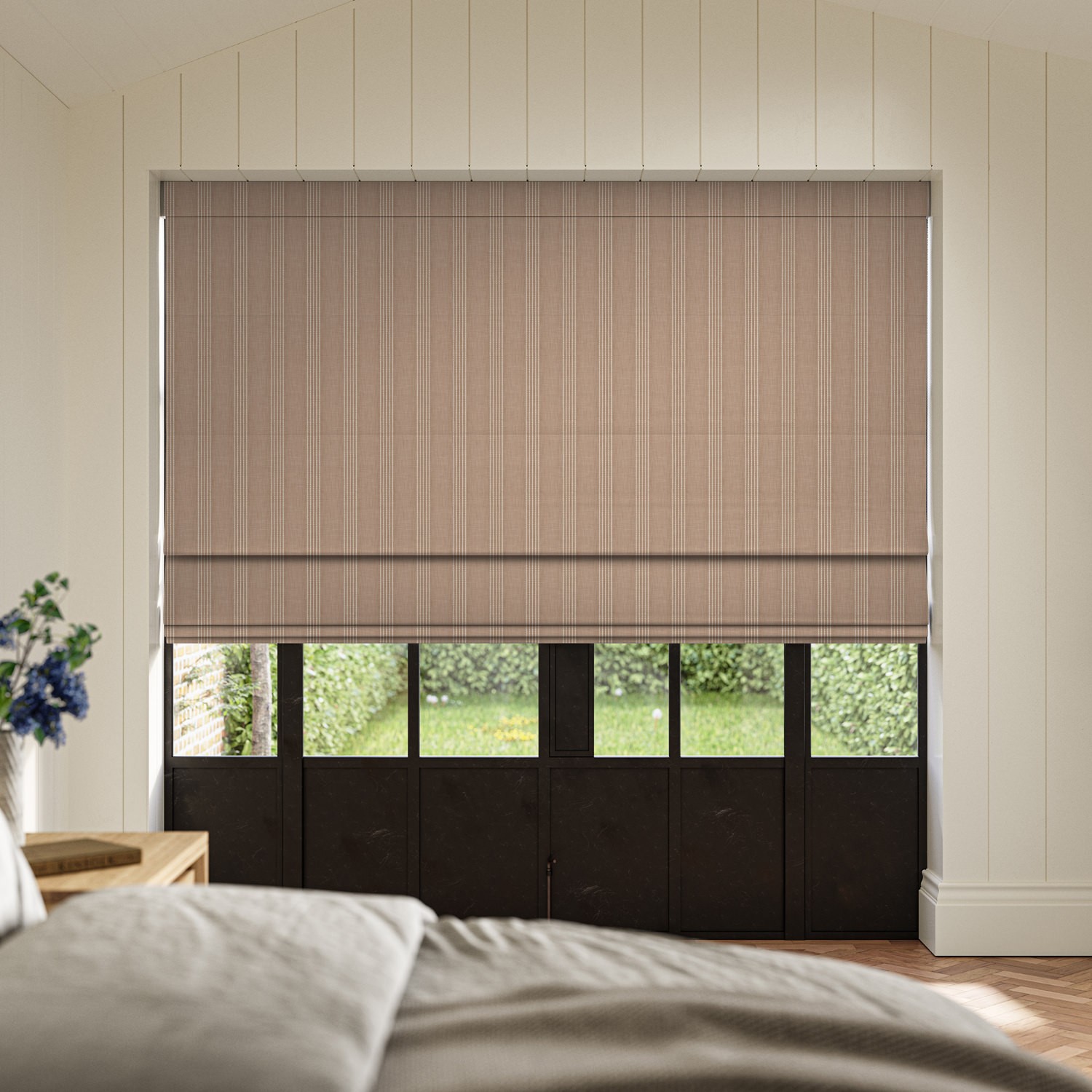
The correct width for a Roman blind depends primarily on where it will be fitted and the dimensions of the window opening.
For made-to-measure Roman blinds, accurate measuring is essential because even a relatively small error can affect how the blind sits, folds and covers the window.
Inside-Recess Width
If the Roman blind is being fitted inside the recess, the blind needs to fit comfortably within the opening.
It is important to measure the recess carefully because walls and window openings are not always perfectly square.
Check the width at more than one point, particularly:
- Near the top
- Around the middle
- Near the bottom
If the measurements differ, the smallest usable width is usually the important one to work from, subject to the supplier’s own measuring instructions.
Outside-Recess Width
If the Roman blind is being fitted outside the recess, the blind can extend beyond the window opening.
This extra overlap can help:
- Increase privacy
- Reduce edge light
- Cover the recess more completely
- Create a stronger visual frame around the window
How much overlap is appropriate will depend on the window, surrounding wall space and the supplier’s measuring guidance.
Wider Is Not Always Better
A Roman blind that is unnecessarily wide can become:
- Heavier
- More visually dominant
- Harder to operate
- Bulkier when raised
For very wide windows, it may sometimes be better to use two or more Roman blinds rather than one very large blind.
Check for Obstructions
Before deciding the final width, consider:
- Window handles
- Architraves
- Radiators
- Curtains
- Furniture
- Adjacent walls
- Other nearby window treatments
These can affect how much space is realistically available.
Multiple Windows Need Careful Planning
If several Roman blinds are being fitted side by side, consistency becomes especially important.
Consider:
- Equal blind widths where appropriate
- Gaps between blinds
- Pattern alignment
- Control-side access
- How the folds will look when all blinds are raised
The Practical Rule
For an inside-recess Roman blind, measure the opening carefully and follow the supplier’s exact deduction guidance.
For an outside-recess Roman blind, allow enough overlap to achieve the coverage and appearance you want without making the blind unnecessarily wide.
With Roman blinds, accurate width is important not only for fit, but also for appearance, operation and how neatly the fabric folds.
Roman Blinds for Wide Windows
Roman blinds can work well on wide windows, but the wider the blind becomes, the more important it is to think about weight, operation, fabric choice and the size of the folded stack.
A very wide Roman blind can look impressive, but it also places greater demand on the mechanism.
Why Width Matters
As a Roman blind gets wider, it usually means:
- More fabric
- More lining
- Greater overall weight
- More strain on the operating system
- A larger visible stack when raised
This does not mean wide Roman blinds should be avoided, but they need to be specified carefully.
Consider the Fabric Weight
Heavy fabrics, thermal linings and blackout linings can all add weight.
On a wider blind, that extra weight becomes more significant.
A lighter plain or dimout fabric may sometimes be easier to manage than a very heavy decorative construction.
Pattern Scale Can Work Well on Wide Blinds
Wide Roman blinds can carry larger patterns particularly well.
They give more space for:
- Large florals
- Botanical prints
- Heritage patterns
- Bold geometrics
- Statement designer fabrics
However, the pattern should still be considered in relation to the room and how the blind will look when raised.
The Fold Stack Will Be More Noticeable
A wide Roman blind can create a substantial fabric stack at the top.
This can affect:
- How much glazing remains visible
- How much light enters when the blind is raised
- How visually heavy the top of the window feels
If this matters, an outside-recess installation may provide more flexibility.
One Wide Blind or Several Smaller Blinds?
For very wide window areas, it may sometimes be better to use two or more Roman blinds rather than one very large blind.
This can be useful where:
- The window is divided into separate panes
- The window has multiple opening sections
- Different parts of the window need independent control
- A single blind would become very heavy
Multiple blinds can also make everyday operation easier.
Control and Mechanism Matter More
On a wide Roman blind, a suitable operating mechanism becomes particularly important.
A chain control and robust headbox may be preferable where the blind is larger and heavier.
The supplier’s maximum width and weight limits should always be checked before ordering.
Best Starting Point for Wide Windows
For a wide window, consider:
- Plain or large-scale patterned fabric
- A suitable headbox
- Chain control
- Whether thermal or blackout lining will add too much weight
- Whether multiple blinds would work better than one
The main goal is to keep the Roman blind looking balanced while making sure it remains practical to operate.
Roman Blinds for Narrow Windows
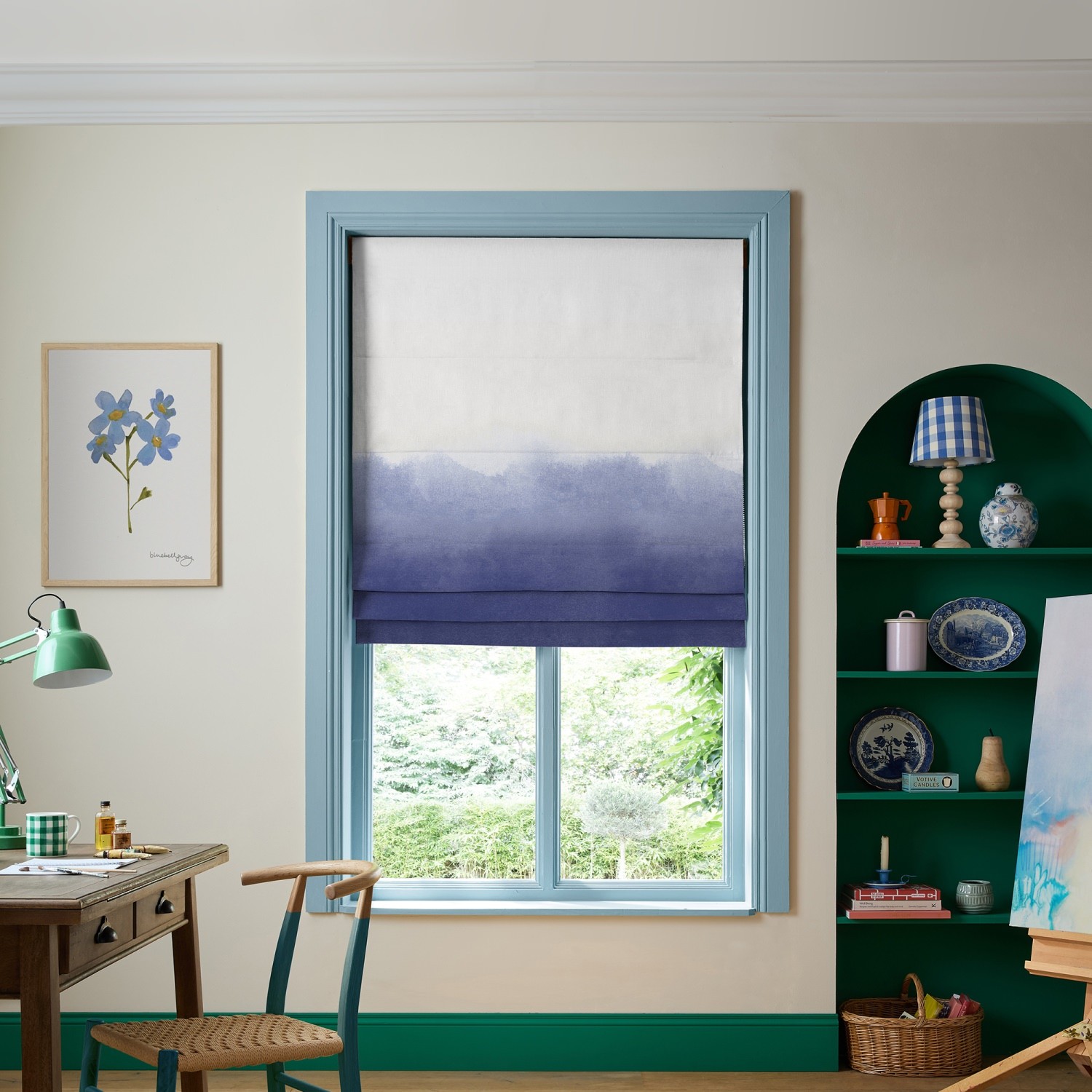
Roman blinds can work very well on narrow windows, but the main challenge is keeping the blind visually balanced without making the window feel crowded.
Fabric choice, pattern scale and fitting position all matter more when the available width is limited.
Plain Fabrics Are Often the Safest Choice
A Plain Roman blind can work particularly well on a narrow window because there is no pattern repeat to crop awkwardly.
It can also help the window feel:
- Cleaner
- Less busy
- More proportionate
- Easier to coordinate with the rest of the room
Soft neutrals and muted colours are often especially effective.
Smaller Patterns Usually Work Better
If you want a Patterned Roman blind, smaller repeating designs are generally easier to use.
They allow more of the pattern to remain visible across the width of the blind.
Good options include:
- Small florals
- Fine geometrics
- Compact botanical motifs
- Subtle repeating prints
Very large motifs can sometimes look incomplete if only part of the design is visible.
Be Careful With Strong Vertical Pattern
On a very narrow blind, certain patterns can exaggerate the height and make the window feel even slimmer.
That may be useful in some rooms, but it should be intentional.
More balanced repeating patterns are often easier to live with.
The Fold Stack Can Feel More Noticeable
On a narrow window, the folded fabric at the top can take up a relatively large proportion of the visible opening.
This matters particularly where:
- Natural light is limited
- The window is short as well as narrow
- The blind sits inside the recess
An outside-recess fit may sometimes allow more glazing to remain visible when the blind is raised.
Keep the Headbox in Proportion
A large or deep headbox can feel visually prominent on a small window.
Check the dimensions before ordering, especially if the blind will be fitted inside the recess.
Best Starting Point for Narrow Windows
A useful guide is:
- Want the safest look: Plain Roman blind
- Want pattern: Small-scale repeat
- Need more visible glass: Consider outside-recess fitting
- Need strong light control: Blackout Roman blind
- Need extra warmth: Thermal Roman blind
For narrow windows, the strongest Roman blind choices are usually those that keep the fabric and pattern in proportion with the size of the opening.
Common Roman Blind Buying Mistakes
Roman blinds are straightforward to choose once you understand the main decisions, but a few common mistakes can lead to a blind that looks good on paper and works less well in the room.
Choosing Fabric Before Deciding What the Blind Needs to Do
It is easy to start with colour or pattern, but performance should come first.
Before looking at fabric, decide whether you need:
- Blackout
- Dimout
- Thermal performance
- Sheer light filtering
- Strong privacy
Once those decisions are made, style becomes much easier.
Assuming Blackout Means Complete Darkness
Blackout fabric reduces light passing through the material, but light can still enter around the edges of the blind.
This is especially relevant with inside-recess fitting.
If darkness is important, think about both:
- Fabric type
- How the blind will be fitted
Ignoring the Fabric Stack
A Roman blind folds into a visible stack at the top when raised.
If this is not considered in advance, the blind may cover more of the glazing than expected.
This matters particularly on:
- Small windows
- Short windows
- Darker rooms
- Inside-recess installations
Choosing a Pattern That Is Too Large
A large pattern can look impressive on a wide blind, but on a narrow window it may be cropped awkwardly.
Always think about:
- Pattern repeat
- Blind width
- Blind drop
- How the design will look when folded
Using Too Much Pattern in the Room
A patterned Roman blind can become a strong feature.
If the room already includes:
- Patterned wallpaper
- Decorative curtains
- Printed upholstery
- Strong rugs
adding another prominent pattern can make the room feel visually crowded.
In that situation, a plain Roman blind may work better.
Forgetting About the Control Side
The chain may become awkward to reach if it is positioned behind:
- Furniture
- Curtains
- Beds
- Desks
- Radiators
Choose the control side based on how the room will actually be used.
Not Checking Recess Depth
A Roman blind may fit within the width of the recess but still be unsuitable because there is not enough depth.
Check for:
- Window handles
- Trickle vents
- Opening sashes
- Headbox depth
- Other projecting fittings
Assuming Thermal and Blackout Mean the Same Thing
They do not.
Blackout is primarily about light reduction.
Thermal is primarily about insulation.
If you want both, check that the chosen Roman blind actually offers both features.
Choosing Colour Without Seeing It in the Room
Fabric colours can look very different depending on:
- Natural light
- Window direction
- Wall colour
- Artificial lighting
- Surrounding furniture
Whenever possible, check a fabric sample in the room before ordering.
Making One Blind Too Wide
A very wide Roman blind can become heavy and bulky.
For larger window areas, several smaller blinds may sometimes be more practical than one very large blind.
The Best Way to Avoid Mistakes
Before ordering, work through the decisions in this order:
function → fit → fabric type → pattern scale → colour → control side → final style
That approach removes most of the common problems before they occur.
What Roman Blind Should You Avoid for Certain Situations?
Roman blinds are versatile, but certain fabric and feature combinations are less suitable in particular situations.
The issue is usually not the Roman blind itself, but choosing a specification that does not match the room.
Avoid Sheer Voile Where Strong Privacy Is Essential
Sheer voile Roman blinds are designed to filter light, not provide strong screening.
They are less suitable for:
- Street-facing bedrooms
- Ground-floor rooms that are heavily overlooked
- Bathrooms requiring privacy
- Rooms where night-time privacy is important
In these situations, Dimout or Blackout fabric is usually more appropriate.
Avoid Blackout if You Mainly Want Soft Daylight
Blackout fabric is designed for strong light reduction.
It may be unnecessary in rooms where the main aim is to:
- Keep the space bright
- Soften glare
- Preserve natural daylight
- Maintain an open feel
Dimout or Sheer Voile may be a better fit.
Avoid Large-Scale Patterns on Very Narrow Windows
A large floral, botanical or geometric motif can lose its impact if only a small portion of the design is visible.
On narrow Roman blinds, large patterns may:
- Look cropped
- Feel out of proportion
- Lose the intended repeat
- Become harder to read visually
A smaller-scale pattern or Plain fabric is often safer.
Avoid Very Busy Patterns in an Already Patterned Room
If the room already has:
- Patterned wallpaper
- Strong upholstery
- Decorative curtains
- Bold rugs
another strong pattern at the window can make the scheme feel overloaded.
A Plain Roman blind can help balance the room.
Avoid Heavy Thermal Construction if Visual Lightness Matters Most
Thermal Roman blinds can be more substantial because of their construction.
In a very small room or on a compact window, that extra visual weight may not suit the look you want.
If insulation is not a priority, a lighter Plain or Dimout fabric may feel more appropriate.
Avoid Inside-Recess Fitting if the Recess Is Too Shallow
A Roman blind should not be forced into a recess where there is not enough room for:
- The headbox
- Window handles
- Trickle vents
- Opening sections
- The fabric folds
An outside-recess fit may be more practical.
Avoid One Oversized Blind Where Several Would Work Better
On very wide windows, one Roman blind can become unnecessarily heavy.
Several smaller blinds may sometimes provide:
- Easier operation
- Better control
- Better alignment with separate window sections
- Less strain on the mechanism
Always check the supplier’s size limits.
Avoid Choosing by Appearance Alone
A fabric may look ideal, but the Roman blind still needs to suit:
- Light requirements
- Privacy needs
- Thermal needs
- Window size
- Fitting position
- Control side
The best Roman blind is one where function and appearance work together, rather than one chosen solely because the fabric looks attractive.
Roman Blind Features Compared
If you are still deciding which Roman blind specification is right for your room, this comparison brings the main options together.
| Feature | Best For | Main Benefit | Main Limitation |
|---|---|---|---|
| Thermal | Colder rooms, older homes, north-facing spaces | Adds an extra insulating layer at the window | Can feel heavier and does not automatically provide blackout |
| Blackout | Bedrooms, children’s rooms, media rooms | Strong light reduction through the fabric | Some light may still enter around the edges |
| Dimout | Living rooms, dining rooms, home offices | Reduces glare and softens daylight | Will not provide full blackout |
| Sheer Voile | Bright rooms, layered windows, softer decorative schemes | Filters daylight while keeping the room feeling light | Limited privacy, especially at night |
| Plain Fabric | Minimal interiors, busy rooms, small windows | Easy to coordinate and visually calm | Less decorative if you want a statement feature |
| Patterned Fabric | Feature windows, traditional rooms, colour-led interiors | Adds character, colour and visual interest | Can compete with other patterns if not balanced carefully |
| Chain Control | Everyday manual operation, larger blinds | Simple, precise raising and lowering | Control position and child-safety requirements must be considered |
| Headbox | Larger blinds, modern interiors, cleaner installations | Keeps the mechanism contained and gives a neater top finish | Needs sufficient fitting depth |
Which Features Can Be Combined?
Roman blind features are not always mutually exclusive.
Depending on the range, you may be able to choose combinations such as:
- Thermal + Blackout
- Blackout + Patterned
- Dimout + Plain
- Thermal + Plain
- Patterned + Headbox
- Blackout + Chain Control
This is why it is better to think of the blind as a specification rather than a single feature.
Start With the Main Requirement
A simple way to narrow the choice is:
- Need darkness: Blackout
- Need insulation: Thermal
- Need softer daylight: Dimout
- Want filtered light: Sheer Voile
- Want a quiet look: Plain
- Want a focal point: Patterned
- Want straightforward manual operation: Chain Control
- Want a cleaner top finish: Headbox
Once the main requirement is clear, the remaining features can be chosen around it.
Best Roman Blind by Room and Priority
If you are choosing between several Roman blind options, it can help to start with the room and the main problem you want the blind to solve.
| Situation | Best Starting Point | Why |
|---|---|---|
| Main bedroom | Blackout Roman blind | Strong light reduction and privacy |
| Cold bedroom | Thermal + Blackout Roman blind | Combines light control with added insulation |
| Living room | Dimout Roman blind | Softens daylight without making the room too dark |
| Feature window | Patterned Roman blind | Adds colour and decorative impact |
| Minimal interior | Plain Roman blind | Keeps the window visually calm and easy to coordinate |
| Home office | Dimout or Plain Roman blind | Helps manage glare while keeping the space comfortable |
| Period property | Thermal or Patterned Roman blind | Can support both comfort and traditional styling |
| Soft filtered daylight | Sheer Voile Roman blind | Keeps the room bright while softening the light |
| Narrow window | Plain or small-scale Patterned Roman blind | Keeps the proportions balanced |
| Wide window | Plain or larger-scale Patterned Roman blind | Allows more space for colour and larger pattern repeats |
Start With the Room, Then Refine the Specification
The table is a starting point rather than a strict rule.
For example, a living room may begin with Dimout as the most practical choice, but you could then refine it further by choosing:
- Plain or Patterned fabric
- Thermal performance
- Chain Control
- Headbox
- Inside or outside recess fitting
The same applies to a bedroom. Blackout may be the main requirement, but you still need to decide whether the blind should be plain, patterned, thermal or designer-led.
The Simplest Decision Process
A practical order is:
room → main requirement → fabric type → fitting position → colour and pattern → control and headbox
This helps prevent style choices from overriding the features that actually matter most in everyday use.
Which DotcomBlinds Roman Blind Is Right for You?
The easiest way to narrow down the DotcomBlinds Roman blind range is to start with the main requirement, then refine the choice by fabric, colour, pattern and designer collection.
Need Stronger Light Reduction?
Choose a Blackout Roman blind.
This is usually the best starting point for:
- Bedrooms
- Children’s rooms
- Rooms affected by street lighting
- Spaces where stronger light reduction is important
You can then decide whether the blind should be plain or patterned.
Need a Softer Daytime Effect?
Choose a Dimout Roman blind.
This can work especially well in:
- Living rooms
- Dining rooms
- Home offices
- Guest rooms
It provides more light control than a lighter decorative fabric without creating the same level of darkness as blackout.
Need Extra Thermal Performance?
Choose a Thermal Roman blind.
This may be particularly useful for:
- Older properties
- North-facing rooms
- Bedrooms
- Period homes
- Windows that feel noticeably colder in winter
If both warmth and darkness matter, check whether the chosen blind also offers blackout performance.
Want the Blind to Blend Into the Room?
Choose a Plain Roman blind.
Plain fabric is usually the easiest option where you want:
- A calm interior
- Easy coordination
- A more minimal appearance
- The blind to support rather than dominate the room
Want the Window to Become a Feature?
Choose a Patterned Roman blind.
This works particularly well where:
- The walls are plain
- The room needs more colour
- The window is naturally prominent
- You want the Roman blind to contribute strongly to the interior
Designer collections can be especially useful here.
Want Soft, Filtered Daylight?
Choose a Sheer Voile Roman blind.
This is best where the main priority is:
- Maintaining natural light
- Softening bright daylight
- Creating a lighter decorative effect
- Layering the Roman blind with curtains
It is less suitable where strong privacy or blackout is required.
Prefer Straightforward Manual Operation?
Choose Chain Control.
Before ordering, decide which side will be easiest to reach and check that the control will not interfere with furniture, curtains or window hardware.
Want a Cleaner Top Finish?
Consider a Headbox.
A headbox can give the mechanism a more contained appearance and may be particularly useful on larger Roman blinds or in more contemporary interiors.
Choosing a Designer Collection
If style is the next priority, a useful starting point is:
- William Morris: Heritage and traditional
- Laura Ashley: Classic and country
- Cath Kidston: Cottage and playful traditional
- Sophie Allport: Relaxed country
- Emily Bond: Rustic and rural
- Orla Kiely: Mid-century and retro
- Sara Miller: Contemporary luxe
- Ted Baker: Polished contemporary
- Bluebellgray: Artistic and colourful
- Land & Shore: Relaxed contemporary and natural
- Shabby Chic by Rachel Ashwell: Vintage and romantic
- DotcomBlind: Versatile, plain and broadly coordinated options
The Simplest Way to Choose
Start with:
light control or thermal need → plain or patterned → colour → designer style → control → fitting position
That keeps the practical decisions at the centre while still leaving plenty of room to choose a Roman blind that suits the interior.
Final Roman Blind Buying Checklist
Before ordering a Roman blind, work through this checklist so the blind suits both the window and the room.
1. What Room Is the Blind For?
Start with the room because that usually determines the main requirement.
- Bedroom
- Living room
- Dining room
- Home office
- Children’s bedroom
- Period room
- Other living space
2. How Much Light Control Do You Need?
Choose between:
- Blackout
- Dimout
- Sheer Voile
- Standard decorative fabric
If darkness matters, check both the fabric and the fitting position.
3. Do You Need Thermal Performance?
Consider Thermal if the room is:
- Cold
- North-facing
- In an older property
- Using older glazing
- Noticeably uncomfortable near the window
If you need both warmth and darkness, check whether the blind offers Thermal + Blackout.
4. Plain or Patterned?
Choose Plain if you want:
- A calm look
- Easy coordination
- A more minimal result
- Less competition with other patterns
Choose Patterned if you want:
- A feature window
- More colour
- More decorative impact
- A stronger interior-design statement
5. Is the Pattern the Right Scale?
Check:
- Window width
- Window height
- Pattern repeat
- Motif size
- How the design will look when folded
A large pattern may suit a wide window but can feel awkward on a narrow blind.
6. Is the Colour Right for the Room?
Compare the fabric with:
- Wall colour
- Flooring
- Furniture
- Curtains
- Upholstery
- Existing patterns
Whenever possible, view a fabric sample in the actual room and in both daylight and artificial light.
7. Inside or Outside the Recess?
Choose inside the recess for a neater, more contained look.
Choose outside the recess where you want:
- More overlap
- Better edge coverage
- More visible glazing when raised
- More flexibility around a shallow recess
8. Is the Recess Deep Enough?
Check:
- Headbox depth
- Window handles
- Trickle vents
- Opening sashes
- Other projecting fittings
Use the usable recess depth, not just the full measurement to the glass.
9. How Much Fabric Will Stack at the Top?
Remember that Roman blinds fold rather than roll away.
Consider whether the stack will cover too much of the glazing when the blind is raised.
This is particularly important on:
- Small windows
- Short windows
- Dark rooms
- Inside-recess installations
10. Is the Blind Too Wide?
For very wide windows, check:
- Maximum permitted blind size
- Fabric weight
- Lining weight
- Mechanism suitability
- Whether two or more blinds would work better
11. Which Control Side Is Best?
Think about:
- Furniture
- Beds
- Sofas
- Desks
- Curtains
- Radiators
- Window handles
- Which side is easiest to reach
12. Do You Want Chain Control?
If choosing Chain Control, check:
- Ease of access
- Correct control-side position
- Child-safety requirements
- Installation of any supplied safety device
13. Do You Want a Headbox?
A Headbox may be useful where you want:
- A cleaner top finish
- A more contained mechanism
- A more structured look
- Better support for a larger blind
Check that there is enough fitting depth.
14. Do You Want a Designer Fabric?
If yes, choose the collection by interior style rather than brand name alone.
For example:
- William Morris for heritage
- Laura Ashley for classic and country
- Orla Kiely for mid-century and retro
- Sara Miller for contemporary luxe
- Sophie Allport for relaxed country
- Bluebellgray for artistic, colourful interiors
15. Will the Blind Be Used With Curtains?
If so, consider:
- Whether the blind should be plain or patterned
- How the colours coordinate
- Whether the chain will remain accessible
- Whether the combined fabrics will make the window feel too heavy
Final Check Before Ordering
Make sure you are happy with:
light control + thermal performance + fabric type + pattern scale + colour + fitting position + recess depth + stack size + control side + headbox + final measurements
If all of those decisions have been considered, you are much more likely to end up with a Roman blind that works well both practically and visually.