Order Tracking
 0800 1422417
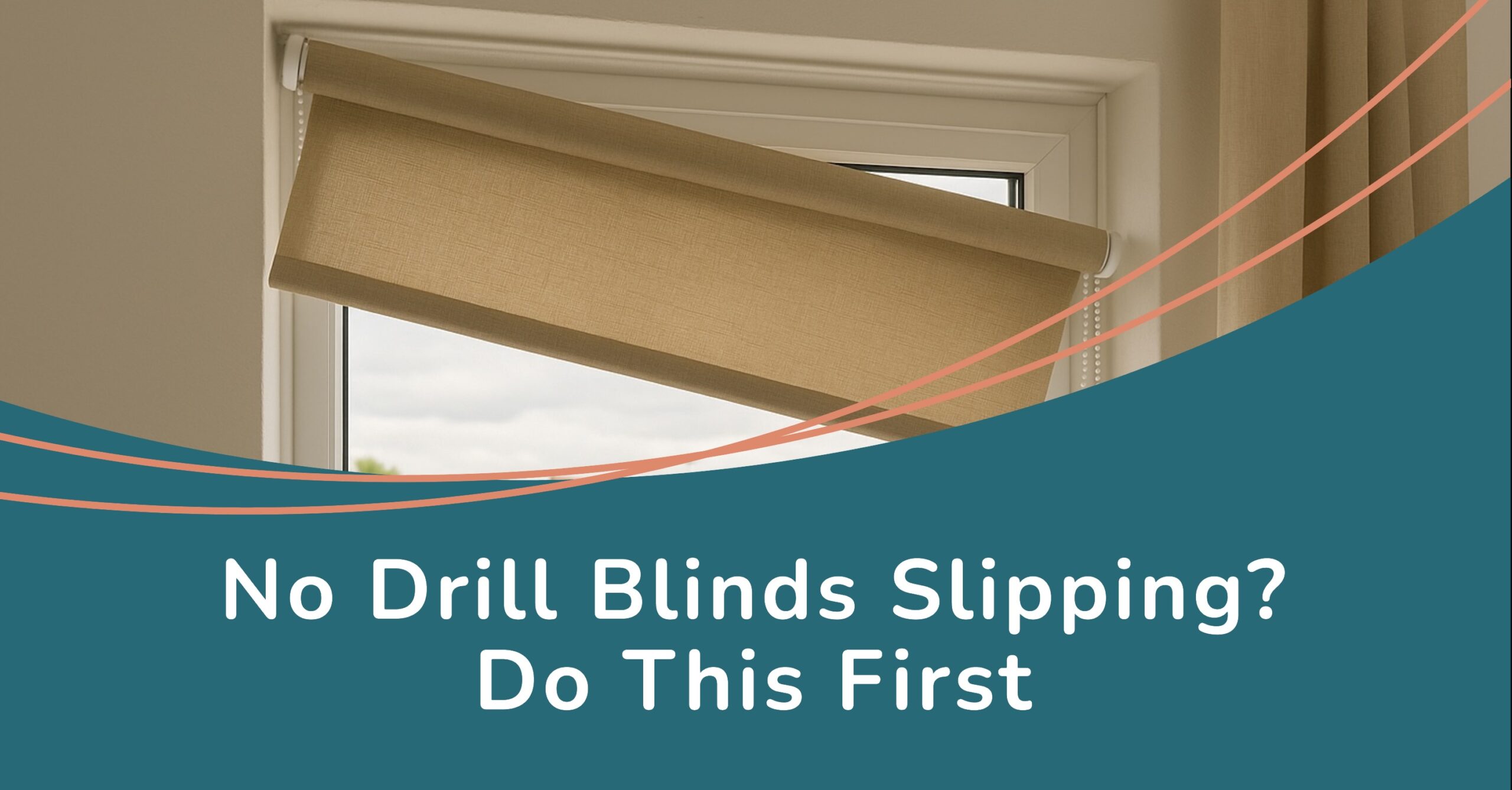
Few things are more frustrating than installing a new no-drill blind, only to find it slipping down or falling off within days. No-drill blinds are designed to be simple, damage-free alternatives to traditional blinds that require screws and wall plugs, but like any fixture, they can run into problems.
The good news? Most slipping issues have clear causes and straightforward solutions. Before you give up on your blind completely, it’s worth taking a closer look at the mechanism, your window recess, and the installation method.
In this guide, we’ll explain the different no-drill blind mechanisms, walk you through a quick diagnosis process, explore the most common reasons why blinds slip, and show you how to fix them step by step.
Table of Contents
- Understanding No-Drill Mechanisms
- The Immediate First Step: Diagnosis
- Why Your No-Drill Blind is Falling: 5 Common Reasons
- The Fix: What to Do First
- When to Give Up: Moving Beyond No-Drill
- Preventing Future Slipping
- Common Questions About Slipping No-Drill Blinds
Understanding No-Drill Mechanisms

Not all no-drill blinds are the same. The way yours is designed to stay in place directly affects why it might be slipping — and how you can fix it. Here are the four main types:
1. Tension-Fit / Spring-Loaded
- Common with roller blinds and some pleated blinds.
- These blinds rely on spring-loaded end caps that press against the inside of your window recess.
- Strengths: Fast installation, no adhesives required, easy to remove.
- Weaknesses: Require smooth, even, and solid recess walls. If the walls are flaky or uneven, grip is lost.
2. Twist-and-Lock
- Uses a turning mechanism that expands an internal bar or bracket until it locks into place.
- Strengths: Generally firmer than simple spring tension.
- Weaknesses: Can wear over time. If over-tightened repeatedly, parts may crack or strip.
3. Click-in / Bracket-Based (Perfect Fit Blinds)
- Designed for uPVC windows, these blinds clip between the glass and the rubber beading of the frame.
- Strengths: Do not rely on recess walls at all, very stable.
- Weaknesses: Only suitable for uPVC windows with compatible beading.
4. Adhesive / Stick-On
- Includes peel-and-stick blackout blinds and some pleated designs.
- Adhesive pads or brackets stick directly to the wall or frame.
- Strengths: Extremely quick to fit.
- Weaknesses: Fail easily if the surface is dusty, greasy, damp, or textured.
The Immediate First Step: Diagnosis
Before you rush to buy a replacement blind or attempt a permanent fix, pause and diagnose the problem. This will save you time and money.
- Check the Mechanism: Reinstall the blind. Does it fall immediately or after a few hours? If it makes a dull “clunk” and slides out, it may be a mechanism issue.
- Examine the Recess Walls: Run a finger along the recess where the blind was installed. Do you feel dust, loose paint flakes, or moisture? This indicates the walls are the culprit.
- Inspect the Blind Itself: Look at the ends of the mechanism. Are there visible cracks, chips, or worn-down parts? If so, the blind may simply need replacing.
This short investigation often reveals the root cause without any guesswork.
Why Your No-Drill Blind is Falling: 5 Common Reasons

1. Soft, Flaky, or Uneven Recess Walls
The Problem:
Tension and twist-fit blinds depend on solid, even walls. In older properties, walls may be plastered unevenly, or the paint may flake and crumble. Even a slight curve can reduce grip.
Key Indicator:
When the blind falls, you notice a dusty outline or small dents where the caps were pressing.
2. Dirty or Oily Recess Walls
The Problem:
Grease, dust, or everyday dirt reduce the friction needed for both tension and adhesive blinds. Kitchens and bathrooms are the worst offenders, with steam, condensation, and cooking residues creating a slippery film.
Key Indicator:
The falling blind leaves behind a noticeably clean spot where it was once pressed or stuck.
3. Mechanism Failure (Wear and Tear)
The Problem:
Springs lose their elasticity, twist-locks strip their threads, and adhesives lose their grip with time. If a blind has been installed, removed, and reinstalled several times, the mechanism may simply have worn out.
Key Indicator:
The blind feels loose even when “locked” in place. You may hear a click, but it doesn’t feel firm.
4. The Window Recess is Too Wide (or Out of Square)
The Problem:
Even high-quality blinds have limits. If your recess is slightly too wide, or wider at the top than at the bottom, the tension is never uniform. This causes slipping — often when you actually pull the blind down.
Key Indicator:
The blind stays up until used, or measuring reveals that your recess width changes by several millimetres from top to bottom.
5. Incorrect Mechanism Choice for the Window Type
The Problem:
Not every no-drill blind suits every window. A tension blind on a sloped uPVC frame will never hold properly. Similarly, adhesive blinds won’t work well on textured walls.
Key Indicator:
The end caps of your blind keep sliding down the slope of the window frame, never finding a secure flat spot.
The Fix: What to Do First
If the Problem is Dirty or Dusty Walls
- Fix: Clean the recess area thoroughly. Use rubbing alcohol (isopropyl) or an all-purpose cleaner.
- Pay attention to the exact spots where end caps or adhesive pads touch.
- For adhesive blinds: let the surface dry completely before reattaching.
If the Problem is Soft, Flaky, or Uneven Walls
- Fix: Improve grip with non-slip pads or double-sided foam tape.
- A small rubber pad (like a furniture protector) or strong foam tape compensates for minor unevenness and prevents slipping.
- Warning: If the surface is truly crumbling, this is only temporary. Professional re-plastering may be required.
If the Problem is Mechanism Failure or Too-Wide Recess
-
Fix: Use a shim or spacer.
-
Remove the end cap on one side.
-
Insert a thin, firm object such as a coin, washer, or bit of card wrapped in tape.
-
This lengthens the blind by a millimetre or two, improving tension.
-
-
When to Give Up: If the spring is slack or parts are cracked, the blind must be replaced.
If the Problem is Out of Square or Unsuitable for Tension
-
Fix: Swap to a more suitable no-drill blind.
-
For uPVC windows: consider Perfect Fit (click-in) blinds.
-
For irregular recesses: consider blinds mounted outside the recess instead of inside.
-
-
Alternative: If nothing works, a fitted (drilled) blind is the only long-term solution.
When to Give Up: Moving Beyond No-Drill
Sometimes, no amount of tweaking will make a slipping blind stay put. Here’s when to accept that it’s time to move on:
- Oversized or Out-of-Square Recess: If shims and spacers fail, a made-to-measure drilled blind will be the only option.
- Crumbling Walls: A blind won’t hold on plaster that falls apart. Repair the recess before attempting installation.
- Repeated Failures: If multiple no-drill blinds have failed in the same window, the problem lies with the surface or recess, not the blinds.
Preventing Future Slipping
A little preparation goes a long way:
- Always measure the recess width at the top, middle, and bottom before ordering.
- Match the blind type to the window: tension blinds for solid recesses, Perfect Fit for uPVC, adhesive only on smooth, clean surfaces.
- Clean the recess walls before installation.
- Avoid frequent removal and reinstallation, which weakens mechanisms and adhesives.
Common Questions About Slipping No-Drill Blinds
A. Core Diagnosis: Why Did It Fall?
Q: Why does my no-drill blind keep falling down after I put it back up?
This usually means the mechanism isn’t gripping properly. Check for dust, grease, or flaky paint in the recess, and inspect the blind ends for wear. If the surface is clean and solid, the mechanism may be faulty and require replacing.
Q: My tension blind was fine for months, why is it suddenly slipping now?
Delayed slipping is often caused by seasonal changes, like summer heat softening materials or winter condensation weakening surfaces. Dust build-up and spring fatigue can also cause tension loss over time.
Q: Is it normal for no-drill blinds to fall down?
It’s fairly common, but not inevitable. Most slipping problems come down to an unsuitable mechanism for the window type, poor surface preparation, or a worn mechanism. With the right blind in the right recess, they should stay up securely.
Q: My adhesive/stick-on blind fell off. Is the glue just bad?
Not usually. Most adhesive failures are caused by dirty, damp, or textured surfaces. Wipe the surface with rubbing alcohol and make sure it’s completely dry before reattaching. If the original pads are spent, replace them with new heavy-duty adhesive strips.
Q: Why do my blinds fall when I pull the cord?
This suggests the mounting method can’t handle the extra pulling force. For tension blinds, it may mean the spring isn’t strong enough or the recess is uneven. For adhesive blinds, it could mean the pads don’t have enough surface contact.
B. Mechanism & Installation Fixes: How to Get a Better Grip?
Q: How do I put more tension on my tension rod blind?
Most tension rods can be twisted to increase pressure. Remove the blind, turn the rod to tighten the spring, and reinstall. If it still feels loose even at maximum tension, the spring may be worn and the blind will need replacing.
Q: What can I put on the window frame to make my tension blind stick?
Non-slip rubber pads or strong double-sided foam tape work well. They add friction, help even out small imperfections, and give the blind ends something firmer to press against.
Q: How do I fix a no-drill roller blind that won’t stay rolled up?
This usually points to a worn internal spring, not the installation. Unfortunately, once the spring mechanism weakens, the only reliable solution is to replace the blind.
Q: Can I use Command Strips or heavy-duty tape to re-mount my adhesive blind?
Yes, many people do. Just make sure the surface is completely clean and dry before applying, and choose weight-rated strips or tape designed for wall mounting.
Q: My window recess is uneven—how can I still use a no-drill blind?
Try adding thin spacers, like washers or rubber pads, behind the end caps to make up for the unevenness. If the recess is very irregular, you may need to switch to Perfect Fit blinds or an outside-recess installation.
C. Limitations & Alternatives: Is It Even Possible?
Q: Are no-drill blinds only for small windows?
They’re best suited for smaller to medium windows. Very wide or heavy blinds put too much strain on no-drill fittings, especially tension and adhesive types.
Q: Do no-drill blinds work on very wide windows?
Tension blinds struggle with extra width because the spring can’t apply enough pressure. If you want no-drill blinds for a wide window, consider installing two smaller blinds side by side or switching to a click-in Perfect Fit style if your frames allow it.
Q: What is the best type of no-drill blind for uPVC windows?
Perfect Fit or Click-in blinds are ideal. They clip securely into the beading of the frame and don’t rely on the recess walls at all, so slipping is much less likely.
Q: Do tension rods work on curved or sloped window frames?
No — tension and twist blinds require flat, parallel surfaces to grip. For curved or sloped frames, look into Perfect Fit blinds or custom-fitted solutions.
Q: When should I give up on no-drill and switch to a drilled blind?
If you’ve cleaned, shimmed, and tested the mechanism and the blind still falls, the problem is structural (oversize recess, crumbling walls, or an unsuitable frame). In these cases, a drilled blind is the only long-term fix.
Time For a New No Drill Blind?
No-drill blinds are a clever solution for renters, homeowners, and anyone who wants stylish window coverings without drilling holes. But if your blind keeps slipping, the problem usually comes down to one of five issues: surface preparation, wall condition, mechanism failure, incorrect fit, or the wrong blind type for the window.
By carefully diagnosing the cause and applying the right fix — whether it’s cleaning the recess, adding grip pads, shimming the mechanism, or switching to a different no-drill style — you can often solve the problem quickly. If not, it may be time to upgrade.
At DotcomBlinds, you’ll find a wide range of no-drill blinds designed to fit modern homes with ease. Explore the full collection here: DotcomBlinds No-Drill Blinds. Not sure which style is right for you? Order a 100% free sample first to test the colour, fabric, and fit before you buy.
Your next no-drill blind doesn’t just have to stay up — it can look fantastic too.