Order Tracking
 0800 1422417
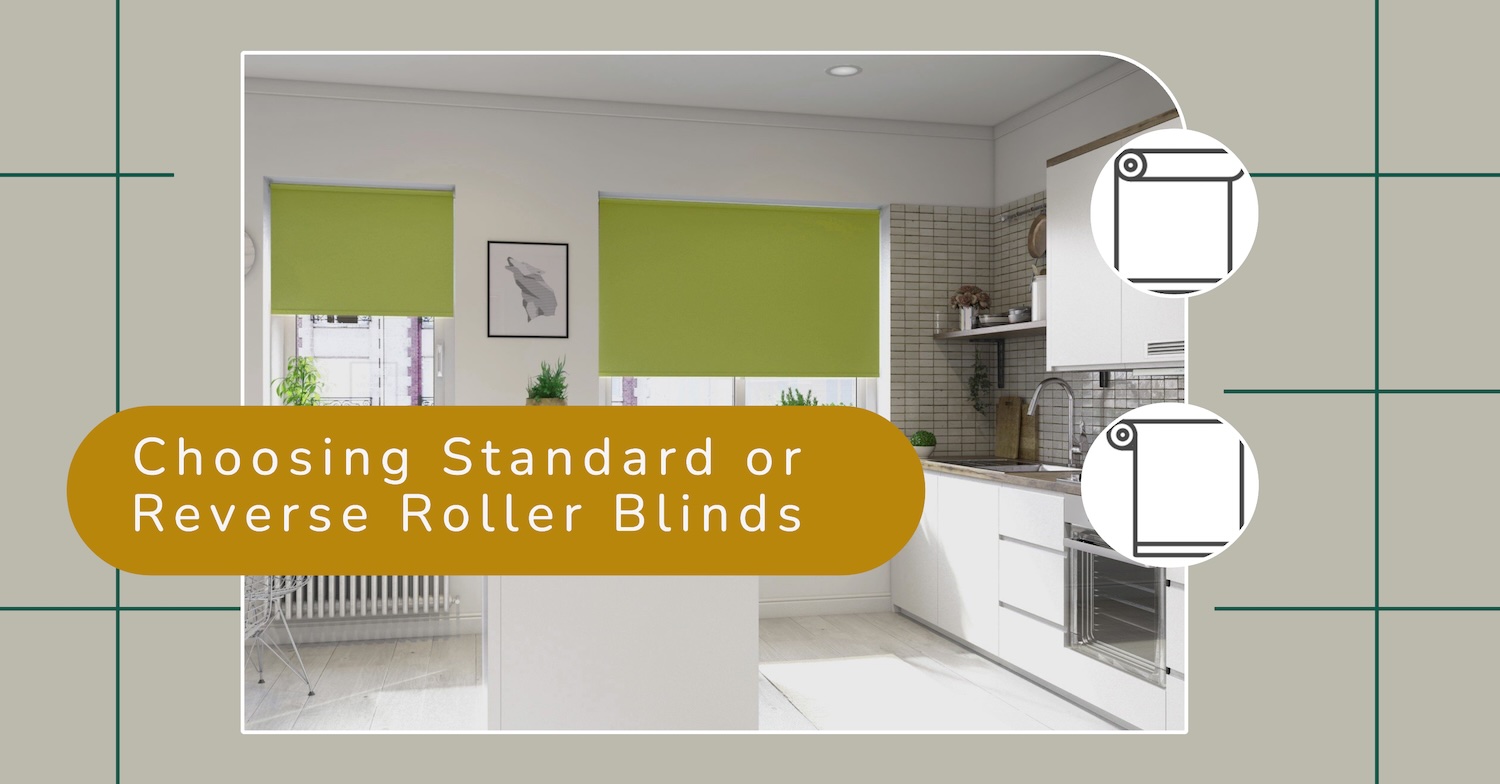
Roller blinds are one of the most popular window covering choices in the UK, but many shoppers are surprised to learn there’s more than one way the fabric can roll. This simple detail can have a big impact on how your blinds look and function.
In this article, we’ll explain the difference between a standard roll and a reverse roll, so you can confidently choose the option that works best for your home, style, and window layout.
While your decision may come down to appearance or practicality, the right choice will depend on how you balance these two factors.
What is a Standard Roll?
 A standard roll is the most common and traditional way to fit a roller blind. In this setup, the fabric rolls off the back of the roller tube, sitting close to the window pane. When the blind is fully lowered, the top of the fabric is hidden from view, creating a neat, streamlined appearance. As the blind rolls up, it “hugs” the window, following its shape closely.
Advantages of a Standard Roll
- Light Gap Control – With the fabric positioned nearer to the glass, side gaps are kept to a minimum, offering improved light control and greater privacy.
- Better Insulation – The closer fit can help trap a small layer of air between the fabric and the glass, which may slightly improve insulation.
- Clean, Traditional Look – Standard roll offers a simple, classic appearance that suits most interiors. However, the roller tube and brackets may be visible from the front unless paired with a fascia or cassette cover.
Disadvantages and Considerations
- Not Ideal for Obstacles – If your window has protruding handles, locks, or other features, the fabric may catch on them as it lowers, making operation awkward or impossible.
- Aesthetic Preference – While many like the classic look, some people prefer the softer, layered effect of fabric falling from the front in a reverse roll configuration.
What is a Reverse Roll?
 A reverse roll roller blind is designed so that the fabric comes off the front of the roller tube, falling away from the window pane. This means the fabric cascades down in front of the roller, revealing the top edge of the material while hiding the rear of the tube from view. The result is a softer, more layered effect compared to the snug fit of a standard roll.
Advantages of a Reverse Roll
- Obstacle Clearance – The biggest advantage of a reverse roll is its ability to avoid obstructions. If your window has protruding handles, cranks, locks, or trim, the fabric drops forward and clears these obstacles with ease. Think of it as giving the blind a “built-in bridge” over anything that would otherwise get in the way.
- Modern, Decorative Look – Reverse roll blinds offer a contemporary style, with the fabric becoming a feature in its own right. The roller tube is hidden from the front and top, creating a sleek, uninterrupted finish.
- Fabric Protection – Since the fabric hangs away from the glass, it’s less likely to rub against the window frame, collect condensation, or suffer marks from daily contact.
Disadvantages and Considerations
- Increased Light Gap – Because the fabric is positioned further from the window, small gaps at the sides can let in more light, slightly reducing privacy and blackout performance.
- Light Spill from Above – When the blind is fully lowered, light can filter over the top edge (above the roller tube), particularly in bright daylight.
- Extra Projection – The blind extends further into the room, which could be a drawback if space is very limited or if furniture is close to the window.
Standard Roll vs Reverse Roll – At a Glance
| Feature | Standard Roll | Reverse Roll |
|---|---|---|
| Fabric Position | Fabric rolls from the back of the tube, close to the window pane. | Fabric rolls from the front of the tube, away from the window pane. |
| Clearance for Obstacles | Limited – may catch on handles, locks, or trim. | Excellent – fabric drops forward to clear handles and other obstructions. |
| Aesthetic / Appearance | Clean, traditional look; roller tube and brackets may be visible unless covered. | Soft, modern look; hides roller tube from the front and top. |
| Light & Privacy Control | Better – minimal side gaps for improved light blocking and privacy. | Slightly reduced – larger side gaps allow more light to pass. |
| Light Gap | Narrow, due to fabric’s close fit to glass. | Wider, as fabric sits further from glass. |
| Space Required (Projection) | Minimal projection into the room. | Projects further into the room, which may not suit tight spaces. |
Making Your Decision: A Simple Checklist
Choosing between a standard roll and a reverse roll comes down to balancing function and style. Use this quick checklist to guide your decision:
-
Check for Obstacles
Does your window have a protruding handle, lock, or alarm sensor?-
Yes – Reverse Roll is likely your only practical option.
-
No – You can choose either style.
-
-
Consider the Look
Which aesthetic do you prefer – the clean, close-to-the-window look, or the soft, cascading waterfall effect?-
Clean, classic – Standard Roll may suit you best.
-
Soft, modern – Reverse Roll could be the better fit.
-
-
Prioritise Light & Privacy
Is minimising light gaps and maximising privacy your top priority?-
Yes – Standard Roll will give better coverage.
-
No – Reverse Roll is still a great option if style or clearance matters more.
-
-
Think About the Space
Is the blind being installed in a tight space where projection is a concern?-
Yes – Standard Roll will sit closer to the window.
-
No – Reverse Roll can work without issues.
-
By answering these questions, you’ll quickly discover which roll style meets your needs while complementing your home’s design.
Frequently Asked Questions (FAQ)
Q1: Does the type of roll affect the price of the blind?
No, generally there’s no difference in the cost of a roller blind based on whether it’s a standard or reverse roll. The choice is all about function and aesthetics, not a price upgrade.
Q2: Can I change a standard roll blind to a reverse roll (or vice versa) after I’ve bought it?
In most cases, yes. Many roller blind mechanisms are designed to be reversible. You’ll need to remove the blind from its brackets, unroll the fabric completely, detach it from the tube, and reattach it on the opposite side. That said, always check the manufacturer’s instructions first, as some models may be exceptions.
Q3: Does one type of roll look better than the other?
This comes down to personal taste. A standard roll gives a clean, classic look with fabric close to the window. A reverse roll offers a more modern, “waterfall” effect that hides the roller tube from the front and can be a decorative statement.
Q4: Will a reverse roll blind create a larger light gap on the sides?
Yes. Because the fabric hangs further from the frame, reverse roll blinds have slightly wider light gaps at the sides. If light control and privacy are your top priorities, a standard roll is usually the better option.
Q5: Is it harder to clean a reverse roll blind?
No. Both types require the same care—usually a gentle wipe with a damp cloth or a light vacuum using a brush attachment, depending on the fabric.
Q6: I have a deep window recess. Does it matter which type I choose?
With a deep recess, you have more flexibility. Both standard and reverse rolls will work well. The deciding factor will still be whether any handles or obstacles are in the way. In that case, a reverse roll can solve clearance issues, otherwise the choice is mostly about style.
Q7: Can I use a reverse roll blind with a blackout fabric?
Yes, you can use blackout, light-filtering, or sunscreen fabrics with a reverse roll. However, the larger side gaps mean a reverse roll won’t achieve complete darkness, even with blackout fabric. For maximum blackout performance, a standard roll with side channels works best.
Ready to Find Your Perfect Roller Blind?
At DotcomBlinds, we offer a wide range of high-quality made-to-measure roller blinds to suit every home and style. As standard, our blinds are Standard Rolled, with the fabric falling from the back of the blind so it sits close to your window for a neat, traditional finish.
Prefer a Reverse Roll instead? No problem – this option allows the fabric to fall from the front of the blind, ideal for clearing window handles, locks, or simply achieving a softer, more decorative look.
Whichever you choose, you can count on DotcomBlinds for expert craftsmanship, precise fitting, and beautiful fabrics. If you have a preference, just let us know when ordering – we’ll make sure your blinds are made exactly how you want them.
Explore our roller blinds collection today and create the perfect look for your windows.