Order Tracking
 0800 1422417
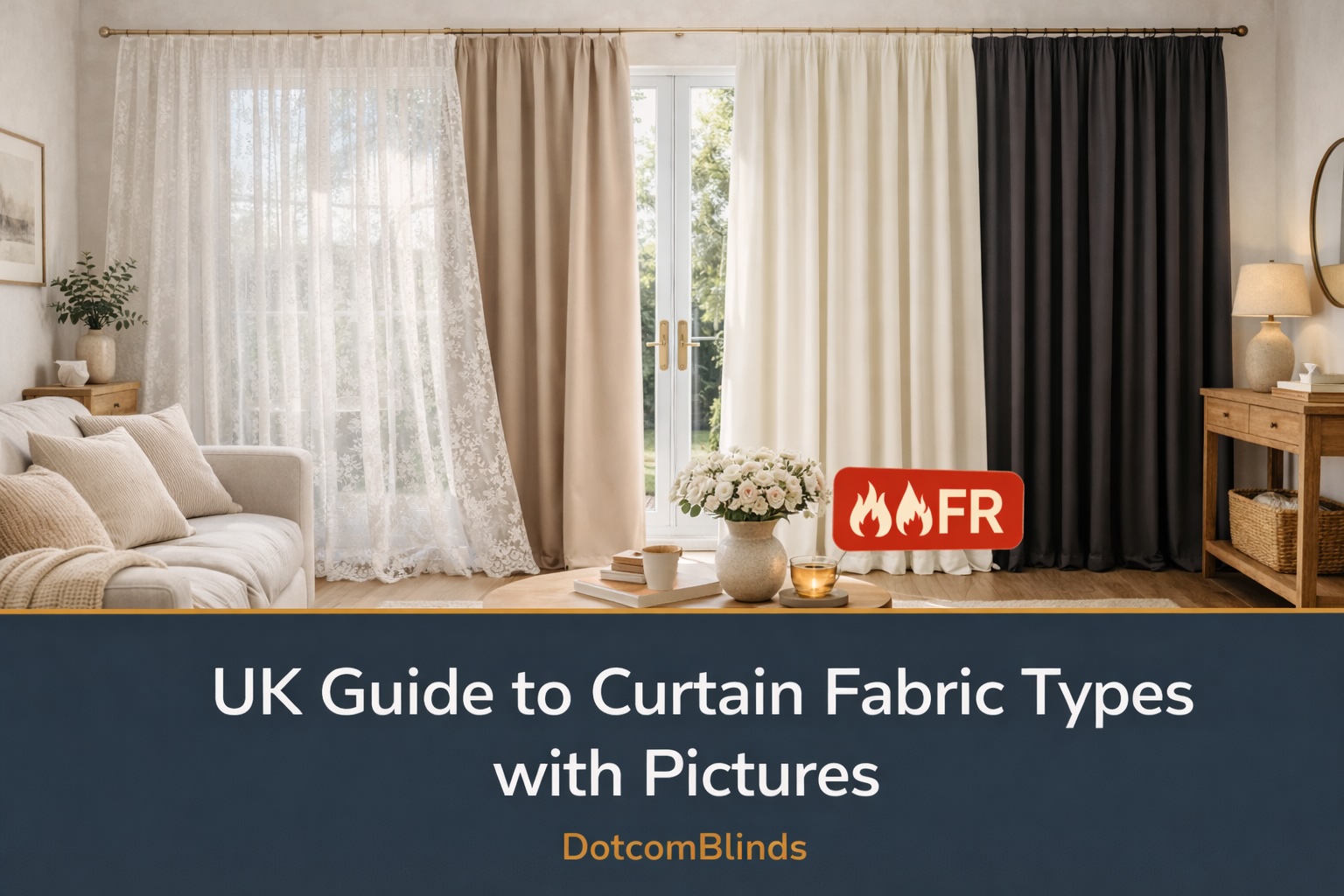
Choosing curtains is often treated as a purely visual decision. Colour, pattern, and how well they match the rest of the room tend to take priority. In practice, however, fabric choice is what determines how your curtains actually perform day to day.
The material you choose will directly impact:
- Light control – from soft diffusion to full blackout
- Insulation – a key consideration for UK homes dealing with heat loss and rising energy costs
- Durability – especially in high-traffic areas or family homes
- Drape and finish – how the curtains hang, fold, and move
- Maintenance requirements – from machine-washable to specialist cleaning
For example, two curtains may look similar online, but a lightweight polyester voile will behave very differently to a lined velvet or a structured linen. This is where many buying decisions go wrong, leading to issues like insufficient privacy, poor light blocking, or fabrics that wear out faster than expected.
In the UK market, curtain fabrics broadly fall into five key categories:
- Natural fibres – such as cotton, linen, silk, and wool, typically associated with premium interiors and more organic finishes
- Synthetic and blended fabrics – including polyester and viscose, which dominate for their durability and ease of care
- Textured and woven fabrics – such as velvet, jacquard, and bouclé, chosen primarily for their visual impact
- Lightweight and sheer fabrics – ideal for layering and maintaining natural light while adding privacy
- Functional and technical fabrics – including blackout, thermal, and flame-retardant options designed for specific performance needs
This guide breaks down each of these fabric types with clear explanations, practical use cases, and visual examples to help you choose with confidence. Whether you are prioritising insulation, light control, or overall aesthetics, understanding the differences between fabrics will ensure your curtains not only look right but perform exactly as needed.
Why Curtain Fabric Choice Matters
In UK homes, curtain fabric is not just a styling decision. It plays a measurable role in comfort, energy efficiency, and long-term performance. This is particularly relevant given typical UK housing characteristics such as older properties, variable insulation standards, and seasonal temperature swings.
1. Insulation and Energy Efficiency
Windows remain one of the biggest sources of heat loss in UK homes. The right curtain fabric can help mitigate this:
- Heavier fabrics (e.g. velvet, wool, thermal-lined curtains) reduce heat transfer and help retain warmth in winter
- Layered setups (e.g. voile + blackout or thermal curtains) create an insulating air gap
- Tightly woven materials outperform lightweight or loosely woven fabrics in reducing draughts
2. Light Control and Seasonal Variation
UK daylight varies significantly throughout the year, from long summer evenings to short winter days. Fabric choice directly affects how light is managed:
- Blackout fabrics are essential for bedrooms, especially during summer months
- Dimout and heavier fabrics reduce glare without fully darkening a room
- Sheer fabrics (voile, chiffon) maintain natural light while adding daytime privacy
A common mistake is choosing curtains that look suitable but fail to control light effectively, particularly in south-facing rooms.
3. Sun Exposure and Fabric Longevity
South-facing windows in the UK receive prolonged direct sunlight, which can degrade certain materials over time:
- Natural fabrics like silk and linen are more prone to fading and UV damage without proper lining
- Synthetic fabrics (especially polyester) offer better resistance to fading and colour loss
- Faux alternatives (e.g. faux linen, faux silk) provide a balance between appearance and durability
This is a key decision point where performance should outweigh purely aesthetic preferences.
4. Lifestyle and Practical Use
Fabric choice should align with how the space is used:
- Family homes / high-traffic areas → durable, easy-care fabrics like polyester or chenille
- Low-traffic or formal spaces → linen, silk, or jacquard for a more refined finish
- Homes with pets or children → avoid delicate or high-maintenance materials
Ease of cleaning and resistance to wear are often underestimated but have a direct impact on long-term satisfaction.
5. Drape, Weight and Overall Finish
The way curtains hang is largely determined by fabric composition and weight:
- Heavier fabrics (velvet, wool) create a structured, formal look with defined folds
- Lighter fabrics (linen, voile) produce a softer, more relaxed drape
- Blended fabrics (e.g. viscose mixes) are often used to improve drape without increasing cost
Understanding these factors upfront ensures that the final choice delivers both visual impact and functional value, rather than compromising on one for the other.
Curtain Fabric Types at a Glance (Quick Comparison)
Curtain Fabric Types at a Glance
Before going into each fabric in detail, it helps to compare the main curtain materials across the factors that matter most in UK homes:
light control, durability, maintenance, and overall positioning.
This comparison also highlights a key point: no single fabric excels in every category. Most decisions involve a trade-off between appearance, performance, and maintenance.
Natural Curtain Fabrics (Premium and Timeless Choices)
Natural curtain fabrics are typically associated with quality, texture, and a more refined finish. In the UK market, they also appeal strongly to customers looking for a more considered interior style, whether that means a relaxed linen look, a traditional wool finish, or the softness of cotton.
From a buying perspective, natural fabrics often sit at the mid-to-premium end of the market. They are popular with homeowners who want curtains to feel more substantial, more tactile, and more in keeping with the character of the room. They also align well with search intent around terms such as organic, sustainable, premium, and luxury.
That said, natural fabrics are not automatically the right choice for every space. While they often offer excellent texture and visual appeal, some require more care than synthetic alternatives. Others benefit from lining to improve durability, insulation, or light control.
Below are the main natural curtain fabrics to know.
Cotton Curtains

Cotton is one of the most widely used curtain fabrics for good reason. It is versatile, breathable, and relatively easy to maintain, which makes it a dependable choice for many UK homes.
In terms of appearance, cotton tends to deliver a clean, familiar finish that works across both traditional and modern interiors. It is available in a wide range of weights and weaves, so it can suit everything from simple, practical curtains in a guest bedroom to more tailored designs in a living room.
From a performance point of view, cotton usually provides moderate light filtering unless paired with a lining. It has enough body to hang well, but it does not generally feel as heavy or as insulating as velvet or wool. For this reason, lined cotton curtains are often the better option where warmth and privacy are priorities.
Cotton works particularly well in:
- Living rooms
- Bedrooms
- Dining rooms
Linen Curtains

Linen has a distinct look that is difficult to replicate convincingly. Made from flax, it offers a soft, relaxed texture and a natural drape that suits calm, understated interiors particularly well.
In the UK market, linen curtains are often associated with:
- Minimalist interiors
- Coastal-inspired rooms
- Neutral colour palettes
- Premium styling
One of linen’s main strengths is its character. It diffuses light beautifully and gives a room an airy, effortless finish. This makes it especially effective in living areas, dining rooms, and larger window spaces where the fabric’s natural movement can be appreciated.
However, linen does come with trade-offs. It is more prone to creasing than many synthetic or blended alternatives, and while many customers see this as part of its charm, others may prefer a more structured appearance. Linen also benefits from lining, both to protect the fabric and to improve privacy and insulation.
Linen curtains are often best suited to:
- Living rooms
- Dining rooms
- Large feature windows
- Premium bedrooms with a softer look
Silk Curtains

Silk sits firmly in the luxury category. It is lightweight, elegant, and naturally lustrous, making it a popular choice for more formal interiors where appearance takes priority.
Visually, silk offers a richness that is difficult to match. It reflects light subtly and creates a polished, high-end finish, particularly in classic schemes or more decorative rooms. However, it is not generally the most practical curtain fabric for busy family homes.
A key consideration with silk is that it should normally be lined. Without lining, it is more vulnerable to sun damage and fading, especially in rooms with strong natural light. This is particularly relevant for UK homes with large south-facing windows, where UV exposure can gradually weaken delicate fabrics.
Silk curtains are usually most suitable for:
- Formal living rooms
- Master bedrooms
- Period properties
- Decorative spaces where practicality is less of a concern
Wool Curtains

Wool is less common than cotton or linen, but it remains a strong option in the higher end of the market, particularly for homes with a more traditional, country, or heritage-inspired style.
One of wool’s biggest strengths is performance. It is naturally heavier than many other fabrics, which helps with:
- Insulation
- Draught reduction
- Noise softening
- Light control
This makes wool particularly relevant in UK homes, where warmth and comfort are major purchasing factors for curtains. In older properties especially, heavier wool curtains can add a noticeable sense of cosiness and substance.
Aesthetically, wool tends to work best in:
- Period homes
- Country interiors
- Traditional bedrooms
- Snugs, lounges, and reading rooms
Are Natural Curtain Fabrics Right for Every Room?
Not always. Natural fabrics can look excellent, but the best option depends on the room and the user’s priorities.
Natural fabrics are often a strong choice when the priority is:
- Texture and authenticity
- A softer, more premium finish
- Interior styling impact
- A more organic or traditional feel
They may be less suitable where the priority is:
- Low maintenance
- High fade resistance
- Budget-friendly pricing
- Maximum practicality in busy households
In many cases, the best solution is not a pure natural fabric alone, but a lined natural fabric or a blend that combines appearance with better day-to-day performance.
Synthetic & Blended Curtain Fabrics (Durability and Everyday Performance)
Synthetic and blended fabrics make up the largest share of the UK curtain market, primarily because they offer a more practical balance between cost, durability, and ease of maintenance.
While natural fabrics tend to lead on texture and premium appeal, synthetic options are often the better choice for day-to-day usability, particularly in busy households, rental properties, or rooms where curtains are opened and closed frequently.
The key advantage of synthetic and blended fabrics is consistency. They are engineered to retain shape, resist wear, and perform reliably over time, often with fewer compromises than natural alternatives.
Polyester Curtains

Polyester is the most widely used curtain fabric in the UK market. It is considered the industry standard for “easy care” curtains due to its durability and low maintenance requirements.
In practical terms, polyester offers:
- High resistance to shrinking and stretching
- Minimal creasing compared to natural fabrics
- Good colour retention, even in brighter rooms
- Ease of cleaning, often machine washable
This makes it particularly suitable for:
- Family homes
- Rental properties
- Kitchens and utility rooms
- High-traffic living spaces
Viscose (Rayon) Blends

Viscose, also known as rayon, is often used in blends rather than on its own. Its primary role is to enhance the drape and softness of a fabric without significantly increasing cost.
When blended with cotton, linen, or polyester, viscose can:
- Add a subtle sheen, similar to silk
- Improve how the fabric hangs and flows
- Create a more refined, premium look at a mid-market price point
This makes viscose blends a strong option for customers who want a more elegant finish without moving fully into luxury fabrics like silk.
Typical use cases include:
- Living rooms
- Bedrooms
- Spaces where drape and softness are important
Faux Silk and Faux Linen Curtains

Faux fabrics are designed to replicate the look of natural materials while improving performance. In most cases, these are polyester-based fabrics engineered to mimic textures such as silk or linen.
The main advantages include:
- Improved fade resistance, particularly in sunny rooms
- Greater durability compared to natural equivalents
- Lower maintenance requirements
- More accessible pricing
For example:
- Faux silk delivers a similar sheen to real silk but is far more resistant to UV damage
- Faux linen provides a textured, natural look with less creasing and better shape retention
These fabrics are especially well suited to:
- South-facing rooms with strong sunlight
- Homes where low maintenance is a priority
- Customers who want a premium look without premium upkeep
When to Choose Synthetic or Blended Fabrics
Synthetic and blended fabrics are often the most practical choice when the priority is:
- Durability and longevity
- Ease of cleaning and maintenance
- Resistance to fading and wear
- Cost efficiency without sacrificing appearance
They may be less suitable for customers specifically seeking:
- Fully natural materials
- Highly textured or organic finishes
- A more traditional or heritage aesthetic
In many cases, blended fabrics offer the most balanced solution, combining the visual appeal of natural fibres with the performance benefits of synthetics.
Textured & Woven Curtain Fabrics (Style, Depth and Visual Impact)
While material composition affects performance, texture and weave are what define how curtains look and feel in a space. This category is less about practicality alone and more about creating visual depth, softness, and a defined interior style.
Velvet Curtains

Velvet is one of the most recognisable curtain fabrics, known for its dense pile and soft, luxurious finish. It is typically heavier than most other fabrics, which gives it a strong presence in a room.
Key characteristics include:
- Excellent light blocking, even without blackout lining
- A rich, soft texture that adds warmth and depth
- A structured drape that creates defined folds
In current UK trends, matt velvet has largely replaced traditional crushed velvet. It offers a more contemporary, understated finish while still delivering the same sense of luxury.
Velvet works particularly well in:
- Bedrooms
- Living rooms
- Media rooms
- Statement interiors
Chenille Curtains

Chenille shares some similarities with velvet but has a more textured, slightly “fuzzy” surface. It is generally considered more casual and more durable, which makes it well suited to everyday use.
Key benefits include:
- Good durability, particularly in high-traffic spaces
- A soft feel without the formality of velvet
- Strong light control depending on weight
Chenille is often a practical alternative to velvet for:
- Family homes
- Busy living rooms
- Homes with pets or children
Jacquard Curtains (Including Damask and Brocade)

Jacquard fabrics are defined by how they are made. The pattern is woven directly into the fabric, rather than printed on the surface. This gives a more durable and higher-quality finish.
Common styles include:
- Damask – traditional, symmetrical patterns
- Brocade – more ornate, decorative designs
Key characteristics:
- Strong visual detail and texture
- Durable construction due to woven patterns
- Typically medium to heavy weight
Jacquard curtains are most often used in:
- Traditional interiors
- Period properties
- Formal living spaces
Bouclé Curtains (Emerging Trend)

Bouclé is an emerging fabric trend, gaining traction in UK interiors for its distinctive looped, knotted texture. It is part of a broader shift towards more tactile, “soft architecture” design elements.
Key features:
- Highly textured surface with visible loops
- Adds depth and interest even in neutral colour schemes
- Typically softer and more contemporary than traditional woven fabrics
Bouclé curtains are best suited to:
- Modern interiors
- Minimalist or neutral schemes
- Design-led spaces where texture is a focal point
When to Choose Textured or Woven Fabrics
These fabrics are most suitable when the priority is:
- Creating visual interest and depth
- Adding a more luxurious or design-led finish
- Enhancing the overall style of a room
They may be less suitable where the focus is purely on:
- Low maintenance
- Budget constraints
- Minimal or understated finishes
In many cases, textured fabrics are combined with functional linings (such as blackout or thermal) to deliver both style and performance.
Lightweight & Sheer Curtain Fabrics (Layering and Light Control)
Lightweight and sheer fabrics serve a very different purpose to heavier curtain materials. Rather than blocking light or insulating a room, they are primarily used to soften natural light, maintain privacy, and create a layered window treatment.
In the UK, these fabrics are particularly common in:
- Living rooms with large windows
- Bay windows
- Patio or bifold doors
- Rooms where maintaining daylight is a priority
They are rarely used on their own for full window coverage. Instead, they are typically paired with heavier curtains or blinds to create a more flexible setup.
Voile Curtains

Voile is the most common sheer curtain fabric in the UK. It is lightweight, smooth, and almost transparent, allowing natural light to pass through while still offering a level of daytime privacy.
Key characteristics:
- Soft light diffusion without darkening the room
- Maintains brightness while reducing direct glare
- Typically made from polyester or cotton
Voile works particularly well in:
- Living rooms
- Dining areas
- Conservatories
- Homes overlooked by neighbours
Chiffon Curtains

Chiffon is similar to voile but offers a softer, more fluid drape. It tends to feel more decorative and slightly more premium, making it suitable for interiors where the finish is just as important as function.
Key differences vs voile:
- More flowing and elegant movement
- Slightly softer appearance
- Often used in more design-led or styled spaces
Chiffon is best suited to:
- Bedrooms
- Formal living spaces
- Layered curtain designs where aesthetics matter
Lace Curtains

Lace curtains have long been associated with traditional UK interiors, particularly in cottages and period homes. They are often referred to as net curtains, especially in more functional contexts.
Key features:
- Patterned transparency that provides privacy
- Decorative detail woven into the fabric
- Strong association with classic interior styles
While traditional floral lace remains common, there is also a niche trend towards modern lace designs, including geometric and minimalist patterns.
Lace curtains are typically used in:
- Ground floor windows
- Period or cottage-style homes
- Rooms where privacy is needed without blocking light
When to Use Sheer Curtains
Sheer fabrics are most effective when used strategically. They are ideal when the goal is:
- Maintaining natural light throughout the day
- Reducing visibility from outside without closing off the room
- Creating a softer, more layered window treatment
They are less suitable when used alone in rooms that require:
- Full privacy at night
- Significant light blocking
- Insulation or thermal performance
Layering Strategy
In many UK homes, the most effective setup is a combination of sheer and heavier curtains, for example:
- Voile for daytime privacy and light
- Blackout or thermal curtains for evening use
This approach allows for greater flexibility and improves both comfort and usability throughout the day and across seasons.
Functional & Technical Curtain Fabrics (Performance-Led Choices)
Functional and technical fabrics are where purchase intent is highest. In the UK market, these are often not “nice to have” features, but primary decision drivers, particularly in bedrooms, energy-conscious households, and rental or commercial environments.
Unlike other fabric categories, the focus here is not primarily on appearance, but on what the curtains are designed to do:
- Block light
- Improve insulation
- Meet safety standards
- Enhance comfort and usability
Blackout Curtains

Blackout curtains are designed to block 100% of incoming light, making them one of the most in-demand curtain types in the UK.
This is typically achieved using a 3-pass coating, where multiple layers are applied to the back of the fabric to prevent light penetration.
Key benefits:
- Complete darkness, ideal for sleep
- Improved privacy
- Reduction in external light pollution (streetlights, early sunrise)
Best suited to:
- Bedrooms
- Nurseries
- Shift workers or light-sensitive sleepers
One important consideration is fabric feel. Coated blackout curtains can sometimes feel stiffer than standard fabrics. However, many modern options combine blackout linings with softer face fabrics to balance performance and appearance.
Thermal & Dimout Curtains

Thermal curtains are designed to reduce heat transfer, helping to keep rooms warmer in winter and cooler in summer. This is particularly relevant in UK homes, where improving energy efficiency is a growing priority.
Unlike blackout fabrics, thermal curtains typically use:
- Dense woven layers
- A high-density black yarn core
- Or specialised linings to trap heat
Dimout fabrics sit between standard curtains and blackout, offering:
- Partial light reduction (not full darkness)
- A softer, more flexible fabric feel
Key use cases:
- Living rooms
- Bedrooms where full blackout is not required
- Older properties with draughty windows
Flame Retardant (FR) and Contract Fabrics

Flame retardant fabrics are essential for commercial and regulated environments in the UK. They are manufactured or treated to meet specific fire safety standards, most commonly BS 5867.
These fabrics are typically required in:
- Hotels and guest accommodation
- Care homes
- Schools and public buildings
- Rental properties and HMOs
Key characteristics:
- Compliance with UK fire safety regulations
- Durable construction for frequent use
- Often available in both decorative and functional styles
When to Choose Functional Curtain Fabrics
Functional fabrics are the right choice when the priority is:
- Sleep quality and light control → blackout
- Energy efficiency and insulation → thermal
- Regulatory compliance → flame retardant
They may be less suitable when the focus is purely on:
- Decorative styling
- Lightweight, airy finishes
- Minimal fabric structure
For made-to-measure curtains, this combination is often the most effective way to meet both aesthetic and functional requirements without compromise.
How to Choose the Right Curtain Fabric
At this stage, most customers understand the different fabric types. The challenge is narrowing that down to the right option for a specific room, window, and use case.
In practice, curtain selection in the UK is rarely about choosing a single “best” fabric. It is about prioritising the right combination of performance, appearance, and practicality.
Below is a structured way to approach that decision.
1. Start with the Room Function
The room itself should be the primary filter, as it defines the required performance level.
Bedrooms
- Priority: Light control and privacy
- Recommended:
- Blackout fabrics
- Velvet or lined curtains
- Avoid:
- Unlined sheers or lightweight cottons
Living Rooms
- Priority: Balance between light and privacy
- Recommended:
- Cotton, linen, polyester blends
- Layered setups (voile + main curtain)
- Consider:
- Thermal lining for insulation
Kitchens and Utility Rooms
- Priority: Durability and ease of cleaning
- Recommended:
- Polyester or blended fabrics
- Avoid:
- Delicate materials like silk or chiffon
Dining Rooms / Formal Spaces
- Priority: Appearance and finish
- Recommended:
- Linen, jacquard, silk, velvet
- Performance is secondary to visual impact
2. Consider Window Orientation (Often Overlooked)
This is one of the most important but underused decision factors.
South-Facing Windows (UK)
- High sunlight exposure
- Risk of fading and glare
- Recommended:
- Polyester or faux fabrics (better UV resistance)
- Lined curtains
North-Facing Windows
- Cooler, lower light levels
- Recommended:
- Heavier fabrics (velvet, wool) to add warmth
- Thermal linings
Street-Facing or Overlooked Windows
- Privacy is a key concern
- Recommended:
- Voile layering for daytime
- Heavier curtains for evening
3. Factor in Lifestyle and Usage
Curtains are used daily, so durability matters more than many expect.
Busy households (children, pets)
- Prioritise:
- Polyester
- Chenille
- Blended fabrics
- Benefits:
- Easier cleaning
- Better wear resistance
Low-traffic or decorative rooms
- More flexibility:
- Linen
- Silk
- Jacquard
Rental properties
- Focus on:
- Cost efficiency
- Durability
- Easy maintenance
4. Decide on Light Control Level
This is often the deciding factor, especially for bedrooms.
- Full blackout → Bedrooms, nurseries
- Dimout / partial reduction → Living rooms, media rooms
- Light filtering / sheer → Daytime privacy, layering
A common mistake is underestimating how much light enters a room, particularly in summer months.
5. Choose Between Aesthetic vs Performance (or Combine Both)
Most decisions involve a trade-off:
- Natural fabrics → Better texture and appearance
- Synthetic fabrics → Better durability and practicality
In many cases, the optimal solution is:
- A decorative face fabric
- Combined with a functional lining
This allows customers to achieve both visual and practical outcomes without compromise.
6. Think About Drape and Finish
Fabric weight and composition affect how curtains hang.
- Structured, formal look → Velvet, jacquard, wool
- Relaxed, soft look → Linen, voile
- Balanced drape → Blended fabrics (e.g. viscose mixes)
This is particularly important for made-to-measure curtains, where expectations around finish are higher.
7. Budget vs Long-Term Value
Lower-cost fabrics (e.g. polyester) often deliver the best short-term value, but higher-end fabrics can offer better long-term satisfaction, especially in key rooms.
A practical approach:
- Invest more in primary living spaces and bedrooms
- Use more cost-effective options in secondary rooms
Getting this balance right ensures the curtains not only look appropriate but also perform reliably over time.
Curtain Fabric Combinations That Work (Layering Strategy)
In many UK homes, the most effective curtain setups are not based on a single fabric, but on combining multiple layers to achieve both performance and flexibility.
Layering allows you to control:
- Light throughout the day
- Privacy at different times
- Insulation during colder months
- Overall aesthetic depth
Why Layering Matters
A single fabric rarely delivers everything:
- Sheers provide light but not privacy at night
- Blackout curtains block light but can feel heavy during the day
- Linen looks great but may not insulate effectively
Layering solves this by combining complementary functions into one setup.
1. Voile + Blackout Curtains (Most Common UK Setup)
This is the most widely used combination in UK homes.
How it works:
- Voile remains closed during the day for privacy
- Blackout curtains are drawn at night
Benefits:
- Maintains natural light while reducing visibility from outside
- Provides full darkness when required
- Suitable for most room types
Best for:
- Living rooms
- Bedrooms
- Bay windows and large glazed areas
2. Linen Curtains + Thermal Lining
This combination balances natural aesthetics with improved performance.
How it works:
- Linen provides the visual finish
- Thermal lining improves insulation and light control
Benefits:
- Retains the soft, relaxed look of linen
- Improves warmth and reduces draughts
- More practical than unlined natural fabrics
Best for:
- Living rooms
- Dining rooms
- Period properties
3. Velvet Curtains + Sheer Layer
This setup focuses on contrast and visual depth, combining heavy and lightweight fabrics.
How it works:
- Sheer layer softens light during the day
- Velvet provides insulation and privacy when closed
Benefits:
- Strong visual impact
- Improved light control and warmth
- Works well in more design-led interiors
Best for:
- Bedrooms
- Feature living spaces
- Statement windows
4. Double Layer Polyester (Practical Setup)
For more practical or budget-conscious setups, layering can still be effective using synthetic fabrics.
How it works:
- Lightweight polyester for daytime
- Heavier polyester or blackout for evening
Benefits:
- Cost-effective
- Easy to maintain
- Durable for everyday use
Best for:
- Rental properties
- Family homes
- High-traffic areas
Choosing the Right Layering Setup
The best combination depends on the same factors outlined earlier:
- Room function
- Light requirements
- Window orientation
- Budget
A simple way to approach it:
- Need daytime privacy → add voile
- Need darkness → add blackout
- Need warmth → add thermal lining
- Want visual impact → combine textures (e.g. velvet + sheer)
For made-to-measure curtains, this approach is particularly valuable, as it allows for precise control over both function and finish, tailored to the specific room and window.
Final Thoughts: Choosing the Right Curtain Fabric for Your Home
Selecting the right curtain fabric is not just about appearance. It is about finding the right balance between style, performance, and practicality for your specific space.
Across UK homes, the most successful choices tend to follow a clear pattern:
- Performance first for bedrooms and energy efficiency (blackout and thermal)
- Balance and flexibility for living spaces (cotton, linen, blends, layering)
- Durability and ease for high-traffic areas (polyester and chenille)
- Texture and finish for design-led interiors (velvet, jacquard, bouclé)
In many cases, the best result is not a single fabric, but a combination of materials and linings that work together to deliver both the look and functionality required.
Made-to-Measure Curtains from DotcomBlinds
At DotcomBlinds, the focus is on helping customers achieve that balance with made-to-measure curtains designed around real UK homes and real usage needs.
Whether you are looking for:
- Blackout curtains for better sleep
- Thermal curtains to improve energy efficiency
- Lightweight voiles for daytime privacy
- Or premium fabrics to elevate your interior
DotcomBlinds offers a wide, carefully selected range of curtain fabrics and styles, all made to your exact measurements.
With:
- A user-friendly online experience
- A broad choice of materials, colours, and finishes
- And a team with years of hands-on industry experience
you can choose with confidence, knowing your curtains will not only look right but perform exactly as needed.
Explore the Full Range
If you are ready to find the right curtain fabric for your space, explore the full made-to-measure collection:
- Curtains designed for style, durability, and performance
- Options to suit every room, window type, and budget
- Tailored solutions that remove the guesswork
Choosing the right fabric is the first step. Getting the right fit makes all the difference.