Order Tracking
 0800 1422417
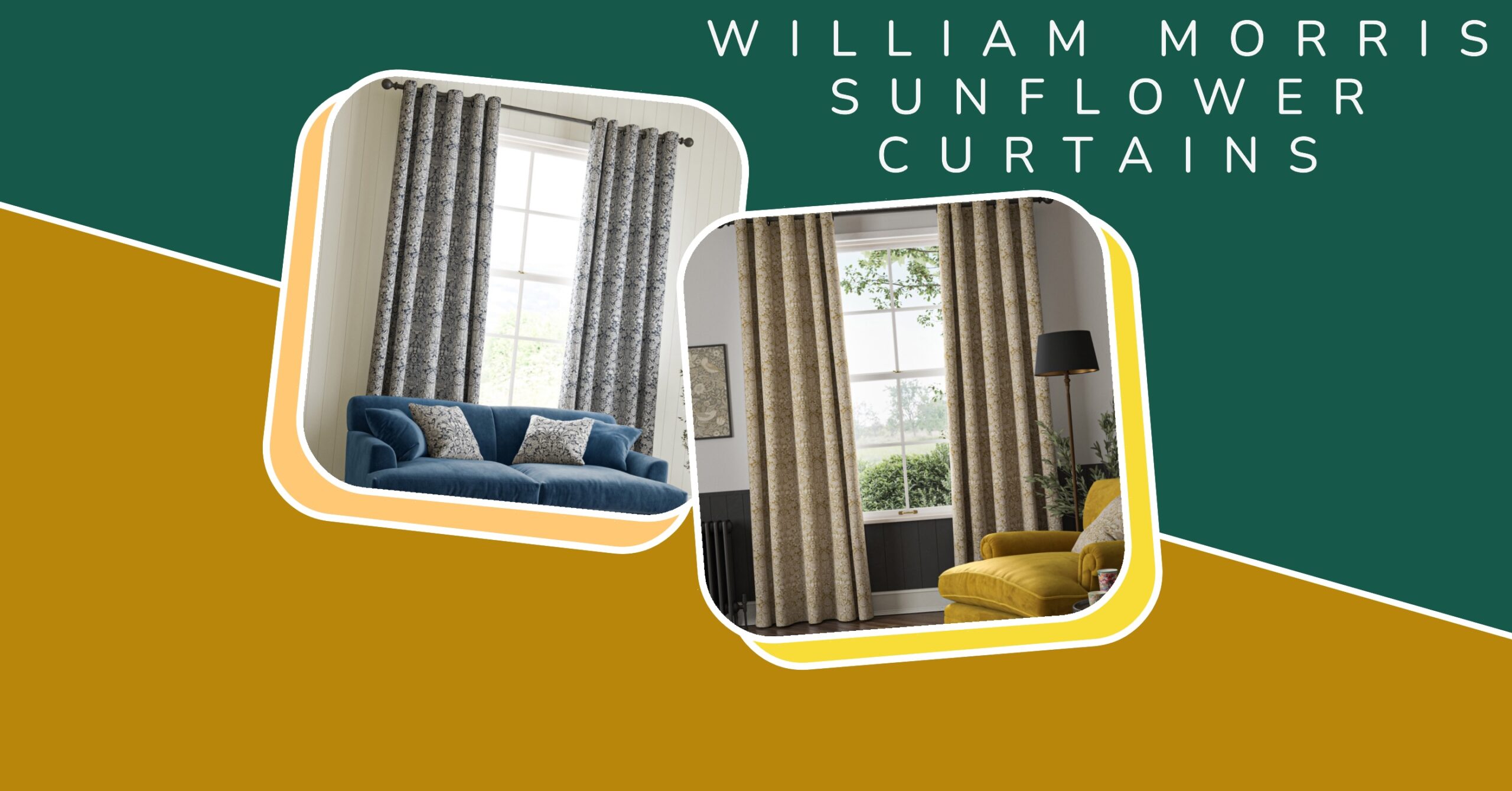
William Morris remains one of the most influential figures in British interior design, with his work continuing to shape how we approach pattern, texture, and craftsmanship in the home. As a leading voice in the Arts and Crafts movement, Morris championed quality materials and nature-inspired design at a time when mass production was rapidly taking over. More than a century later, his patterns still feel relevant, particularly in spaces where character and individuality matter.
Among his most recognisable designs, the Sunflower pattern stands out for its balance of structure and organic flow. It combines detailed botanical elements with a repeating layout that works exceptionally well across larger surfaces, making it a natural fit for curtains.
In made-to-measure curtain applications, this design comes into its own. The scale of the pattern, combined with precise sizing and professional finishing, allows the fabric to hang properly and display the design as intended. The result is a window treatment that not only frames the room effectively but also contributes meaningfully to the overall interior scheme.
Who Was William Morris? A Brief Overview
William Morris was a designer, craftsman, and writer whose work defined the British Arts and Crafts movement in the late 19th century. At a time when industrial manufacturing was prioritising speed over quality, Morris took a different approach, advocating for traditional craftsmanship, durable materials, and design rooted in nature.
His work spanned textiles, wallpaper, furniture, and interior decoration, with a consistent focus on intricate patterns inspired by plants, flowers, and natural forms. These designs were not purely decorative. They were carefully constructed to achieve balance, rhythm, and repeatability, making them highly functional across larger surfaces such as walls, upholstery, and soft furnishings.
This is a key reason why Morris designs continue to perform well in modern interiors. Unlike trend-led patterns, they are built on principles that translate across time:
- Structured repetition, allowing patterns to scale effectively
- Natural colour palettes, which integrate easily into a range of interiors
- Detail without randomness, ensuring visual interest without chaos
For curtains specifically, these characteristics are commercially important. A well-designed repeat ensures the pattern aligns cleanly across wide window spans, while the depth of detail adds visual weight without overwhelming the space.
Today, Morris-inspired designs remain widely used because they bridge the gap between traditional and contemporary interiors. They offer enough heritage to feel established, while still working in modern settings where texture and pattern are used more deliberately.
The Story Behind the Sunflower Design
The Sunflower design is one of William Morris’s most recognisable textile patterns, first introduced in the late 19th century during the height of the Arts and Crafts movement. Like much of Morris’s work, it draws directly from nature, but with a level of structure and intentionality that sets it apart from more decorative or illustrative floral prints.
At its core, the design reflects Morris’s philosophy that pattern should be both beautiful and functional. The sunflower motif is repeated in a balanced, flowing layout, supported by layered foliage and interconnecting stems. This creates a sense of rhythm across the fabric, which is particularly important when applied to larger surfaces such as curtains.
Key Characteristics of the Sunflower Pattern
- Strong vertical and flowing movement
The upward direction of the stems helps elongate window spaces, making ceilings feel higher and rooms more proportioned. - Balanced repeat structure
The pattern is dense enough to create impact, but evenly spaced to avoid visual clutter. - Layered botanical detailing
Leaves, stems, and flowers work together to create depth, rather than relying on a single focal element. - Natural but controlled aesthetic
Unlike modern abstract florals, the design feels ordered and intentional, which improves longevity in interior schemes.
Why It Remains Commercially Relevant
From a practical and commercial perspective, the Sunflower design continues to perform well because it solves a common challenge in interior styling: introducing pattern without reducing versatility.
- It provides visual interest at scale, which is ideal for curtains that need to stand out
- It works across both traditional and modern interiors, depending on colourway and styling
- The structured repeat ensures the pattern hangs correctly on made-to-measure curtains, avoiding awkward breaks or misalignment
In contrast to trend-led prints, which often date quickly, Morris’s Sunflower design is built on principles of proportion and repetition. This makes it a more stable choice for homeowners looking to invest in curtains that will remain relevant over time.
Why Sunflower Curtains Work So Well in Modern Homes

The success of William Morris Sunflower curtains in modern interiors is not accidental. The design sits in a useful middle ground, offering enough character to act as a feature, while remaining structured enough to integrate into a wide range of room styles. From a practical standpoint, it solves several common challenges around scale, balance, and visual impact.
Strong Visual Impact Without Overwhelming
One of the key advantages of the Sunflower pattern is its density and spacing. Many patterned curtains either feel too busy or too sparse when applied across large window areas. This design avoids both issues:
- The repeat is detailed but controlled, so it holds interest without creating noise
- The spacing allows the eye to move across the fabric naturally
- It works effectively as a focal point, particularly in otherwise neutral rooms
This makes it suitable for homeowners who want to introduce pattern without committing to more aggressive or trend-driven prints.
Versatility Across Interior Styles
Despite its heritage roots, the Sunflower design adapts well across different interior directions:
- Traditional interiors benefit from its authenticity and craftsmanship
- Transitional spaces (mix of classic and modern) use it to bridge styles
- Contemporary rooms can use it as a contrast element to add depth
The outcome is not dictated by the pattern alone, but by how it is styled, particularly through colour choice, wall finishes, and surrounding materials.
Ideal for Made-to-Measure Curtains
This is where the design delivers the most practical value.
Patterned fabrics often underperform when used in standard, off-the-shelf curtains due to poor alignment and inconsistent drop lengths. With a design like Sunflower:
- The repeat benefits from accurate sizing, ensuring the pattern is not cut awkwardly
- Made-to-measure production allows for consistent flow across the full width of the window
- The fabric hangs correctly, preserving the intended structure of the design
For wider windows or statement spaces, this becomes particularly important. Poorly aligned patterns reduce perceived quality, whereas a well-fitted, made-to-measure curtain enhances both the design and the overall finish of the room.
Colour Variations Explained: Choosing the Right Sunflower Curtain
The Sunflower design is consistent in structure, but the colourway you choose will significantly influence how it performs within a space. This is not purely an aesthetic decision. Colour impacts light levels, perceived room size, and how easily the curtains integrate with existing finishes.
Below is a practical breakdown of the main colour options and where they tend to work best.
Ochre – Warm and Classic

- Best suited to: traditional living rooms, period properties, warmer interior schemes
- Works well with: wood flooring, beige or cream walls, brass or gold accents
Ochre is the most heritage-led option. It reinforces the traditional character of the Morris design and pairs naturally with classic materials. It is particularly effective in rooms where you want to create warmth without relying on darker tones.
Indigo – Bold and Contemporary

- Best suited to: modern interiors, high-contrast schemes, feature spaces
- Works well with: white walls, grey palettes, black accents
Indigo shifts the design into a more contemporary position. The darker base increases contrast, making the pattern more defined. This works well in rooms that need a stronger focal point or where the rest of the scheme is relatively minimal.
Artichoke – Subtle and Natural

- Best suited to: calm, neutral interiors, biophilic or nature-led spaces
- Works well with: soft greens, off-whites, natural textures
Artichoke is the most understated of the options. It softens the visual impact of the pattern, making it easier to integrate into spaces where a quieter, more relaxed atmosphere is required. This is often the safest choice for bedrooms or multi-use living areas.
Madder – Rich and Statement-Led

- Best suited to: feature rooms, dining spaces, more expressive interiors
- Works well with: deeper wall colours, layered textiles, darker furniture
Madder introduces a warmer, more saturated tone that increases the presence of the curtains within the room. It is more directional than Ochre and works best when the overall scheme is designed to support it.
Practical Selection Considerations
When choosing between colourways, focus on how the curtains will function within the room rather than selecting purely on preference:
- Room size and light levels
Darker tones (Indigo, Madder) add depth but can reduce brightness
Lighter tones (Ochre, Artichoke) help maintain an open feel - Existing materials
Match undertones with flooring, furniture, and wall finishes - Role of the curtains
Decide whether they should be a feature element or a supporting layer
Making the right choice here ensures the design enhances the space rather than competing with it, which is particularly important with patterned, statement fabrics like Sunflower.
Best Rooms for William Morris Sunflower Curtains

While the Sunflower design is versatile, its performance varies depending on how and where it is used. The scale of the pattern and its visual weight make it particularly effective in spaces where curtains play a central role in the overall design.
Below is a practical breakdown of where these curtains tend to work best.
Living Rooms
Living rooms are typically the strongest use case.
- Curtains often act as a primary visual feature, especially on larger windows or patio doors
- The Sunflower pattern adds depth and character without requiring additional statement elements
- Works well in both traditional and modern living spaces, depending on colourway
For open-plan layouts, this style can also help define the seating area and create a more cohesive look.
Bedrooms
In bedrooms, the focus shifts slightly from visual impact to comfort and practicality.
- The pattern adds interest without needing multiple competing textures
- When paired with blackout lining, it supports better light control and privacy
- Softer colourways (such as Artichoke or Ochre) tend to perform better in more relaxed environments
The key is to ensure the curtains enhance the room without making it feel visually heavy.
Dining Rooms
Dining rooms are well suited to more expressive designs, making Sunflower curtains a strong option.
- Adds a sense of occasion and structure to the space
- Frames windows effectively, particularly in more formal layouts
- Richer tones like Madder or Indigo can elevate the overall scheme
This is one of the few rooms where a bolder approach tends to outperform more neutral options.
Home Offices
For home offices, the goal is balance.
- The pattern introduces personality without making the space feel overly decorative
- Works particularly well behind a desk setup or on a feature window
- More muted colourways help maintain a professional feel
This is useful for spaces that need to feel both functional and considered, especially for video calls or client-facing environments.
Where to Be More Selective
Although versatile, Sunflower curtains are not always the best fit in every space:
- Small rooms with limited natural light may feel more enclosed with darker colourways
- Highly patterned interiors can lead to visual conflict if not carefully managed
In these cases, a simpler fabric or a more subtle pattern may deliver a better overall result.
Curtain Styles and Heading Options

The heading style you choose will directly affect how the Sunflower pattern is presented across the curtain. This is not just a design decision. It impacts pattern visibility, how the fabric hangs, and the overall formality of the room.
With a structured, repeating pattern like Sunflower, selecting the right heading is important to avoid distortion or loss of detail.
Eyelet Curtains – Clean and Contemporary
- Best for: modern interiors, wider windows, minimal styling
- Effect on pattern: more uniform spacing, but visible folds can slightly interrupt the repeat
Eyelet curtains create large, even waves in the fabric. This gives a clean, consistent look, but the deeper folds can partially obscure sections of the pattern when viewed from certain angles.
They are a practical option where ease of installation and smooth operation are priorities.
Pencil Pleat Curtains – Versatile and Adjustable
- Best for: most room types, flexible styling
- Effect on pattern: tighter gathering can compress sections of the design
Pencil pleat is the most adaptable heading, suitable for both tracks and poles. However, because the fabric is gathered more tightly, the pattern can appear slightly condensed at the top.
This is a solid all-round option, particularly where flexibility is needed across different window types.
Pinch Pleat Curtains – Structured and Premium
- Best for: formal spaces, high-end interiors, feature windows
- Effect on pattern: maintains structure while allowing the design to fall more naturally
Pinch pleat headings create defined, evenly spaced folds that hold their shape over time. This allows more of the pattern to remain visible between folds, making it one of the better options for detailed designs like Sunflower.
It also delivers a more tailored finish, which aligns well with the heritage feel of the Morris pattern.
Which Heading Works Best for Sunflower Curtains?
From a practical perspective:
- Pinch pleat offers the best balance between structure and pattern visibility
- Eyelet works well in modern settings but slightly reduces pattern continuity
- Pencil pleat is the most flexible but can compress the design
The right choice depends on the room style and how prominent you want the pattern to be. If the goal is to showcase the design clearly, more structured headings tend to perform better.
Fabric, Lining and Practical Considerations

Fabric Weight and Drape
The Sunflower pattern is relatively detailed, so the fabric needs enough weight to support it properly.
- Heavier fabrics provide a cleaner drape, helping the pattern fall naturally
- Lighter fabrics may lead to uneven folds, which can distort the design
- A good-quality weave ensures the pattern retains definition and clarity
For made-to-measure curtains, this is particularly important, as poor drape reduces the perceived quality of both the fabric and the installation.
Light Control: Standard vs Blackout Lining
Lining choice should be driven by how the room is used:
- Standard lining
- Softens incoming light
- Maintains a lighter, more breathable feel
- Suitable for living rooms and dining areas
- Blackout lining
- Significantly reduces light penetration
- Improves privacy
- Better suited to bedrooms or media rooms
It is worth noting that darker Sunflower colourways combined with blackout lining will have a stronger impact on overall light levels.
Thermal Performance
Curtains can contribute meaningfully to insulation, particularly in UK homes where heat loss through windows is common.
- Thermal linings help retain heat in winter and reduce heat gain in summer
- Thicker, well-fitted curtains minimise drafts around window edges
- Made-to-measure sizing improves overall efficiency compared to off-the-shelf options
This is a practical benefit that often gets overlooked but can influence comfort and energy use.
Durability and Longevity
A patterned fabric like Sunflower should be viewed as a longer-term investment.
- Quality materials are more resistant to fading and wear
- Proper lining protects the face fabric from sun exposure
- Structured headings (such as pinch pleat) help maintain shape over time
Lower-quality fabrics may initially look similar but tend to lose definition and structure more quickly.
Maintenance Considerations
- Regular vacuuming or light brushing helps prevent dust build-up
- Professional cleaning is typically recommended for lined curtains
- Avoid excessive direct sunlight where possible to preserve colour integrity
Styling Tips: How to Pair Sunflower Curtains
The Sunflower design has enough presence to define a space, so the surrounding elements need to be considered carefully. The objective is to support the pattern rather than compete with it, ensuring the room feels cohesive rather than overworked.
Wall Colours: Keep the Base Controlled
Walls should provide a backdrop, not another focal point.
- Neutral tones (off-white, beige, soft grey) allow the pattern to stand out
- Muted heritage colours (sage green, warm taupe) complement the botanical theme
- Avoid overly bold or saturated wall colours unless intentionally designing a high-contrast scheme
The aim is to create separation between the curtains and the wall, so the pattern remains clearly defined.
Flooring: Use Texture to Balance the Pattern
Flooring plays a key role in grounding the space.
- Wood and engineered wood flooring work particularly well with Morris designs
- Natural finishes help reinforce the organic feel of the pattern
- If using carpet, opt for low-pattern or plain textures to avoid visual conflict
Highly patterned flooring alongside Sunflower curtains can make the room feel overly busy.
Layering with Blinds
In many cases, curtains will not be the only window treatment.
- Pair with roller blinds or Roman blinds in a plain or lightly textured fabric
- Keep the blind colour aligned with either the wall or one of the tones within the curtain
- Avoid introducing a second strong pattern at the window
Layering improves both light control and visual depth, but only when done with restraint.
Complementary Soft Furnishings
This is where the scheme can be tied together.
- Pick out secondary colours from the Sunflower pattern for cushions or throws
- Use plain or subtly textured fabrics rather than competing prints
- Introduce materials like linen, wool, or cotton to add variation without clutter
Repeating colours rather than patterns is usually the more effective approach.
Avoiding Common Styling Mistakes
- Combining multiple bold patterns in the same space without a clear hierarchy
- Matching everything too closely, which can make the room feel flat
- Ignoring scale, particularly in smaller rooms where large patterns can dominate