Order Tracking
 0800 1422417
Choosing between vertical and horizontal blinds is not just a matter of style. The better option usually depends on the shape of the window, how the room is used, how much privacy is needed and whether the blind has to cover a standard window, a wide opening or a frequently used door.
Vertical blinds are often the stronger choice for large areas of glass. They work well across patio doors, sliding doors, wide windows, conservatories and floor-to-ceiling glazing because the louvres draw sideways rather than lifting upwards. This makes them practical where access, width and full-height coverage matter.
Horizontal blinds are usually better suited to standard windows. This includes Venetian blinds, wooden blinds and faux wood blinds, all of which use horizontal slats that tilt to control light and privacy. They are especially useful in bedrooms, kitchens, bathrooms and home offices, where more precise day-to-day adjustment is often needed.
Neither style is automatically better. Vertical blinds solve the problem of wide coverage and sideways operation, while horizontal blinds solve the problem of compact fitting and detailed light control. In many UK homes, the best result is to use both: vertical blinds for wide doors and large glazing, and horizontal blinds for smaller or standard windows.
This guide compares vertical and horizontal blinds room by room, looking at where each style works best, how they differ visually and practically, and which option is likely to suit bedrooms, bathrooms, kitchens, living rooms, conservatories and home offices.
Vertical vs Horizontal Blinds: Quick Answer
Vertical blinds are usually the better choice for wide windows, patio doors, sliding doors, conservatories and floor-to-ceiling glazing. Their louvres hang vertically and move sideways, making them practical for large openings and doors that need regular access.
Horizontal blinds are usually the better choice for standard windows, bedrooms, kitchens, bathrooms and home offices. Their slats tilt open and closed, giving more detailed control over privacy, glare and natural light.
In simple terms, choose vertical blinds when the window is wide or door-like, and choose horizontal blinds when the window is more standard in size and needs precise light control.
| Scenario | Better Starting Point | Why |
|---|---|---|
| Patio doors or sliding doors | Vertical blinds | They draw sideways, which suits doors and wide openings. |
| Standard bedroom window | Horizontal blinds | They offer strong privacy and adjustable light control. |
| Bathroom window | Horizontal blinds | Faux wood or aluminium options can suit moisture-prone rooms better than fabric louvres. |
| Wide living room window | Vertical blinds | They cover wider glass areas without needing to lift a heavy blind upward. |
| Home office | Usually horizontal blinds | Tilted slats can help manage screen glare and privacy throughout the day. |
| Conservatory | Vertical blinds or specialist systems | Large areas of glass often need flexible coverage and practical light control. |
| Small kitchen window | Horizontal blinds | They are compact, practical and easy to adjust on smaller windows. |
The quickest rule is this: vertical blinds suit width, height and doors; horizontal blinds suit standard windows, privacy and precise slat control.
What Are Vertical Blinds?
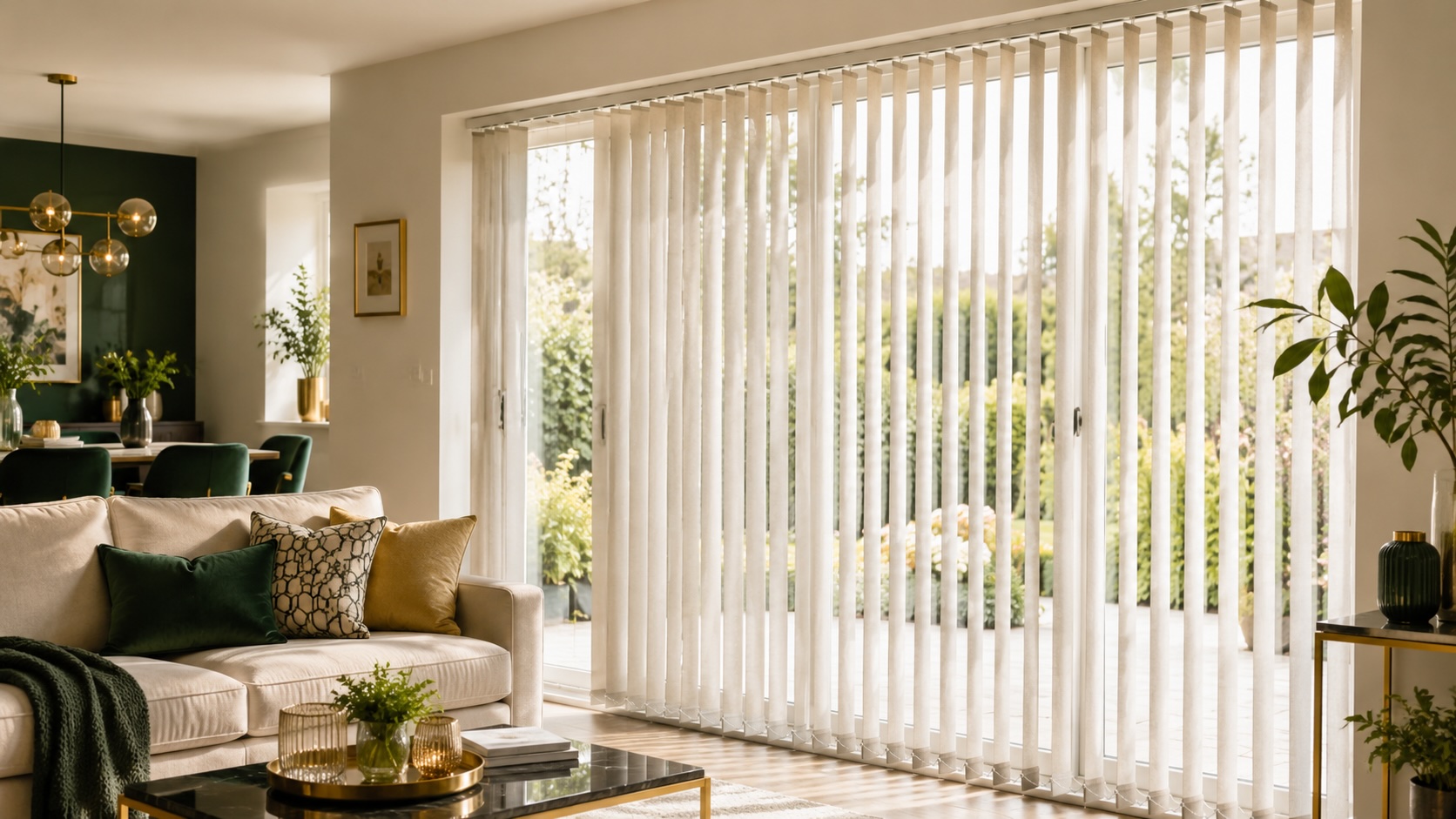
Vertical blinds are made from individual hanging fabric strips, known as louvres, that run from the top track down towards the floor or windowsill. These louvres can be tilted to control light and privacy, or drawn to one side to open the blind fully.
Their biggest strength is the way they handle width. Because vertical blinds move sideways rather than lifting upwards, they are particularly well suited to patio doors, sliding doors, wide windows and tall areas of glazing. This makes them one of the most practical choices for rooms where the window is also an access point.
Vertical blinds are often used in:
- Living rooms with patio doors
- Dining rooms with wide glazed openings
- Conservatories
- Home offices with large windows
- Sliding doors
- Floor-to-ceiling windows
- Commercial or multi-use spaces
They are also useful because they offer flexible privacy. The louvres can be angled to let daylight in while reducing the view from outside, or closed fully when more coverage is needed. This makes them practical for rooms that need to respond to changing light throughout the day.
Older vertical blinds were often associated with offices, but modern vertical blinds can look much softer and more domestic when the right fabric and colour are chosen. Neutral tones, warm greys, soft whites and subtle textures can make vertical blinds feel calm, practical and well suited to contemporary UK homes.
The main point is proportion. Vertical blinds usually look best when they are used on windows and doors that suit their scale. On a large opening, they can look clean and balanced. On a small window, they may feel overly functional or out of proportion compared with a more compact horizontal blind.
What Are Horizontal Blinds?
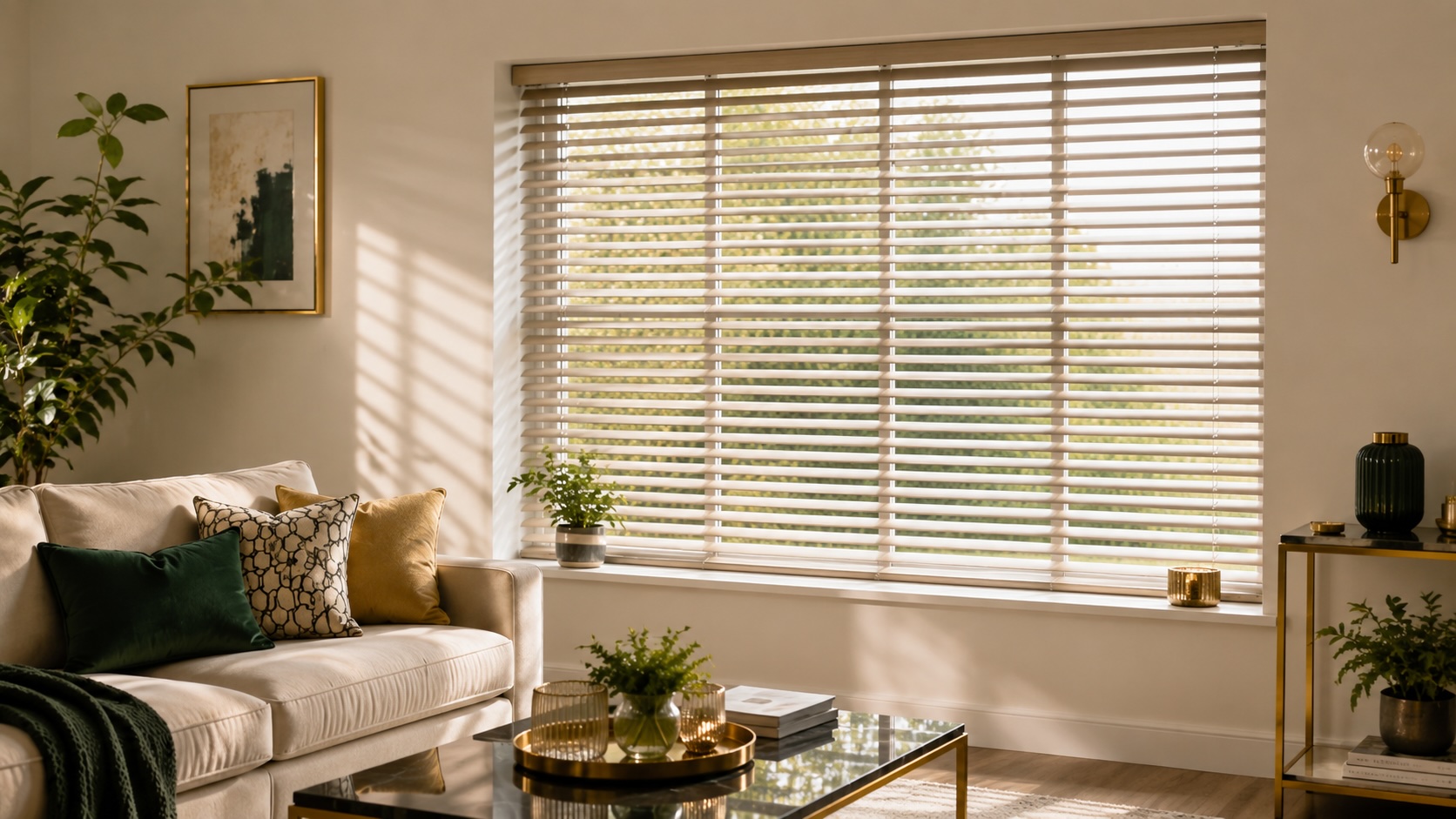
Horizontal blinds are blinds made with slats that run from side to side across the window. The slats can be tilted open or closed to control privacy and light, and the blind usually lifts upwards when the window needs to be fully uncovered.
When people refer to horizontal blinds, they are usually talking about slatted blind styles such as Venetian blinds, wooden blinds and faux wood blinds. These blinds all work in a similar way, but the material changes the look and the best room suitability.
Horizontal blinds are often used in:
- Bedrooms
- Kitchens
- Bathrooms
- Home offices
- Small living room windows
- Standard sash or casement windows
- Street-facing rooms
- Rooms where privacy changes throughout the day
Their main advantage is control. By adjusting the slat angle, you can let light into the room while still reducing direct views from outside. This is especially useful in bedrooms, bathrooms, home offices and ground-floor rooms where full privacy is not always needed, but an uncovered window would feel too exposed.
Horizontal blinds also work well on smaller and standard-sized windows because they are compact and visually balanced. They sit neatly within or around the window opening and do not need side stack space in the way vertical blinds do.
The material makes a difference. Wooden blinds add warmth and a more natural finish, faux wood blinds offer a similar look with better suitability for moisture-prone rooms, and aluminium Venetian blinds create a cleaner, more minimal look.
In simple terms, horizontal blinds are usually the better choice when the window is standard in size and the room needs precise light, privacy and slat control throughout the day.
The Main Difference: Wide Openings vs Detailed Tilt Control
The main difference between vertical and horizontal blinds is how they operate around the window.
Vertical blinds are designed around width, height and sideways movement. Horizontal blinds are designed around compact coverage and precise slat control. Both can manage privacy and light, but they are better suited to different window shapes and room uses.
Vertical Blinds Are Built for Width
Vertical blinds work well where the window or door is wide because the louvres draw sideways along a track. This makes them practical for patio doors, sliding doors and large glazed openings where lifting a blind upwards would be awkward or heavy.
They are especially useful when the window also needs to remain accessible. For example, on patio doors, vertical blinds can be drawn to one side so the door can be used easily. The louvres can also be tilted during the day to reduce glare or improve privacy without fully closing the blind.
Vertical blinds are strongest when:
- The opening is wide
- The glass is tall or full-height
- The blind needs to move sideways
- The window or door is used frequently
- The room needs broad coverage across a large area
- A practical, clean finish is more important than a compact slatted look
This is why vertical blinds often make sense in living rooms with patio doors, conservatories, dining rooms with large windows and home offices with wide glazing.
Horizontal Blinds Are Built for Control
Horizontal blinds work differently. Their slats tilt open and closed, allowing light to be directed more precisely. This makes them useful in rooms where privacy and glare change throughout the day.
On a street-facing bedroom window, for example, horizontal blinds can be angled to reduce the view from outside while still allowing daylight in. In a home office, the slats can be adjusted to reduce screen glare without making the room feel dark.
Horizontal blinds are strongest when:
- The window is standard size
- The room needs adjustable privacy
- Glare needs to be controlled carefully
- The blind should sit neatly within the window area
- The room needs a structured, compact finish
- Material choice matters, such as wood, faux wood or aluminium
This is why horizontal blinds are often a strong choice for bedrooms, bathrooms, kitchens, home offices and smaller living room windows.
Direction of Movement Matters
The way each blind opens is a major part of the decision.
Vertical blinds move side to side, which suits doors and wide windows. Horizontal blinds move up and down, which suits standard windows where the blind does not need to clear a doorway or large opening.
This difference affects how practical each blind feels in daily use. A horizontal blind on a very wide patio door may become awkward, while a vertical blind on a small bathroom window may look out of scale.
The Practical Rule
Choose vertical blinds when the main challenge is covering a large or wide opening.
Choose horizontal blinds when the main challenge is controlling light and privacy on a standard window.
In many homes, the best choice is not one style throughout. Vertical blinds often work best for the larger glazed areas, while horizontal blinds are better for the smaller, more private rooms.
Comparison Table: Vertical vs Horizontal Blinds
Vertical and horizontal blinds both give useful control over privacy and light, but they are built for different window shapes. Vertical blinds usually perform best across width and height, while horizontal blinds usually perform best on standard windows where detailed slat adjustment matters.
| Factor | Vertical Blinds | Horizontal Blinds |
|---|---|---|
| Slat direction | Vertical louvres that hang from a top track. | Horizontal slats that run across the window. |
| Best window type | Wide windows, patio doors, sliding doors and tall glazing. | Standard windows, smaller windows and rooms needing compact coverage. |
| Operation | Tilt the louvres and draw them sideways. | Tilt the slats and lift the blind upwards. |
| Privacy control | Good across large windows and doors, especially when louvres are angled. | Very strong on standard windows because slats can be angled precisely. |
| Light control | Good for managing light across wide areas of glass. | Excellent for directing light up or down through slat tilt. |
| Best rooms | Living rooms with patio doors, conservatories, dining rooms and wide office windows. | Bedrooms, kitchens, bathrooms, home offices and smaller living room windows. |
| Visual style | Tall, clean, practical and suited to larger openings. | Structured, compact and available in wood, faux wood or aluminium finishes. |
| Space requirement | Needs space for the louvres to stack to the side when opened. | Needs space at the top for the slats to stack when raised. |
| Moisture suitability | Depends on the fabric and room conditions. | Faux wood and aluminium options are often better suited to kitchens and bathrooms. |
| Best for small windows | Usually less suitable because they can look out of proportion. | Usually stronger because they sit neatly within the window area. |
The key difference is proportion. Vertical blinds usually make sense when the window is wide, tall or door-like. Horizontal blinds usually make sense when the window is smaller, more standard and needs close control over privacy or glare.
Which Rooms Suit Vertical Blinds Best?
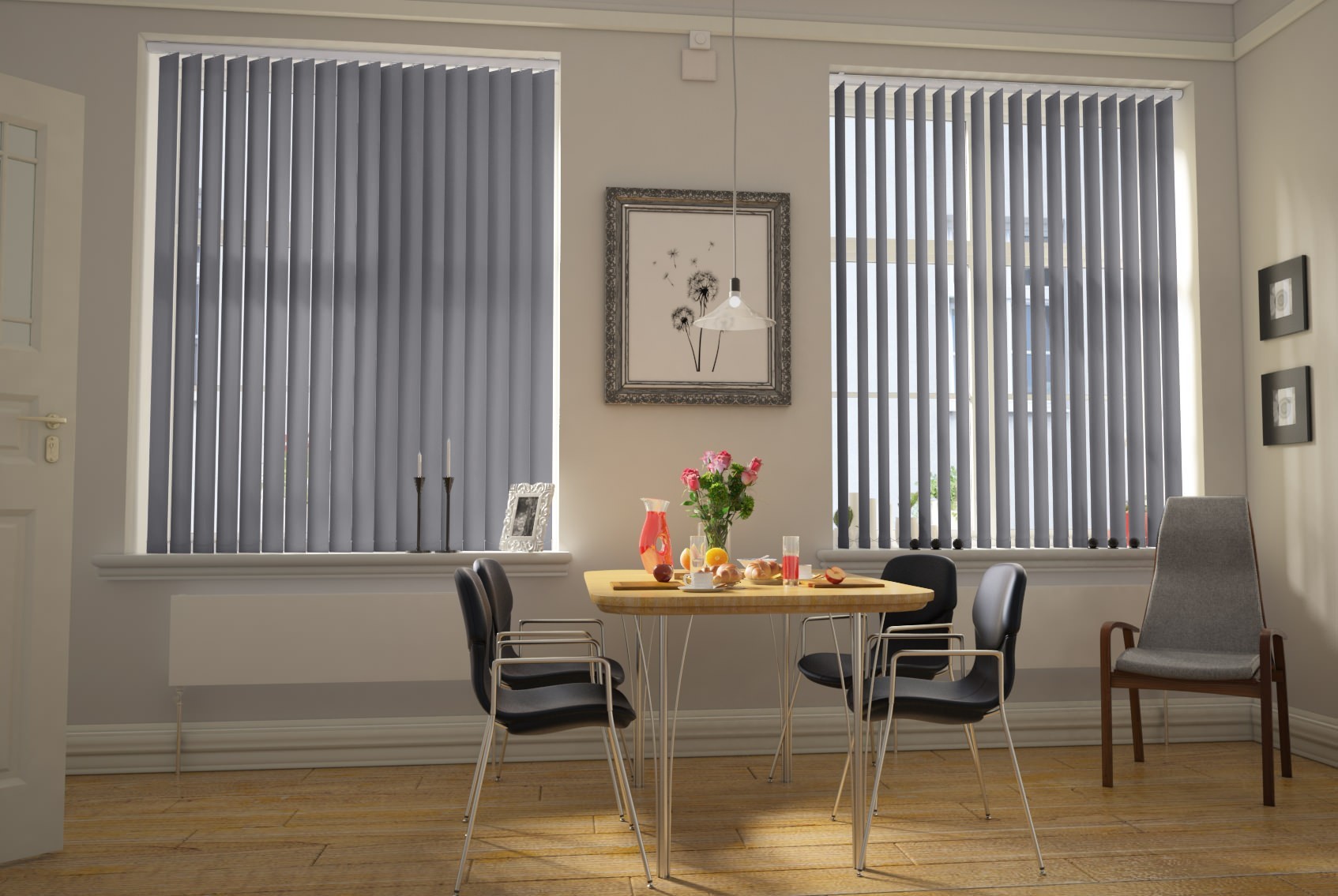
Vertical blinds work best in rooms with wide, tall or door-like glazing. Their strength is not small-window detail. It is broad, practical coverage across larger openings where the blind needs to move sideways and remain easy to use.
This makes vertical blinds especially useful in rooms where access, width, glare and full-height privacy are part of the decision.
Living Rooms with Patio Doors
Living rooms with patio doors are one of the strongest use cases for vertical blinds. The louvres can be drawn to one side when the doors are in use, then tilted or closed when privacy or light control is needed.
This is more practical than using a blind that needs to be lifted upwards across a wide opening. With vertical blinds, the operation naturally matches the way patio doors are used.
They work particularly well when:
- The doors are wide
- The room overlooks a garden, patio or neighbouring property
- The doors are used regularly
- Daytime glare needs to be softened
- The room needs privacy in the evening
- A full curtain look would feel too heavy
For a living room, softer neutral fabrics, warm greys or subtle textures can help vertical blinds feel more domestic and less office-like.
Sliding Doors
Sliding doors usually suit vertical blinds because both systems move sideways. The blind can stack to the side, leaving the opening accessible, while the louvres can be angled during the day to control light and privacy.
This makes vertical blinds a practical option for rear extensions, garden rooms, dining areas and open-plan kitchen-living spaces with large sliding doors.
The key detail is stack space. When the blinds are open, the louvres need somewhere to sit. This should be considered before choosing the draw direction.
Conservatories
Conservatories often have large areas of glass, which can make light, heat and privacy difficult to manage. Vertical blinds can help because they cover tall or wide glazed sections while still allowing the light to be adjusted through the louvre angle.
They can be useful where the conservatory is used as a dining room, sitting room, playroom or home office. The ability to tilt the louvres throughout the day gives more control than simply opening or closing the blind completely.
In conservatories, vertical blinds can work well where:
- Several windows need coordinated coverage
- The glazing is tall or wide
- Glare changes throughout the day
- Privacy is needed without fully darkening the room
- A practical, easy-to-adjust solution is preferred
Dining Rooms with Large Windows
Dining rooms with wide windows or glazed doors can also suit vertical blinds. They create a clean, full-height finish and can make the room feel more balanced when the window is large.
This is especially useful in dining rooms that connect to a garden, patio or conservatory. The blind can be opened fully for daylight and access, then adjusted in the evening for privacy.
For a more refined look, choose softer fabric colours rather than very stark office-style finishes. Warm neutrals, off-white, taupe, soft grey and muted green can help the blinds feel more integrated with dining furniture and flooring.
Home Offices with Wide Glazing
Vertical blinds can work well in home offices where the window is wide or full-height. They can help reduce glare across a larger area of glass while still allowing the room to feel bright.
They are particularly useful when the desk faces or sits near a wide window. Tilting the louvres can soften harsh light without completely blocking the view or making the room feel closed in.
For standard office windows, horizontal blinds may offer more precise glare control. But where the window is wide, vertical blinds can be the more practical option.
Commercial and Multi-Use Rooms
Vertical blinds remain a strong option for commercial and multi-use spaces because they are practical, scalable and well suited to larger windows. They can work in offices, meeting rooms, clinics, classrooms, rental properties and shared spaces where blinds need to be easy to use and provide reliable coverage.
Their simple track and louvre system makes them especially suitable where the room has larger glazing and needs regular adjustment throughout the day.
When Vertical Blinds Make Most Sense
Vertical blinds are usually the better choice when the room has:
- Patio doors
- Sliding doors
- Wide windows
- Tall windows
- Floor-to-ceiling glazing
- Conservatory-style glass
- A need for sideways opening
- A need for broad privacy and light control
They are less likely to be the first choice for small windows, compact bathrooms or standard bedroom windows. In those rooms, horizontal blinds often look more proportionate and provide finer control.
Which Rooms Suit Horizontal Blinds Best?
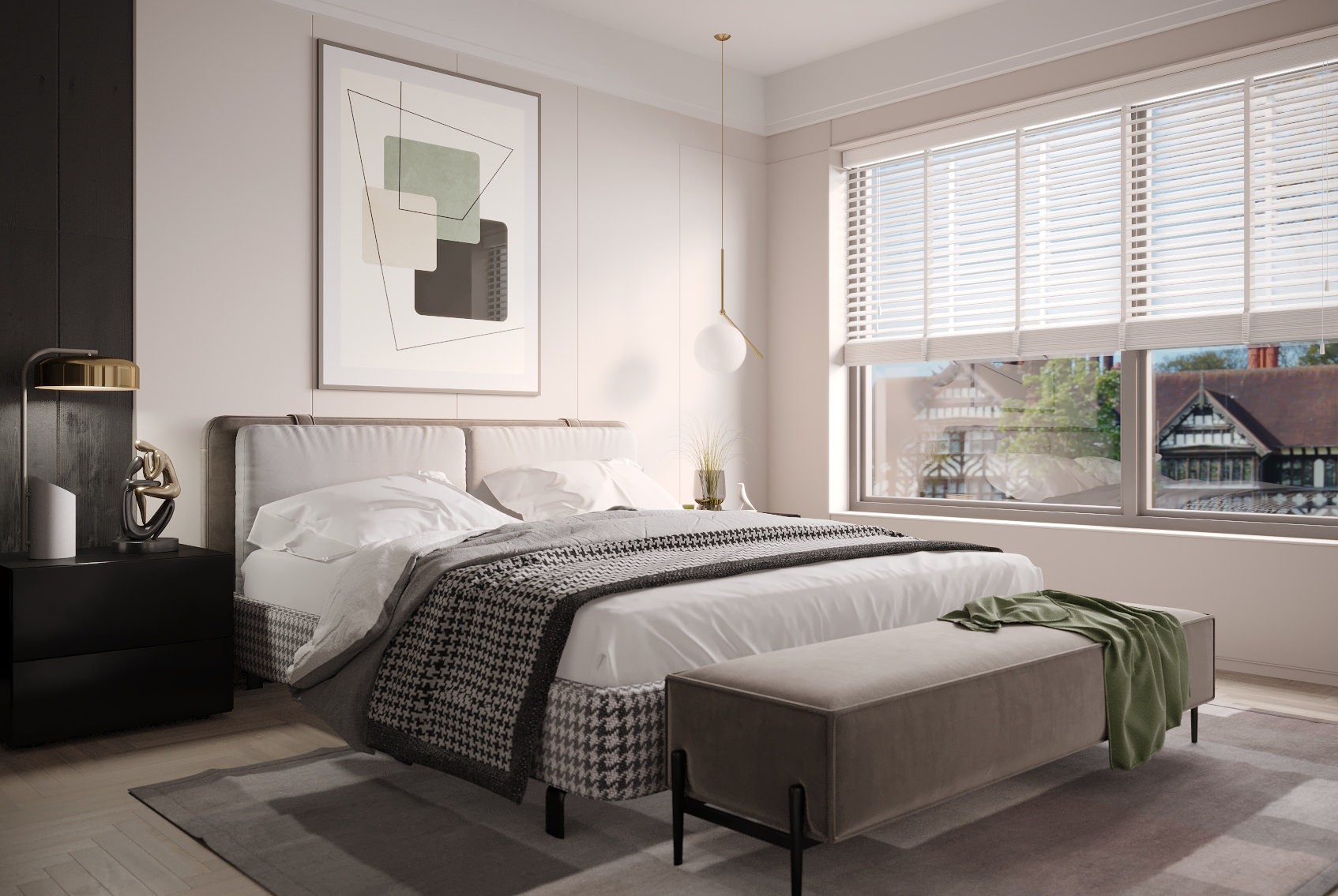
Horizontal blinds are usually the stronger choice for standard windows, smaller windows and rooms where privacy or light needs to be adjusted carefully throughout the day. Because the slats tilt rather than simply opening or closing, they give a high level of control without needing to expose the whole window.
This makes them especially useful in bedrooms, bathrooms, kitchens and home offices, where the room often needs both daylight and privacy at the same time.
Bedrooms
Horizontal blinds work well in bedrooms because they allow privacy to be adjusted without fully blocking natural light. The slats can be tilted to reduce views from outside while still letting daylight into the room.
They are particularly useful for bedrooms that face a street, neighbouring property or shared outdoor space. A wooden or faux wood blind can also add structure and warmth to the room, making the window feel more finished than a plain practical covering.
For bedrooms, horizontal blinds are a good choice when:
- The window is standard size
- Privacy matters during the day and evening
- The room needs adjustable light control
- A structured, neat finish is preferred
- The customer wants a warmer wood-effect look or a crisp Venetian style
Kitchens
Kitchens often suit horizontal blinds because they are compact, practical and easy to adjust. On a smaller kitchen window, vertical blinds can feel out of scale, while a horizontal blind sits neatly within the window area.
Faux wood and aluminium Venetian blinds are usually better starting points for kitchens than real wood, especially where moisture, steam and cleaning are part of the decision. The slats can be tilted to manage glare while cooking or opened more fully when more daylight is wanted.
Horizontal blinds are especially useful for kitchen windows above sinks, worktops or dining nooks where a compact blind is more practical than a full-length fabric option.
Bathrooms
Bathrooms are one of the clearest rooms where horizontal blinds often make more sense than vertical blinds. Most bathroom windows are relatively small, and the main requirement is usually privacy with some natural light.
A faux wood or aluminium horizontal blind can work well in this type of space because the slats can be angled to obscure the view while still allowing light in. This is useful for bathrooms, en-suites and cloakrooms where fully closing the blind would make the room feel too dark.
Real wood is generally less suitable for moisture-prone rooms, so faux wood or aluminium is usually the more practical direction.
Home Offices
Horizontal blinds are often a strong option for home offices because they give precise control over glare. The slats can be angled to redirect daylight away from screens without needing to darken the whole room.
This is useful when the desk is near a window, the room is south-facing, or video calls and screen work are part of daily use. Compared with vertical blinds, horizontal blinds usually offer more detailed adjustment on standard office windows.
For home offices, aluminium Venetian blinds can create a crisp, modern look, while wooden or faux wood blinds can make the room feel warmer and less clinical.
Small Living Room Windows
For smaller living room windows, horizontal blinds are usually more proportionate than vertical blinds. They sit neatly in the window space and can add a more tailored finish without making the room feel overly functional.
Wooden blinds can work particularly well in living rooms because they introduce natural texture and structure. Faux wood can give a similar visual effect where practicality or budget is more important.
Horizontal blinds are a good option for living rooms when the window is standard in size, especially if the room already has curtains, soft furnishings or other decorative elements.
Street-Facing Rooms
Street-facing rooms often benefit from horizontal blinds because they allow privacy without fully blocking daylight. The slats can be tilted so people outside have a reduced view in, while the room still receives natural light.
This is useful for:
- Front bedrooms
- Living rooms facing pavements
- Home offices at the front of the house
- Ground-floor rooms
- Flats with nearby neighbouring windows
In these settings, horizontal blinds often give a better balance of privacy and openness than a blind that is simply open or closed.
When Horizontal Blinds Make Most Sense
Horizontal blinds are usually the better choice when the room has:
- Standard windows
- Smaller windows
- A need for precise privacy control
- A need for glare management
- Bathroom or kitchen moisture considerations
- Street-facing windows
- A preference for wood, faux wood or aluminium finishes
- A more structured interior style
They are less likely to be the first choice for wide patio doors, sliding doors or very large areas of glazing. In those situations, vertical blinds usually provide more practical coverage and easier operation.
Best Choice by Window Type
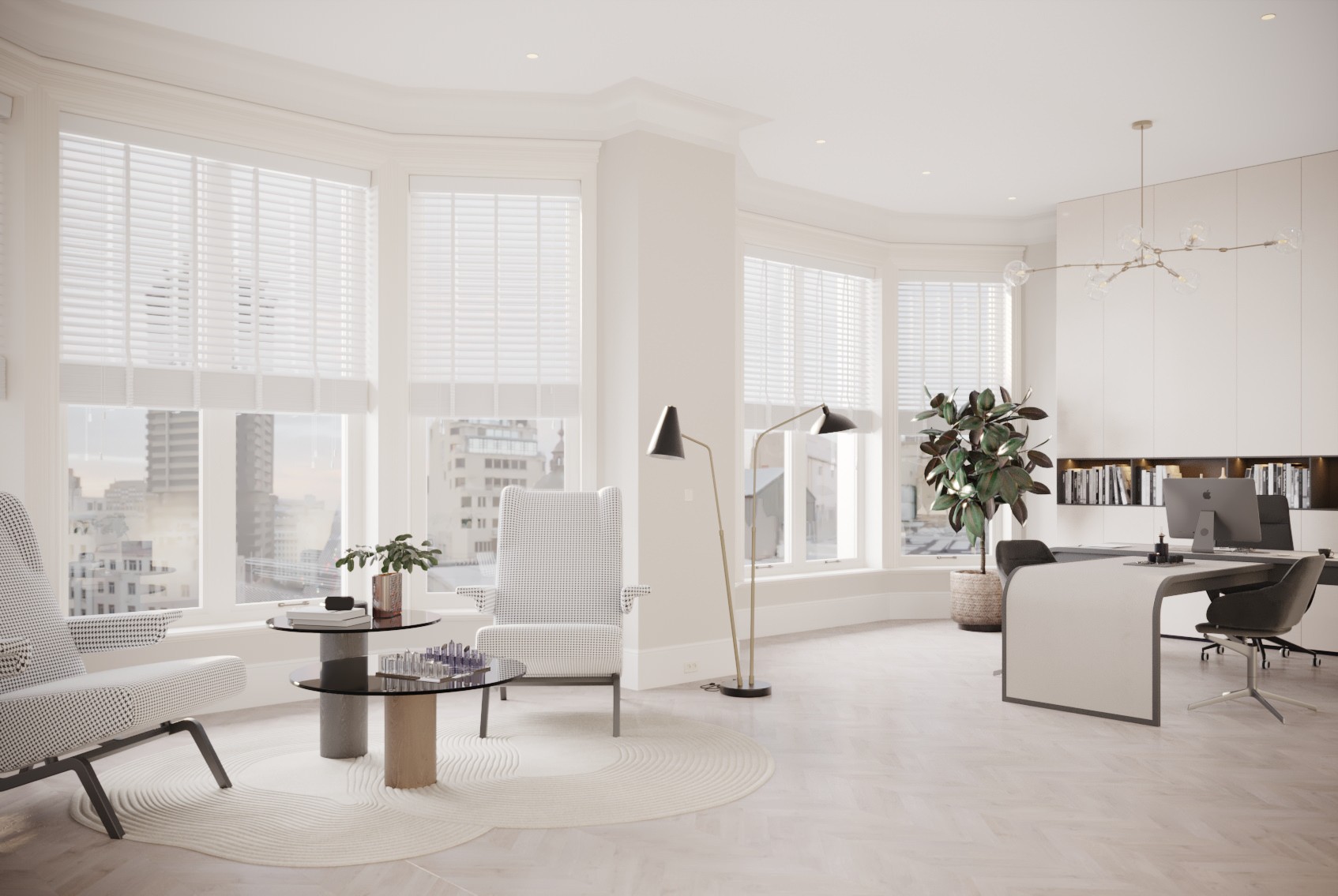
The window shape often matters more than the room itself. Vertical blinds and horizontal blinds behave very differently on standard windows, wide openings, doors and bay windows, so the best choice should start with the glazing rather than the product name.
Standard Windows
For most standard UK windows, horizontal blinds are usually the better starting point. They sit neatly within or around the window opening and give precise control over privacy and light.
This makes them especially useful for bedrooms, kitchens, bathrooms, home offices and front-facing rooms. Venetian, wooden and faux wood blinds all work well on standard windows because the slats can be angled throughout the day without needing to raise the blind fully.
Vertical blinds can be used on standard windows, but they are often less proportionate unless the window is tall or wide enough to suit the vertical louvre format.
Wide Windows
Wide windows often suit vertical blinds better. Their sideways operation makes them easier to manage across a larger span, and the louvres can be drawn to one side when the full window needs to be exposed.
A very wide horizontal blind can become heavier and more awkward to lift. It may also create a deeper stack of slats when raised. For this reason, vertical blinds are often more practical on larger windows, especially in living rooms, dining rooms and open-plan spaces.
Patio Doors and Sliding Doors
Vertical blinds are usually the more practical choice for patio doors and sliding doors. The reason is simple: doors need sideways access, and vertical blinds also move sideways.
This makes them easier to live with than a blind that has to be raised upwards each time the door is used. The louvres can be drawn clear of the door opening, then tilted or closed when privacy is needed.
Horizontal blinds are usually less suitable for wide patio doors unless each door panel has its own specialist blind system. For a traditional vertical versus horizontal comparison, vertical blinds usually win on patio and sliding doors.
French Doors
French doors can be more nuanced. If the doors have individual glazed panels, horizontal blinds may work well when fitted to each door or within a compatible frame-fit system. This can keep the blinds close to the glass and allow each door to operate normally.
However, if the French doors sit within a wider glazed opening, or the customer wants one blind treatment across the whole area, vertical blinds may be more practical.
The key points are:
- How often the doors open
- Whether the blind needs to move with the door
- Handle clearance
- Available fixing space
- Whether each glazed panel needs separate control
Bay Windows
Bay windows often suit horizontal blinds because each section of the bay can be dressed individually. This gives good privacy and light control across each pane while keeping the shape of the bay visible.
Wooden, faux wood or Venetian blinds can work particularly well in bays because they create a structured, tailored look. Each blind can be adjusted separately, which is useful when sunlight or privacy needs vary across the bay.
Vertical blinds can work on some bay windows, but they are usually less natural visually unless the bay is very wide or shallow. The louvre tracks and angles need careful planning to avoid a clumsy finish.
Tall or Floor-to-Ceiling Windows
Tall or floor-to-ceiling windows often suit vertical blinds because the vertical louvre format follows the height of the glazing. This can create a clean, elongated look that feels proportionate to the window.
Horizontal blinds can be used on tall windows in some cases, but they may become heavy or create a large slat stack when raised. Vertical blinds are usually easier to operate across tall glazing, especially where the window is also wide.
Small Windows
Small windows usually suit horizontal blinds better. A vertical blind can look too functional or oversized on a compact window, while horizontal slats tend to feel more balanced.
This is especially relevant for cloakrooms, bathrooms, small kitchens, utility rooms and narrow bedroom windows. Faux wood or aluminium horizontal blinds are often good options where moisture, privacy and simple adjustment matter.
The Window-Type Rule
As a practical guide:
- Standard windows: usually horizontal blinds
- Small windows: usually horizontal blinds
- Wide windows: usually vertical blinds
- Patio and sliding doors: usually vertical blinds
- Bay windows: usually horizontal blinds section by section
- Tall glazing: usually vertical blinds
- Bathrooms and cloakrooms: usually horizontal blinds
- Large rear glazing: usually vertical blinds
The best choice is the style that works with the shape and movement of the window. Vertical blinds suit width and height. Horizontal blinds suit standard windows, smaller openings and more detailed control.
Privacy: Which Style Gives Better Control?
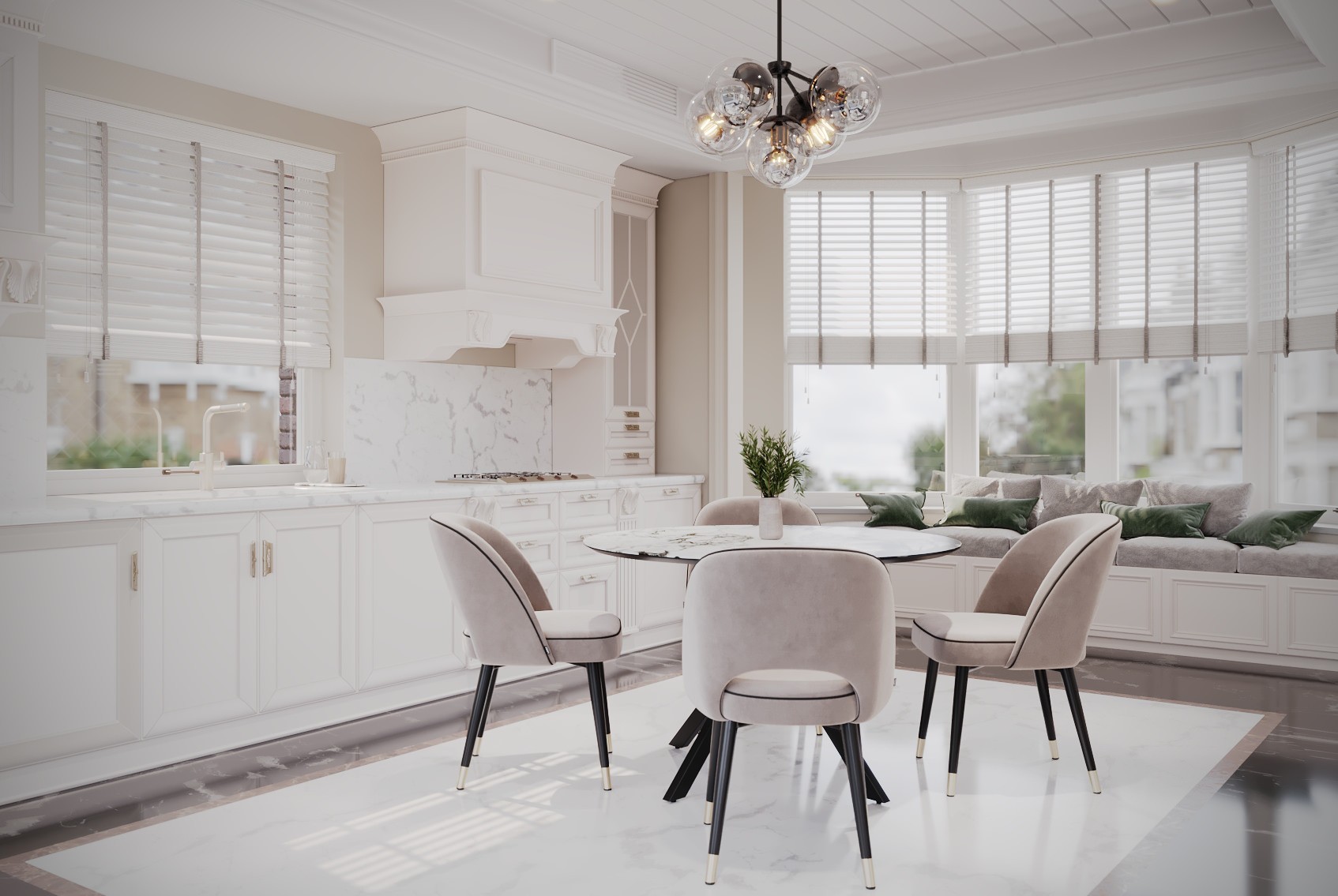
Both vertical and horizontal blinds can provide good privacy, but they control it in different ways. The better option depends on the window size, the viewing angle and whether the room needs privacy all day or mainly in the evening.
Horizontal Blinds for Precise Privacy
Horizontal blinds usually offer the most detailed privacy control on standard windows. The slats can be tilted upwards or downwards, allowing you to reduce the view from outside while still keeping some natural light in the room.
This makes them particularly useful for street-facing rooms, ground-floor windows and rooms overlooked by neighbouring properties.
Horizontal blinds are especially effective in:
- Bedrooms facing the street
- Bathrooms and en-suites
- Ground-floor living rooms
- Home offices
- Kitchens facing neighbouring windows
- Flats with close external views
The ability to tilt the slats means the blind does not always need to be fully closed. This is useful in rooms where you want privacy without making the space feel dark or shut in.
Vertical Blinds for Wide-Window Privacy
Vertical blinds are very effective for privacy across wide windows, patio doors and sliding doors. The louvres can be angled to block direct views while still allowing daylight through, or closed fully when more privacy is needed.
They are particularly useful in rooms with large glazed areas that overlook gardens, patios, neighbouring houses or shared outdoor spaces.
Vertical blinds work well for privacy in:
- Living rooms with patio doors
- Dining rooms with wide windows
- Conservatories
- Sliding doors
- Floor-to-ceiling glazing
- Home offices with large windows
Because vertical blinds cover larger areas of glass, they are often the more practical choice when the main privacy issue comes from a wide opening rather than a standard window.
Daytime and Evening Privacy
Privacy changes throughout the day depending on light direction. During daylight hours, both vertical and horizontal blinds can reduce views into the room while still allowing light through. In the evening, when the lights are on inside, privacy usually needs more coverage.
Horizontal blinds can be angled for daytime privacy, but they may need to be closed more fully at night. Vertical blinds work in a similar way: partly angled louvres can help during the day, while fully closed louvres offer stronger evening coverage.
The exact result depends on:
- Slat or louvre angle
- Fabric or material opacity
- Outdoor light levels
- Indoor lighting
- Window position
- How close neighbouring views are
Which Is Better for Street-Facing Rooms?
For standard street-facing windows, horizontal blinds are usually the better choice. Their slats allow more nuanced control, which is useful when the room needs privacy without fully blocking daylight.
For wide street-facing or rear-facing glazing, vertical blinds may be more practical because they cover larger areas more naturally.
The Privacy Rule
Choose horizontal blinds when the room needs detailed privacy control on a standard window.
Choose vertical blinds when the room needs broad privacy coverage across a wide window, patio door or large glazed opening.
For many homes, horizontal blinds solve privacy best in bedrooms, bathrooms and front-facing rooms, while vertical blinds solve privacy best across patio doors, conservatories and wider living spaces.
Light and Glare Control
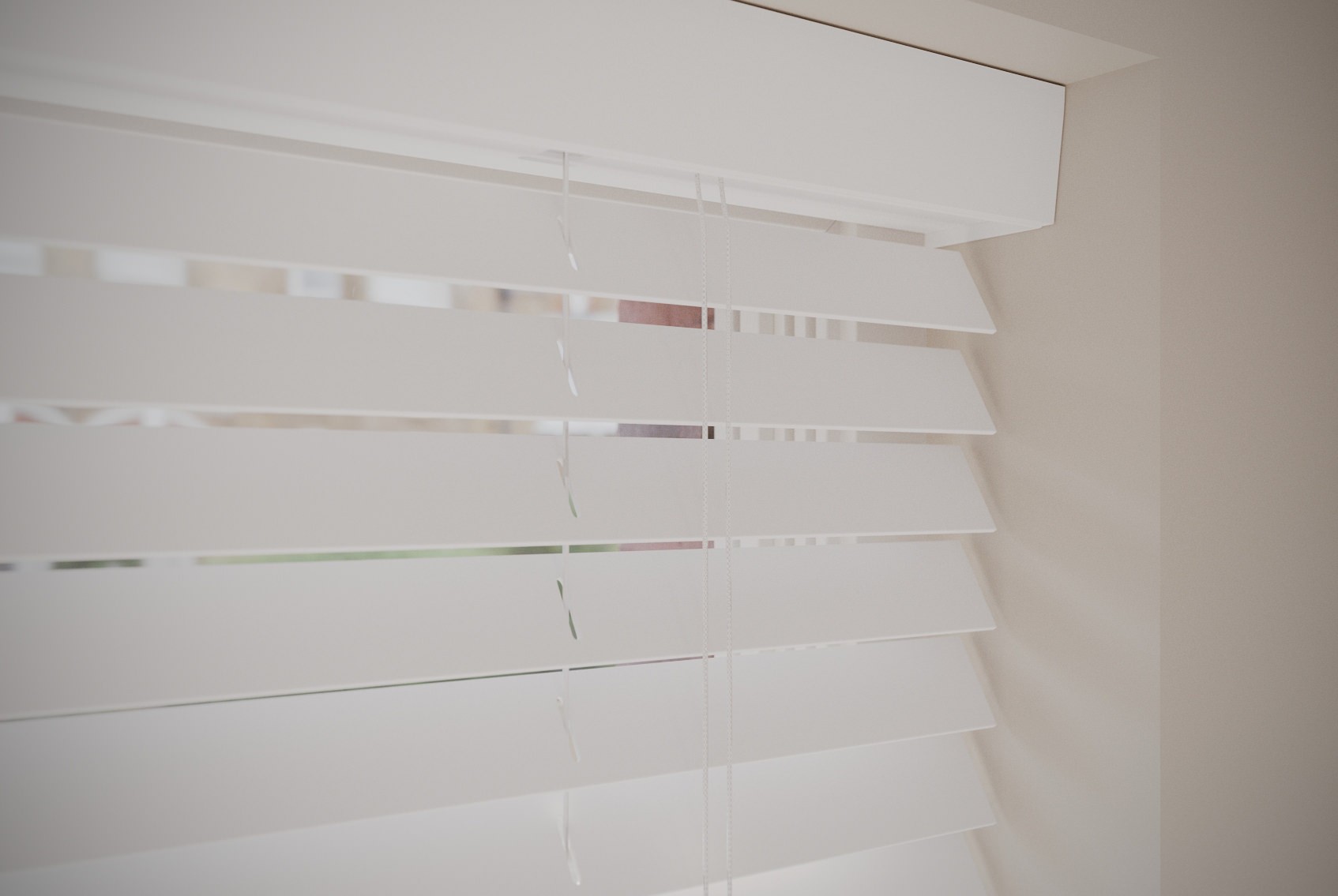
Light control is one of the main reasons people compare vertical and horizontal blinds. Both styles allow adjustment rather than simply being open or closed, but horizontal blinds usually offer finer control on standard windows, while vertical blinds are better for managing light across larger areas of glass.
Horizontal Blinds for Directional Light Control
Horizontal blinds are particularly good at directing light. Because the slats tilt upwards or downwards, they can soften bright sunlight, reduce glare and still allow daylight into the room.
This makes them useful in rooms where light needs to be adjusted carefully throughout the day, such as bedrooms, kitchens, bathrooms and home offices.
In a home office, for example, horizontal blinds can help reduce glare on screens without making the whole room dark. In a bedroom, they can provide privacy while still allowing some morning light through. In a kitchen, they can soften bright sunlight over a sink, worktop or dining area.
Horizontal blinds work well for light control when:
- The window is standard size
- Direct sunlight needs to be softened
- Screen glare is an issue
- Privacy and daylight are both needed
- The room benefits from adjustable slat angles
- A compact blind is preferred
The material also affects the result. Aluminium blinds can feel crisp and reflective, wooden blinds add warmth, and faux wood blinds offer a practical option for rooms where moisture and cleaning are part of the decision.
Vertical Blinds for Large Glass Areas
Vertical blinds are strongest where light needs to be controlled across a wide or tall opening. Patio doors, conservatories, sliding doors and large living room windows can all let in a lot of sunlight, and a vertical blind gives a practical way to soften that light without covering the glass completely.
The louvres can be angled to reduce glare while keeping the room bright. This is especially useful in open-plan rooms, dining areas and conservatories where the sunlight changes throughout the day.
Vertical blinds work well for light control when:
- The glazing is wide or full-height
- The room gets strong sunlight through patio doors
- The blind needs to cover a large area
- The space needs flexible daytime adjustment
- The opening needs to remain accessible
- A side-drawing blind is more practical than a lifting blind
Which Is Better for Glare?
For standard windows, horizontal blinds usually give better glare control because the slats can be adjusted more precisely. This is useful in home offices, bedrooms and kitchens where the position of the sun can make a noticeable difference.
For large glazed areas, vertical blinds are often more practical. They may not offer the same fine directional control as horizontal slats, but they cover larger openings more naturally and can be adjusted without making the blind difficult to operate.
Colour and Material Matter
The colour of the blind can affect how the room feels. Light colours usually keep the room brighter and softer, while darker colours can reduce brightness more strongly but may make the space feel heavier.
For vertical blinds, softer neutrals, warm greys and subtle textured fabrics often work well because they diffuse light without making the window feel stark. For horizontal blinds, faux wood, wooden or aluminium finishes can all change the balance between warmth, brightness and practicality.
The Light Control Rule
Choose horizontal blinds when the room needs precise control over glare and daylight on a standard window.
Choose vertical blinds when the room needs broad light control across wide windows, patio doors, sliding doors or conservatory glazing.
In most homes, horizontal blinds are stronger for detailed adjustment, while vertical blinds are stronger for managing large areas of glass.
Style and Interior Design Differences
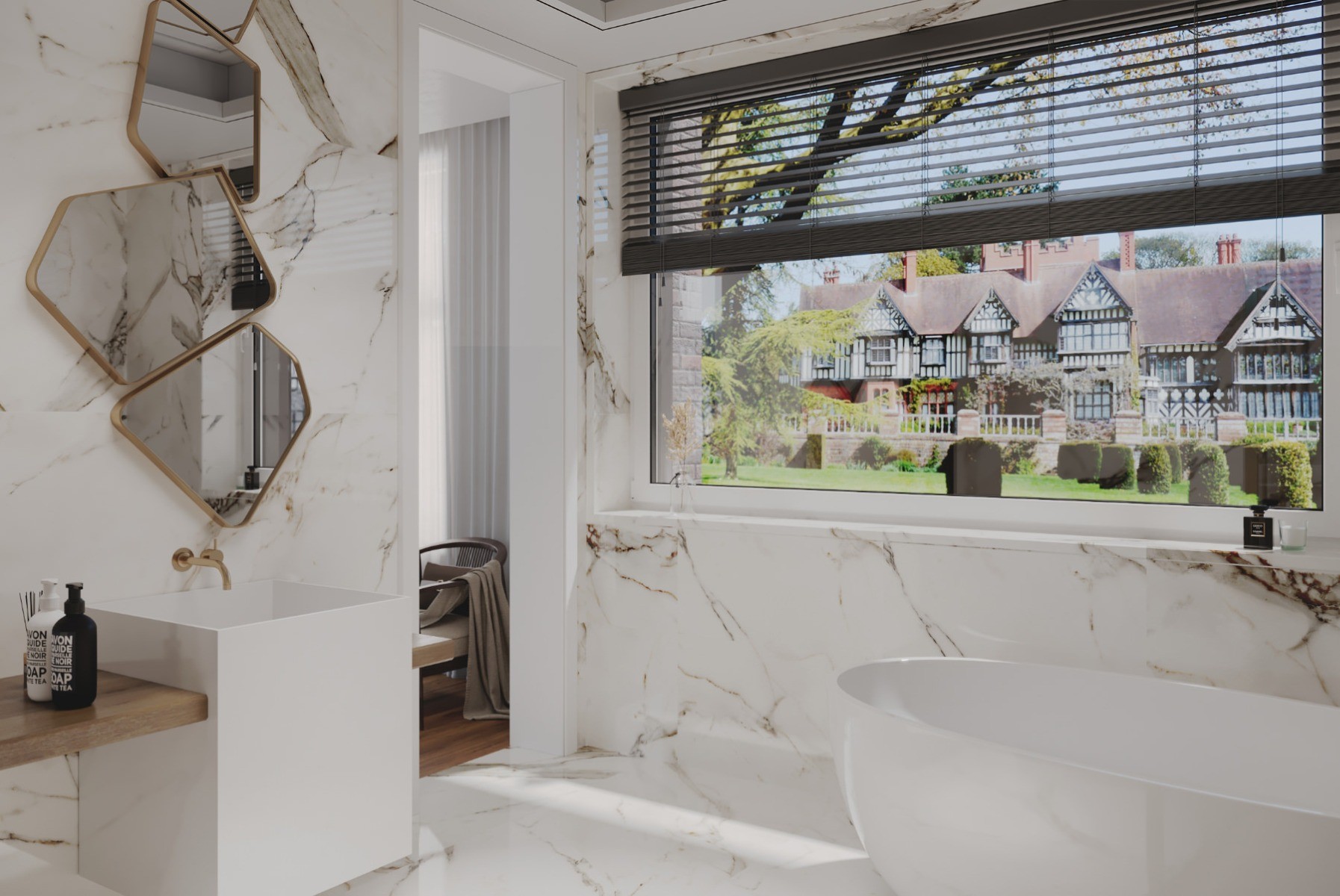
Vertical and horizontal blinds create very different visual effects. Even when both are chosen in a neutral colour, the direction of the slats changes how the window feels in the room.
Vertical blinds tend to make a window look taller, cleaner and more continuous. Horizontal blinds tend to make a window look more structured, compact and defined. The best style choice depends on whether the room needs broad, soft coverage or a more tailored slatted finish.
The Look of Vertical Blinds
Vertical blinds have a simple, full-height appearance. The louvres run from top to bottom, which can visually suit patio doors, sliding doors and tall windows because the blind follows the natural height of the glazing.
They usually work best when the window is large enough to justify the vertical lines. On a wide opening, vertical blinds can look balanced and practical. On a small window, they can sometimes feel too commercial or too functional.
Modern vertical blinds can look much softer than older office-style versions, especially when chosen in calm colours and subtle textures. Off-white, warm grey, beige, taupe, soft green and muted neutral fabrics can help them sit comfortably in living rooms, dining rooms and conservatories.
Vertical blinds are a good style choice when the room needs:
- A clean full-height window treatment
- Practical coverage across wide glazing
- A softer alternative to bare patio doors
- A simple neutral finish
- A blind that draws sideways rather than lifting
- A less bulky option than curtains across large doors
They are less suited to rooms where the window dressing needs to feel decorative, layered or highly textured.
The Look of Horizontal Blinds
Horizontal blinds have a more structured appearance. The slats create clean horizontal lines across the window, which can make the blind feel neat, tailored and more architectural.
The material has a big impact on the style. Wooden blinds bring warmth and natural texture, making them suitable for bedrooms, living rooms and home offices. Faux wood blinds offer a similar look with better practicality in kitchens and bathrooms. Aluminium Venetian blinds feel slimmer, sharper and more modern.
Horizontal blinds usually work best on standard windows because the proportions feel right. They frame the window neatly and give the room a more finished look without needing full-length fabric.
Horizontal blinds are a good style choice when the room needs:
- A structured, tailored finish
- Adjustable privacy without a soft fabric look
- A wood, faux wood or aluminium material choice
- A compact blind for a standard window
- A cleaner alternative to curtains
- A blind that works with modern, classic or practical interiors
They can become less practical on very wide openings, especially if the blind is heavy or needs to be raised frequently.
Which Style Looks More Modern?
Neither style is automatically more modern. A vertical blind can look contemporary when used on the right window, especially across large glazing in a simple neutral fabric. A horizontal blind can look modern, classic or natural depending on the material and colour.
The more important question is whether the blind suits the window proportions.
Vertical blinds usually look most modern when they are used where they make architectural sense: wide doors, tall glazing and open-plan rooms.
Horizontal blinds usually look most modern when they are used on standard windows with a clean finish, especially in aluminium, faux wood or a restrained wooden tone.
Matching the Blind to the Room Style
For minimalist or contemporary rooms, horizontal aluminium blinds or simple vertical blinds in neutral fabric can both work well. The choice depends mainly on the window size.
For warmer interiors, wooden or faux wood horizontal blinds usually add more texture and character than vertical blinds.
For large practical spaces, such as conservatories, dining rooms and living rooms with patio doors, vertical blinds can feel more natural because they suit the scale of the glazing.
For smaller rooms, such as bathrooms, kitchens and home offices, horizontal blinds usually feel more proportionate and better integrated.
The Style Rule
Choose vertical blinds when the room has large glazing and needs a clean, full-height finish.
Choose horizontal blinds when the window is standard-sized and the room needs a more structured, compact or material-led look.
The best design result comes from matching the blind to the scale of the window first, then choosing the colour and material that support the room’s wider style.
Are Vertical Blinds Still Stylish?
Vertical blinds are sometimes seen as old-fashioned because many people associate them with older offices, rented flats or very plain white louvres. That reputation is understandable, but it is not the full picture. Vertical blinds can still look stylish when they are used on the right type of window and chosen in the right fabric, colour and finish.
The key is proportion. Vertical blinds look best where their long lines make sense: patio doors, sliding doors, wide windows, conservatories and tall glazing. In these settings, the vertical louvres feel practical and balanced because they follow the scale of the glass.
Where vertical blinds tend to look dated is on small windows, especially if the colour is stark white, the fabric is very plain and the blind looks more like an office fitting than part of the room design.
How to Make Vertical Blinds Look More Modern
Modern vertical blinds work best when they are treated as a considered window covering rather than a default practical choice.
Good design choices include:
- Choosing warm neutrals instead of harsh white
- Using soft grey, taupe, cream, beige or muted green tones
- Selecting subtle texture rather than flat office-style fabric
- Matching the blind colour to the wider room palette
- Using them on wide or tall glazing where the proportions work
- Keeping the surrounding room scheme clean and uncluttered
A living room with patio doors, for example, can look much better with soft neutral vertical blinds than with a stark white fabric that feels disconnected from the furniture and flooring.
Where Vertical Blinds Still Work Best
Vertical blinds are still highly relevant for rooms where other blind styles can feel awkward. Wide patio doors, sliding doors and full-height glazing often need a blind that can open sideways and cover a large area without becoming heavy to operate.
In these situations, vertical blinds can be more stylish precisely because they are practical. They suit the architecture of the window rather than fighting against it.
They work especially well in:
- Living rooms with patio doors
- Open-plan kitchen-dining rooms with large glazing
- Conservatories
- Dining rooms with wide windows
- Home offices with full-height glass
- Garden rooms and extensions
When Vertical Blinds May Look Dated
Vertical blinds are less successful when they are used on windows that do not need them. On a small bathroom window, narrow bedroom window or compact kitchen window, horizontal blinds usually feel more proportionate and current.
Vertical blinds may look dated if:
- The window is too small for the louvre scale
- The fabric is stark white and flat
- The room has no other soft textures
- The blind looks like a functional office fitting
- The track and louvre stack feel too dominant
- The blind has been chosen for every room regardless of window size
The Verdict on Style
Vertical blinds are not automatically dated. Poorly chosen vertical blinds can look dated, but well-chosen vertical blinds can still be a smart, practical and stylish choice for the right windows.
The best rule is simple: use vertical blinds where their scale and sideways operation make sense. If the window is wide, tall or door-like, vertical blinds can still look very appropriate. If the window is small or standard-sized, horizontal blinds will usually give a more modern and balanced finish.
Are Horizontal Blinds More Modern?
Horizontal blinds are often seen as the more modern option, especially when compared with older-style vertical blinds. In many rooms, that impression is fair. Horizontal blinds usually look neat, structured and compact, which suits a wide range of contemporary interiors.
However, they are not automatically more modern in every situation. A horizontal blind can look sharp and stylish on a standard window, but it may feel awkward or heavy on a very wide patio door. As with vertical blinds, the best result depends on using the right blind on the right window.
Why Horizontal Blinds Often Feel Contemporary
Horizontal blinds have a clean, architectural look. The repeated slat lines create a structured finish that works well with modern furniture, fitted kitchens, home offices and simple bedroom schemes.
They also give a choice of materials, which makes them easier to match to different interior styles.
For example:
- Aluminium Venetian blinds can look crisp, minimal and practical.
- Faux wood blinds can look clean and warm while being suitable for kitchens and bathrooms.
- Wooden blinds can add natural texture and a more premium feel to living rooms, bedrooms and home offices.
This material choice is one reason horizontal blinds often feel more design-led than basic fabric vertical blinds.
Where Horizontal Blinds Look Best
Horizontal blinds usually look most modern on standard windows where their proportions feel balanced. They sit neatly within the window area and do not dominate the room.
They work particularly well in:
- Bedrooms
- Kitchens
- Bathrooms
- Home offices
- Small living room windows
- Street-facing rooms
- Bay windows
- Utility rooms and cloakrooms
In these spaces, horizontal blinds can provide a finished look without needing curtains or full-length fabric. They are also easy to pair with other interior elements, such as wood flooring, kitchen cabinetry, bathroom fittings or office furniture.
When Horizontal Blinds May Not Be the Best Design Choice
Horizontal blinds are less convincing when the window is too large for them to operate comfortably. On very wide glazing, the blind may be heavy to lift, create a bulky top stack or feel less practical than a side-drawing option.
They may also be less suitable when the room needs a softer, fabric-led look. For example, a living room with large glazed doors may look better with vertical blinds, curtains, panel blinds or another full-height treatment, depending on the desired style.
Horizontal blinds may be less ideal when:
- The window is very wide
- The blind needs to cover patio or sliding doors
- The room needs a softer fabric finish
- The blind would need to be raised frequently
- The top stack would feel too bulky
- Full-height coverage is more important than compact slat control
Modern Does Not Always Mean Better
A blind can look modern but still be the wrong choice for the room. A slim aluminium Venetian blind may look smart, but if it is fitted across a wide door that is used several times a day, it may quickly feel impractical.
Likewise, a vertical blind may seem less fashionable in theory, but on a wide patio door it may look more natural because it suits the way the opening works.
Good design is not only about appearance. It is also about proportion, movement and daily use.
The Verdict on Horizontal Blinds
Horizontal blinds often look more modern on standard windows because they are compact, structured and available in wood, faux wood and aluminium finishes. They are especially strong in bedrooms, bathrooms, kitchens, home offices and smaller living spaces.
However, they are not the right answer for every window. For wide doors, tall glazing and large openings, vertical blinds may still look more balanced and work better in everyday use.
The practical rule is this: horizontal blinds usually look more modern on standard windows, while vertical blinds can look more appropriate on large glazing.
Cleaning and Maintenance Differences
Cleaning is another area where vertical and horizontal blinds differ. Neither style is difficult to maintain, but the amount of effort depends on the material, the room and how much dust, moisture or everyday use the blind is exposed to.
In general, horizontal blinds need more regular dusting because each slat can collect dust. Vertical blinds are often easier to keep visually tidy across large windows, but fabric louvres may need more care if they become marked.
Cleaning Vertical Blinds
Vertical blinds are usually straightforward to maintain because the louvres hang down from a track and do not have lots of horizontal surfaces where dust can settle. This can make them practical for wide windows, patio doors and conservatories.
For everyday cleaning, the louvres can usually be dusted, vacuumed gently with an upholstery attachment or wiped carefully depending on the fabric type. Because the louvres hang vertically, dust is less likely to sit on them in the same way it does on horizontal slats.
Vertical blinds are generally easy to maintain when:
- They are used in living rooms, dining rooms or conservatories
- The fabric is a practical neutral or textured finish
- They are kept away from heavy splashes or grease
- The louvres are dusted or vacuumed regularly
- Marks are dealt with carefully and promptly
The main drawback is staining. If a fabric louvre becomes marked, it may be more noticeable than dust on a slatted blind, especially on lighter fabrics. This is one reason vertical blinds are not always the first choice for compact kitchens or bathrooms.
Cleaning Horizontal Blinds
Horizontal blinds can need more regular dusting because the slats create flat surfaces where dust can settle. This is particularly noticeable on wooden, faux wood and aluminium blinds.
The benefit is that many horizontal blinds are simple to wipe down, especially faux wood and aluminium styles. This makes them practical for kitchens, bathrooms and utility rooms where moisture, steam or general cleaning are part of everyday use.
Horizontal blinds are generally easy to maintain when:
- The slats are dusted regularly
- Faux wood or aluminium is used in moisture-prone rooms
- The blind is fitted in a practical position
- The room does not expose the blind to heavy grease or splashing
- The material suits the room conditions
Wooden blinds may need more care than faux wood or aluminium, particularly in rooms with moisture. Faux wood is often a more practical choice for bathrooms and kitchens because it gives a similar look while being better suited to humid conditions.
Kitchens and Bathrooms
For kitchens and bathrooms, horizontal blinds are often the more practical option, especially faux wood or aluminium blinds. These materials are usually easier to wipe clean than fabric louvres and tend to suit smaller windows better.
Vertical blinds can work in some kitchens or bathrooms, but they are usually more suitable where the window is large, the room is well ventilated and the blind is not close to sinks, baths, showers or cooking areas.
As a practical guide:
- Bathrooms: faux wood or aluminium horizontal blinds are often the stronger choice.
- Kitchens: faux wood or aluminium horizontal blinds are usually more practical on standard windows.
- Large glazed kitchen-dining doors: vertical blinds may still be suitable if the issue is width rather than moisture.
Dust, Marks and Daily Use
Horizontal blinds are more likely to show dust on individual slats, especially darker finishes. Vertical blinds may show less everyday dust, but marks on the fabric can be more difficult to ignore.
For busy homes, this matters. A blind in a child’s bedroom, kitchen or high-use room should be chosen with cleaning in mind, not just appearance.
The Maintenance Rule
Choose horizontal blinds when the room needs a wipeable, practical blind, especially in kitchens, bathrooms and utility spaces.
Choose vertical blinds when the window is large and the main maintenance concern is general dust rather than splashes, steam or grease.
In short, horizontal blinds usually need more dusting but can be easier to wipe clean. Vertical blinds can be easier across large windows, but fabric louvres need more care if they become marked.
Cost and Value Considerations
Cost is often part of the decision between vertical and horizontal blinds, but the cheapest option is not always the best value. The right choice should consider the size of the window, the material, the room conditions and how often the blind will be used.
Vertical blinds can be a cost-effective way to cover large areas of glass. Horizontal blinds can offer strong value on standard windows, especially where privacy, wipeability and detailed slat control matter.
Vertical Blinds and Large Window Value
Vertical blinds are often good value for wide windows, patio doors and sliding doors because they are designed to cover larger openings. Instead of trying to use one very wide horizontal blind, or splitting the window into several separate blinds, vertical blinds can provide broad coverage through one practical system.
This can make them a sensible option for:
- Patio doors
- Sliding doors
- Wide living room windows
- Conservatories
- Large dining room windows
- Garden rooms
- Full-height glazing
The value comes from practicality. A blind that opens sideways, covers the full width and remains easy to operate is often a better long-term choice than a blind that looks cheaper initially but becomes awkward in daily use.
Horizontal Blinds and Standard Window Value
Horizontal blinds usually offer strong value on standard windows. They are available in several material options, including aluminium, faux wood and real wood, which gives more flexibility depending on budget and room style.
For bathrooms and kitchens, faux wood or aluminium horizontal blinds can be particularly good value because they combine privacy control with a practical, wipeable finish. For bedrooms and living rooms, wooden blinds may cost more than some alternatives, but they can add warmth and a more finished look.
Horizontal blinds are often a good value choice for:
- Bedrooms
- Bathrooms
- Kitchens
- Home offices
- Small living room windows
- Utility rooms
- Bay windows
- Street-facing rooms
The value comes from everyday control. A blind that allows privacy, light and glare to be adjusted precisely can make the room more comfortable throughout the day.
Material Affects the Price
The type of blind is only part of the cost. Material and specification also matter.
A simple fabric vertical blind may cost less than a premium made-to-measure wooden blind, but that does not mean vertical blinds are always cheaper overall. Equally, an aluminium Venetian blind may be more budget-friendly than a real wood blind, but may not create the same warmth or finish.
Common cost factors include:
- Window size
- Blind material
- Fabric or slat finish
- Made-to-measure sizing
- Control type
- Lining or opacity
- Number of blinds required
- Specialist fitting requirements
The best comparison is not simply vertical versus horizontal. It is the correct vertical blind for that window versus the correct horizontal blind for that window.
Avoid False Economy
The cheapest blind can become poor value if it does not suit the room. For example, a horizontal blind across a very wide door may be inconvenient if it needs to be lifted frequently. A vertical blind on a small bathroom window may feel clumsy and less suitable than a compact faux wood blind.
Poor value often comes from choosing the wrong style for the window rather than paying slightly more for the right one.
Common false economies include:
- Choosing a blind that is too awkward to operate
- Using a fabric blind in a room that needs a wipeable finish
- Choosing a style that looks out of proportion
- Trying to cover a wide opening with a blind that is too heavy
- Buying standard sizing when made-to-measure would fit better
- Choosing based on price alone rather than daily use
Long-Term Value
Long-term value comes from choosing a blind that works with the window, suits the room and is easy to live with.
Vertical blinds usually provide strong long-term value where the window is large, wide or door-like. Horizontal blinds usually provide strong long-term value where the room has standard windows and needs detailed control over light, privacy and glare.
The Cost and Value Rule
Choose vertical blinds when they provide the most practical way to cover a large opening.
Choose horizontal blinds when they provide the best everyday control for a standard window.
The best-value blind is not always the lowest-cost blind. It is the one that fits properly, suits the room and continues to feel practical after everyday use.
Common Mistakes to Avoid
Choosing between vertical and horizontal blinds is easier when you avoid the most common mismatch: selecting a blind because it looks good in isolation rather than because it suits the window and room.
A blind can be well made and still feel wrong if it is fitted to the wrong type of opening, used in the wrong room or expected to solve a problem it was not designed for.
Choosing Horizontal Blinds for Very Wide Doors
Horizontal blinds are excellent on standard windows, but they are not always practical across very wide patio or sliding doors. A large horizontal blind may be heavier to lift, harder to operate and less convenient when the door is used regularly.
For wide doors, vertical blinds usually feel more natural because they draw sideways. This allows the door opening to remain accessible without needing to lift the full blind each time.
Using Vertical Blinds on Small Windows
Vertical blinds can look out of proportion on small windows. The long louvres and top track may feel too dominant, especially in bathrooms, cloakrooms, small kitchens or narrow bedroom windows.
For compact windows, horizontal blinds usually create a neater and more balanced finish. Faux wood, aluminium or wooden blinds can sit neatly within the window area and give better detailed control.
Ignoring Moisture in Kitchens and Bathrooms
Kitchens and bathrooms need more practical thinking than dry rooms. Steam, condensation and cleaning all matter.
Fabric vertical blinds are not always the best choice near sinks, baths, showers or cooking areas. In many cases, faux wood or aluminium horizontal blinds are more suitable because they are easier to wipe and better matched to moisture-prone rooms.
Real wood should also be chosen carefully, as it is usually better suited to drier rooms than bathrooms or steamy kitchens.
Choosing Based on Style Alone
It is easy to choose the blind that looks most attractive in a product image, but the best choice depends on how the room is used.
A horizontal wooden blind may look smart, but it may not be practical for a large sliding door. A vertical blind may look plain at first, but it may be the most suitable option for wide rear glazing.
Style matters, but it should come after proportion, operation and room suitability.
Forgetting About How the Blind Opens
The direction of movement is one of the most important differences.
Vertical blinds draw sideways. Horizontal blinds lift upwards. This affects access, usability and how the blind feels in everyday life.
Before choosing, consider:
- Does the window open inwards or outwards?
- Is it a door or a fixed window?
- Will the blind need to move every day?
- Is there space for the vertical louvres to stack?
- Is there space at the top for horizontal slats to stack?
- Will handles or obstacles get in the way?
A blind that looks right but gets in the way will quickly become frustrating.
Using One Blind Style Everywhere
Some homes suit a consistent blind style throughout, but many do not. A house with patio doors, bathroom windows, bedroom windows and a bay window may need more than one solution.
Using vertical blinds on every window can make smaller rooms feel too functional. Using horizontal blinds everywhere can make large doors less practical.
A mixed approach is often better:
- Vertical blinds for wide glazing and patio doors
- Horizontal blinds for bedrooms, bathrooms, kitchens and home offices
This keeps the window treatment appropriate rather than forcing one style onto every room.
Overlooking Privacy Angles
Privacy is not just about whether the blind is open or closed. The angle of the slats or louvres matters, as does the position of the window.
Horizontal blinds often give better detailed privacy on street-facing standard windows. Vertical blinds often give better broad privacy across patio doors and wide openings.
Think about where people can see in from:
- Pavements
- Neighbouring houses
- Gardens
- Flats opposite
- Shared driveways
- Side passages
The right blind should manage the real viewing angle, not just cover the glass.
Not Considering Made-to-Measure Fit
Poor fit can undermine both vertical and horizontal blinds. Gaps, awkward proportions, short drops or blinds that are too wide can make even the right style feel wrong.
Made-to-measure blinds are especially important for:
- Wide windows
- Patio doors
- Bay windows
- Recessed windows
- Tall glazing
- Older properties with uneven openings
- Rooms needing strong privacy or light control
A precise fit helps the blind look better, operate more smoothly and perform more effectively.
The Mistake to Avoid Most
The biggest mistake is choosing the blind before thinking about the window.
Start with the practical question: is this a wide opening, a standard window, a small window or a door?
Once that is clear, the decision becomes much simpler. Vertical blinds usually suit width, height and sideways access. Horizontal blinds usually suit compact windows, privacy control and precise slat adjustment.
Decision Checklist: Vertical or Horizontal Blinds?
The easiest way to choose between vertical and horizontal blinds is to start with the window, then look at the room. The right choice usually becomes clear once you consider size, movement, privacy, moisture and daily use.
Use this checklist as a practical guide before deciding.
1. Is the Window Wide, Tall or Door-Like?
If the window is wide, full-height or part of a patio or sliding door, vertical blinds are usually the better starting point.
They are designed to move sideways, which makes them more practical for large openings. They also avoid the need to lift a heavy blind up and down each time the door or window needs to be used.
Choose vertical blinds if the window is:
- A patio door
- A sliding door
- A wide living room window
- A large dining room window
- Full-height glazing
- Conservatory glazing
- A wide rear extension window
2. Is the Window Standard or Small?
If the window is standard-sized, narrow or compact, horizontal blinds are usually more suitable.
They sit neatly within the window area and provide detailed privacy and light control. This makes them a strong choice for bedrooms, bathrooms, kitchens, home offices and smaller living room windows.
Choose horizontal blinds if the window is:
- A bedroom window
- A bathroom window
- A kitchen window
- A home office window
- A small living room window
- A bay window section
- A street-facing standard window
3. Does the Room Need Precise Privacy?
For detailed privacy control, horizontal blinds usually have the advantage. Their slats can be tilted to reduce views from outside while still allowing daylight in.
This is useful for front-facing bedrooms, ground-floor rooms, bathrooms and home offices.
Choose horizontal blinds if:
- The room faces a street
- Neighbours can see into the window
- Privacy is needed during the day
- You want daylight without fully exposing the room
- The window is standard-sized
For wider glazed areas, vertical blinds may still be the better privacy choice because they cover the scale of the opening more naturally.
4. Is Glare the Main Issue?
If glare is a problem on a standard window, horizontal blinds usually give more precise control. The slats can be angled to direct light away from screens, beds, seating areas or worktops.
This is useful in:
- Home offices
- Bedrooms
- Kitchens
- South-facing rooms
- Rooms used for screen work
If glare is coming from a wide patio door or conservatory glazing, vertical blinds may be more practical because they cover the larger glass area more effectively.
5. Is the Room Moisture-Prone?
For bathrooms, en-suites, cloakrooms, utility rooms and many kitchens, horizontal blinds are often the stronger choice, particularly faux wood or aluminium options.
These materials are generally more practical where moisture, steam and cleaning are part of everyday use.
Choose horizontal blinds if the room is:
- A bathroom
- An en-suite
- A cloakroom
- A utility room
- A kitchen with a standard window
- A window near a sink or cooking area
Vertical blinds may still work in a large kitchen-dining space with patio doors, but the choice should be based on the door or glazing rather than the kitchen alone.
6. How Often Will the Window or Door Be Used?
If the blind sits across a door that is used every day, operation matters. Vertical blinds usually make more sense because they draw to the side, allowing easier access.
Choose vertical blinds if:
- The doors are used regularly
- The blind needs to clear an opening
- The window covering must move sideways
- The area connects to a garden, patio or balcony
- Raising a blind every time would be inconvenient
For fixed or standard windows, horizontal blinds are usually easier and more proportionate.
7. What Look Do You Want?
If the room needs a clean, full-height finish across large glazing, vertical blinds can work well. If the room needs a more structured, compact or material-led finish, horizontal blinds are usually stronger.
Choose vertical blinds for:
- Full-height simplicity
- Wide, uninterrupted coverage
- Practical patio door treatment
- Soft neutral fabric across large glass
Choose horizontal blinds for:
- Wooden, faux wood or aluminium finishes
- A structured slatted look
- Standard window proportions
- More detailed interior styling
8. Do You Need One Style Throughout the Home?
Not necessarily. Many homes work better with a mixed approach.
A practical combination could be:
- Vertical blinds for patio doors and wide glazing
- Faux wood blinds for bathrooms and kitchens
- Wooden blinds for bedrooms and living rooms
- Aluminium Venetian blinds for offices or compact modern spaces
This avoids forcing one blind style onto rooms where it does not naturally fit.
Quick Decision Table
| Question | Choose Vertical Blinds If… | Choose Horizontal Blinds If… |
|---|---|---|
| What shape is the window? | It is wide, tall or door-like. | It is standard-sized, small or narrow. |
| How does it need to open? | Sideways movement is more practical. | Upward lifting is practical enough. |
| Is privacy the main concern? | The privacy issue is across wide glazing. | The room needs precise slat control. |
| Is glare the main issue? | The glare comes through large doors or wide windows. | The glare needs careful adjustment on a standard window. |
| Is it a bathroom or kitchen? | Only if the window is large and well positioned. | Usually, especially in faux wood or aluminium. |
| What style is preferred? | Clean, full-height and practical. | Structured, compact and material-led. |
The final decision should come from the window first, then the room. If the opening is wide or door-like, vertical blinds are usually the more practical choice. If the window is standard or small, horizontal blinds usually provide the better balance of privacy, light control and appearance.
Can You Use Both Styles in One Home?
Yes. In many homes, using both vertical and horizontal blinds is not only acceptable, but more practical than choosing one style for every room.
Different rooms often have different window shapes, privacy needs and day-to-day uses. A blind that works well across patio doors may not be the best choice for a bathroom window. A blind that looks neat in a bedroom may not be practical across large sliding doors.
Using both styles allows each window to be treated according to its purpose.
Why Mixing Blind Styles Often Works
A home does not need identical blinds in every room to feel consistent. What matters more is that the choices feel intentional.
For example, vertical blinds can be used where the home has large rear glazing, while horizontal blinds can be used on standard windows in bedrooms, bathrooms, kitchens and offices. This gives each room the right level of practicality without making the interior feel mismatched.
A mixed approach works well when:
- The home has both standard windows and patio doors
- Some rooms need privacy while others need wide coverage
- Bathrooms and kitchens need more practical materials
- Living areas have large glazed openings
- Bedrooms need a softer, more controlled finish
- The aim is practical consistency rather than identical products
A Practical Whole-Home Combination
A common and sensible approach is:
| Area of the Home | Suitable Blind Style | Reason |
|---|---|---|
| Patio doors or sliding doors | Vertical blinds | They draw sideways and suit wide openings. |
| Bedrooms | Horizontal blinds | They give good privacy and detailed light control on standard windows. |
| Bathrooms | Horizontal blinds | Faux wood or aluminium styles are practical for moisture-prone rooms. |
| Kitchens | Usually horizontal blinds | They are compact and easier to wipe on standard windows. |
| Wide kitchen-dining doors | Vertical blinds | The width and door access matter more than the room type. |
| Home offices | Horizontal blinds for standard windows, vertical blinds for wide glazing | The best option depends on whether glare control or width is the main issue. |
| Conservatories | Often vertical blinds | They suit larger areas of glass and adjustable daytime coverage. |
How to Keep the Look Consistent
Mixing blind styles works best when the colours and finishes are coordinated. The blinds do not need to match exactly, but they should feel connected.
For example, a home might use soft neutral vertical blinds across patio doors, with warm white faux wood blinds in bathrooms and light oak wooden blinds in bedrooms. The products are different, but the overall palette still feels calm and consistent.
To keep a mixed scheme cohesive:
- Stay within a simple colour palette
- Use similar undertones, such as warm neutrals or cool greys
- Match blind colours to walls, flooring or furniture
- Avoid too many competing finishes
- Use vertical blinds only where their scale makes sense
- Use horizontal blinds where a compact finish is more suitable
Avoid Matching for the Sake of It
Using the same blind style in every room can sometimes make the home feel less considered. Vertical blinds throughout may look too functional on smaller windows. Horizontal blinds throughout may become impractical where large patio doors or sliding doors are involved.
It is better to choose blinds that suit each room than to force one product type across the whole property.
The Mixed-Blinds Rule
Use vertical blinds where the home needs wide coverage and sideways operation.
Use horizontal blinds where the home needs compact fitting, material choice and detailed privacy control.
A mixed approach can feel more professional because it shows that each window has been treated according to its size, position and purpose.
Why Made-to-Measure Matters
Made-to-measure matters for both vertical and horizontal blinds because fit affects almost everything: appearance, privacy, light control and daily use. Even the right blind style can look poor or perform badly if it is not made to the correct size.
This is especially important when comparing vertical and horizontal blinds, because each style depends on proportion. Vertical blinds need to sit correctly across wide or tall glazing. Horizontal blinds need to fit neatly within or around standard windows without looking cramped, gappy or uneven.
Better Fit for the Window Shape
Windows are not always perfectly standard. Older UK homes, bay windows, patio doors, recessed windows and wide openings can all have small variations in size.
A made-to-measure blind is produced for the specific window dimensions, rather than forcing a standard size to fit as closely as possible. This helps the blind look more considered and reduces common problems such as awkward gaps, uneven coverage or a blind that feels too short or too wide.
For vertical blinds, accurate sizing helps the louvres hang properly and cover the opening neatly.
For horizontal blinds, accurate sizing helps the blind sit cleanly in the recess or across the window, with better alignment and a more finished appearance.
Improved Privacy
Privacy depends on coverage. If the blind is too narrow, too short or poorly positioned, gaps can reduce privacy, especially in bedrooms, bathrooms and street-facing rooms.
Made-to-measure blinds help minimise this issue because they are sized around the actual window. This is important for both blind styles:
- Vertical blinds need enough width and drop to cover large windows or doors properly.
- Horizontal blinds need a close, neat fit to reduce side gaps and improve privacy on standard windows.
This is particularly useful for front-facing rooms, ground-floor windows and properties overlooked by neighbours.
Better Light Control
Light gaps can be frustrating, especially in bedrooms, home offices and south-facing rooms. A blind that does not fit well may let in unwanted strips of light around the edges or fail to cover the full glazed area.
Made-to-measure sizing helps improve light control by ensuring the blind is produced to suit the window dimensions and fitting position.
For horizontal blinds, this can improve the way the slats cover the window and reduce unwanted glare.
For vertical blinds, it helps the louvres sit at the right height and width across wide openings, patio doors and tall glazing.
More Balanced Proportions
The appearance of a blind is closely linked to proportion. A vertical blind that is too short can look unfinished. A horizontal blind that is too wide or badly fitted can look bulky or untidy.
Made-to-measure helps avoid these issues by creating a blind that feels planned for the window rather than adapted afterwards.
This matters most on:
- Patio doors
- Sliding doors
- Wide living room windows
- Bay windows
- Tall windows
- Small bathroom windows
- Recessed bedroom windows
- Older or uneven window openings
Better Everyday Operation
A blind should not only look right. It should also work smoothly in daily use.
Poorly sized blinds can catch, drag, feel awkward or fail to clear handles and openings properly. This is particularly important for doors and frequently used windows.
Made-to-measure vertical blinds can be planned around the required draw direction and stack space. Made-to-measure horizontal blinds can be sized to suit the recess, sill, handles and window opening.
This makes the blind easier to live with, especially in rooms that are used every day.
Why It Matters for Vertical Blinds
Vertical blinds are often used on larger openings, where small sizing errors can be more noticeable. The drop, track width, louvre overlap and stack position all affect how the blind looks and operates.
A made-to-measure vertical blind can help ensure:
- The louvres hang to the correct length
- The blind covers the width properly
- The stack sits in a practical position
- Patio or sliding door access remains workable
- The blind looks proportionate to the opening
This is one reason vertical blinds are particularly suited to made-to-measure ordering.
Why It Matters for Horizontal Blinds
Horizontal blinds often need a close fit, especially when they are used inside a recess or on standard windows where privacy and light control matter.
A made-to-measure horizontal blind can help ensure:
- The blind sits neatly in the window
- Side gaps are reduced
- The slat stack is proportionate
- The blind does not obstruct handles unnecessarily
- The finish looks cleaner and more tailored
This is especially important for bedrooms, bathrooms, kitchens, home offices and bay windows.
The Made-to-Measure Rule
Made-to-measure is valuable because it supports the reason you chose the blind in the first place.
For vertical blinds, it helps wide and tall openings look clean and operate properly.
For horizontal blinds, it helps standard windows look neat and provide better privacy and light control.
The right style matters, but the right fit is what makes the blind work properly in the room.
Final Verdict: Which Style Works Best in Each Room?
The best choice between vertical and horizontal blinds depends less on which style is generally better and more on which one suits the window, the room and the way the space is used.
Vertical blinds work best where the window is wide, tall or door-like. Horizontal blinds work best where the window is standard-sized, smaller or needs detailed privacy and light control.
Choose Vertical Blinds For Large Glazing
Vertical blinds are usually the better option for patio doors, sliding doors, conservatories and wide windows. Their sideways operation makes them practical across large openings, especially where the door or window is used regularly.
They are particularly suitable for:
- Living rooms with patio doors
- Open-plan kitchen-dining rooms with large rear glazing
- Conservatories
- Sliding doors
- Wide dining room windows
- Floor-to-ceiling glazing
- Large home office windows
In these spaces, vertical blinds make sense because they follow the scale and movement of the glazing. They can be drawn to one side for access, tilted during the day for privacy and closed fully when more coverage is needed.
Choose Horizontal Blinds For Standard Windows
Horizontal blinds are usually the better option for standard windows, compact rooms and spaces that need precise control over light, glare and privacy.
They are particularly suitable for:
- Bedrooms
- Bathrooms
- Kitchens
- Home offices
- Small living room windows
- Bay windows
- Street-facing rooms
- Utility rooms and cloakrooms
In these spaces, horizontal blinds feel more proportionate. Their slats can be adjusted carefully, allowing daylight into the room while reducing glare or views from outside.
Room-by-Room Summary
| Room or Window Type | Best Starting Point | Reason |
|---|---|---|
| Patio doors | Vertical blinds | They draw sideways and allow easier access. |
| Sliding doors | Vertical blinds | The operation matches the movement of the doors. |
| Bedrooms | Horizontal blinds | They offer detailed privacy and light control. |
| Bathrooms | Horizontal blinds | Faux wood or aluminium options are practical for moisture-prone rooms. |
| Kitchens | Usually horizontal blinds | They are compact and easier to wipe on standard windows. |
| Wide kitchen-dining doors | Vertical blinds | The width and access requirement matter more than the room name. |
| Home offices | Horizontal blinds for standard windows, vertical blinds for wide glazing | The choice depends on whether glare control or large coverage is the priority. |
| Conservatories | Often vertical blinds | They suit broad areas of glass and flexible louvre adjustment. |
| Bay windows | Horizontal blinds | Each section can be dressed and adjusted separately. |
The Practical Answer
For most UK homes, the answer is not vertical blinds everywhere or horizontal blinds everywhere. It is usually a mix.
Use vertical blinds where the home has large glazing, wide windows or doors that need sideways access.
Use horizontal blinds where the home has standard windows that need privacy, glare control, material choice and a neat finish.
The strongest choice is the one that suits the window first and the room second. When the blind matches the shape, movement and use of the window, it will look better, work better and feel more practical over time.
Frequently Asked Questions
Clear answers to common questions about vertical and horizontal blinds, including room suitability, privacy, light control, cleaning and window types.