Order Tracking
 0800 1422417
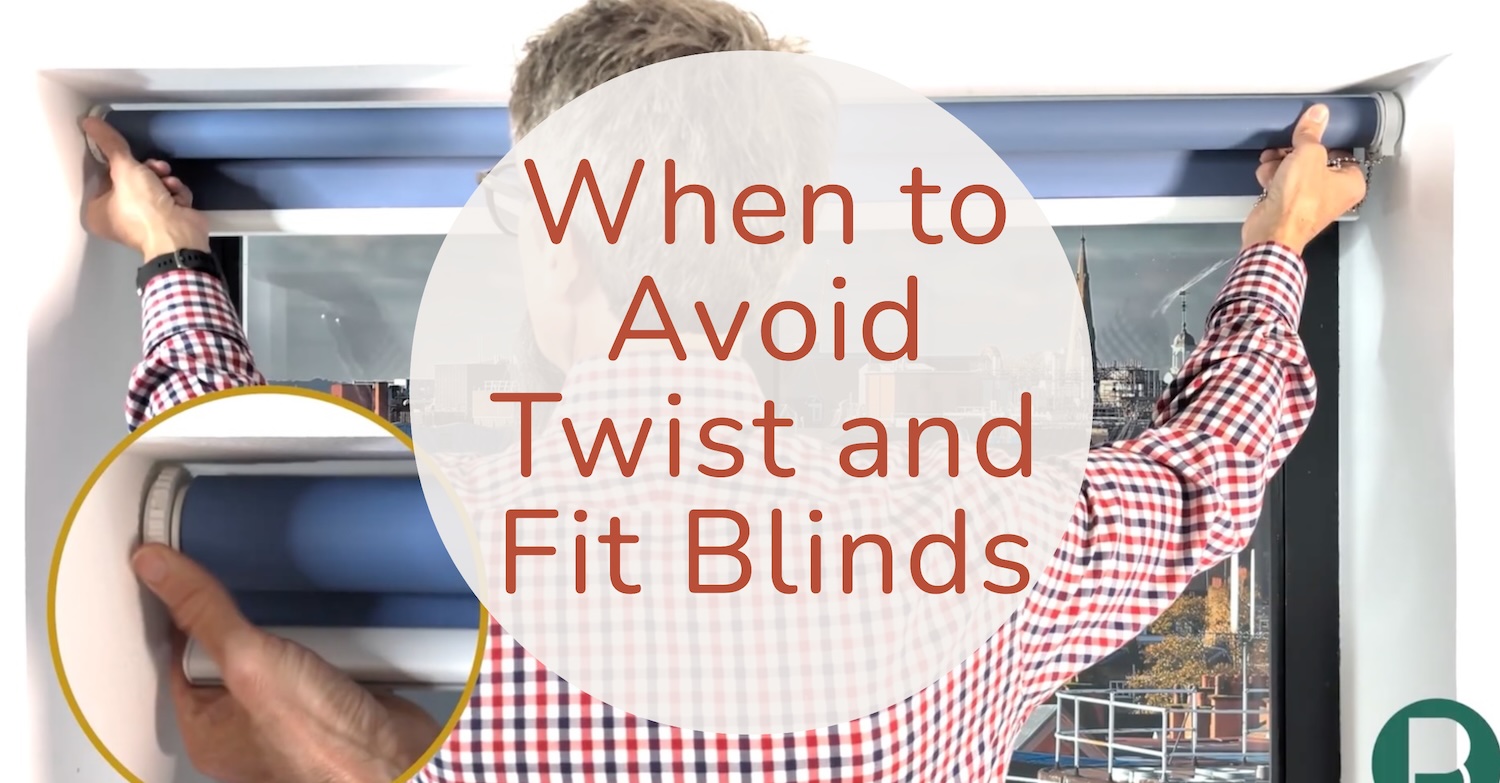
Twist and Fit blinds have become a popular choice for anyone looking to install blinds quickly and without tools. With their no-drill, no-fuss design, they’re particularly appealing to renters, first-time DIYers, and those who want to avoid permanent damage to window frames. But while they offer convenience and simplicity, they’re not suitable for every situation.
In this guide, we’ll explore the key scenarios where Twist and Fit blinds may fall short—so you can decide with confidence whether they’re the right fit for your windows.
1. Larger Windows
Twist and Fit blinds are designed with convenience in mind, offering a no-drill, no-screw solution that’s ideal for small to medium-sized windows. However, when it comes to larger windows, they can quickly become impractical or even problematic.
The main issue is weight and support. Twist and Fit blinds rely on tension to stay in place, and this system simply isn’t strong enough to support the additional weight and width of blinds fitted across a larger span. Over time, the tension can weaken, leading to sagging, slipping, or even complete failure of the blind fitting. This not only affects the look and function of your window treatment but could also cause damage to the blind itself or your window frame if it comes loose.
Additionally, larger windows typically require wider blind panels, which can bow or warp without the necessary centre brackets or anchoring points that traditional fixed blinds offer. You may also find that the Twist and Fit mechanism struggles to maintain uniform tension across a wide opening, resulting in an uneven appearance and compromised usability.
If you’re dressing large windows, it’s generally safer to choose standard wide fit blinds that are securely mounted with brackets and screws. These provide the structural integrity needed for wider widths and ensure a long-lasting, dependable fit.
2. Unusually Shaped Windows (Deep, Angled, or Curved)
While Twist and Fit blinds offer an easy and tool-free installation for standard window frames, they’re not a one-size-fits-all solution. In fact, unusually shaped windows—such as deep-set, angled, or curved frames—can pose significant challenges for this type of blind.
The Twist and Fit system depends on even, straight surfaces and consistent tension across the frame to hold the blind securely in place. If your window has a curved top, angled sides, or is set deep within a recess, the tension rod or fixings may not sit flush or remain stable. This can lead to uneven pressure, slippage, or a complete inability to install the blind properly.
In deep windows, for instance, the mounting points may not reach the inside edges of the recess, leaving the blind unsupported. Angled or arched frames often leave gaps where light leaks through, and the blind itself may buckle or twist due to inconsistent force across its structure.
Even if you manage to install Twist and Fit blinds on a non-standard window, the result is usually compromised—both visually and functionally. For these types of frames, made-to-measure blinds with proper fixings are the better choice, as they can be customised to the exact dimensions and shape of your window, ensuring full coverage, stability, and a professional finish.
3. Fitting Outside the Window Recess
Twist and Fit blinds are specifically designed for quick and easy installation within the window recess. If you’re planning to install blinds outside the recess, this is a clear case where Twist and Fit should be avoided.
The system relies on spring-loaded tension or expanding brackets that grip the sides of a window reveal. This method simply doesn’t work on flat wall surfaces, architraves, or above-frame areas where there’s nothing for the blind to press against. Without a window recess to hold the blind securely in place, there’s no way to anchor the mechanism, making installation impossible.
Even if you attempt to improvise a workaround, the result is likely to be unstable, unsafe, and visually unappealing. Twist and Fit blinds installed outside a recess will either not hold at all or become loose over time, especially with repeated use.
If you need to mount blinds above the window or across a larger surface area—perhaps to block more light, create the illusion of height, or cover an awkward frame—you’re far better off with traditional bracket-fitted blinds. These allow for precise placement, secure fixing into the wall, and a more polished look.
In short, Twist and Fit blinds are strictly for recess fitting. If your design or practical needs call for an outside mount, opt for a solution that’s purpose-built for the job.
4. Soft, Flaky, or Uneven Recess Walls
Twist and Fit blinds depend entirely on pressure and friction to stay securely in place, which means the condition of your window recess walls is critical. If the surfaces are soft, flaky, crumbling, or uneven, the system simply won’t hold properly—and can quickly become a source of frustration.
Walls that have loose plaster, old paintwork, or crumbly filler can’t provide the firm grip needed for a Twist and Fit mechanism. As pressure is applied, the surface may crack, flake, or even collapse, causing the blind to lose tension or fall entirely. This doesn’t just ruin the installation—it may also damage your window frame or the blind itself.
Similarly, if your recess walls are uneven, bowed, or textured, the fittings won’t sit flush or apply pressure evenly. This can result in a wobbly fit, visible gaps, or a tilted blind that doesn’t function as intended. You might also experience difficulty raising or lowering the blind due to misalignment.
If your recess is in poor condition, it’s wise to repair or re-plaster the surface first. Alternatively, you might consider traditional blinds with drilled brackets, which provide more reliable support and don’t depend on surface smoothness for stability.
In short, for a Twist and Fit blind to do its job, the recess walls must be solid, flat, and in good condition. Anything less risks a poor fit, a shortened lifespan, and a less-than-satisfying finish.
5. When Total Blackout is Required
If you’re looking to achieve complete darkness in a room—such as a bedroom, nursery, home cinema, or shift worker’s sleeping space—Twist and Fit blinds are rarely the right solution.
The design of Twist and Fit blinds naturally comes with gaps at the edges, particularly where the blind meets the sides of the recess. Because the blind is held in place by tension rather than fixed brackets or side channels, it’s difficult to eliminate light bleed around the frame. Even blackout fabrics won’t perform at their best if light can creep through from the sides or top.
This is especially noticeable during bright mornings or in rooms with strong artificial street lighting outside. The result is a room that remains dim, but never truly dark—something that can disturb sleep, reduce privacy, or spoil the viewing experience in a home cinema setup.
For genuine blackout performance, you’re better off choosing cassette blinds with side channels, perfect fit blackout blinds, or standard blackout roller blinds mounted outside the recess. These options are designed to seal off all light entry points, ensuring consistent, reliable darkness day or night.
In short, if light control is a top priority, Twist and Fit blinds won’t deliver the level of coverage required. They’re better suited to rooms where privacy and style matter more than complete light exclusion.
6. Limited Types and Designs
While Twist and Fit blinds offer quick and simple installation, they come with a notable trade-off: limited choice when it comes to blind styles, fabrics, and finishes.
Because these blinds are built around a specific tension-based fitting system, manufacturers tend to keep the designs relatively basic and uniform to ensure compatibility. As a result, you’ll often find a narrow range of colours, standard fabric weights, and conservative styles. If you’re hoping for luxurious textures, bold prints, or premium blackout linings, the options are likely to be disappointing or non-existent.
If you’re aiming to match your blinds to a specific interior scheme or require customisation—such as extra-wide widths, child-safe mechanisms, or enhanced thermal insulation—a traditional made-to-measure blind will offer far more flexibility in terms of aesthetics and functionality.
In summary, Twist and Fit blinds are fine for simple window dressing needs, but when it comes to style, substance, and choice, they’re no match for a properly installed, tailored blind solution.
7. Frequent Operation / High Traffic Areas
Twist and Fit blinds may be convenient, but they’re not built for constant use. In high traffic areas—such as kitchens, living rooms, hallways, or playrooms—where blinds are regularly opened and closed, the limitations of this system can quickly become apparent.
Unlike bracket-fixed blinds, which are anchored securely to the wall or frame, Twist and Fit blinds depend on tension to stay in place. With every pull, twist, or adjustment, you’re slightly disturbing that tension. Over time, this repeated movement can cause the blind to shift position, sag, or even come loose entirely, especially if the mechanism wasn’t installed on a perfectly flush surface.
High-use areas also demand blinds that are built to be robust and reliable, not just easy to install. Children tugging at cords, pets brushing past, or daily opening and closing can all put strain on a system not designed for regular handling. Even the highest-quality Twist and Fit blind is more prone to wear, loosening, or misalignment in busy parts of the home.
For high-traffic spaces, it’s best to invest in blinds with permanent fixings, which can withstand heavier use and offer more consistent performance. These blinds will stay exactly where you installed them, no matter how often they’re operated.
In short, if your blinds will be used daily, or are located in a space where people pass through frequently, avoid Twist and Fit in favour of a more secure, durable option.
8. High-End Aesthetics / Bespoke Finishes
If your space calls for premium styling, architectural detail, or a fully tailored interior design scheme, Twist and Fit blinds are unlikely to meet your expectations. While they’re practical and functional for quick window coverage, they lack the refined appearance and customisation that high-end interiors often demand.
Most Twist and Fit blinds come in standardised colours and sizes, with limited fabric choices and hardware finishes. There’s little opportunity for matching trims, discreet headrails, luxury fabrics, or upgraded components. For interiors that require seamless integration, subtle textures, or perfectly coordinated window treatments, this can leave the finished look feeling basic or out of place.
The visible mounting mechanism, often exposed at the sides or top, can also detract from a polished aesthetic. In contrast, professionally installed blinds—whether cassette-style, recess-fitted rollers, Roman blinds, or wooden Venetians—can be designed to blend beautifully into the room, sometimes even appearing invisible when raised.
Additionally, high-spec finishes like brushed metal components, motorisation, or tailor-made dimensions simply aren’t compatible with the one-size-fits-most nature of Twist and Fit systems.
So, if your aim is to create a space with bespoke detail, luxury finishes, or a designer feel, Twist and Fit blinds are best avoided. Instead, opt for made-to-measure solutions that align with your interior vision and elevate the overall quality of the space.
9. Interference with Curtains / Drapes
If you’re planning to use Twist and Fit blinds alongside curtains or drapes, it’s worth considering how the two will interact—because in many cases, they don’t play well together.
Twist and Fit blinds are typically installed within the window recess, often protruding slightly into the space due to their tension-based mounting system. This can cause physical interference with curtain headers, poles, or tracks—especially when curtains are mounted just above the frame or close to the wall. The result? Your curtains may not hang properly, gather neatly, or close fully across the window.
The issue is even more noticeable with thicker drapes or curtain holdbacks, which can push against the blind or prevent it from operating smoothly. If either the curtain or blind becomes obstructed, you may end up with a clumsy setup that looks messy and functions poorly.
In addition, the look of Twist and Fit blinds—particularly their visible end fittings or simplified roller mechanisms—might not sit well with the more elegant or layered aesthetic that curtains often aim to achieve.
For rooms where curtains are the primary decorative feature and blinds are used for added privacy or light control, it’s usually better to choose a low-profile, bracket-fitted blind that tucks neatly behind or above the curtain line. This avoids interference and keeps your window treatment looking cohesive and deliberate.
In short, if your window design includes curtains or drapes, Twist and Fit blinds can create clutter and conflict rather than harmony. A more tailored installation will help everything work together smoothly.
10. Very Heavy Fabric Blinds (like Roman Type)
While Twist and Fit systems are suitable for lightweight and medium-weight blinds, they’re generally not designed to support the weight of heavier fabric blinds, particularly Roman blinds made from thick or luxurious materials.
Roman blinds are often constructed using densely woven textiles, thermal linings, or decorative layers to create a soft, structured look when raised. This extra weight puts significant strain on the mounting system. Since Twist and Fit blinds rely solely on tension rather than fixed brackets or screws, they struggle to support the downward force of heavier fabrics over time.
As a result, the blind may begin to slip, sag, or detach entirely—especially with repeated operation. This not only compromises the appearance and function of the blind but may also pose a safety risk, particularly in homes with children or pets.
In addition, Roman blinds require precise movement to fold neatly as they’re raised and lowered. If the blind isn’t mounted completely level or begins to shift due to weight pressure, the folds can become crooked or uneven, spoiling the clean, elegant look that Roman blinds are known for.
If you’re opting for Roman blinds or any other heavy fabric style, it’s strongly recommended to use a securely fixed bracket system, ideally one that’s custom-measured and professionally installed. This ensures proper support, smooth operation, and a long-lasting fit.
In short, Twist and Fit blinds are not suited to substantial or weighty fabric blinds. For Roman blinds especially, a traditional installation offers both the reliability and aesthetics required.
It’s Not All Doom and Gloom
While this article highlights the limitations of Twist and Fit blinds in certain scenarios, it’s important to recognise that these blinds do offer genuine advantages—particularly if the above concerns don’t apply to your situation.
If you have standard-sized windows with solid, flat recesses and you’re not using particularly heavy fabrics or pairing them with curtains, Twist and Fit blinds can be an excellent solution. In fact, they come with several practical benefits that traditional blinds don’t always offer:
- No Drilling or Screwing Required: Twist and Fit blinds install using a tension mechanism, which means no need to drill into walls or window frames. This is ideal if you’re not confident with tools or want to avoid permanent alterations.
- No Damage to Walls or Frames: Since there’s no drilling involved, you avoid leaving unsightly holes or damaging finishes—a key advantage for maintaining the appearance and condition of your space.
- No Tools or DIY Experience Needed: You don’t need a toolbox or a tradesperson. These blinds are genuinely beginner-friendly, making them a great option if you’re not handy with home improvement tasks.
- Perfect for Renters and Temporary Homes: Twist and Fit blinds are especially popular in rented properties, student accommodation, or temporary living arrangements where drilling is not allowed.
- Easy to Remove and Relocate: Moving house? No problem. You can take the blinds with you, reinstall them in minutes, and avoid wasting money on new window treatments.
- Helps Maintain Window Warranty: For some new windows and doors, drilling into the frame can void the manufacturer’s warranty. Twist and Fit blinds provide a safe workaround, allowing you to dress your windows without affecting coverage.
In short, if your window setup falls within the ideal conditions for Twist and Fit blinds, they can be a smart, damage-free, and flexible option. They may not be perfect for every space, but when used appropriately, they’re a real convenience—especially for those who want a hassle-free alternative to traditional blind installation.